Portuguese
  Spanish


With Help From The World’s Largest Crane, EDF Installs 245-Ton Dome On Reactor 2 At Hinkley Point C Nuclear Power Plant
The British company EDF Energy has completed an important milestone in the construction of the new Hinkley Point C nuclear power plant, located in Somerset, United Kingdom. With the assistance of the world’s largest construction crane, a 245-ton dome has been installed over the Unit 2 reactor building.
This operation marks a significant advancement in the development of the country’s first nuclear project in over three decades.
Twin Reactors And Clean Energy Goal
The Hinkley Point C plant will feature two identical nuclear reactors. According to BBC reports, once operational, these units are expected to generate electricity with zero carbon emissions for over six million British homes.
-
Eni Acquires 25% Stake in Chilean Lithium Project, Plans to Invest Up to $225 Million in Eco-Friendly Extraction Method

-
French Brand Transforms 6 Million Brazilian PET Bottles into Sustainable Sneakers for Global Fashion Market
-
Abandoned Factory in Rio’s North Zone Becomes Urban Hazard with Standing Water and Debris

-
The U.S. Navy Conducts Submarine Tests in Idaho Lake to Detect Underwater Noises Hidden by the Ocean


The plant’s construction is projected to be completed in 2031, five years behind the originally scheduled date.
The pandemic has been cited as one of the main causes of the extended timeline. The total cost of the project has already reached £26 billion, approximately US$33 billion.
Engineering And Prefabrication To Speed Up The Work
The newly installed dome measures 14 meters in height and was built with 900 welds. Once assembled on the building, the total structure reaches 44 meters.
The engineers used prefabrication techniques to accelerate the work and ensure greater precision in assembly.
Stuart Crooks, CEO of Hinkley Point C, emphasized that repeating an identical project brings significant benefits.
According to him, the repetition of the model is the best way to build new plants, potentially resulting in time savings of 20% to 30%.
Big Carl Crane: Key Piece In The Project
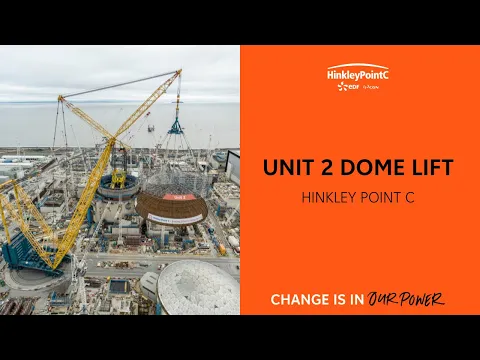

The highlight of the operation was the SGC-250 crane, known as “Big Carl”. It was used to lift the heavy dome of Unit 2.
With 96 wheels and powered by 12 motors, the equipment can move over six kilometers of tracks. Its maximum load capacity is 5,000 tons.
Manufactured by the company of Carl Serens — who named the crane — Big Carl uses 52 counterweight containers, each weighing 100 tons.
The 245-ton dome was not the heaviest item it lifted in the project: the crane also hoisted 423-ton steel rings for the same unit.
Support From The British Government
The UK’s Energy Minister, Michael Shanks, commented on the importance of the project. According to him, Hinkley Point C will represent a new generation of clean nuclear energy produced within the country.
Shanks also stated that the plant is expected to create quality jobs in Somerset and throughout the regions connected to its supply chain.
The British government aims to begin what it calls the “golden age” of nuclear power with the project.
He also mentioned additional investments in Sizewell C and small modular reactors (SMRs), aimed at strengthening energy security and protecting family budgets.
EDF Energy emphasizes that, with the progress of construction and the lessons learned from building the first unit, a more efficient process is expected for the next steps.
The use of repetitive engineering, as highlighted by the company, is set to become a model for future nuclear power plants in the United Kingdom.
With information from Interesting Engineering.