Portuguese
  Spanish


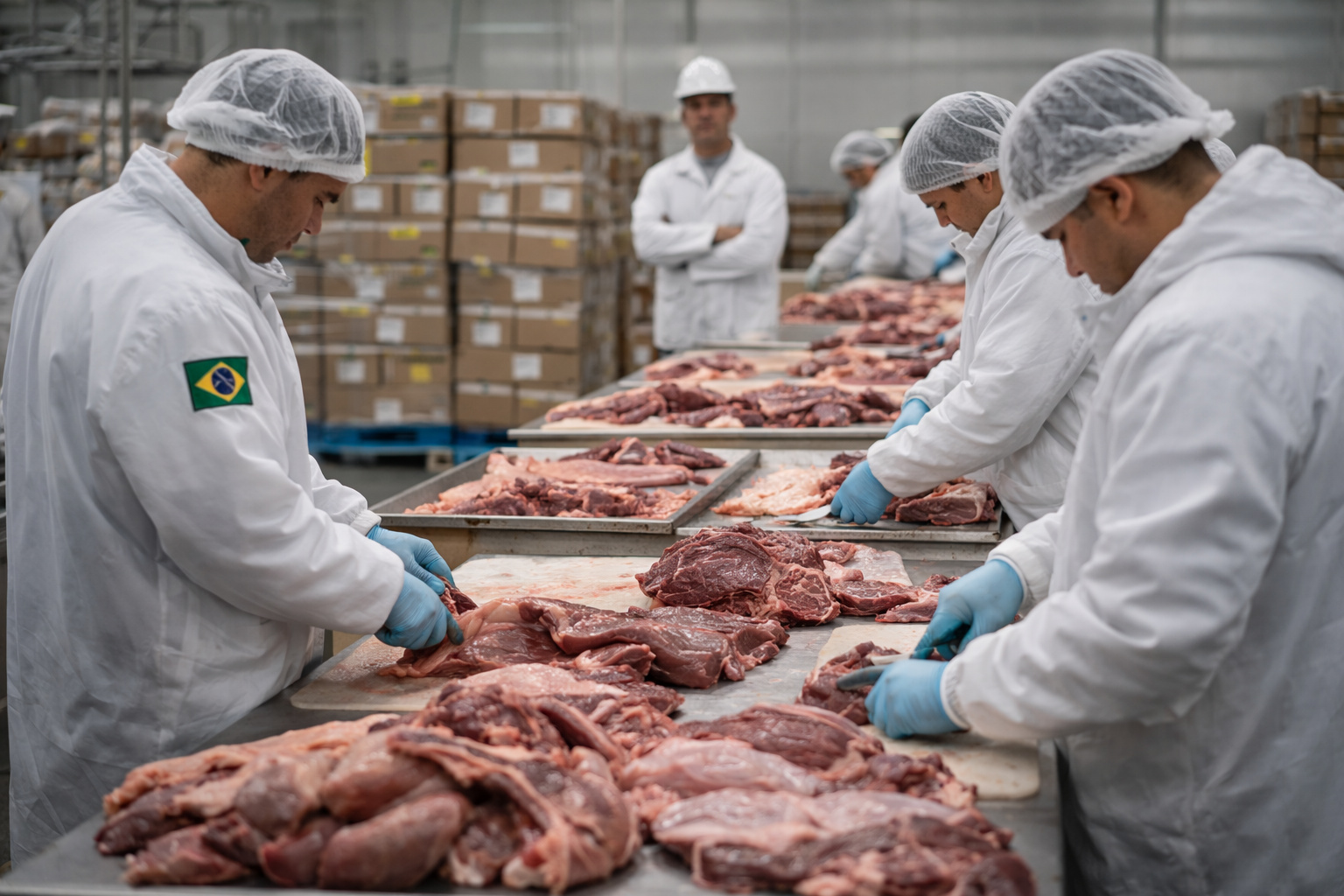

Vietnam opens market for Brazilian beef offals and expands exports, utilization of meat, and job creation in the meat industry.
On April 17, 2026, the Ministry of Agriculture and Livestock (Mapa) announced the official opening of the Vietnam market for the import of Brazilian beef offals, including heart, liver, and kidneys, consolidating another advance in the sanitary and commercial negotiations of the national agribusiness. According to the joint statement from Mapa and the Ministry of Foreign Affairs (MRE), the authorization strengthens trade with the fourth main destination of Brazilian agribusiness exports and expands the full utilization of the beef chain.
Vietnam already occupies a strategic position for the Brazilian agricultural sector. According to the federal government itself, the Asian country imported over US$ 3.5 billion in Brazilian agricultural products in 2025, with highlights on corn, soybean complex, fibers, and textile products. As a recent fact, the announcement also raised the number of market openings for Brazilian agribusiness to 592 since the beginning of the current administration, creating a new business front for slaughterhouses, exporters, and companies linked to national beef production.
The measure represents not only an increase in exported volume but mainly the appreciation of parts of the animal that previously had lower commercial utilization.
-
As Brazil Expands Social Welfare, Survey Reveals 40% Blame Poverty on Laziness, While 58% Cite Lack of Opportunities

-
China Tightens Control on Antimony, Driving Prices from $22,000 to Nearly $40,000 per Ton as U.S. Rushes to Bolster Strategic Reserves

-
BlackRock Freezes $1 Billion in Brazilian Renewable Energy, Impacting 1.5 GW of Planned Projects and Highlighting Investor Concerns Over Infrastructure Bottlenecks Cutting Up to 25% of Solar and Wind Generation
-
Labor Shortage: Despite Record Average Salary, 90% of Brazilian Bar and Restaurant Owners Struggle to Hire Key Roles Like Sushi Chefs and Head Cooks


What are beef offals and why do they have strategic value in global trade
The so-called beef offals include parts such as liver, heart, kidneys, tongue, lungs, and other internal organs. In Brazil, these items have more restricted consumption compared to traditional meat, but in various Asian countries, they are highly valued and are part of the daily diet.
This cultural difference creates an important economic opportunity. While premium cuts are destined for traditional markets such as China, the United States, and the European Union, offals find strong demand in countries like Vietnam, the Philippines, and other Southeast Asian markets.
This allows Brazil to increase the profitability of each animal slaughtered, transforming by-products into high commercial value items. From an industrial perspective, this movement represents a significant advance in the efficiency of the production chain.
Market opening strengthens strategy for full utilization of production
The export of beef offals is directly linked to the concept of full utilization of the animal, a practice that has been increasingly valued in modern agribusiness.


When only the prime cuts are marketed, a significant part of the animal’s economic potential is wasted. With the opening of specific markets for different parts, it is possible to:
- increase revenue per unit produced
- reduce industrial losses
- optimize processing logistics
This model transforms the meat supply chain into a more efficient and profitable operation, with less waste and greater value generation. Furthermore, it enhances Brazil’s competitiveness in the international arena.
Vietnam consolidates as a strategic partner of Brazilian agribusiness
Vietnam has been gaining increasing relevance as a destination for Brazilian exports. By 2025, the country had already imported more than US$ 3.5 billion in agricultural products from Brazil, including items such as soybeans, corn, meat, and coffee.
This volume places Vietnam among the main consumer markets of the national agribusiness, reinforcing its strategic importance.
The opening for beef offal further enhances this commercial relationship, creating new opportunities for expansion. The trend is that the Asian country will continue to increase its share in purchases of Brazilian products, especially in segments where there is strong local demand.
Direct impact on the meatpacking industry and job creation
The new market opening has a direct effect on the Brazilian meatpacking industry, which now has another channel for its production. With the possibility of exporting beef offal, meatpackers can:
- increase processing volume
- expand specific production lines
- create new jobs
This type of opening tends to stimulate investments in the production chain, especially in regions where livestock farming has a strong presence.
In addition, it strengthens Brazil’s position as one of the largest exporters of animal protein in the world.
Market diversification reduces risks for the sector
Another strategic point of the opening to Vietnam is the diversification of destinations for Brazilian exports. Excessive dependence on a few markets can pose economic risks, especially in scenarios of international instability. By expanding the number of buying countries, Brazil reduces this vulnerability.

Entering new markets serves as a protection mechanism for agribusiness, ensuring greater stability in exports. This is especially relevant in a sector highly sensitive to sanitary, political, and logistical issues.
Sanitary requirements are a key factor for release
The opening of the Vietnamese market does not occur automatically. It depends on rigorous technical negotiations, involving sanitary requirements and quality standards.
Brazil needed to prove:
- adequate sanitary control
- traceability of production
- compliance with international standards
These criteria are fundamental to ensure food safety and the trust of the importing country. Success in the negotiation reinforces the credibility of the Brazilian sanitary system on the global stage.
Growth of Asian demand drives new opportunities
The increase in income and population in Asian countries has boosted the consumption of animal protein and derivatives. This movement creates opportunities for exporters who can meet local preferences.
In the case of beef offal, the demand is especially strong, as these products are part of the traditional cuisine in various regions of Asia.
Brazil, due to its productive capacity and competitiveness, positions itself as a natural supplier to meet this growing demand. This scenario is likely to favor new market openings in the future.
Recent openings show advancement of Brazilian agricultural diplomacy
The negotiation with Vietnam is part of a broader set of actions by the Brazilian government to expand access to international markets.
In recent months, Brazil has also made progress in negotiations with countries in Africa, the Middle East, and Asia, expanding the portfolio of exportable products.
This movement demonstrates an active strategy for the international insertion of Brazilian agribusiness, based on technical and commercial agreements.
What changes in practice for Brazil with this new opening
In practice, the opening of the Vietnamese market for beef offal represents a structural change in how production can be marketed. The impact includes:
- increased revenue per animal
- greater industrial efficiency
- expansion of exports
- strengthening of international presence
These combined factors elevate the economic potential of the sector and reinforce Brazil’s role as an agro-exporting powerhouse.
Do you believe that Brazil can still expand its presence in the Asian market?
The opening of the Vietnamese market for beef offal shows that there is still significant room for growth in Brazilian exports. With increasing demand, high production capacity, and new negotiations underway, the country continues to expand its global presence.
In light of this, an important question arises: is Brazil just beginning to explore the potential of the Asian market, or is there still much room for growth in the coming years?