Portuguese
  Spanish


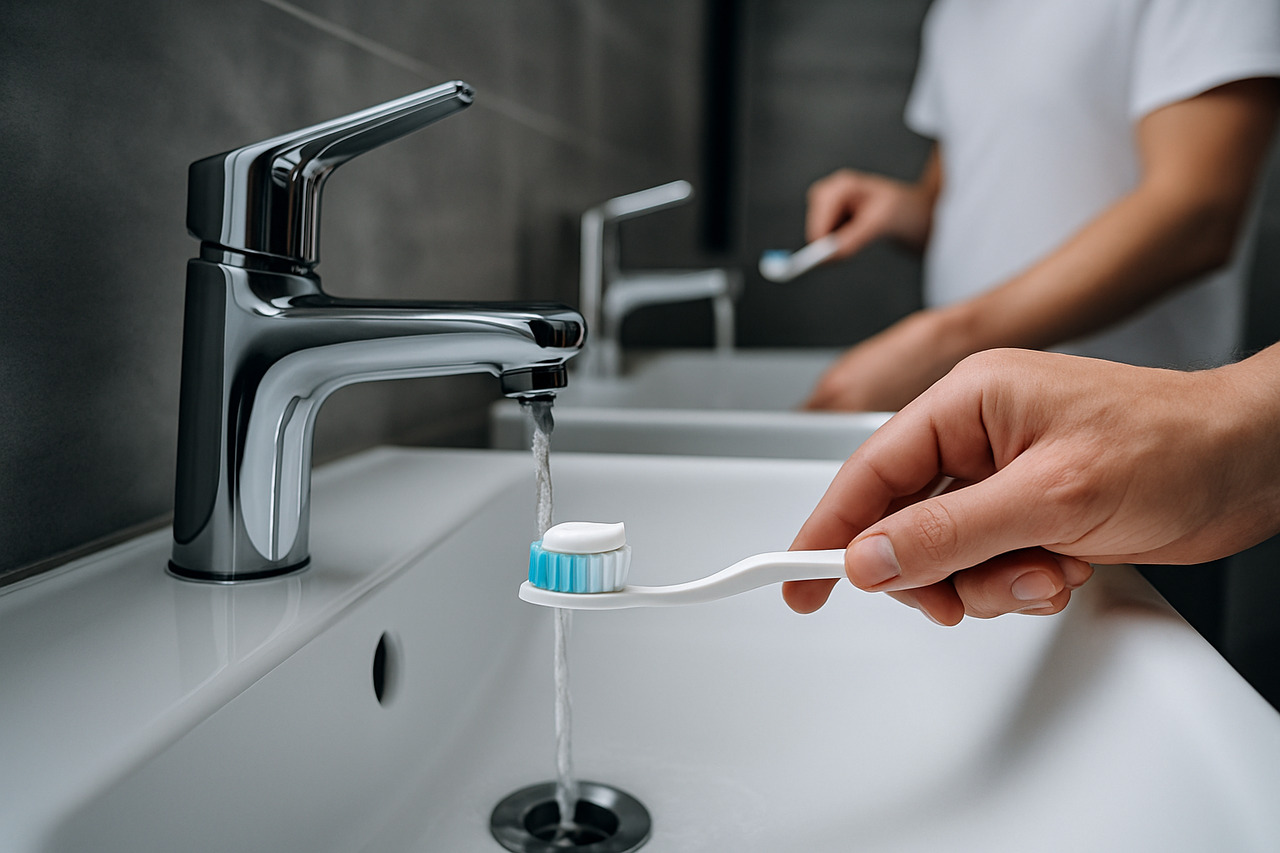


Experts Explain How Water Influences Brushing And Whether It Really Helps, Hinders, Or Doesn’t Change Anything In Cleaning Teeth
It is a habit toma: apply the toothpaste on the brush and drip a little water before brushing. But does this help or hinder cleaning teeth? Experts consulted by the Tilt portal explained the effects of using water in this process.
Water Reduces Friction in Brushing
According to Ricardo Belchior, professor and coordinator of the Chemical Engineering Department at FEI, using water before brushing can decrease the abrasiveness of the toothpaste. With less friction between the paste and the enamel of the teeth, brushing may be less effective.
Even so, he states that water also plays its role. It helps to dilute the abrasives present in the paste, which improves penetration between the teeth and, consequently, can increase cleaning efficiency.
-
Over 500,000 Wild Boars Culled in Eight Months, but Industry Estimates 1.25 Million, Raising Concerns About Crop Damage, Threatened Livestock, and Health Risks in Rural Brazil

-
Chinese Spacecraft Releases Mysterious Object in Orbit, Sparking Global Debate on Space Technology and Earth Monitoring

-
Retired Builder Constructs House Using Over 4,000 Milk Cartons in Brazil, Engineer Estimates Structure Could Last 100 Years

-
Brazilian Well Taps Guarani Aquifer, Sparking Debate on Water Supply and Security



Belchior also reminds us that many people simply do not like the sensation of brushing their teeth without wetting the brush. This discomfort can hinder the process and reduce dedication to brushing.
Water Doesn’t Interfere That Much, Says Expert
For Jaime Aparecido Cury, emeritus professor at Unicamp, water does not compromise the effectiveness of brushing. He explains that toothpaste has rheological properties.
In other words, its components are only activated by friction — such as the friction with the teeth during brushing.
Cury states that even if a person puts a little water, it does not significantly affect the functioning of the toothpaste.
In the lab, to completely dilute a toothpaste, a long process would be necessary, with agitation for several minutes.
Wet Brush Improves Sensation
Dentist Ricardo Jahn, professor at Unisa and specialist in periodontics, also emphasizes that water does not harm oral hygiene.
He recommends only moistening the bristles before applying the paste, to improve the sensation during brushing.
According to Jahn, the ideal is to apply the equivalent of a pea-sized amount of toothpaste on the brush. It is not necessary to cover the bristles with paste.
He highlights that cleaning occurs through the friction of the bristles with the teeth, not by the amount of foam.
Practical Conclusion
Adding a little water to the toothpaste before brushing does not compromise the quality of hygiene. If preferred, just moisten the bristles before applying the paste.
And remember: there’s no need to overdo the amount of paste — a small portion is already sufficient.
With information from Tilt.