Portuguese
  Spanish


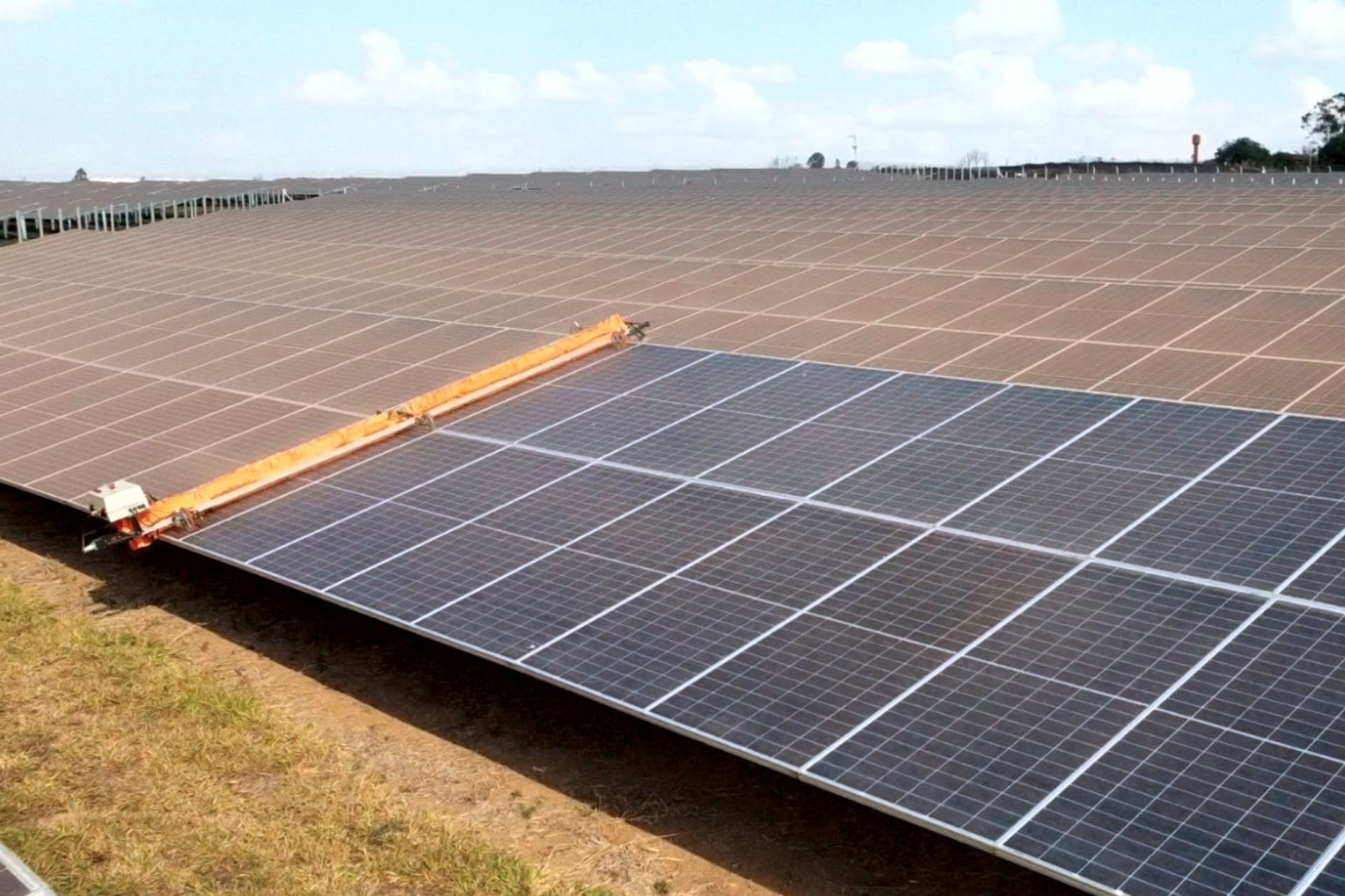

Understand in This Text Why Solar Cleaning Is Essential and How Dirt on Modules Compromises Efficiency. See Maintenance Strategies.
Effective solar cleaning in solar plants is essential, as dirt on modules can reduce efficiency by up to 20%, threatening generation and profitability.
Therefore, investments in preventive maintenance and monitoring are crucial to ensure the future of solar energy in Brazil.
Impact of Dirt on Modules: Why Act Quickly
The presence of accumulated dirt on solar panels, referred to as dirt on modules, can reduce energy generation by between 5% and 20%.
-
4,000-Year-Old Stone Circle Discovered Near Belfast, Unveiling Prehistoric Ritual Complex in Irish Countryside

-
Brazilian Innovator Transforms 1962 Mercury Comet with Nissan Leaf Electric Motor, Achieving 125 km Range for Under $6,000

-
China Tests Giant 582-Ton Magnets to Contain Plasma Hotter Than the Sun’s Core, Aiming to Cut Superconductor Costs and Generate First Electricity from “Artificial Sun” by 2030
-
Seventh Grader Builds Nuclear Fusion Machine at Home, Aiming for Guinness World Record


Furthermore, another study conducted by UFSC concluded that the lack of maintenance can compromise up to 15% of the efficiency of solar plants.
What Solar Cleaning Can Recover and Gain
Research shows that after cleaning, the power of inverters can increase by up to 25%, reversing considerable losses caused by dirt on modules.
Differences Between Fixed Structures and Those with Trackers
In systems with solar trackers, dirt on modules can be even more harmful.
This is because mechanical sensors can get stuck and prevent the modules from following the sun throughout the day — reducing generation, even though trackers typically provide up to 20% more energy than fixed structures.
Therefore, solar cleaning and constant maintenance are crucial, regardless of the type of structure.
Market Perception: Lack of Attention Still Persists
Many solar system owners underestimate the importance of cleaning.
Especially customers of distributed generation do not have adequate guidance from installation to after-sales.
This happens because offers often prioritize discounts on the electricity bill, overlooking performance impacts.
Thus, the accumulation of dirt on modules ultimately compromises the return on investment in the medium and long term.
How to Include Solar Cleaning Already in the Project Phase
From the planning stage, it is possible to estimate the loss due to dirt on modules and include this in energy simulations.
Specific sensors can monitor the level of dirt and indicate the ideal time for cleaning.
Additionally, considering historical data on dust and climate in the area helps define maintenance frequency with better cost-effectiveness.
Real-Time Monitoring: Prevention Beyond Solar Cleaning
The absence of continuous monitoring is another serious flaw.
Connecting the plant to an operations center allows for immediate fault detection, reducing downtime and ensuring that any issues are corrected accurately.
Cleaning Methods: Manual Is Still the Safest
Despite technological advances, manual solar cleaning remains the safest and most effective option in Brazil, provided it is done with the necessary care.
If opting for automated or robotic methods, it is important to verify that the equipment is approved by the manufacturer of the modules, to avoid voiding the warranty.
Awareness Evolving, but Still Insufficient
According to Rodrigo Kimura, energy director at Grupo CESBE and Giya, the market is more aware of the damages caused by dirt on modules, but still needs to make significant progress.
His evaluation is clear: “the cost of proper maintenance is less than the revenue lost due to decreased generation”.
Technical information and concrete data are still essential to convince investors.
Practical Summary: Solar Cleaning and Maintenance Worthwhile
| Topic | Main Highlights |
| Plant Efficiency | Dirt can reduce generation by up to 20%. |
| Benefits of Cleaning | Increase of up to 25% in inverter power. |
| Structures with Trackers | More productivity, but more sensitive to dirt. |
| Lack of Guidance | Common neglect in distributed generation. |
| Project and Planning | Sensor + history to define frequency. |
| Continuous Monitoring | Essential for identifying faults. |
| Cleaning Methods | Manual is safe; automated requires approval. |
| Awareness and ROI | Investing in maintenance prevents significant losses. |
Quick Guide to Visual Inspection in Solar Plants
Before investing in specialized services, it is possible to perform a simple check to identify whether immediate solar cleaning is needed.
Here are some points of attention:
- Check the Condition of the Modules: Dust, stains, bird droppings, or visible pollution are clear signs of dirt on modules.
- Observe Performance Monitoring: Sudden drops in generation may indicate the need for maintenance.
- Check Dirt Uniformity: If some modules are dirtier than others, this can cause imbalance and compromise the efficiency of the solar plant.
- Look for Cracks and Damage: In addition to dirt, check for scratches, cracks, or loose parts. These issues can affect safety.
- Analyze Local Dirt Frequency: Areas with high dust, pollen, or soot require more frequent inspections.
Practical Tip: If dirt is visible to the naked eye or performance is below historical average, it is time to schedule cleaning safely and avoid greater losses.