






 Portuguese
  Spanish


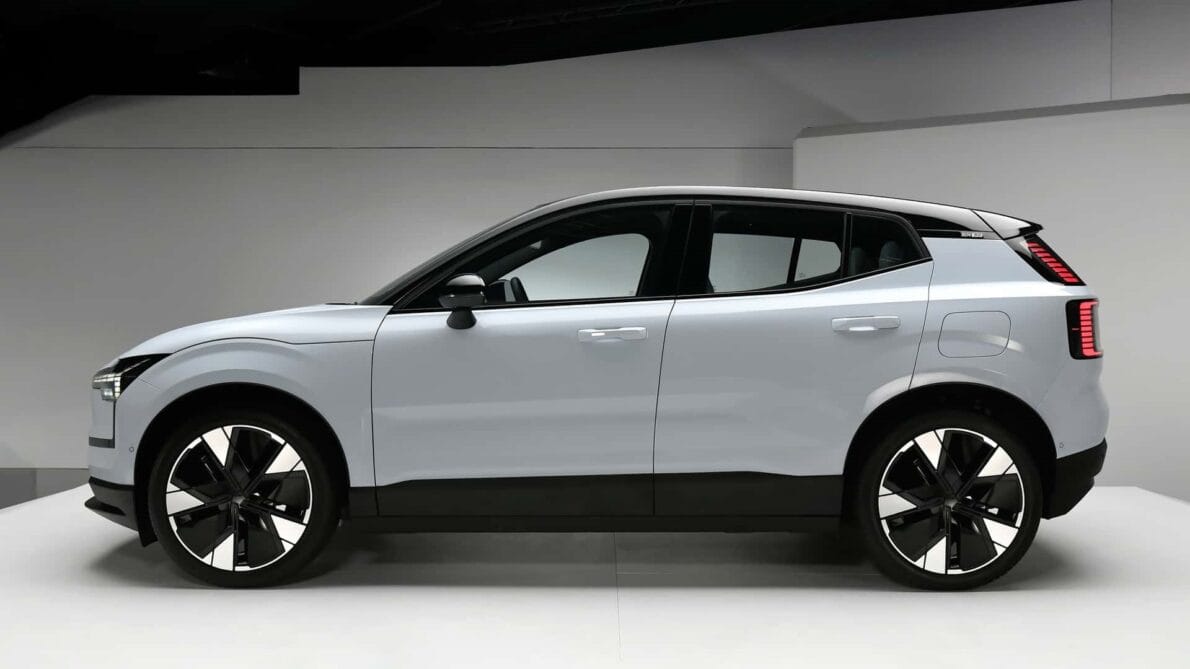
New Volvo Car Model EX30 Arrives to Become the Cheapest Luxury Car in Brazil, Offering More Than 330 Km of Range and 272 Hp of Power.
Volvo has established a monthly sales target of one thousand units for the new Volvo EX30, the cheapest luxury car in Brazil. This compact SUV fully electric has been in pre-sale for a few months and started being delivered to Brazilian customers about two weeks ago. If the Swedish brand can solidify its plan, the Brazilian premium car market, currently led by the Series 3 and the X1 (both from BMW and produced in Brazil), will have a new number one.
Check Out All the Details of the Volvo EX30: Price, Performance, Engine, and More


The Volvo EX30 has solid arguments to claim the title of the cheapest luxury car in Brazil. First, it is manufactured in China, a country with extensive production capacity and excellent delivery logistics, as evidenced by the number of units that BYD and GWM can bring and sell monthly.
However, the main attraction is the price, which makes the Volvo EX30 the most accessible premium car for sale in the country, surpassing any combustion model.
-
Uber Black Revamps Fleet, Drops Ten Car Models and Sets Deadline for Electric BYD Dolphin

-
Chinese Giant Uses Metal Structures and Cranes to Deliver Over 700 Electric Cars to Brazil

-
Uber Faces Shareholder Scrutiny as Board Accused of Ignoring Safety, Compliance, and Harassment Warnings Amid Over 3,500 U.S. Lawsuits
-
Ferrari’s First Electric Car Divides Fans, Priced at $630,000, Amid Concerns Over Limited Editions; Brand Clarifies It’s Not Just for Future Perks


Prices start at R$ 229,950 for its Core version with a 51 kWh battery. In other versions, it has a 69 kWh battery. In this case, the Core costs R$ 249,950.
The Plus adds features like 19-inch wheels, dual-zone air conditioning, wireless smartphone charging, electric trunk lid opening, and a 1,040 W Harman Kardon sound system – it goes up to R$ 277,950. For R$ 293,950, the top-of-the-line Ultra delivers 20-inch wheels, a panoramic roof, electric seats, and parking maneuver assistance.
Interior of the New Cheapest Luxury Car in Brazil Surprises
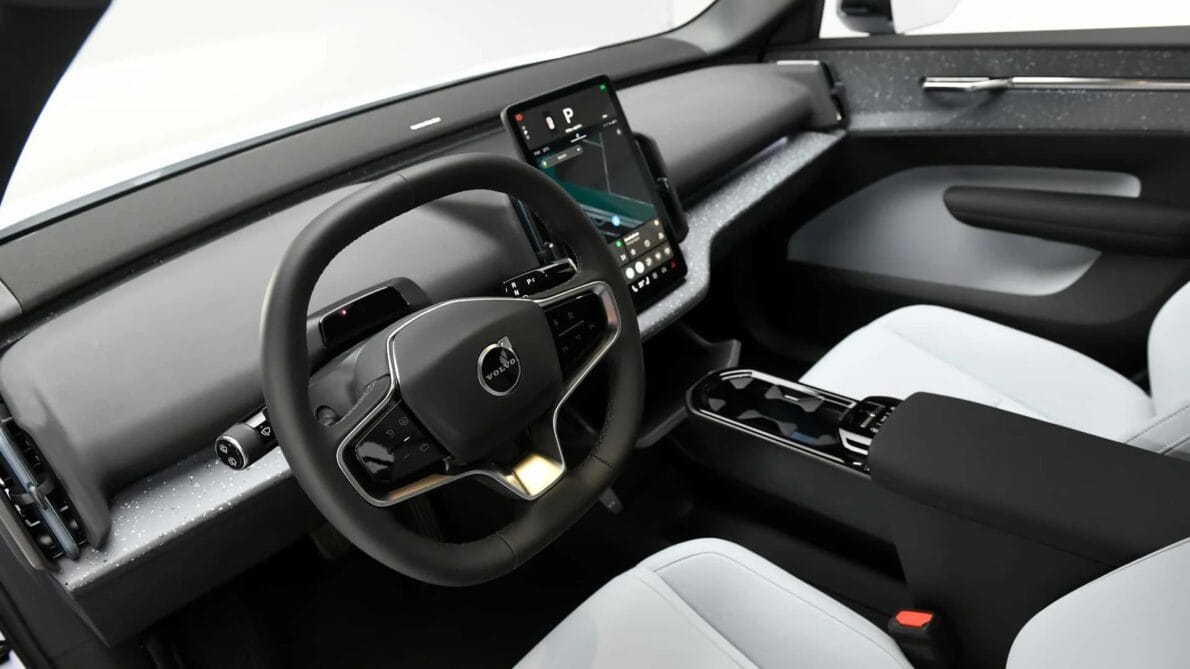
The Volvo EX30 does not have an instrument cluster behind the steering wheel. It is located at the top of the central vertical 12.3-inch display. There we also have the display for the driving assistance systems, which includes the semi-autonomous – as efficient as in other products of the brand.
The new Volvo car features onboard internet, and the operating system is from Google. Thus, users of Android can do everything on the screen, installing applications like Google Maps, Waze, and Spotify.
The cheapest luxury car in Brazil does not have Apple CarPlay, but the company promises to add this technology to the car by the end of the year. Inside, the finish is good, with soft-touch materials, the cabin combines fabrics, rubber, and, in some cases, imitation leather.
The front section has two storage compartments. One is in the central console, hiding the two USB ports. The other is located under the central armrest. It is retractable and can also transform into a cup holder.
Volvo EX30 Delivers 272 Hp of Power
The car has a wheelbase of 2.65 meters, and the trunk, in turn, has 318 liters. However, due to its depth, it allows for more luggage than estimated by the low capacity. There is also a second compartment at the front, where it is possible to store a backpack. The front features full-LED headlights, without a front grille, with a bi-color body depending on the version. The rear stands out for its taillights with two connections.
The 272 hp of power and 35 kgfm of torque of the cheapest luxury car in Brazil lead to efficient speed gains. In practice, the model is faster than the Compass. The Volvo EX30 can go from 0 to 100 km/h in 5.3 seconds in the versions with a 69 kWh battery, completing the task in one second less than the Jeep. The traction, indeed, is rear.
As for the batteries, the charging of the entry-level version can be done in 26 minutes on fast chargers of up to 134 kW. For the others, the process takes 28 minutes at 153 kW. On an 11 kW Wallbox, the times are six and eight hours, respectively, according to Volvo. It is worth mentioning that the model can deliver 250 km of range in the Core version and 338 km in the other versions.








Be the first to react!