






 Portuguese
  Spanish


The city of Denver, in the United States, invested in the Housing First method with the All In Mile High program and reduced the homeless population by 64% since 2023. The 2026 census counted only 518 people living on the street, while about 7,700 were moved to permanent housing.
While capitals around the world see the homeless population grow and treat the problem as impossible to solve, an American city took the opposite path and has numbers to prove it. Denver, in the state of Colorado, reduced the number of people living on the street by 64% in just three years, and the most recent census found only 518 people sleeping rough in the city. It was neither luck nor a miracle. It was a stubborn, expensive, and organized public policy, built on the Housing First method.
The data came from the 2026 census, the so-called Point-in-Time Count, released in May and based on a count made on a single night in January, as reported by CBS Colorado. The drop in the homeless population is the largest in almost a decade in the city and placed the number of homeless people at the lowest level in nine years. Behind the result is the All In Mile High program, the bet of Mayor Mike Johnston that turned the Housing First method into the backbone of the fight against the problem since he took office in 2023.
The numbers that made the city newsworthy
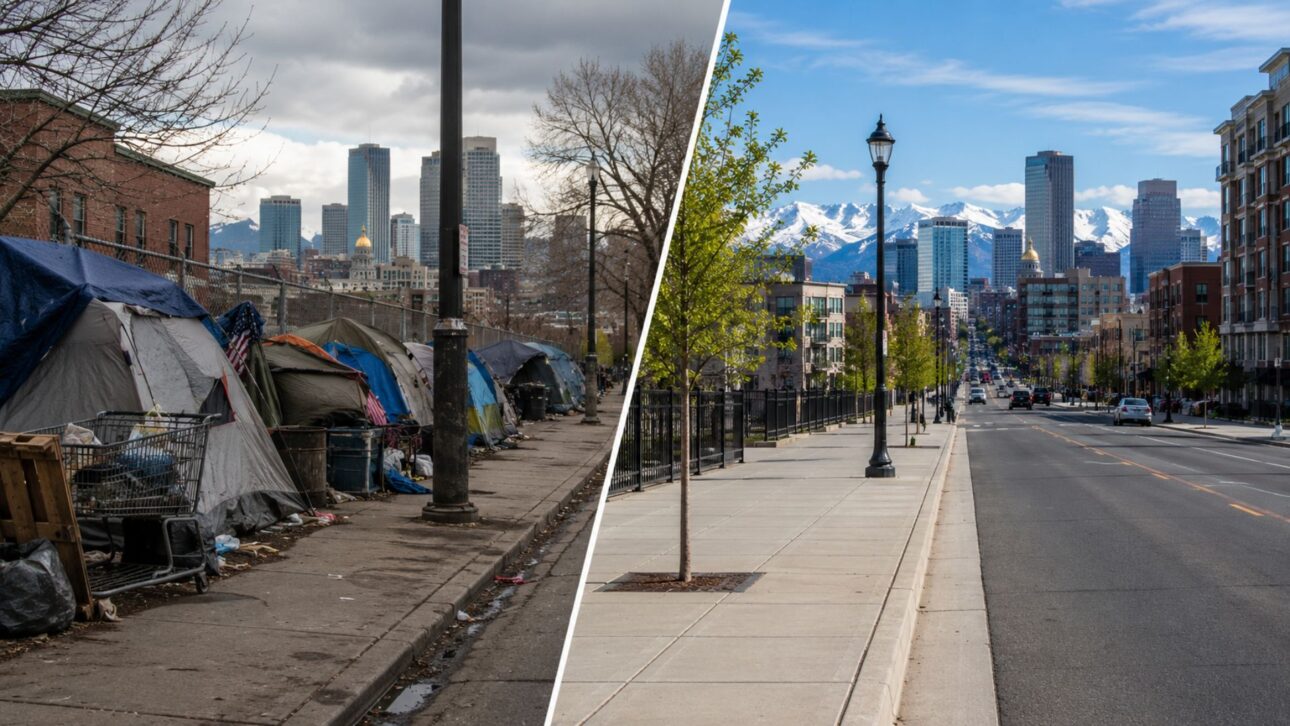
The 64% decrease refers to the homeless population itself, people sleeping on the sidewalk, in cars, or in tents, and not the total number of homeless people. In this count, Denver went from more than fourteen hundred people living on the street in 2023 to only 518 in the 2026 census, a reduction of 34% just compared to the previous year.
-
Couple Transforms Abandoned Fire Station into Dream Home After a Decade of DIY Renovations

-
Bolivian Female Construction Workers Form Association to Combat Discrimination and 38% Pay Gap in the Industry

-
Near Amsterdam, residents buy land and discover they must also build streets, manage drainage, handle waste, and grow food on half their plot.
-
Brazil’s WEG to Open New Factory in China by 2027, Expanding Production of Large Rotating Electric Machines and Low to Medium Voltage Motors in Rugao


This is the data that makes the city proud, and rightly so. Removing two-thirds of people from the streets in three years is rare anywhere on the planet, especially in a rich and expensive metropolis like Denver, where the cost of housing constantly pushes people onto the streets. The number 518 represents the lowest level of homelessness in nine years, according to the official count.
At the same time, about 5,900 people were staying in shelters scattered across the city on the night of the count. This shows that many people have left the streets but are still in temporary accommodation, not necessarily in permanent housing. Understanding this difference is key to acknowledging Denver’s victory realistically, without exaggerating or downplaying the achievement.
What is the Housing First method, and why does it work
The logic behind all this is simple and counterintuitive. The Housing First method, known abroad as Housing First, reverses the traditional assistance model. Instead of requiring a person to first stop drinking, find a job, or prove they deserve it before getting a roof over their head, the house comes first, without preconditions, and the rest of the support comes after they are already housed.
The idea stems from an obvious realization when said out loud: it is almost impossible for someone to take care of their health, look for work, or reorganize their life while sleeping on the street. With a fixed address and a door that closes, everything else becomes possible. “Homelessness is solvable, and Denver is proving it as long as you are willing to do the work to solve it”, said Mayor Mike Johnston, who made the issue the flagship of his term.
Those responsible for the count reinforce this perspective. “Homelessness has decreased in Denver for the first time in almost ten years”, said Cole Chandler, director of the city’s housing department. For Jason Johnson, executive director of the Metro Denver Homeless Initiative, the entity that collects the data, the decline is a sign of a more coordinated and data-driven system. The Housing First method, in this arrangement, has ceased to be a theoretical concept and has become a results-driven machine.
All In Mile High: hotels, micro-housing, and rapid response teams
The name of the program that put the Housing First method into action is All In Mile High, and the way it was implemented explains much of its success. On the first day of his term, in July 2023, Johnston declared a state of emergency for homelessness and created multidisciplinary teams, nicknamed Tiger Teams, with the mission of cutting through the bureaucracy that was holding everything back. The time to build a micro-housing unit dropped from 18 months to 30 days after the rules were simplified.
The choice of shelter type was also different from the obvious. Instead of collective shelters with rows of beds, Denver opted for private rooms in purchased and converted hotels, as well as micro-communities of individual tiny houses. The bet on privacy and dignity, instead of crowded shelters, is part of what made people accept leaving the streets, according to the analysis by the magazine Governing, which treated Denver’s case as a possible path for other cities.
Behind-the-scenes numbers help understand the scale. The All In Mile High reduced large encampments, those with more than 20 tents, by 98%, and those with 10 to 20 tents by 89%, emptying the city’s most visible street scenes. None of this came cheap: between July 2023 and June 2025, the city spent about $178 million on the program, supported by the combination of the Housing First method with heavy investment and determined management.
7,700 in permanent housing: the size of the result
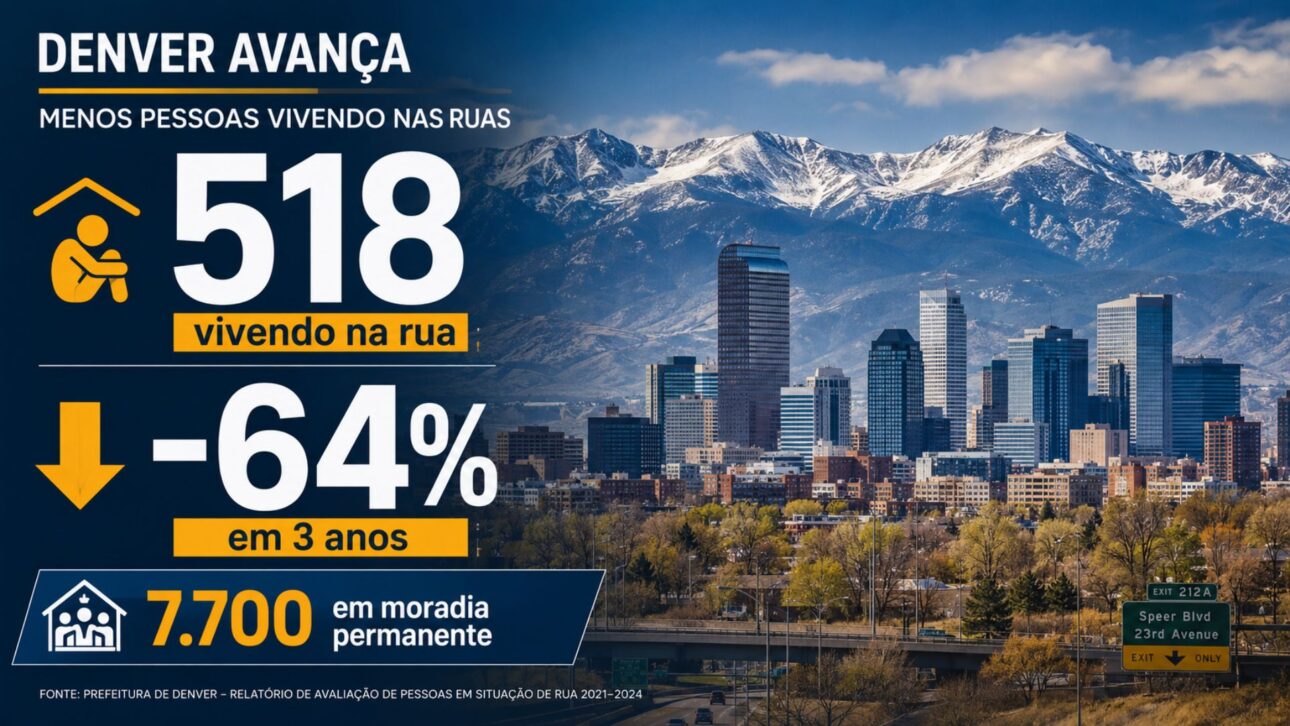
Since the launch of All In Mile High in 2023, about 7,700 people have been moved to permanent housing and more than 8,500 gained access to some type of shelter, according to the program’s own report. These are people who were on the street and now have a place to live, in different stages of stability.
There is a milestone that well summarizes the ambition of the policy. Denver became the largest city in the United States to virtually eliminate street homelessness among war veterans, a group that is often one of the most difficult to remove from the streets. Targeting those in the most critical situations first is a hallmark of the Housing First method, and the city used this as proof of concept before targeting larger groups.
The difference between permanent housing and temporary shelter, however, is not a detail. Moving someone to permanent housing means a truly stable home, while the shelter is a temporary stop. The fact that 7,700 people have reached a stable home is the most solid data of the program, precisely because it points to a lasting solution, not just a momentary relief of the street population.
The fine print: what the numbers don’t tell
Now the part where the headline doesn’t fit, and which needs to be said with honesty. Although the street population has plummeted, the total number of homeless people in Denver fell much less, because a good part just migrated from the sidewalk to the shelter. In the metropolitan area, the reduction in total was about 8%, far from the 64% of the street, which shows that getting off the street is not the same as solving the problem entirely.
There is still a worrying fact that contrasts with the celebration. The number of homeless children and adolescents reached the highest level in ten years, with more than thirteen hundred minors in this condition. While adults were leaving the street, families with children slipped in the opposite direction, a sign that the housing crisis continues to push people into vulnerability, even where the street population is decreasing.
Critics also point the finger at the way of counting. The city’s panel does not remove from the statistics those who went to permanent housing and then returned to the street, which can inflate the sense of success. Added to the fact that the census is a snapshot of a single night, this calls for caution in reading the numbers. Recognizing these limits does not erase Denver’s progress, but prevents the story from becoming propaganda. The Housing First method delivered a lot, and still has much to prove.
The Brazilian mirror: what if it worked here?
It is impossible to read this story in Brazil without thinking about our cities. While Denver was reducing the street population, Brazilian capitals saw the problem explode. The country has more than 300,000 people in street situations according to the Cadastro Único, and cities like Belo Horizonte saw this number practically double in five years. The contrast is striking and uncomfortable.
Denver’s case is of interest to Brazil precisely because it breaks the excuse that there is no way out. The city did not invent magical technology, it chose a strategy, funded it with real money, and carried it out with discipline for years. The Housing First method is not an American exclusivity, it is an approach tested in several countries, including initial experiences in Brazilian municipalities that are beginning to look at this path.
Of course, copying is not simple. Denver is rich, spent $178 million and still faces bottlenecks in affordable housing, problems that in Brazil appear multiplied. But the lesson is that the street population responds to serious public policy, and does not disappear just with removal or discourse. Where there was housing, support, and consistency, the number fell. This is the message that Denver sends to any Brazilian mayor willing to listen.
Denver’s turnaround shows that drastically reducing the street population is possible, as long as fleeting indignation is replaced by an expensive, organized plan carried out for years on end. The Housing First method, combined with All In Mile High, took thousands of people off the sidewalk and led 7,700 to permanent housing, even with all the honest caveats that the numbers demand. It is not perfect, but it is proof that it is possible to change the game.
And you, do you believe that a Brazilian city could apply the Housing First method and reduce the homeless population as Denver did, or do you think our reality is too different for it to work? Share in the comments what you would do if you were the mayor of your city





Be the first to react!