






 Portuguese
  Spanish
  5 min of reading
  0 comments


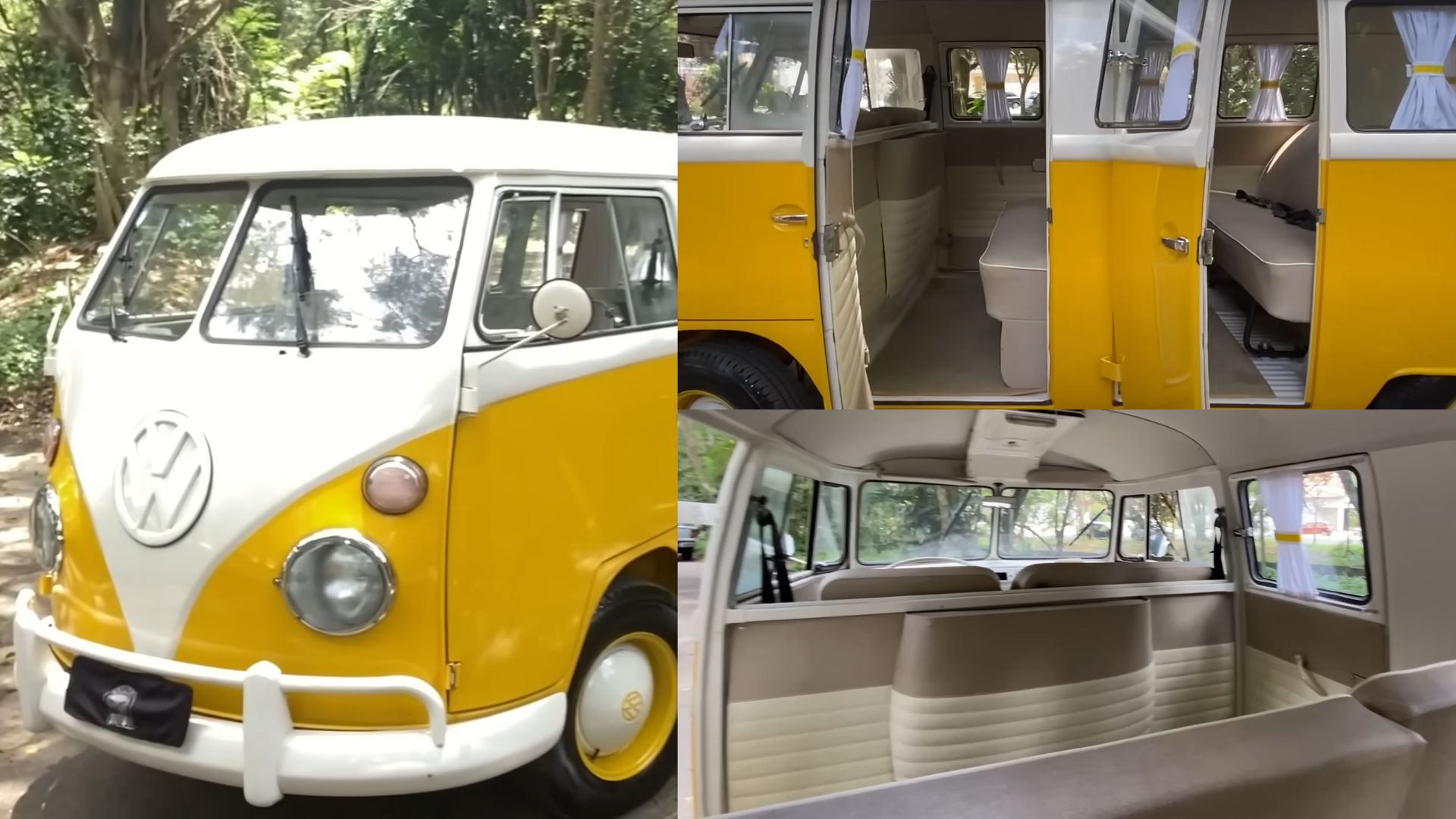
The Six-Door Version of the Kombi, Created Exclusively in Brazil, Became a Rare Vehicle by Uniting Dual Side Doors, a Resistant Engine, and a Design Thought Out for Passenger Transport in Airports, Taxis, and School Services.
The Six-Door Kombi, exclusive to the Brazilian market, was born to facilitate boarding and disembarking in passenger transportation operations — including at airports — and became a rarity after a limited production.
With dual doors on both sides and the reputation of the air-cooled boxer engine, the model served taxis, school services, and corporate fleets, playing a discreet yet significant role in the country’s mobility framework.
Origin of the Project and Arrival in Brazil
The genesis of the Kombi dates back to the post-war period.
-
Two new 300cc models from QJ Motor are expected to arrive in Brazil as SBM to target the CB 300F and shake up the low-displacement market, with more power and liquid cooling than Honda.

-
Camaro may reappear in 2027, but not as you remember: Chevrolet prepares the return of the icon with four doors, manual transmission, and an extreme performance version to face the new era of sports cars.

-
Is the BYD Song Pro worth it? The Anderson Sincero channel says it doesn’t exceed R$ 140,000, and the price dropped by R$ 47,000, reinforcing the depreciation of the plug-in hybrid in the Fipe table.
-
Caoa Changan CS75 arrives for R$ 199,990 with 4.77 m in length, a trunk of up to 1,620 liters, 8-speed Aisin transmission, 180 hp, 37.2 inches in screens, and Zero Gravity seat with massage.


The concept of the utility vehicle was sketched on April 23, 1947 by Dutch businessman Ben Pon, then an importer of Volkswagen.

Series production began in 1950 in Germany, and, a few years later, the model was already present on Brazilian streets.
In Brazil, the industrial history of the Kombi has an inaugural chapter. Assembly began in 1953 in the Ipiranga neighborhood of São Paulo, with imported kits.
On September 2, 1957, Volkswagen began national production at the Anchieta Factory in São Bernardo do Campo, with 50% local content.
It was the first vehicle manufactured by the brand in the country. The Beetle would start being produced here from 1959, consolidating the expansion of the Brazilian operation.
Why Six Doors?
The proposal for the 6-door version was pragmatic: access from both sides to speed up passenger flow during quick stops.
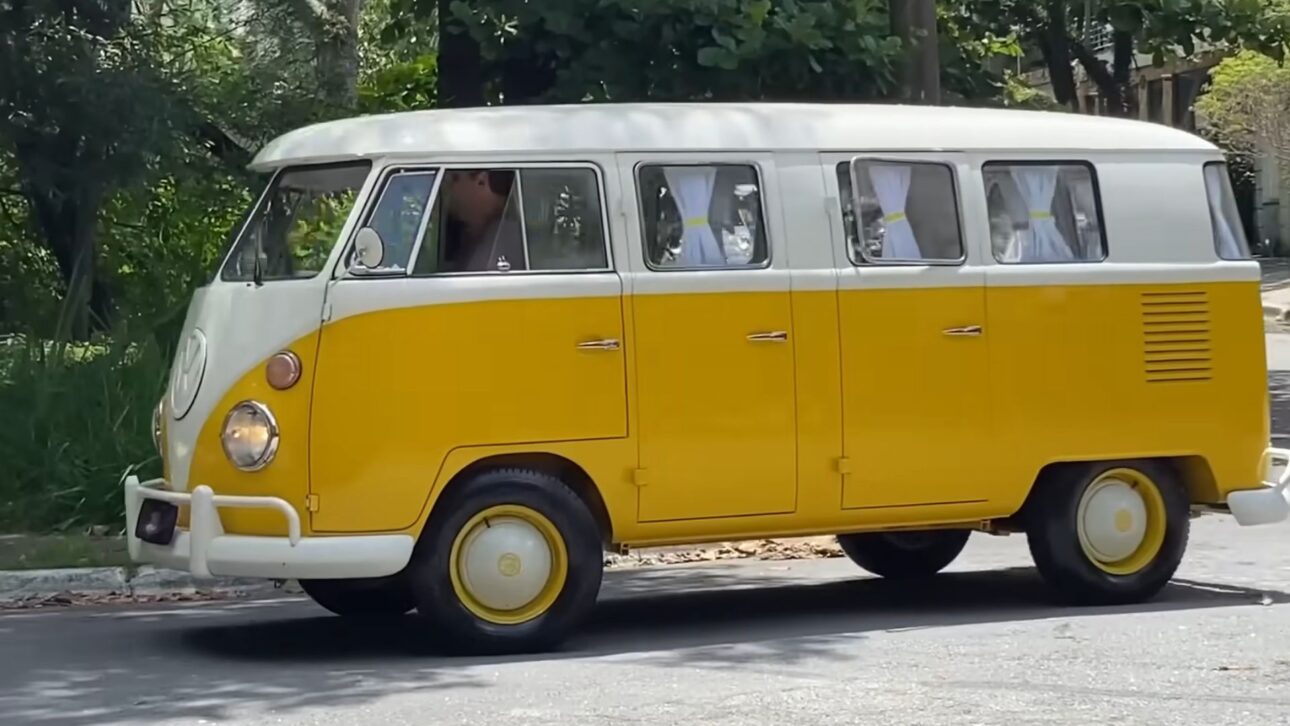
Instead of just one side opening, the body featured a pair of doors on each side, in addition to the two front doors, totaling six.
This solution facilitated boarding by row of seats and reduced maneuvers in tight spaces, something valuable in urban transport and airport yards.
According to period records and specialized publications, the 6-door Kombi appeared in the early 1960s as a derivative of the passenger configuration.
The idea was to serve taxis, shared rides, schools, and companies that demanded agile boarding.
Although production was small, the configuration remained in the catalog for years and survived generational changes in the Brazilian market.
Simple, Robust, and Nationalized Mechanics
The mechanical base retained the well-known air-cooled four-cylinder boxer, a motor known for its simple maintenance and recognized durability, which fueled its reputation of being “unbreakable” among fleet operators.
Initially, the 6-door model used the 1.200 cm³ engine, the same as other Kombis at the time. With the evolution of the line, it gained the 1.500 cm³ engine in 1967, improving its performance.
From 1975 onwards, already in the phase with a modernized front, it offered the 1.600 cm³ engine.
These updates accompanied the process of nationalization of components and the maturation of local engineering.
The architecture with a rear engine and rear-wheel drive, combined with the monocoque body design, provided robustness for intensive use.
At the same time, the access through three openings on each side — counting the front door and the set of dual side doors — contributed to the versatility in high passenger turnover applications.
Use in Airports and Transport Services
The airport environment was one of the natural destinations for the 6-door model.
With mirrored doors on both sides, the Kombi served short routes within the yard, transferring crews and passengers between terminals and aircraft, in order to minimize stop time.
In urban and school lines, the logic was similar: reducing time at each stop and organizing flow by rows, something facilitated by the multiple access points.
Although the iconographic and archival references about this use are largely dispersed and sporadic, they converge on the frequent use of the 6-door model in support operations and corporate fleets.
The set of functional characteristics — symmetrical doors, simple interior, and durable mechanics — explains why this configuration has been remembered by those who worked with light collective transport over the decades.

Between the “Owl” and the Modernized Front
Brazil maintained project specificities when updating the Kombi.
In the second half of the 1970s, the national model adopted a front with more modern lines, but retained the sides with dual doors in certain versions.
In this arrangement, the 6-door model continued to be sold at least until the end of the 1970s, although the available factory documentation for the public is not unanimous regarding the last year of production.
In any case, the concept that originated it — quick and bilateral access — remained a differential while it was in the catalog.
Rarity and Preservation
Due to having been produced in limited numbers and primarily intended for operational fleets, many units were intensely used and, over time, disappeared.
Finding an intact 6-door Kombi today is uncommon.
Preserved or restored examples usually appear at vintage meetings and specialized collections.
The growing interest in historic commercial vehicles has driven research and recoveries, helping to reconstruct the trajectory of this typically Brazilian configuration.
Legacy of a Brazilian Utility Vehicle
The Kombi ended its production in Brazil in 2013, after more than half a century of history, and the 6-door model remains a symbol of local adaptation to specific mobility needs.
It combines simple engineering, enhanced accessibility, and a layout solution that aligns with the real operation of those transporting people and cargo in challenging environments.
Given so much history and so few survivors, what memory or record of the 6-door Kombi would you like to see preserved for future generations?


-

-

-

-

8 people reacted to this.