






 Portuguese
  Spanish


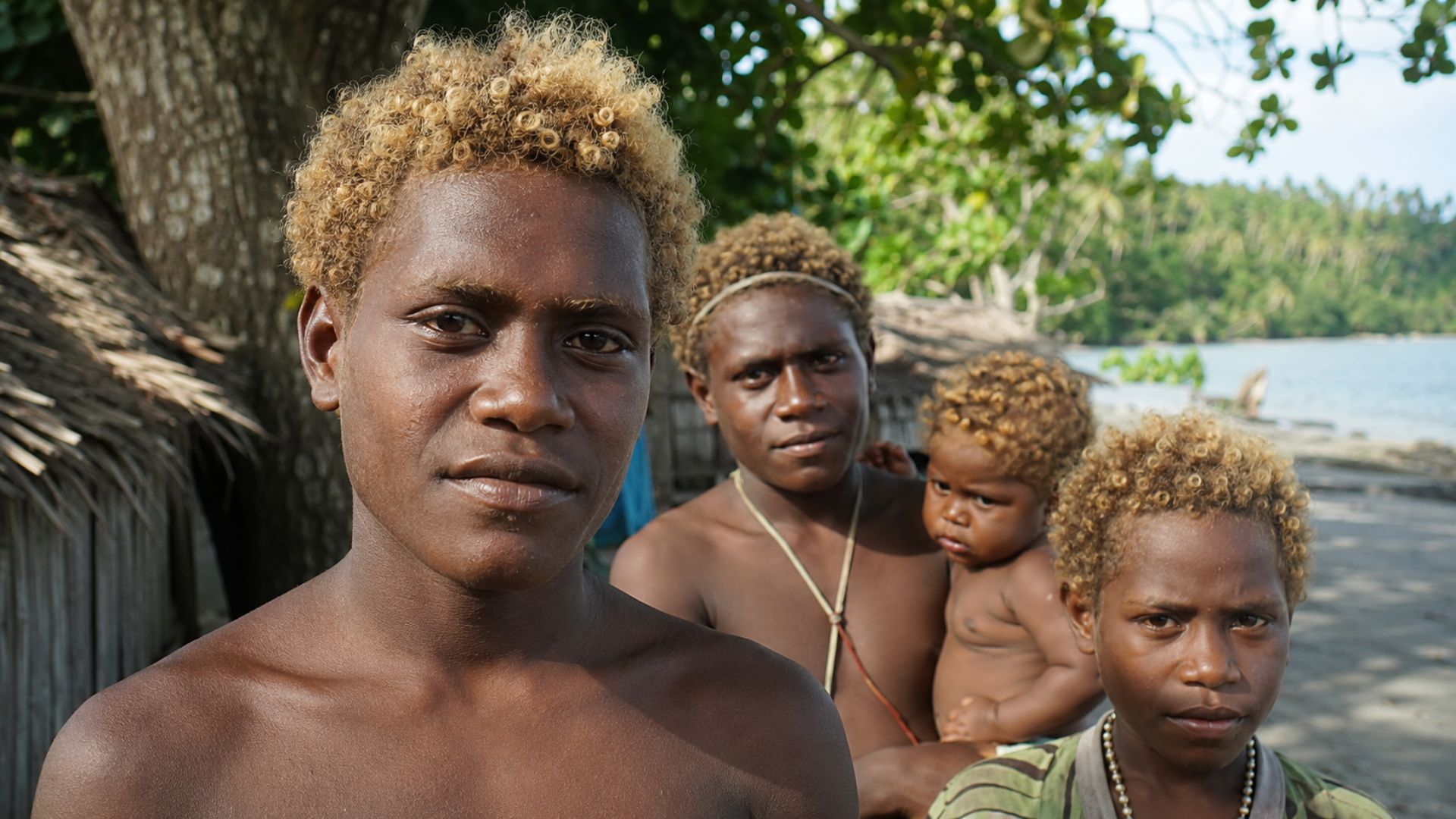


For years, the blonde hair of Melanesians was credited to European colonizers or a diet of fish and sun. But a study, published on the Dutch Portal, debunked both explanations and showed that the color comes from a unique genetic mutation, the exchange of a single amino acid, in a rare case of convergent evolution.
In the middle of the Pacific, a people carry a combination that seems contradictory. The Melanesians of the Solomon Islands have dark skin and, at the same time, natural blonde hair, something that very few groups in the world are born with. The image surprises those who see it for the first time.
For a long time, this blonde was attributed to European colonizers or a diet of fish and sun. But a study, published more than a decade ago, pointed to another origin. The color comes from a unique genetic mutation of the Melanesians, which scientists described as a case of convergent evolution.
Dark skin and blonde hair, the mark of the Melanesians
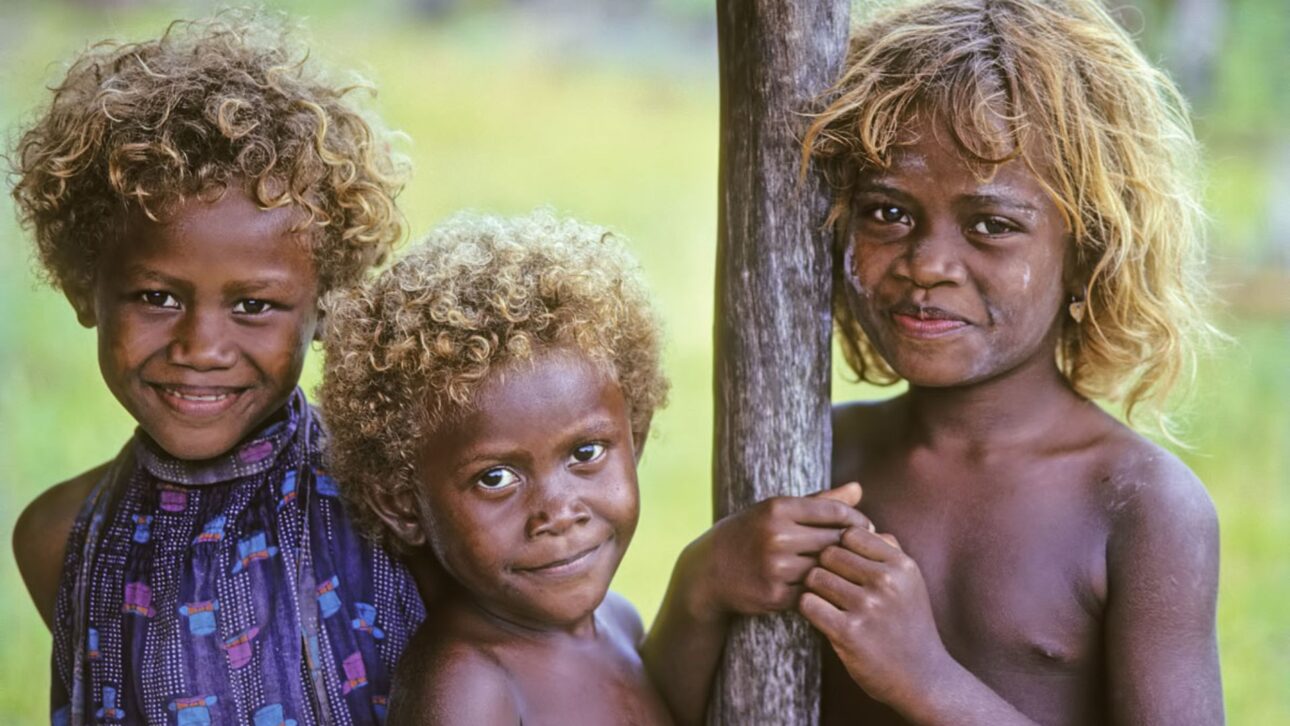
The Solomon Islands form an archipelago of thousands of islands, in Oceania, with more than half a million inhabitants.
-
Man Converts Water Tank into $20,000 Luxury Boat, DIY Video Reaches 571,000 Views on World Tech Channel

-
Inventor Builds Amphibious Vehicle with Kayak and Electric Motors, Gains 223,000 Views on Quiet Nerd Channel
-
Former Yale Hospital Cleaner Returns as Resident Doctor After a Decade; Shay Taylor-Allen Transitions from Janitorial Duties to Medical Practice

-
Microsoft Submerges 855 Computers in Nitrogen-Filled Capsule 35 Meters Under the Scottish Sea, Records Eight Times Fewer Failures Than on Land After Two Years




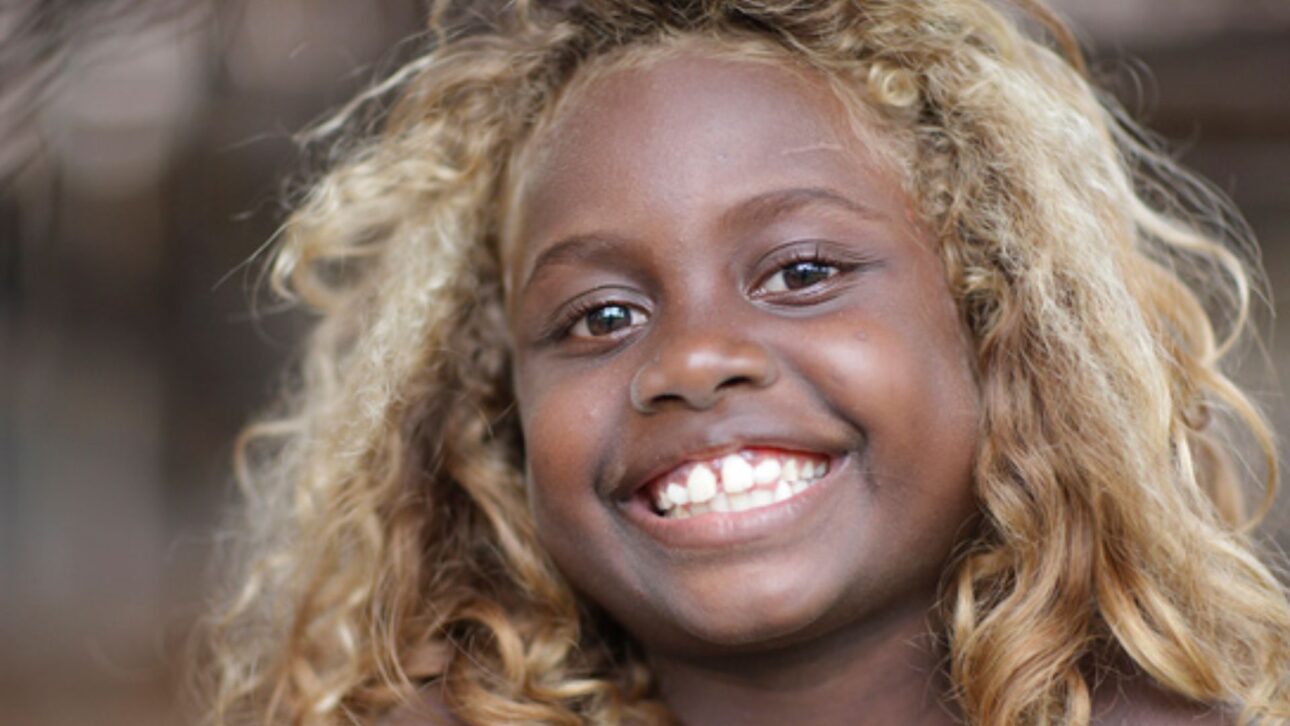
It is there that the Melanesians live, a people with a physical characteristic that draws attention worldwide.
Dark skin and blonde hair, at the same time, and naturally.
The combination is rare outside populations of European origin, and for this reason, the Melanesians are among the very few peoples on the planet to naturally possess these two traits.
For a long time, this left geneticists with more questions than answers.
The theories that tried to explain the blonde, and failed
Many attributed the light hair to the heritage of Europeans who passed through the region, especially British, Germans, and Australians.
History even supported this view, as several islands were under German rule in the 19th century, and in 1893 the United Kingdom turned the Solomon Islands into a protectorate, with British and Australian companies expanding coconut cultivation soon after.
The Melanesians themselves never bought this version.
For years, they argued that the blonde came from a diet rich in fish and constant exposure to the sun.
In the end, neither explanation held up. Neither European blood nor the diet, the true answer was elsewhere.
The answer was in the genes of the Melanesians themselves
A study solved the puzzle by looking at the DNA.
The discovery is impressive in its simplicity, because it all comes down to the exchange of a single amino acid in a protein, with arginine being replaced by cysteine.
This tiny change in the genetic code is what separates dark hair from blonde in this population.
And it is not an imported gene, it is theirs.
According to the study, about a quarter of the inhabitants of the Solomon Islands carry this variant, which is recessive, meaning the blonde only appears when the child inherits the mutation from both the father and the mother.
Researcher Myles called the case “convergent evolution,” the same result achieved by a completely different genetic path from the European one.
Anthropologist Jonathan Friedlaender, from Temple University, explained that the mutation probably arose by chance in a single person and spread because the original population of the islands was small.
An ancestry that comes from far away


The research did not stop at the hair.
She also looked into the origins of the Melanesian people and found something curious in this group’s prehistoric past.
While practically all humans who left Africa carry genes inherited from Neanderthals, Melanesians have a slightly different ancestry.
The kinship here is with the Denisovans.
It is believed that these people have heritage from interbreeding with the Denisovan hominid, a distant cousin of the Neanderthals, which left a particular genetic set in the inhabitants of the islands.
But pay attention to one detail.
This ancestry helps explain what makes Melanesians genetically distinct, while the blonde hair itself comes from the specific mutation described by the study.
In the end, the story of the Melanesians is less about mystery and more about identity.
The blonde hair that intrigued outsiders so much was not a gift from colonizers nor an effect of diet, but rather a genetic mark that the people of the Solomon Islands carry on their own, over generations.
Science only needed time to see what was written in the DNA.
And you, had you heard about the Melanesians and this combination of dark skin with blonde hair? Do you know of another similar case around the world? Tell us in the comments, with respect for differences and the diversity of peoples, and share this article with those who like genetics and curiosities about humanity.


