






 Portuguese
  Spanish


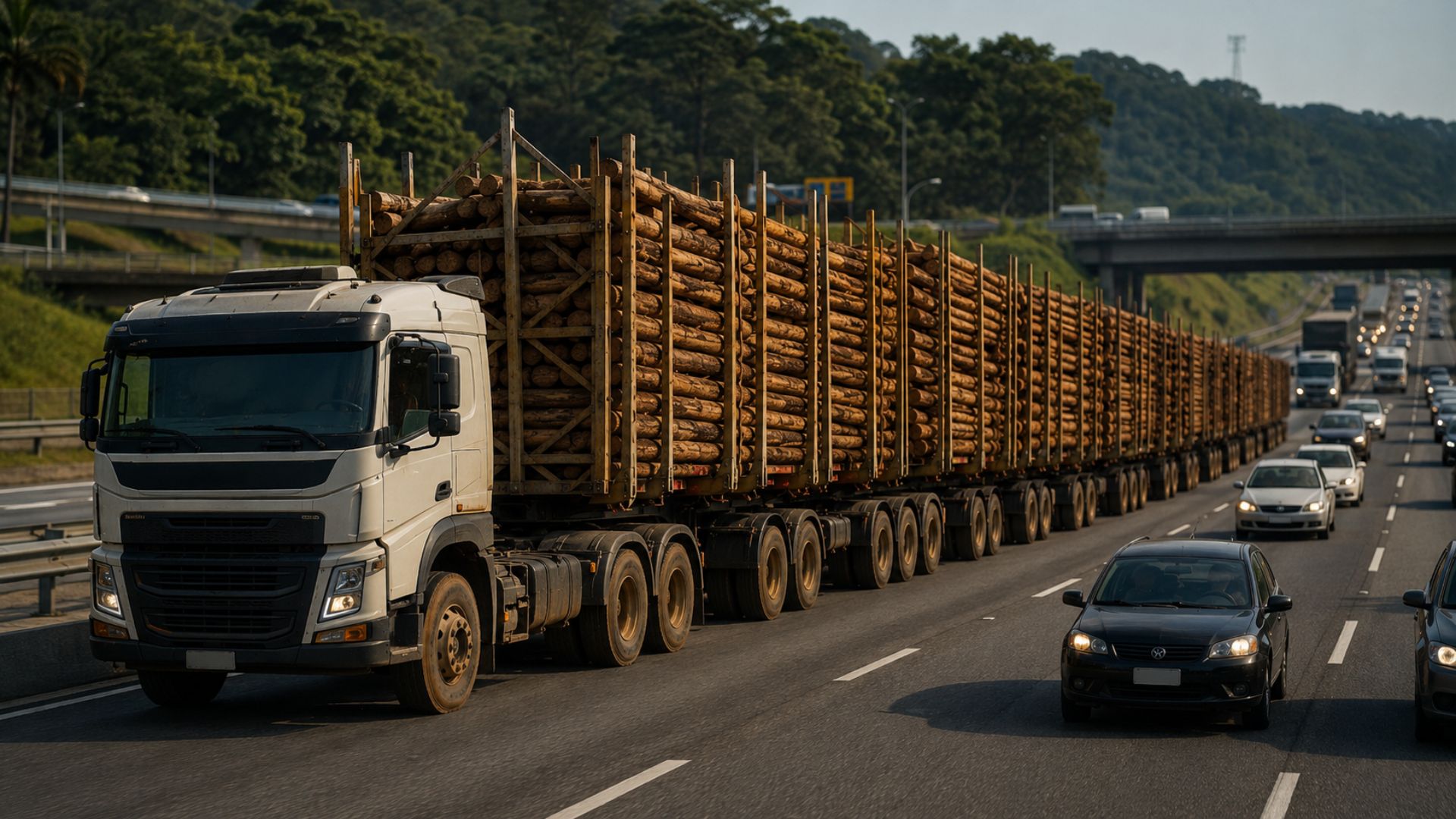

Called hexatrem, the approximately 52-meter set is not hidden, it just runs on Suzano’s private roads. The Volvo FMX truck pulls six semi-trailers, totaling up to 200 tons and replacing 35 smaller vehicles, with increased productivity and fewer emissions within the eucalyptus farms.
A 540-horsepower Volvo FMX truck pulling six trailers loaded with eucalyptus logs, weighing up to 200 tons and about 52 meters long, is at the center of an operation that Suzano maintains within its own farms. Called hexatrem, the set began regular operation in December 2019, at the Três Lagoas unit in Mato Grosso do Sul, and later began operating in the Mucuri forests, in the far south of Bahia. There are 19 compositions of this type working in the state of Mato Grosso do Sul.
The reason these machines do not appear on the roads is not a secret, but a matter of law. The Brazilian legislation requires special authorization for combinations above 74 tons of gross combined weight, and no current rule comes close to allowing 200 tons on public highways. Therefore, the truck and its trailers circulate only on private reforestation roads, where they replaced 35 smaller vehicles and gained efficiency.
What is the hexatrem and why does the truck stay away from highways
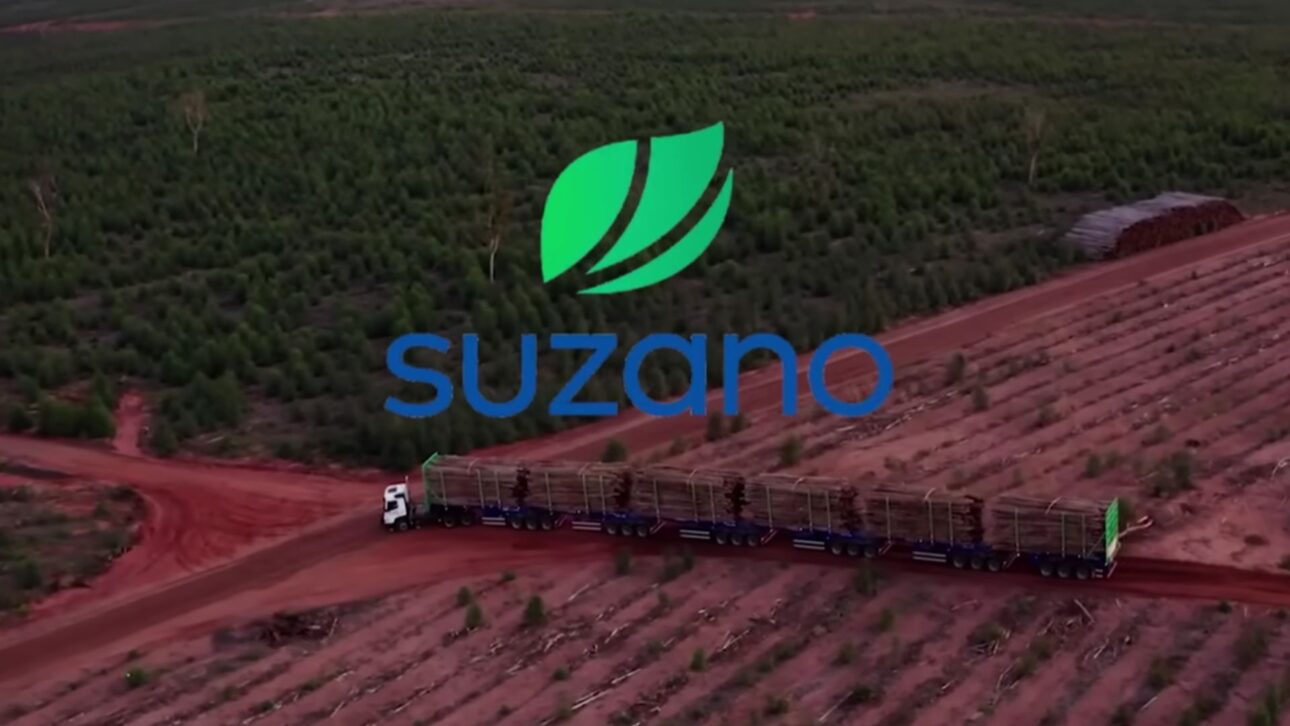
It is a Volvo FMX truck pulling six semi-trailers, developed by the implement manufacturer Facchini, in a composition of about 52 meters, equivalent to approximately half a football field, capable of carrying up to 200 tons of eucalyptus logs per trip.
-
70-Year-Old Brazilian Dentist Fulfills 20-Year Dream by Visiting Seven of the World’s Highest Peaks in the Himalayas

-
Heatwave in Europe Causes Drownings: France Reports 40 Victims as Temperatures Soar to 40°C, Experts Issue Surprising Warning
-
French Solar Mirror Array Concentrates Sunlight 16,000 Times, Reaching Temperatures Over 3,000°C

-
Brazil to Use Reinforced Concrete in $200.4 Million Mega Roundabout Project with Four Overpasses and Expanded Bridge, Set to Last 630 Days



The operation runs exclusively within Suzano’s farms, in Três Lagoas, Mato Grosso do Sul, and also in Mucuri, Bahia.
The restriction to private areas is a legal imposition, not a smokescreen.
In Brazil, vehicle combinations with a total combined gross weight above 74 tons can only circulate on public roads with a Special Transit Authorization, and even the exceptions fall far short of the 200 tons of the hexatrem.
Resolution No. 872, of 2021, from the National Traffic Council, for example, allowed combinations of up to 91 tons only for the transportation of sugarcane, and even then with authorization.
Since the hexatrem more than doubles this limit, it cannot set foot on public asphalt.
The engineering of the truck that hauls 200 tons
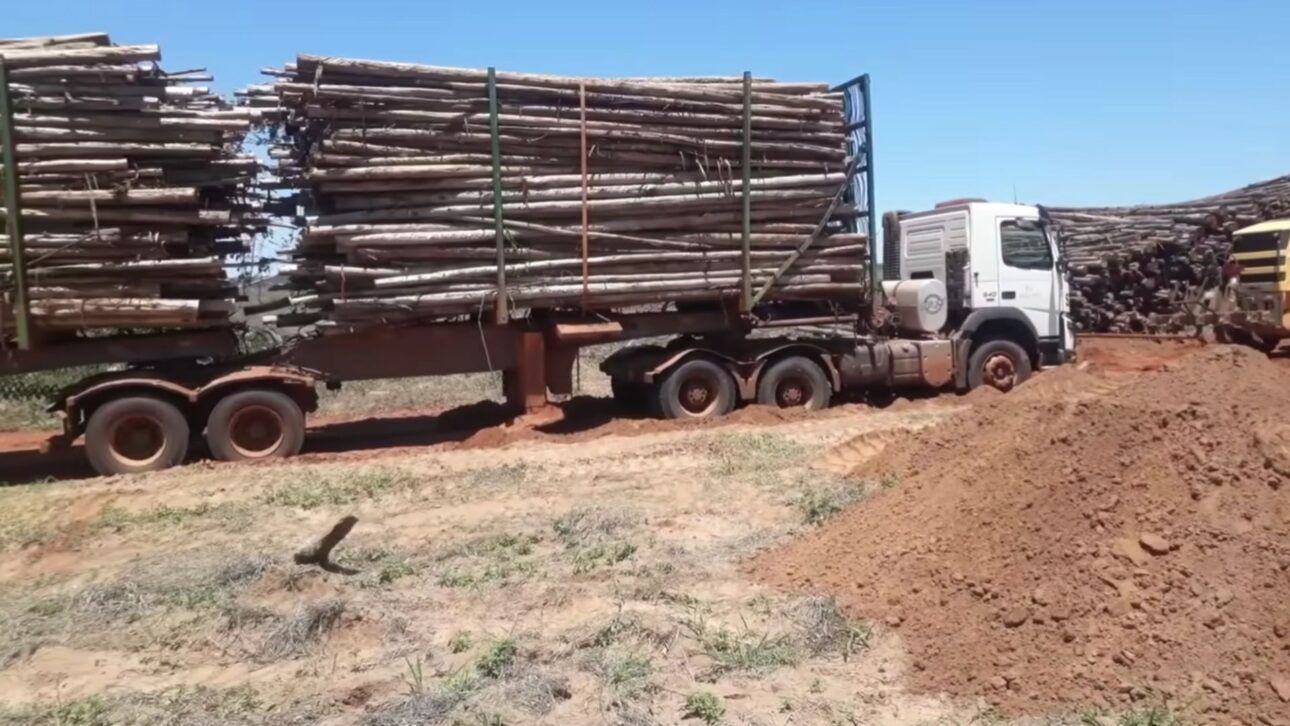
The Volvo FMX used by Suzano is equipped with the Volvo D13 engine, six cylinders, 540 horsepower, and 2,600 Nm of torque, managed by a 14-speed automated I-Shift transmission, with two ultra-low gears to facilitate the start of heavy compositions on uneven ground and slopes within farms.
The chassis also received specific reinforcements for the task.
According to Volvo, the truck features a double frame throughout, a rear axle with hub reduction, a cast axle housing, and a more resistant driveshaft, a set designed for severe off-road operations.
Despite its rugged vocation, the FMX maintains comfort items of a road truck, such as pneumatic suspension, air conditioning, cruise control, and an onboard computer.
From tritrem to hexatrem, the leap in productivity
The hexatrem is the most advanced point of an evolution in wood transportation.
Before it, the same type of truck hauled the tritrem, with three semi-trailers, and then the pentatrem, with five, which already carried 79% more eucalyptus logs than the tritrem.
With six semi-trailers and up to 200 tons, the hexatrem delivers a productivity gain of 127% compared to the tritrem and 27% compared to the pentatrem, according to Volvo and Suzano.
The practical result appears in the fleet and consumption.
The arrival of the 19 hexatrems allowed the operation of 35 tritrems to be closed, which means fewer trucks running, less fuel burned, and fewer emissions.
According to Suzano’s data, diesel consumption per cubic meter transported fell by 21.5% compared to the tritrem, and for every 1 million cubic meters moved, there is a reduction of about 600 tons of CO2 equivalent.
The company even built, in 2017, a tunnel under the BR-158 highway to connect planting areas without using the public road.
The scale of Suzano and the sector behind the truck


The investment in this type of truck is explained by the size of the operation it supports.
Suzano is the world’s largest producer of short fiber pulp, made from eucalyptus, and has a capacity for about 13.4 million tons of pulp and 2 million tons of paper per year, with products present in over 100 countries.
Just the Mucuri unit, in Bahia, where the hexatrains began to operate, produces about 1.7 million tons of pulp and 250 thousand tons of paper per year.
The sector as a whole has significant weight in the Brazilian economy.
According to the Brazilian Tree Industry, IBÁ, the cultivated trees segment had gross revenue around R$ 240 billion in 2024 and accounts for more than 700 thousand direct jobs and over 2 million direct and indirect positions.
Brazil is the world’s largest exporter of pulp and the second-largest producer, only behind the United States, which helps to understand why each gain in efficiency in eucalyptus transport matters so much.
The hexatrem shows that the importance of this truck lies less in the spectacle and more in the engineering and logistics.
A Volvo FMX with 540 horsepower towing 200 tons in six trailers on internal eucalyptus roads is not a hidden machine, but a practical response to a legal limit and a need for productivity.
It removes dozens of trucks from the roads, reduces costs and emissions, and supports one of the largest pulp operations on the planet.
And you, had you heard of the hexatrem or imagined that a single truck could pull 200 tons of eucalyptus in Brazil? Do you think such heavy combinations should one day gain regulated space on specific highways, or is it better that they remain restricted to private areas? Leave your opinion in the comments, respecting different opinions, and share this article with those who enjoy engineering and heavy transport.


