Portuguese
  Spanish


French project reuses treated wastewater to reinforce public reservoirs, while legal differences show why this solution still progresses at different rates in Europe, especially when the final destination involves human supply and strict sanitary control.
In the French region of Vendée, the Jourdain program tests an alternative to reinforce reservoirs used in the production of drinking water by reusing treated wastewater.
The initiative is conducted by Vendée Eau and recovers part of the water that would leave the Sables-d’Olonne treatment plant, before sending it to an additional purification stage.
After this process, the water travels through an underground pipeline to the Jaunay region, where it passes through a vegetated area before reaching the retention used for public supply.
-
Creative Uses for Toilet Paper Rolls That Will Change Your Perspective

-
Crab Trapped in Plastic Bottle for 62 Days Near Okinawa Highlights Little-Known Impact of Marine Pollution on Small Animals
-
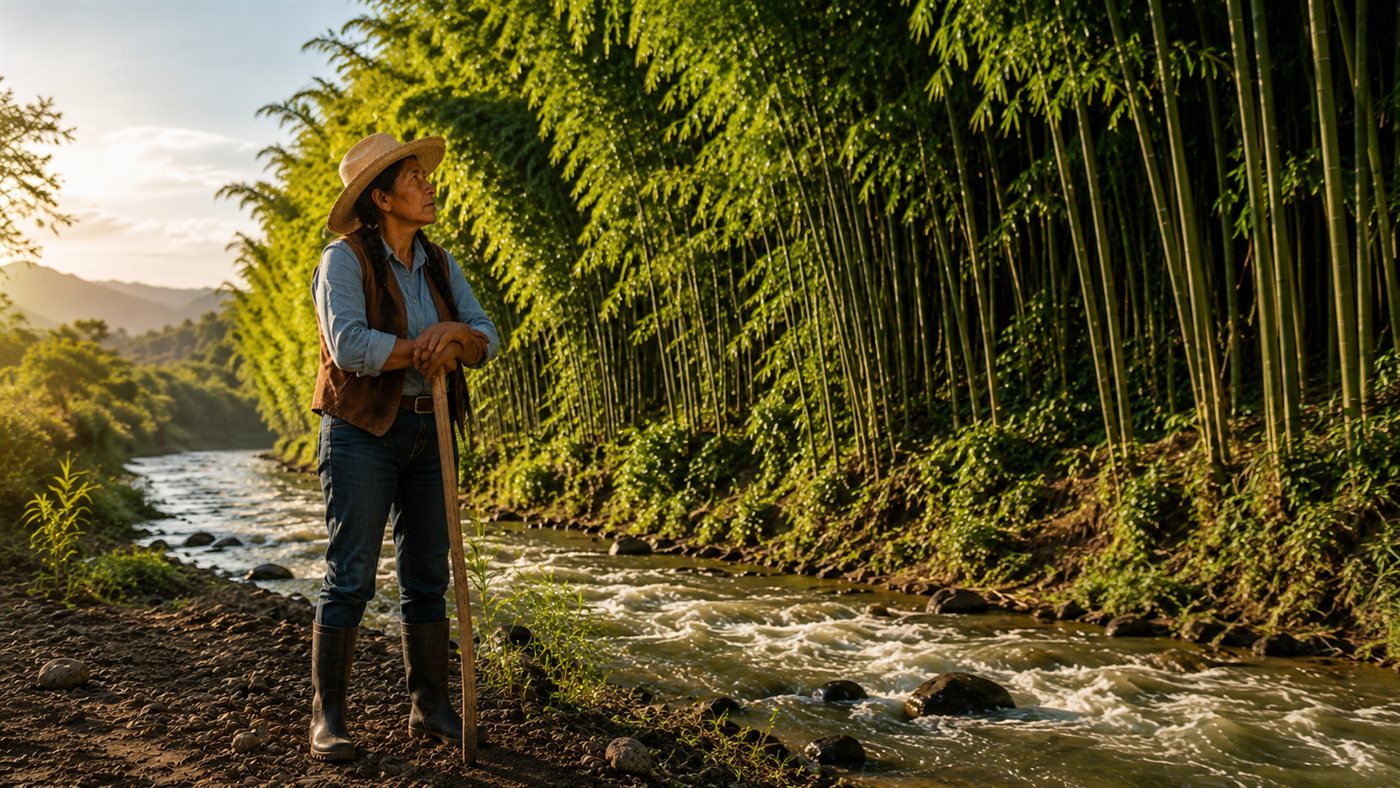
Esperanza’s Bamboo Barrier in Oaxaca Redirects River and Reduces Erosion by 85% in Five Years

-
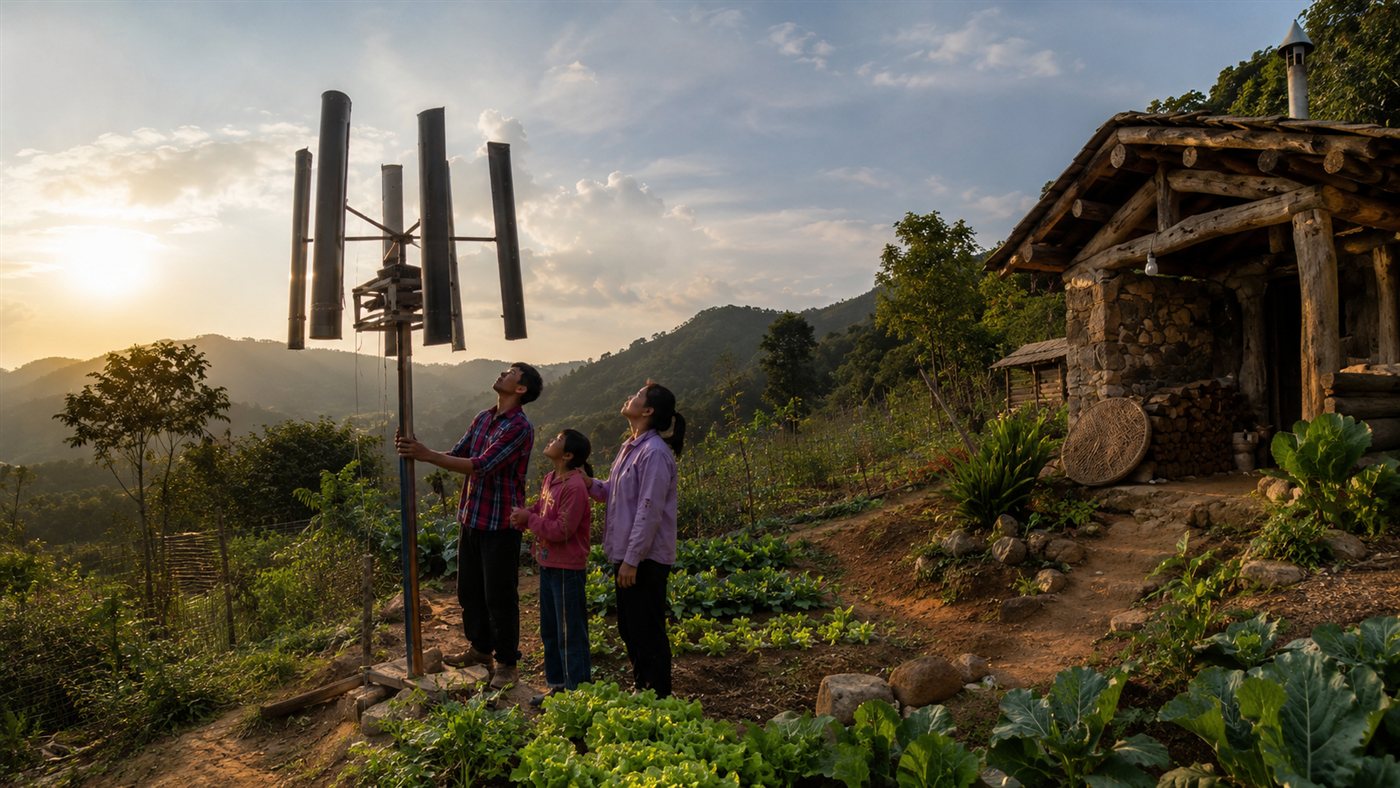
Family Builds Homemade Wind Turbine to Power Off-Grid Home, Video Reaches 555,000 Views on Ngô Thị Huyền’s Channel


The model gained prominence for proposing indirect reuse, where the regenerated water does not go directly to the taps and still goes through environmental stages and conventional treatment.
The proposal seeks to reduce pressure on supply in a coastal area marked by intense tourism in the summer, population growth, and greater vulnerability during drought periods.
According to Vendée Eau, about nine out of ten liters of drinking water consumed in the department come from surface waters, such as reservoirs and dams.
How the Jourdain program works
Unlike the idea of immediate conversion of sewage into drinking water, the French system works with a longer and controlled circuit to reduce sanitary risks.
The already treated wastewater is captured at the exit of the Sables-d’Olonne station, before being discarded into the sea, and goes to an advanced treatment unit.
In this facility, the liquid undergoes purification processes aimed at removing particles, microorganisms, and chemical residues before being transported to the Jaunay retention.
The Loire-Bretagne Water Agency describes the project as a way to recover treated effluents that would be discharged into the ocean and transform them into a complementary resource for supply.
After the technical stage, the water travels through 27 kilometers of underground pipeline to a vegetated area, where an environmental transition occurs before mixing with the reservoir.
Only after this phase does the water integrate into the surface retention, which supplies the plant responsible for the final treatment of water intended for human consumption.
Four purification barriers before the reservoir
The safety of the Jourdain program depends on a sequence of physical, chemical, and microbiological barriers installed before the water reaches the natural transition environment.
According to Vendée Eau, the advanced treatment combines ultrafiltration, low-pressure reverse osmosis, ultraviolet disinfection, and chlorination to reduce different types of contamination.
These procedures aim to act on particles, bacteria, viruses, pesticides, PFAS, and pharmaceutical residues that may remain in wastewater after conventional treatment.
In the experimental phase, the facility treats about 25% of the water discarded by the Sables-d’Olonne station, a volume corresponding to approximately 150 cubic meters per hour.
The health assessment of the project also passed through Anses, the French health safety agency, which analyzed the use of treated wastewater to feed a retention intended for potable water production.
In the opinion, Anses describes the system as an experimental demonstrator and details the capture, transportation through underground piping, passage through the vegetated area, and entry into the reservoir.
Why Vendée became a laboratory for regenerated water
The choice of Vendée is linked to the dependence on surface waters and the need to reinforce supply in a region subject to variations in rainfall and seasonal increases in demand.
In the months of higher tourist activity, water consumption increases precisely during a period when availability may be more pressured by heat and drought.
This scenario led Vendée Eau to structure Jourdain as a complementary solution, without fully replacing dams, rivers, or other traditional supply sources.
The program was designed to advance gradually, with stages of study, implementation, real operation tests, and evaluation of environmental, health, and social impacts.
The project’s institutional presentation itself indicates development over several years, with an experimental phase before any broader expansion of treatment capacity.
Therefore, Jourdain should not be presented as a universally implemented solution, but as a real-scale experience aimed at regional water security.
Differences between France and Spain in the use of regenerated water
While France tests indirect reuse to reinforce reservoirs linked to human supply, Spain maintains more restrictive rules for this type of application.
The Royal Decree 1085/2024, published in October 2024, approved the Spanish regulation on water reuse and reorganized the use of reclaimed water in the country.
The Ministry for the Ecological Transition of Spain reports that the regulation governs reclaimed water from urban and industrial stations for 28 uses, grouped into urban, agricultural, industrial, and other categories.
Despite expanding reuse in different sectors, the Spanish framework did not transform reclaimed water into a common source for direct human consumption under normal conditions.
Spanish legislation provides for quality criteria and risk management plans, but remains cautious when the destination involves human ingestion and direct public supply.
This regulatory framework helps explain why Spain, even with strong experience in agricultural and industrial reuse, advances with more limits in the debate on water for consumption.
Droughts accelerate the European debate on water reuse
The discussion gained momentum because water scarcity pressures European governments to seek complementary sources, especially in coastal areas where treated effluents are still discarded into the sea.
In the European Union, Regulation 2020/741 establishes minimum requirements for water reuse, focusing on the use of treated urban wastewater for agricultural irrigation.
Although the European framework helps standardize safety criteria, each country maintains the margin to define uses, limits, and procedures compatible with its national legislation.
In this context, the French case draws attention for combining industrial technology, environmental stage, and conventional potable water treatment in a unique indirect supply chain.
The experience of Vendée also shows that the acceptance of this type of solution depends on technical control, regulatory transparency, and clear communication about each stage of the process.
In practice, projects like Jourdain attempt to demonstrate that reclaimed water can reinforce reservoirs under rigorous monitoring, while countries like Spain preserve legal limits for uses considered more sensitive.
Sources: https://www.vendee-eau.fr/programme-jourdain/
Sources: https://www.anses.fr/system/files/EAUX2023SA0037.pdf
Sources: https://www.boe.es/buscar/act.php?id=BOE-A-2024-21701
Sources: https://eur-lex.europa.eu/eli/reg/2020/741/oj/eng