






 Portuguese
  Spanish
  4 min of reading
  0 comments


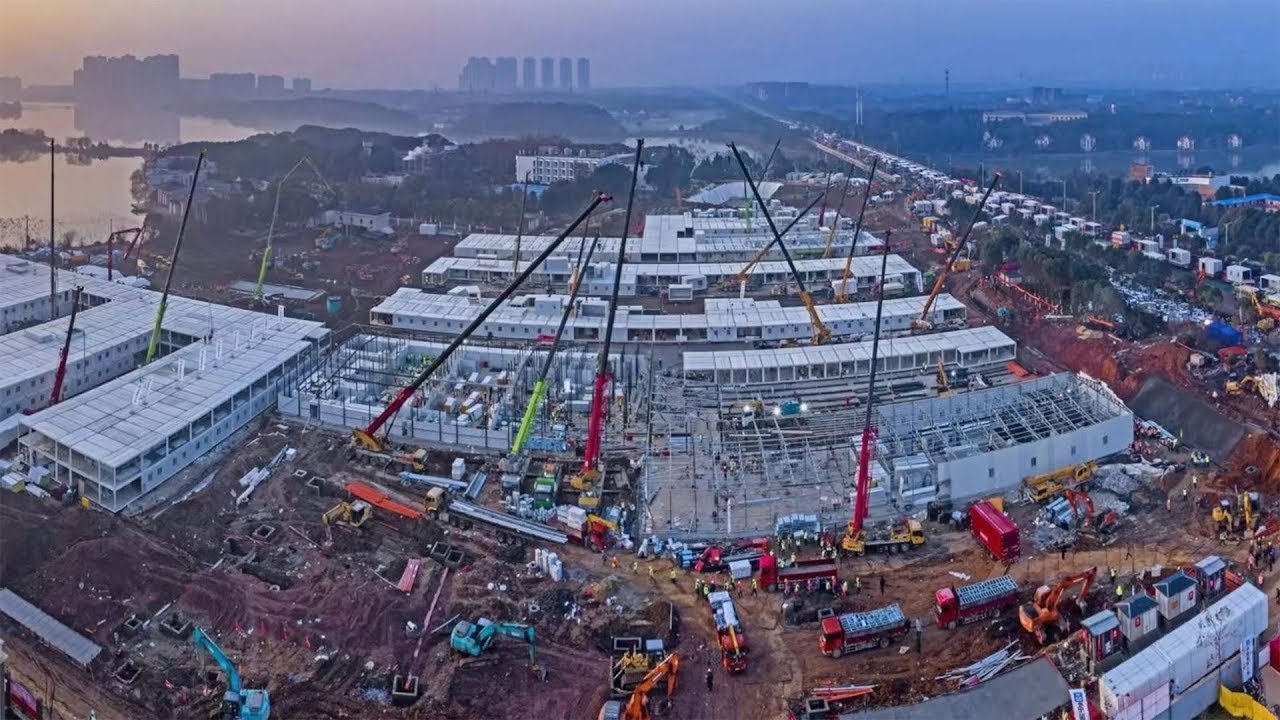
China built a hospital with 1,000 beds in just 10 days during the pandemic, using prefabrication, 7 thousand workers, and 24-hour continuous operation.
On January 23, 2020, Wuhan, a city of about 11 million inhabitants in central China, went into total lockdown. No one entered, no one left. An unknown virus spread faster than the hospitals’ capacity to treat patients. Beds were exhausted, hallways crowded, and patients waited for care outside health units. In light of this scenario, the Chinese government announced an unprecedented decision: to build a complete hospital from scratch in just 10 days. It was not an improvised structure. Huoshenshan Hospital was designed with 1,000 beds, 30 intensive care units, a negative pressure ventilation system, a medical oxygen network, sewage treatment, and remote connection to military hospitals in Beijing.
Construction began on the night of January 23, was completed on February 2, and received its first patient on February 3, 2020.
Hospital design was based on a model used during the SARS epidemic in 2003
Huoshenshan Hospital was not developed from scratch. Its design was adapted from Xiaotangshan Hospital, built in Beijing in 2003 during the SARS epidemic.
-
To halt the advance of the Sahara, the 8,000 km Great Green Wall in the Sahel relies on reforestation to combat desertification, but by 2026 it remains far behind the goal of 100 million hectares.

-
Long before sustainable construction became a trend, China built earthen fortresses with multiple floors, a central courtyard, and the capacity to house up to 800 people living in a community.

-
While in the rest of the world building a hospital takes years from design to inauguration, China erected the Huoshenshan Hospital from scratch in just 10 days, with 1,000 beds, foundation, structure, electrical installations, plumbing, and oxygen system ready to receive patients, mobilizing 7,000 workers.

-
Without mortar, grout, or traditional construction: the ClickBrick system assembles brick facades with ceramic pieces held by metal clips, eliminating the need for glue, speeding up installation, and even allowing everything to be dismantled later without turning the construction into expensive permanent debris.


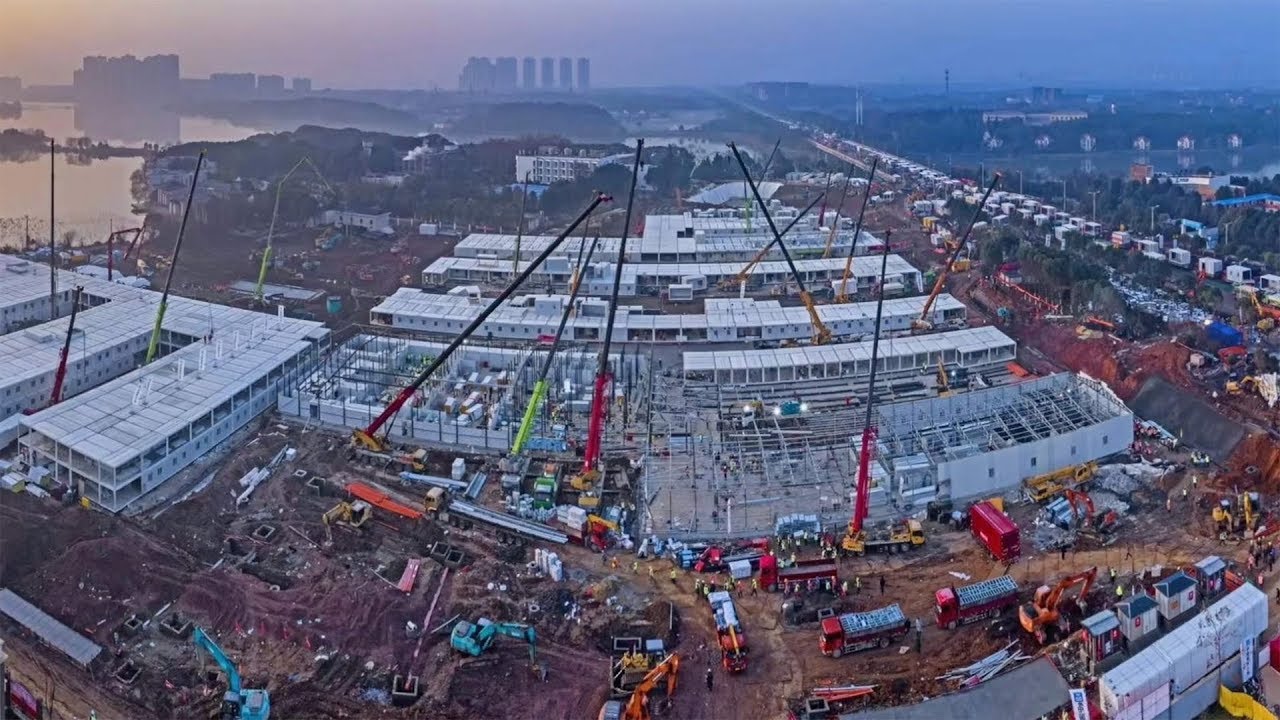



The original project was located in government archives in less than 78 minutes and delivered to an engineering team in Wuhan. In just 24 hours, the plan was adapted to the new site, and in about 60 hours, the technical drawings were finalized.
This factor was decisive for the speed of construction, demonstrating that rapid building was the result of prior planning and the reuse of tested solutions.
Construction began with immediate mobilization of heavy machinery and site preparation
On the night of January 23, dozens of excavators, tractors, and bulldozers began leveling the ground.
More than 35 excavators and 10 bulldozers worked simultaneously in the first hours. The soil was compacted and prepared to receive foundations with layers of waterproofing, concrete, and sewage systems already integrated into the base. The simultaneous execution of multiple stages was key to reducing the total construction time.
Modular system with prefabricated structures allowed accelerated assembly of the hospital
The hospital was set up using pre-fabricated modules of approximately 10 square meters. Each unit arrived already equipped with electrical, hydraulic, and ventilation systems, allowing for quick assembly using cranes.
The modules were positioned on elevated pillars, creating a technical space for the passage of pipes and ventilation systems.
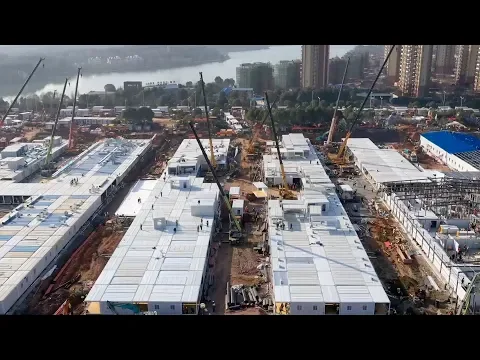
This solution also functioned as a sanitary barrier, preventing direct soil contamination.
Construction mobilized 7,000 workers in continuous 24-hour shifts without interruption
The construction of Huoshenshan involved up to 7,000 workers operating continuously. The workers were organized into uninterrupted shifts, allowing the work to progress 24 hours a day. Machines operated constantly, and industrial lights ensured visibility during the night.
This massive mobilization was one of the determining factors for the record completion time.
Accelerated schedule allowed for complete hospital completion in just 10 days
The construction schedule was executed with extreme precision. The ground was leveled on the first day, foundations began on the second, and modules started to be installed from the fifth day. On the tenth day, the construction was completed and handed over to the People’s Liberation Army.
The next day, the hospital was already operational, receiving patients. Each room in the hospital was equipped with a negative pressure system, a technology used in high biosafety environments.
This system prevents contaminated air from leaving the rooms, ensuring that microorganisms remain confined and are filtered before being released.
The implementation of this system on a large scale was one of the main technical challenges of the project.
Live broadcast of the construction attracted over 110 million views in China
The construction of the hospital was broadcast live 24 hours a day through digital platforms. Millions of people followed the progress of the work in real-time. At its peak, about 50 million were watching simultaneously, and the total accumulated views exceeded 110 million.
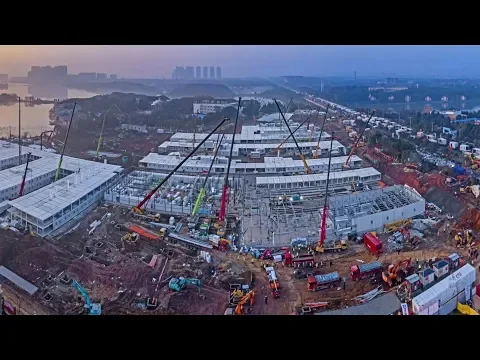
The event turned into a digital phenomenon, with viewers following every step of the construction.
The second Leishenshan hospital increased capacity with an additional 1,600 beds in 12 days
Alongside Huoshenshan, China began the construction of the Leishenshan Hospital. With a capacity of 1,600 beds, the facility was completed in 12 days and began operations in February 2020. At the peak of construction, over 15,000 workers and hundreds of machines were working simultaneously.
Together, the two hospitals added 2,600 beds to Wuhan’s healthcare system in less than two weeks.
The construction of Huoshenshan was made possible due to a combination of multiple factors: pre-existing design, intensive use of prefabrication, high availability of labor, and centralized coordination.
This model allowed for the elimination of bureaucratic steps and the simultaneous execution of various phases of the project.
Hospital operated for 73 days and was closed after the control of the pandemic in Wuhan
The Huoshenshan Hospital was designed as emergency infrastructure. After operating for 73 days and treating hundreds of patients, the facility was closed in April 2020, when local transmission of the virus was controlled. The structure remained preserved for potential reactivation.
The construction of the Huoshenshan Hospital raised questions about efficiency, speed, and organization of construction in critical situations.
In your view, can this model be adapted globally, or does it depend on specific conditions that limit its replication?




-

-

-

-

-

11 people reacted to this.