Portuguese
  Spanish


In just one unloading, Transnordestina received 33.9 thousand tons of Chinese rails, enough to complete 283 kilometers — material that had been waiting for three years while the work was halted due to administrative processes.
Published on March 3, 2026, by Terra, the ship Spruce Arroz docked at the Port of Pecém with the cargo that brought the Transnordestina Railway back to life.
According to the outlet, there were 33.9 thousand tons of rails imported from China, distributed in 23 thousand bars of 24 meters each.
According to the report, this volume is enough to lay 283 kilometers of main line — more than half of the railway’s route in Ceará.
-
Brazilian Energy Auction Secures $4.6 Billion in Projects to Enhance Power Grid and Prevent System Bottlenecks, Achieving an Average Discount of 51.58%

-
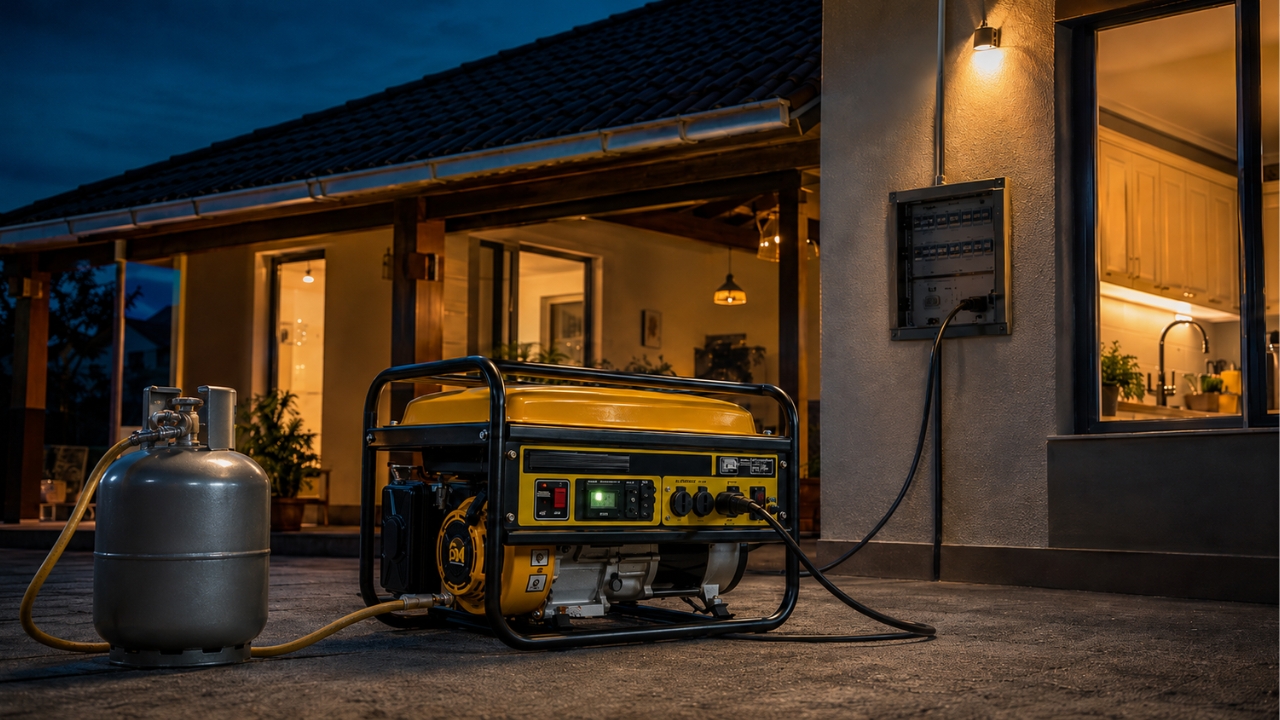
Gas-powered generator reignites emergency energy debate in Brazil, offering night and rain operation without open roof, as solar with battery can exceed $7,500 installed.

-
Statkraft Brazil Earns Pro-Ethics Certification from CGU, Highlighting Commitment to Compliance, Governance, and Sustainable Renewable Energy

-
Despite Perceived Delays, Rio de Janeiro’s New Stock Exchange on Track for Launch by Early Next Year


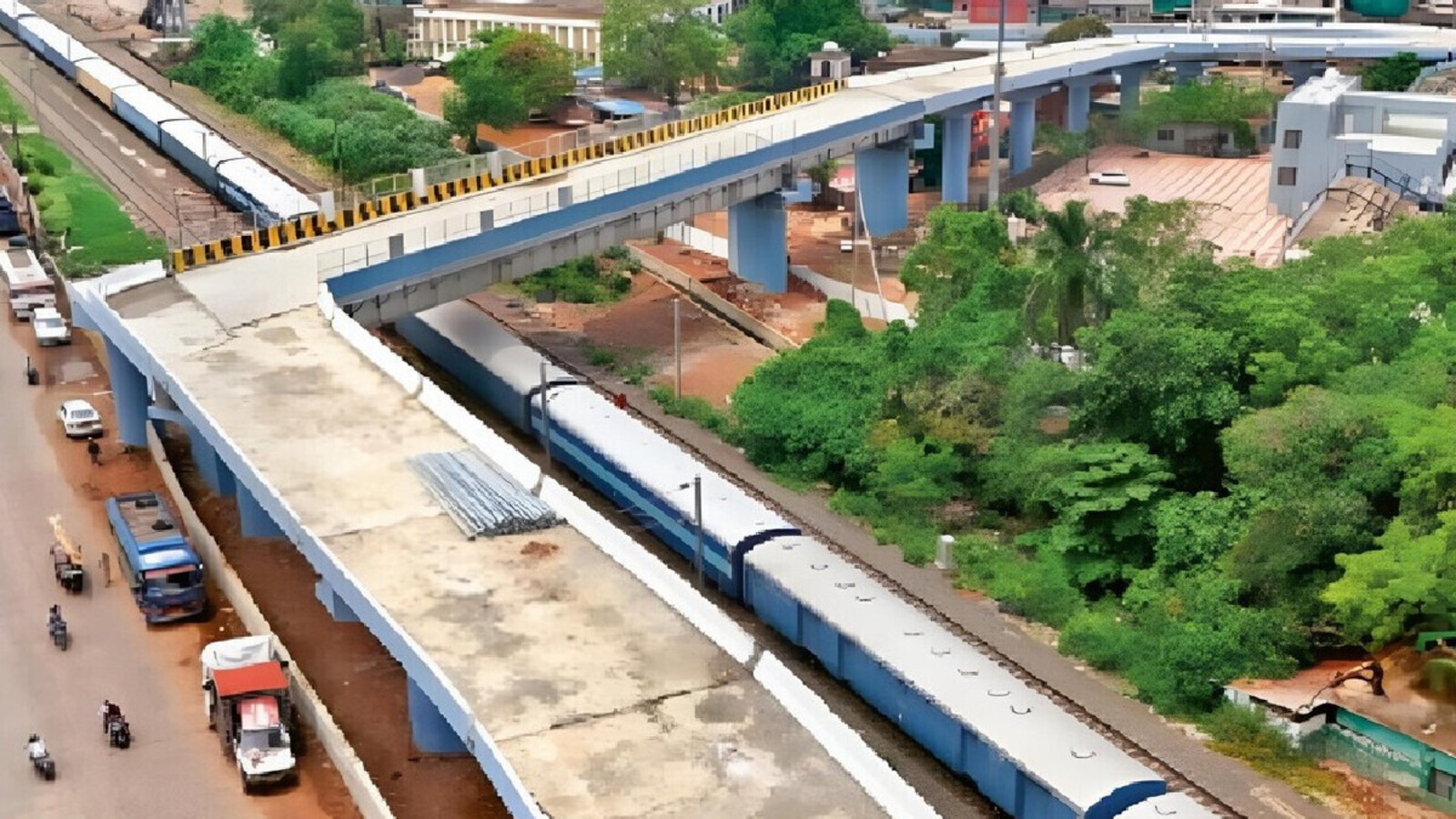
Therefore, the arrival of the material formally reopens the construction site of the Transnordestina Railway, a 1,206-kilometer project that connects Eliseu Martins, in Piauí, to the Ceará port.
According to Transnordestina Logística S.A. (TLSA), the concessionaire responsible for the work, the section that needed to be completed had steel bars as the main bottleneck.
However, the story of these three years of standstill tells a larger part of the problem.

Why the Transnordestina Railway stood still for three years without advancing a meter
The work began in the 2000s but experienced successive halts.
From 2023 to 2026, it remained three years without physical production, according to Terra.
According to the outlet, the main reason was “administrative processes” — legal disputes, contractual revisions, and funding issues between the concessionaire, the federal government, and banks.
As a result, the original delivery schedule fell years behind plan.
Similarly, other Brazilian railways face similar barriers — as recently shown by the portal about Angra 3, halted for 39 years with R$ 1 billion spent annually.
Indeed, the comparison is uncomfortable: long stoppages have become standard in strategic Brazilian works. Another recent case was the demand from Northeast communities for regulation of wind farms.
On the other hand, the arrival of the rails is seen by project engineers as the turning point for the conclusion.
The China that delivers railways fast — and the one we depend on
At the opposite end of the equation is the producer of the rails.
According to Exame, China delivered five new high-speed lines in 2026 alone and surpassed 50 thousand kilometers of high-speed railways.
For comparison, this is about 1.5 times the Earth’s circumference — in a network almost entirely completed in just over a decade.
According to data from Brasil 247, the Chinese system transported over one billion passengers in 2026 alone.
Next, the parallel is worth noting: while China expands its network by thousands of kilometers per year, Transnordestina seeks to complete 283 kilometers that were pending.
In this context, the import of rails is, in itself, a symptom.
Brazil stopped producing railway steel at scale in recent decades and became dependent on Asian suppliers.

The 1,206 kilometers of the Transnordestina Railway, from the interior to the sea
The work connects Eliseu Martins, in southern Piauí, to the Pecém Port Complex, in Ceará.
It is 1,206 kilometers that cross three states and connect the grain-producing region of Matopiba to the sea.
According to TLSA, the stated objective is to reduce the logistical cost of soybeans, corn, ore, and fertilizers from the northeastern interior to the port.
As a result, the agro-export sector bets on concrete gains:
- Up to 30% reduction in freight per ton of soybeans and corn
- Direct route from Matopiba to Pecém, without a long road route
- Movement of ore from Maranhão and Piauí through the same network
- Increase in the Ceará port’s capacity for solid bulk
Therefore, the arrival of the rails in Pecém means much more than the end of a construction project.
It means an entire logistical axis changing modes — from truck to train.
The Spruce Arroz: how heavy steel transport works
The ship Spruce Arroz is a bulk carrier, specialized in transporting bulk cargo or long profiles.
According to Terra, it departed from Chinese ports specifically carrying the rails contracted by TLSA.
Similarly, this logistics model has become standard in Brazilian railway works since 2010.
Heavy rails are manufactured in long bars, transported on specific decks, and unloaded with large cranes.
According to port records, Pecém needed to set up a dedicated area to receive the batch.
Subsequently, the material proceeded by road and service railway to the construction sites of Lot 11, towards the interior of Ceará.

Where Brazil stands on the global map of modern railways
Meanwhile, other countries deliver fast projects.
As Exame shows, in 2026 alone, China inaugurated five new high-speed lines.
Indeed, Brazil still has no commercial HSR (high-speed rail) operation.
Brazil has projects under construction or planning, such as the Bioceanic Railway (which would connect the Atlantic to the Pacific via Peru) and FIOL itself.
On the other hand, Austria inaugurated its first HSR line outside China in April — a connection that the portal covered as a pioneering European case.
Therefore, the comparison presents an uncomfortable picture.
Brazil has continental dimensions and a railway network far from complete — it depends, for structural steel, on the same country that delivers five new lines per year.
What changes in agribusiness when Transnordestina becomes operational
The foreseen impact is regional and sectoral.
According to TLSA, the main gain lies in reducing the transport cost of solid bulk.
Therefore, soybean and corn exporters from western Bahia and southern Piauí expect a turnaround in product competitiveness at the shipping point.
Similarly, mining companies with operations in Maranhão and Piauí foresee freight savings to Pecém.
In this sense, the Ceará port also sees capacity expansion — moving from its role in agricultural bulk to ore movement.