






 Portuguese
  Spanish


Dinosaur bone identified in vertebra collected in 1985 in Antarctica reveals titanosaur of six to seven meters, corrects old classification as marine reptile and reinforces that James Ross Island holds clues of forests, migrations, and environments very different from the current frozen continent, according to a study by Acta Palaeontologica Polonica.
Dinosaur bone collected in December 1985 on James Ross Island, near the Antarctic Peninsula, was reanalyzed by researchers and identified as part of a titanosaur in Antarctica. The fossil had been stored for decades among marine fossils and materials associated with reptiles and marine creatures.
The discovery was published on June 30, 2026, in The Daily Galaxy, and involves records from the British Antarctic Survey, field notes from geologist Mike Thomson, and paleontological analysis that identified the vertebra as evidence of a terrestrial dinosaur. The finding changes the interpretation of a fragment that seemed common but opened a window to ancient Antarctica.
A fossil stored in the wrong place for decades by
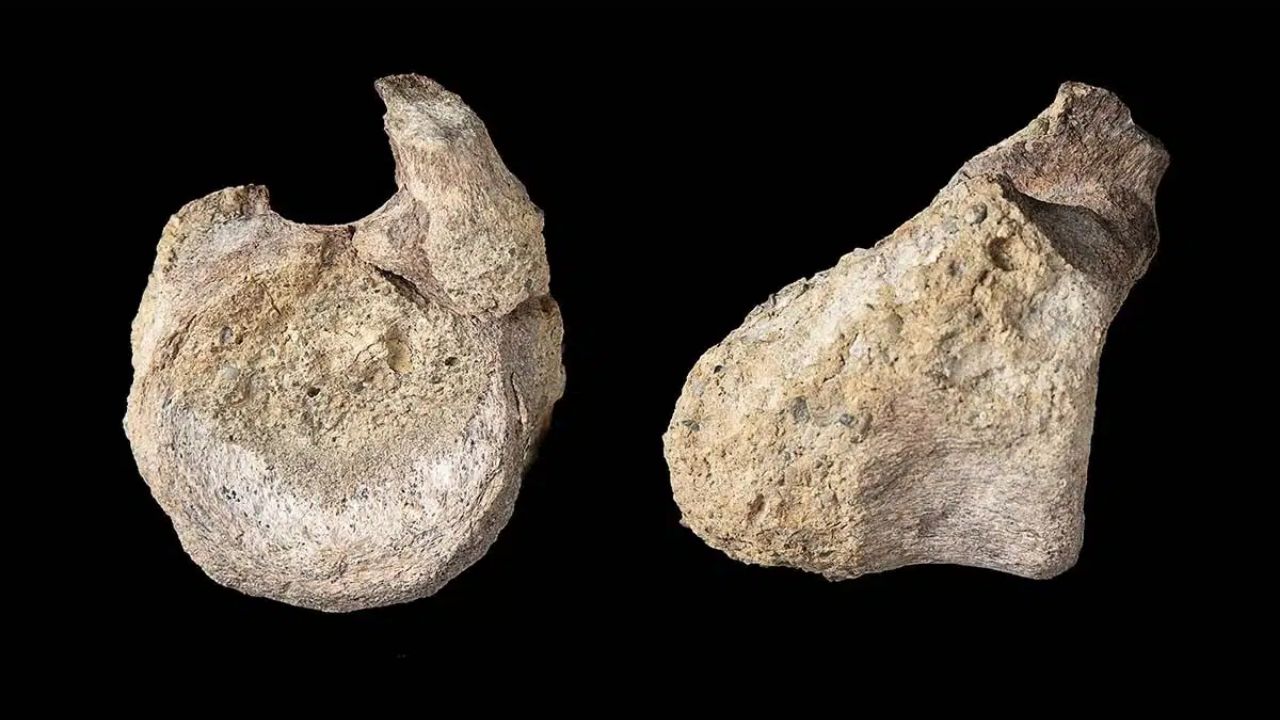
The material was collected during an expedition of the British Antarctic Survey in 1985. At that time, the interpretation that the fragment could belong to a marine reptile made sense, as the rocks in the region contained a large number of fossils of marine organisms, including ammonites.
-
Scientists Develop System to Turn Seawater into Drinking Water Using Only Sunlight, No Electricity Needed

-
Brazilians Spend Over 52 Years Online, Leading Global Internet Usage Rankings Ahead of Mexico and South Korea

-
German Printing Machine Manufacturer Dominates Over 40% of Global Offset Press Market

-
Rare Phenomenon in Brazil: Hundreds of Spiders Appear Suspended in the Sky, Astonishing Residents with Giant Webs



The problem is that the vertebra did not reveal its identity obviously. It was an isolated fragment, found in a context dominated by marine sediments. What seemed like just another piece of an ancient oceanic environment ended up being reclassified as part of a terrestrial dinosaur.
Dinosaur Bone Changes the Weight of James Ross Island
James Ross Island was already important to researchers for preserving records of Antarctica’s remote past. With the new identification, the location gains even more relevance because it now holds one of the strongest pieces of evidence that large herbivorous dinosaurs roamed that region.
The dinosaur bone is not a complete skeleton, nor does it allow for the reconstruction of the entire animal. Even so, a single vertebra was enough to link the fossil to sauropods, a group that includes titanosaurs. In paleontology, a well-interpreted fragment can change the importance of an entire collection.
The Vertebra Belonged to a Titanosaur
The analysis indicated that the fossil corresponds to a titanosaur vertebra, a type of sauropod dinosaur. Based on the preserved size, researchers estimate that the animal could have been between six and seven meters long, although it is not yet clear whether it was a young individual or a smaller adult.
This point is important because titanosaurs are known in other parts of the southern hemisphere. The presence of this group in Antarctica reinforces the idea that the continent had significant biogeographical connections with areas that are now very distant, such as South America and New Zealand.
The Initial Error Had a Geological Explanation
The original classification was not simply carelessness. The fossil came from marine deposits, and this context influenced the reading made in the field. If the rock layer was full of marine fossils, it was natural to imagine that the vertebra also belonged to an animal from the same environment.
The review showed that the scenario was more complex. The animal probably lived on land, died on the ancient continent, and had part of its remains transported to the sea, possibly by a river. The fossil was found in marine sediment, but its biological origin pointed to land.
Antarctica Once Had Forests and Dinosaurs
The discovery draws attention because it contrasts with the current image of Antarctica, marked by ice, extreme cold, and a hostile environment. In the Late Cretaceous, however, the continent had very different conditions, with temperate forests formed by ferns, conifers, and palm-like plants.
This environment allowed for the presence of terrestrial animals, including different groups of dinosaurs already recorded in Antarctic fossils. The frozen Antarctica of today does not tell the whole story of the continent; beneath this image lies a green, wet, and biologically more diverse past.
The Discovery Helps Understand Ancient Southern Routes
The Dinosaur Bone also raises questions about displacement and distribution of species. If titanosaurs lived in the Antarctic Peninsula region, this may indicate that the area functioned as a passage between different parts of the ancient southern hemisphere.
This hypothesis is relevant because it helps explain how similar groups appear in regions now separated by oceans. Antarctica, in a warmer and more connected past, may have been a natural bridge for the movement of terrestrial animals between continental masses.
Ammonites helped date the fossil’s context
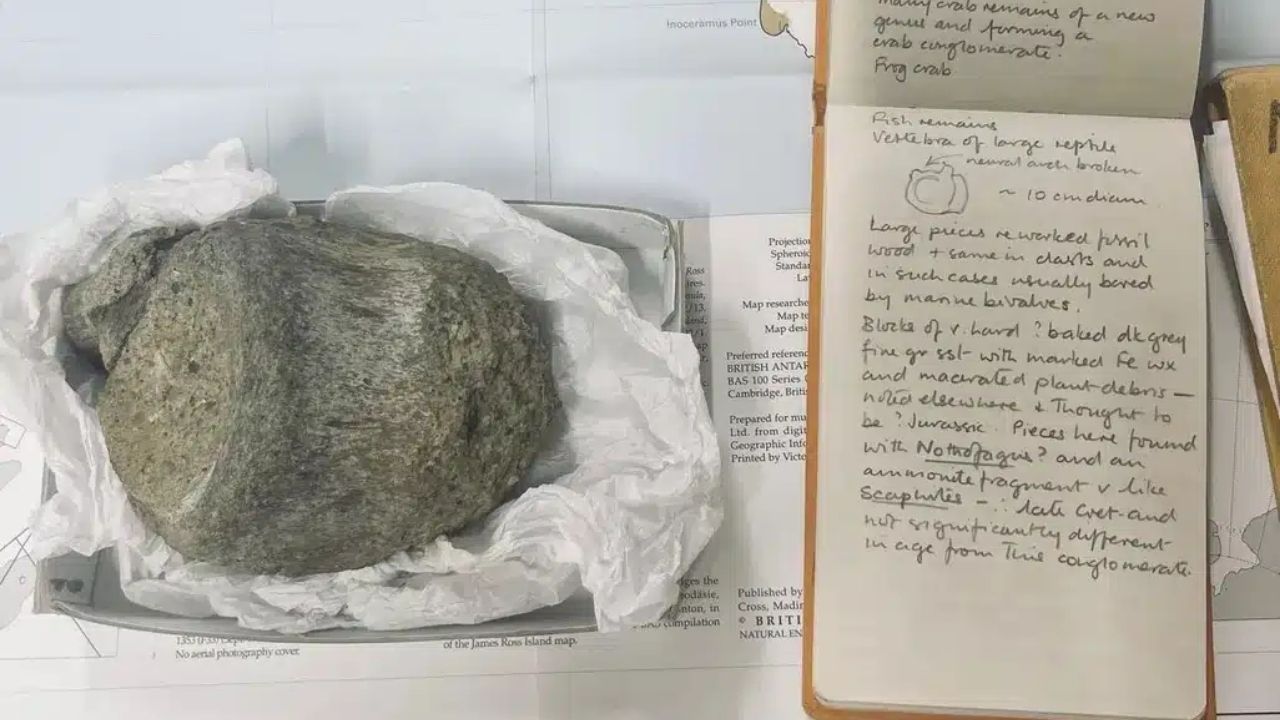
Although the bone was not from a marine animal, the surrounding marine fossils played an important role. The ammonites found in the same deposits allowed for more precise dating of the rock, pointing to the early Campanian stage of the Late Cretaceous.
This detail shows how different fossils work together in scientific reading. The marine context confused the initial interpretation, but also helped position the find in time. The same layer that hid the dinosaur’s identity helped reveal when that fragment was preserved.
A single piece can reveal a little-known fauna
Fossils from Antarctica are rare and often damaged by the continent’s conditions. Therefore, each preserved fragment has high value. An isolated vertebra may not reveal species, behavior, or complete appearance, but it can indicate presence, evolutionary group, and geographical relationships.
Researchers suggest that what has been found so far likely represents only a small part of the diversity that existed there. Ice, erosion, and difficulty of access limit the number of available fossils. The absence of many bones does not mean absence of life; it often just means difficulty of preservation and discovery.
Why the find remained invisible for so long
The case also shows how scientific collections can hold undiscovered findings. The fossil was preserved, recorded, and available, but its importance depended on a new analysis, anatomical comparison, and different questions than those asked at the time of collection.
This type of revision is common in science. Techniques, references, and interpretations change over time. What one generation catalogs provisionally can be reinterpreted by another. Not every discovery happens in the field; some are born when someone takes another look at a forgotten piece.
The first confirmed bone expands the history of Antarctica
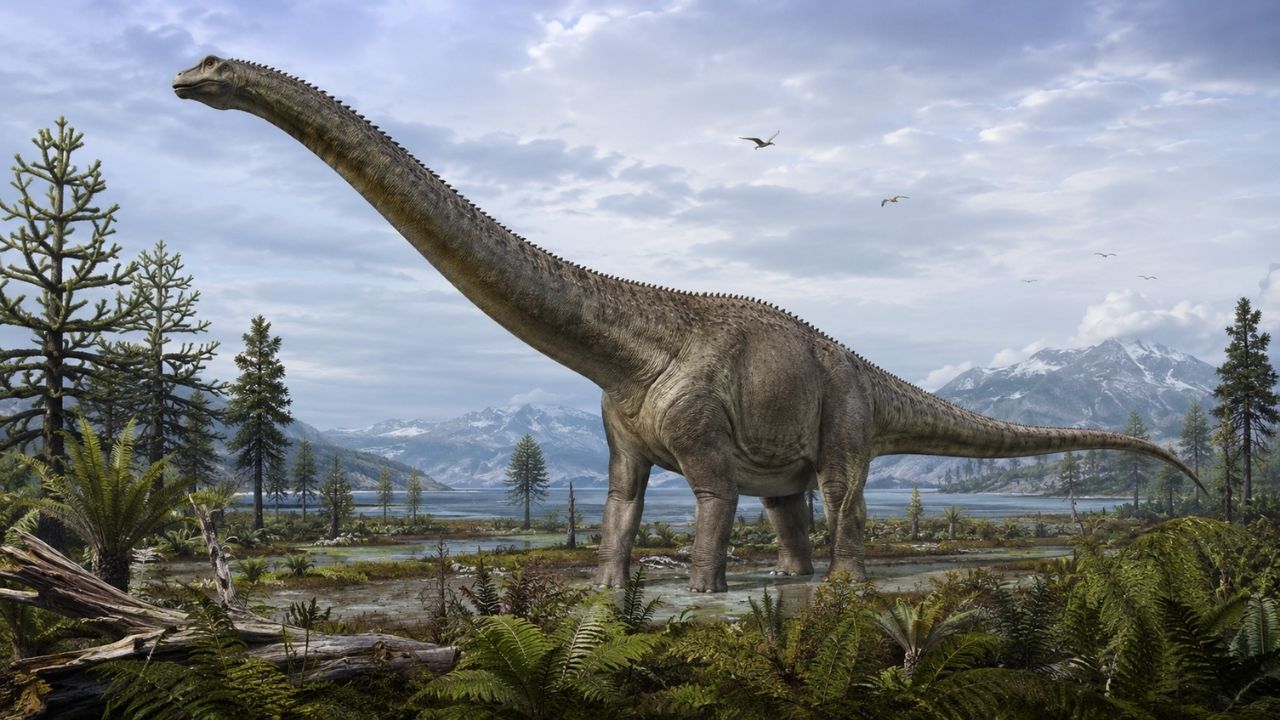
Identifying the fragment as a confirmed dinosaur bone from Antarctica changes the symbolic weight of the discovery. The find not only shows that there were dinosaurs on the continent, but it also reinforces that its natural history is still incomplete.
Ancient Antarctica was not an empty landscape. It comprised forests, rivers, marine coasts, terrestrial animals, and primitive birds. The titanosaur vertebra fits into this larger picture, where the current icy continent was once part of a warmer and more connected world.
What does this fossil change in the way we look at the continent?
The dinosaur bone from James Ross Island shows that a small piece can reopen big questions. A fragment collected in 1985, stored for 40 years and mistaken for marine material, now points to titanosaurs, ancient forests, and possible terrestrial routes in the far south of the planet.
The discovery also reminds us that Antarctica still holds little-known parts of the history of life on Earth. Do you find it more surprising that the fossil went unnoticed for decades or that Antarctica once harbored forests and large dinosaurs? Leave your opinion in the comments.


