Portuguese
  Spanish


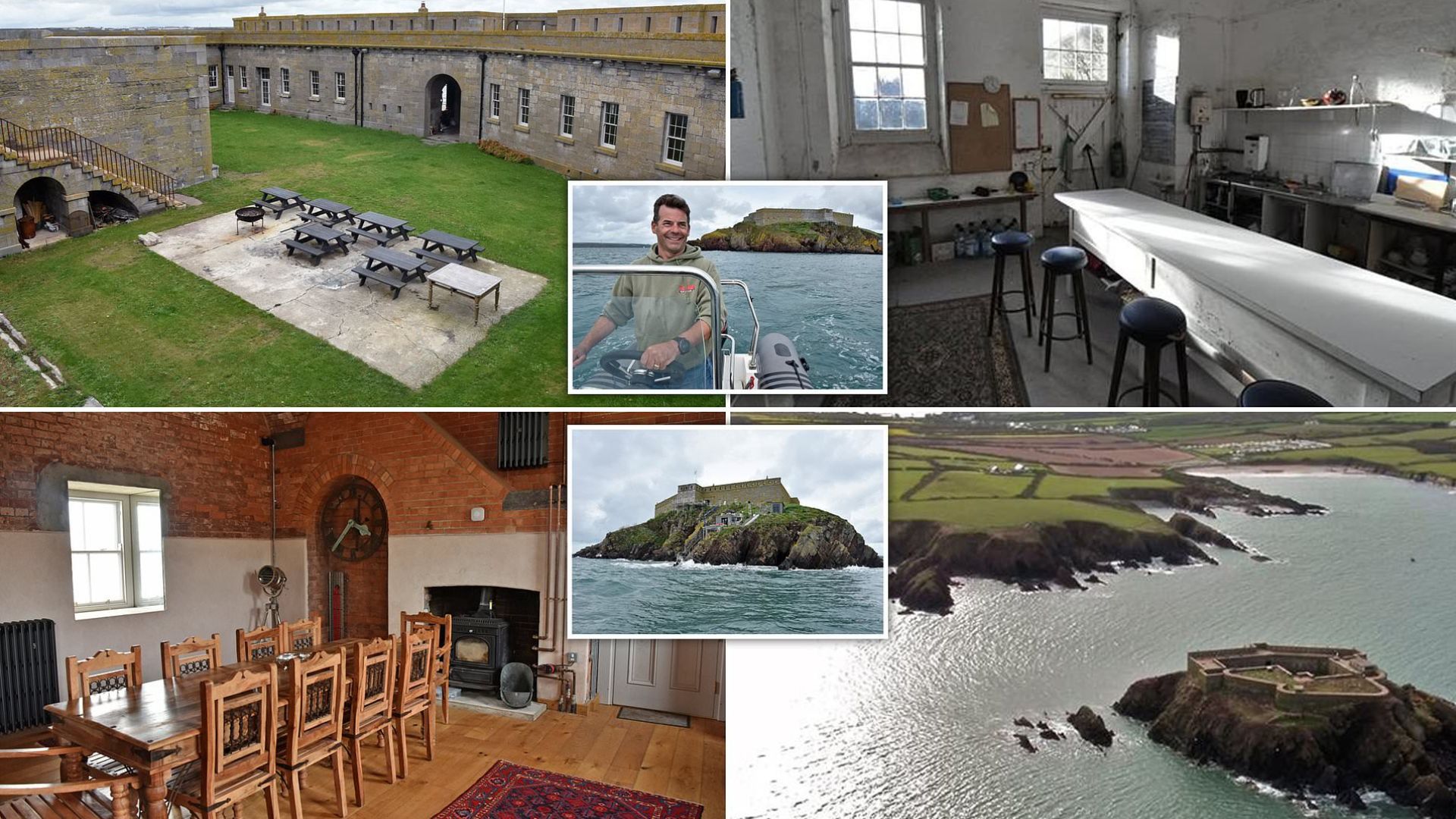

Private island in Wales combines military history, million-dollar renovation, and unusual structure with helipad, panoramic bar, and self-sufficient systems, attracting international attention after being put up for sale for over £3 million and associated with a technology sector entrepreneur.
The name associated with Thorne Island is that of British entrepreneur Mike Conner, linked to the creation of Appsbroker, a company later incorporated into the trajectory that resulted in the Qodea brand.
He is the one responsible for purchasing the island in 2017 and transforming the old coastal fort, now on the market for over £3 million, into an isolated property with an unusual structure and both residential and commercial vocation.
The property is located on the Pembrokeshire coast, in western Wales, and features a set of rare characteristics even for the luxury segment.
-
Bruno Guimarães, 28, Misses Crucial Penalty Against Norway in World Cup After Replacing Vinicius Jr.

-
Inspired by a school lesson on Africa’s water crisis, a young boy raised money through chores to fund a well that transformed a Ugandan community.

-
Brazilian Construction Worker Moves to France, Earns Up to €2,500 Monthly with Home Renovations, Gains Social Media Attention

-
US Navy Sinks USS Oriskany with 230 kg of C-4, Creating World’s Largest Artificial Reef in 37 Minutes




The listing highlights a helipad, bar on top of the fortification, game room, large terraces, glass office facing the sea, private pier, five moorings, and a 10-meter hydraulic crane used to hoist boats and supplies.
Historic fort transformed into luxury property

More than the asking price, what helps explain the repercussion is the contrast between the military origin of the property and its current use.
At the center of the island is a fort built between 1852 and 1854 as part of the Milford Haven defensive system.
Decades later, the same structure went through other phases, including use as a hotel and family residence, until reaching the most recent renovation led by Conner.
The total area announced is 2.49 acres, equivalent to the 2.5 acres rounded up in reports and real estate listings.
The internal complex totals just over 8,000 square feet and today accommodates five bedrooms, five bathrooms, and spaces designed to host up to 20 guests, a number that reinforces the island’s appeal for retreats, private events, and high-standard stays.
Million-dollar renovation and structural recovery
Conner’s journey became part of the island’s own sales narrative.

According to reports published in the British press, he found the property after seeing a video on the internet and decided to take on a recovery project considered unusual even for investors accustomed to complex works.
Upon purchasing the property, he found a degraded structure, with poorly integrated modern interventions, wear caused by sea spray, and a series of limitations imposed by geographical isolation.
The renovation required an investment of over £2 million and took years to take shape.
Part of the work consisted of recovering the architectural identity of the fort, removing later layers to reveal original masonry elements and reorganizing the internal spaces for contemporary use.
There was also replacement of floors, installation of heritage-style windows, and adaptation of the environments for prolonged stays, without detracting from the historic property.
Complex logistics on isolated island
The island’s isolation made logistics one of the most laborious aspects of the work.
Reports on the restoration describe the intensive use of helicopters to bring materials, equipment, and supplies to the site, as well as the stay of workers in the fort itself during part of the project.
This type of operation helps explain why the recovery of a sea fortification involves very different costs and solutions from those required by conventional real estate on dry land.

Self-sufficient structure and restricted access
At the same time, the renovation was not limited to aesthetics.
The announcement states that the island operates off-grid, with systems focused on energy and water self-sufficiency.
These include solar panels with 100 kWh battery storage, heat pumps for hot water and underfloor heating, a rainwater harvesting and storage system, sewage treatment, and reverse osmosis for potable water production.
This technical package is crucial for understanding the strategic value of the property.
Thorne Island is not just a historic building surrounded by the sea, but a property prepared to operate with relative autonomy in a restricted access area.
The main arrival is by boat, via a private pier, while the helipad extends the connection to the mainland and reinforces the exclusive profile surrounding the sale announcement.
Strategic location on the Welsh coast
The island’s precise location also draws attention.
Although it is off the Welsh coast and about 3 nautical miles from Milford Haven, the real estate listing states that the point is approximately 0.4 nautical miles from West Angle Bay beach, near the village of Angle.
This detail corrects the perception that the property would be physically very far from the coast, even though access remains conditional on sea or air.
Who is Mike Conner, the entrepreneur behind the island


Curiosity about the owner grew because the property’s profile deviates from the standard of traditional luxury mansions.
Instead of a house built for leisure from the outset, what is seen is a listed coastal fortress, surrounded by open sea, reconfigured to host guests, private meetings, and extended stays.
The panoramic office installed in the old observation point and the rooftop bar perfectly summarize this change of function: the space designed for surveillance is now sold as a setting for socializing and contemplation.
In the business field, Mike Conner’s name is linked to the founding of Appsbroker, a British technology company created in Swindon and later integrated into the corporate movement that consolidated the Qodea brand.
Official UK records show Michael Tarcisius Conner as a director of Qodea Technology Limited until October 2023, a fact that supports his public identification as a technology entrepreneur in reports about the island.
Thus, the answer to the question of who owns the island-fortress that returned to the spotlight with a helipad, rooftop bar, office with sea view, and hydraulic crane involves a specific name and an equally unique restoration operation.
It is Mike Conner, a British entrepreneur associated with Appsbroker, who bought Thorne Island in 2017, funded an extensive restoration of the Victorian fort, and put one of the most unusual properties currently advertised in the UK on the market.