Portuguese
  Spanish


Illuminations produced mainly between the 13th and 14th centuries show warriors defeated by giant mollusks and still challenge medieval art researchers.
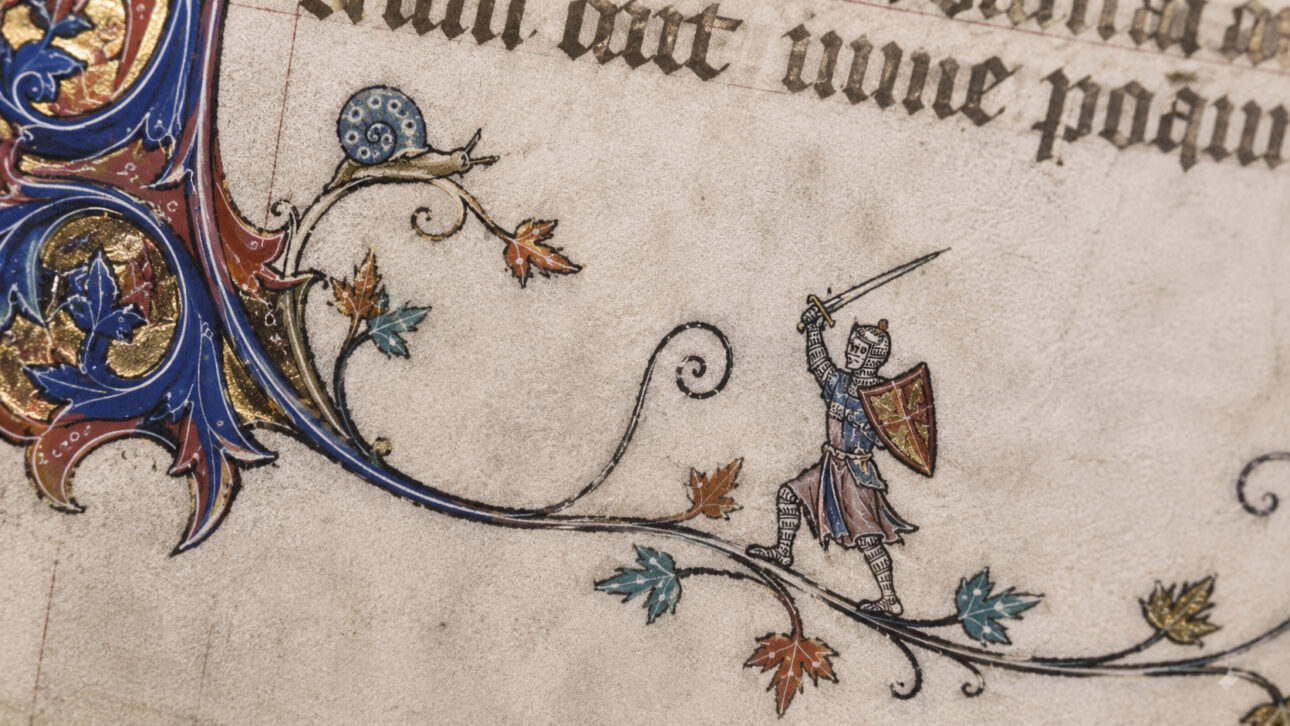
Knights protected by armor, shields, and swords appear facing giant snails on the margins of religious books from the Middle Ages.
These improbable scenes were found in psalms, missals, books of hours, and other manuscripts used by the clergy and European nobility.
Researchers believe that the drawings could represent humor, cowardice, social inversion, and criticism of the ideal of courage of medieval warriors.
-
Brazil Deploys Navy Field Hospital, Search Dogs, and Water Purifiers to Aid Venezuela After Deadly Earthquake

-
World’s Largest Crocs Collection: 3,569 Pairs Counted in 13-Hour Museum Session, 18 Years After Spotting a Neighbor’s Lilac Crocs
-
Brazilian Teacher Reclaims World Record with 4,000-Piece Zelda Collection Valued at $100,000
-
Brazil’s “Tuscany” Boasts Award-Winning Olive Oils, Scenic Trails, and Mantiqueira Landscapes


A definitive explanation, however, has never been established for the recurring presence of mollusks on the pages.
Marginalia hid curious images in medieval books
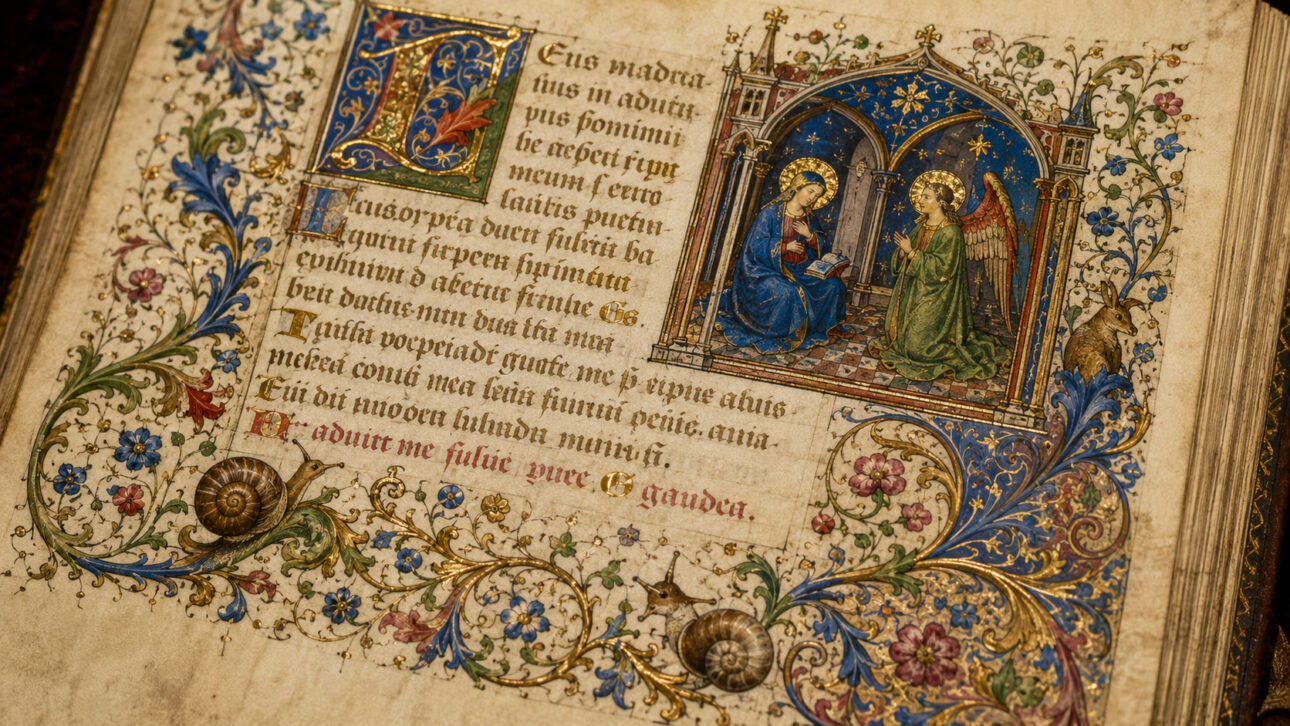
The snails were drawn on the edges of the pages, spaces known as marginalia.
Hired artists added colors, ornaments, and figures after the scribes completed the copying of the texts.
These paintings, called illuminations, could highlight chapters, decorate pages, or convey independent messages.
Armed rabbits, hares hunting humans, hybrid creatures, and figures with grotesque features also appeared in these spaces.
The images, therefore, did not serve only to literally represent what was written in the religious works.
Production of manuscripts required time, skill, and a lot of money
Many medieval books were produced on parchments made from animal skin.
Each page needed to be copied manually, while any mistake could mean additional hours of work.
The high costs restricted the production of manuscripts to members of the Church, royalty, and nobility.
Among the most common volumes were:
- Psalters, composed of psalms;
- Books of hours, intended for private prayers;
- Breviaries, used in daily prayers;
- Pontifical books, related to ceremonies conducted by bishops;
- Decretals, formed by papal letters and determinations.
Artists also filled the margins of these formal works with funny, bizarre, and sometimes coarse scenes.
The style won over the nobility over time and began to follow its own artistic trends.
Warrior snails spread across European manuscripts
European artists began to depict battles between snails and humans mainly at the end of the 13th century.
The trend gained strength in France and remained present in manuscripts produced during the 14th century.
Giant mollusks were shown crawling, flying, or pointing their upper tentacles at armed knights.
Some warriors appeared fleeing, kneeling, or begging for forgiveness before the creatures.
Records analyzed by the British Library show that these combats were repeated in different medieval manuscripts.
The exact meaning of the scenes, however, has been lost over the centuries.

Defeat of the knights created an upside-down world
Interpretations gathered by the BBC indicate that the confrontation inverted the social patterns of the time.
The knight symbolized strength, courage, and high status, while the snail represented slowness and apparent fragility.
The victory of the mollusk, in this sense, transformed the warrior into a cowardly, vulnerable, and ridiculous figure.
Professor Maria Cristina Pereira, from the University of São Paulo, also relates the animal to medieval agrarian life.
Snails were common in the fields and were part of the visual repertoire known to artists of that period.
Historian Marian Bleeke associates these scenes with the concept of the world turned upside down.
This type of representation inverted the expected hierarchies to provoke surprise, criticism, and comedy.
Lombards may be linked to the origin of the drawings
One theory relates the snails to the Lombards, a Germanic people who dominated areas of the Italian Peninsula between 568 and 774.
Lombards were also associated with tax collection and lending, practices condemned by the Church during certain periods.
A popular legend narrated the encounter between a Lombard peasant and a heavily armed snail.
Deities encouraged the confrontation, while the man’s wife tried to prevent that reckless decision.
The hypothesis was never proven and remains among the possible interpretations presented by researchers.
Medieval humor continues to intrigue readers centuries later
The warrior snails of medieval illuminations probably combined humor, irony, agricultural references, and inversions of social hierarchies.
Other theories associate the battles with class struggle, resurrection, or the representation of cowardice.
None of these explanations managed to clarify alone the popularity of the drawing among medieval artists.
The scenes continue to spark curiosity and laughter more than 500 years after their creation.
For you, did the giant snails represent a critique of the knights or were they just a joke by medieval artists? Leave your opinion!