






 Portuguese
  Spanish


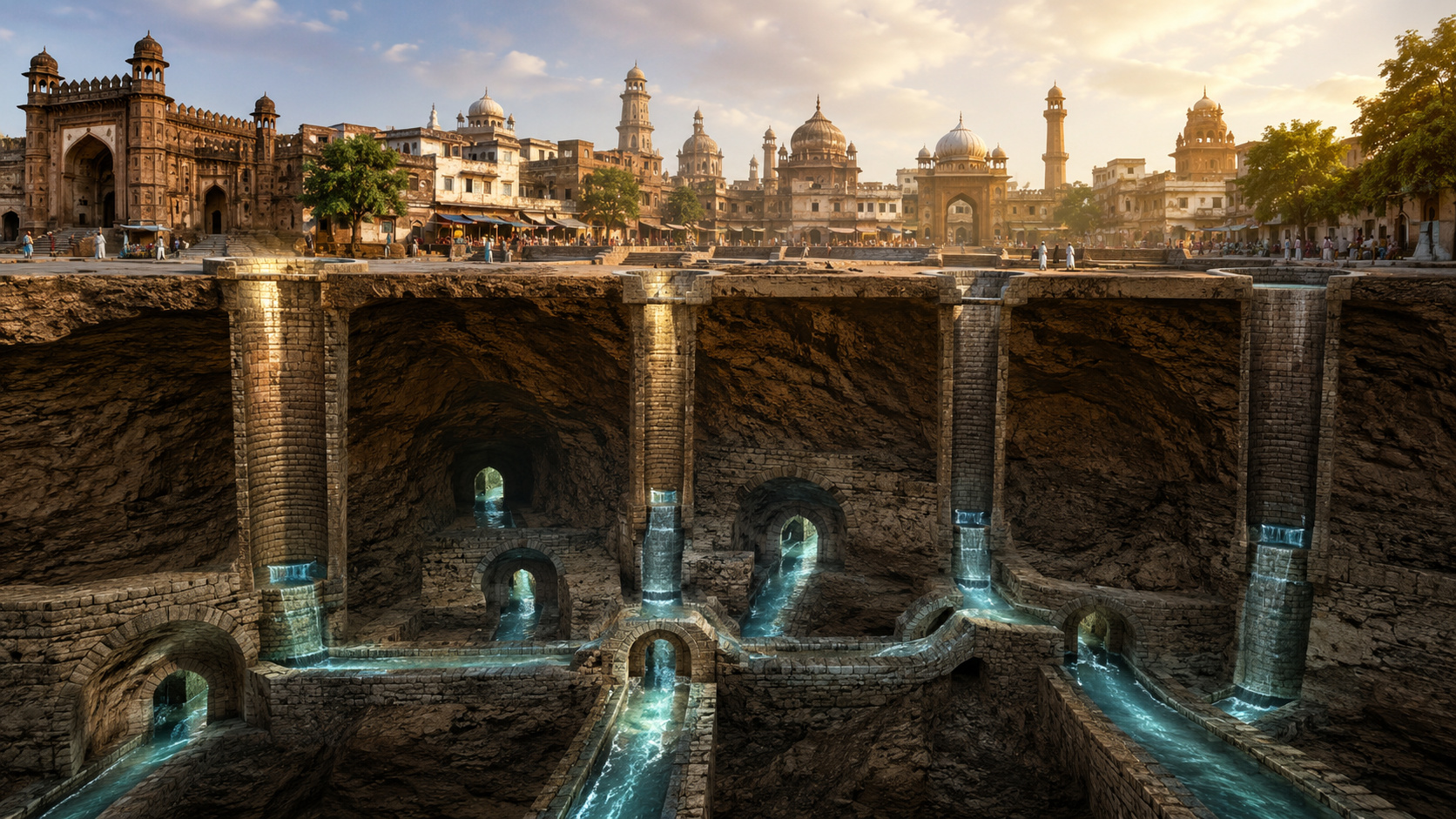

The tunnels of Burhanpur, in India, capture underground water and use gently sloping galleries to conduct the flow without electricity. The 1615 construction brings together eight hydraulic systems, inspection wells, and still active channels. The historical hydraulic engineering helps explain how the city preserves this supply. The cited volume reaches 1.8 million liters per day.
The tunnels built in 1615 under Burhanpur, India, still carry water by gravity, without relying on electric pumps to push the flow along the route.
The information was published by UNESCO, the UN agency for education, science, and culture. The city appears on the Tentative List presented by India on February 8, 2024.
The data of 1.8 million liters per day is part of the material sent for the Tentative List. This volume should not be understood as a recent independent measurement but as information declared in the dossier about the historical system.
-
Brazil’s “Tuscany” Boasts Award-Winning Olive Oils, Scenic Trails, and Mantiqueira Landscapes

-
Inspired by a 2000s Wonder Woman cartoon, she amassed 1,581 items, including a comic signed by Stan Lee, becoming the world’s largest collector.
-
Man Mistakes Lottery Email for Spam, Nearly Loses $185 Million Powerball Prize in Australia
-
8-Year-Old Girl from Kashmir Sets World Record by Reciting and Organizing All 118 Periodic Table Elements in 33.71 Seconds


Burhanpur needed to bring water to areas where the rivers did not solve the problem
Burhanpur is located in the state of Madhya Pradesh, India, near the Tapti and Utavali rivers. Even with these rivers nearby, the high banks made it difficult and expensive to transport water to different parts of the city.


During the Mughal period, Burhanpur grew as a military and commercial point. The need to supply residents, troops, and travelers led to a solution that sought water underground and brought it into the city.
It was in this scenario that the Khooni Bhandara was born, a set of structures created to capture and conduct water. The work took advantage of the terrain’s characteristics instead of relying on machines.
Eight hidden hydraulic systems in the ground make the water flow on its own
The Khooni Bhandara comprises eight hydraulic systems built in Burhanpur. A hydraulic system is the name given to the set of structures that capture, convey, store, and distribute water.
Groundwater is captured in areas near the Satpura hills and enters channels hidden beneath the ground. It then flows to storage points before reaching the city.
The logic is simple but requires precision. The galleries were made with a slight descent, allowing the water to advance by the force of gravity.
The idea is similar to a gravity aqueduct, which carries water from a higher point to a lower one. It also resembles ancient aqueducts and water capture works that use the natural slopes of the terrain.
Vertical wells bring air and allow repair of Burhanpur tunnels
The system has 103 kundis, structures similar to wells that connect to underground tunnels. They help reach the galleries and make it possible to observe the state of the water network.
UNESCO, the UN agency focused on education, science, and culture, records that the vertical wells had two important functions: bringing air into the tunnels and providing access to workers responsible for repairs.
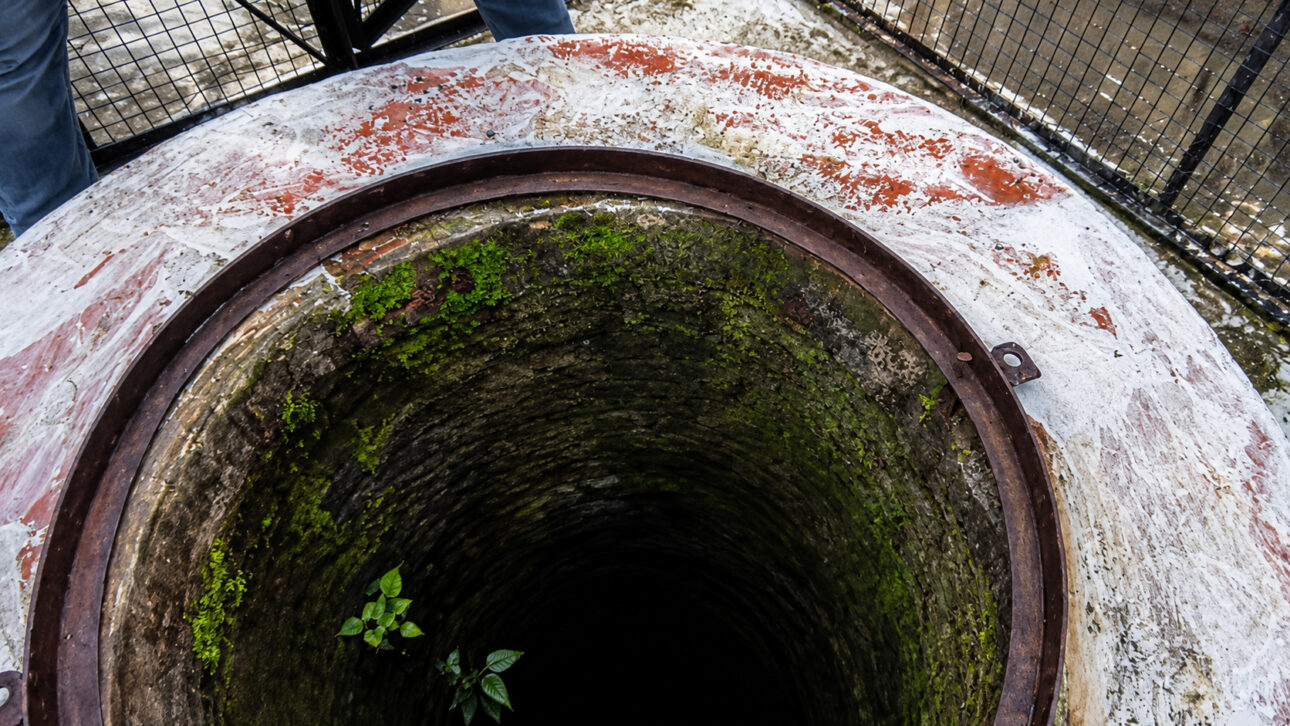
When a passage was blocked, it was possible to descend through the well and clean or correct the problem. This access prevented the entire area above the channels from needing to be opened.
Maintenance remains crucial for the survival of the work. Without frequent cleaning and care, the water finds it more difficult to pass through the tunnels.
Volume of 1.8 million liters per day appears in the Indian city dossier
The Khooni Bhandara once had a larger storage capacity throughout its history. The dossier states that the system supplies 1.8 million liters of water per day and still operates without energy costs to move the water.
Six underground conduits remain preserved and active. This shows that part of the engineering done more than four centuries ago continues to be useful for Burhanpur’s supply.
Being on the Tentative List does not mean that Burhanpur has already received the World Heritage title. The list gathers sites presented for possible future analysis.
The value of 1.8 million liters per day needs to be read carefully. It belongs to the material presented by India and does not provide a recent independent measurement related to the reported volume.
Calcium and magnesium narrow the galleries and threaten the network’s operation
The preservation of the tunnels faces a physical problem inside the galleries. The accumulation of calcium and magnesium on the walls reduces the space through which the water passes.
When the path becomes narrower, the flow loses strength, and the system’s capacity decreases. Therefore, conserving the tunnels does not just mean protecting an ancient construction.
Maintenance helps to maintain an infrastructure that still meets part of the city’s water needs. The wells, channels, and storage points need to function as a single network.
Burhanpur shows that ancient works do not need to be just museum pieces. When cared for, they can continue solving real problems related to water access.
The tunnels of Burhanpur combine hydraulic engineering, gravity, and terrain knowledge in a work built in 1615. The water flows through hidden galleries, passes through inspection wells, and reaches parts of the city without electric pumps.
The structure also shows that preserving ancient works can be useful for the present, especially in places where water needs to be captured and conducted carefully.
Do you believe that Brazilian cities could better utilize the terrain and ancient works to reduce energy consumption in water supply? Leave your opinion in the comments and share this story.


