





 Portuguese
  English
  Spanish
  5 min of reading
  0 comments


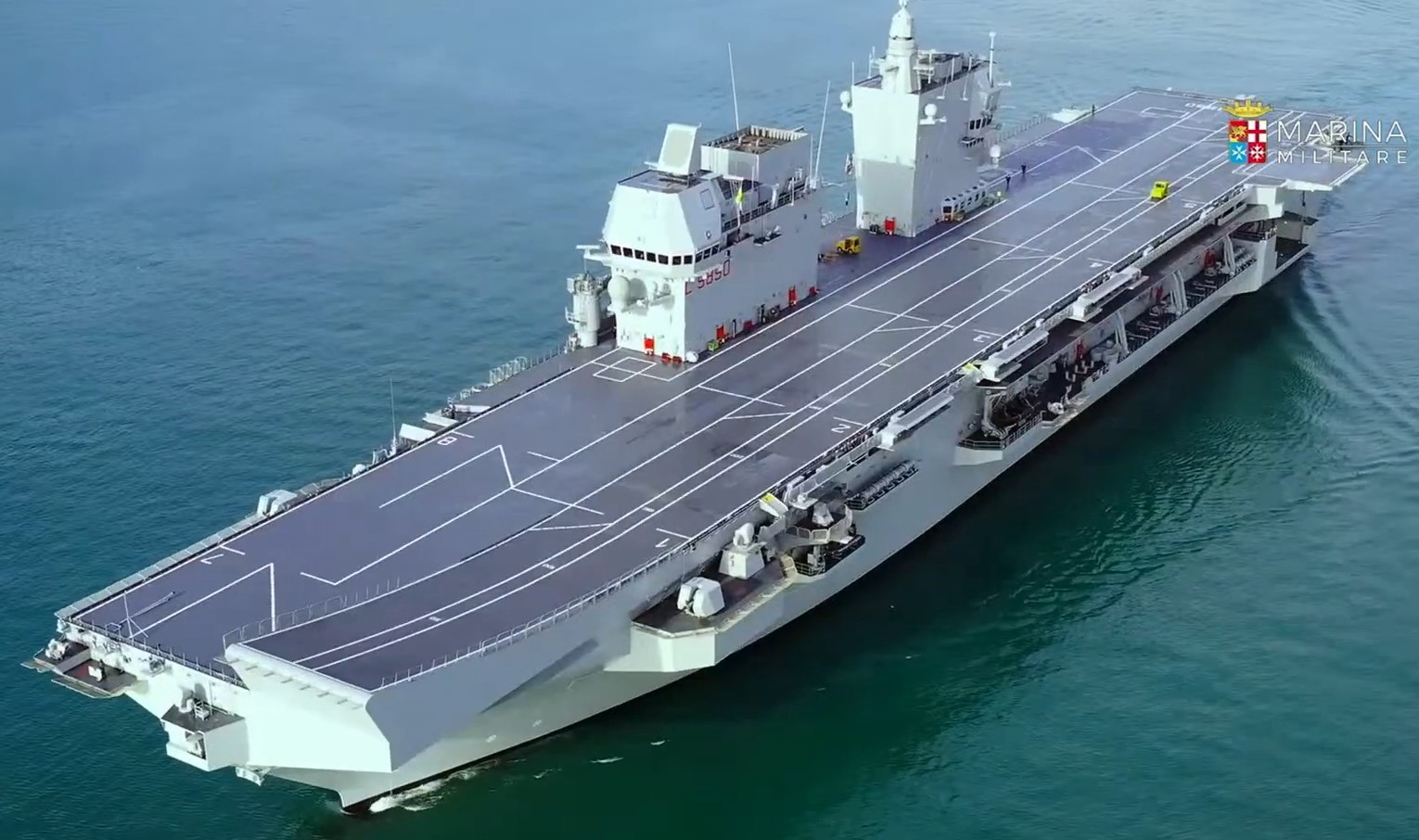
Italian ship ITS Trieste brings together 36.7 thousand tons, 245 meters, and multiple military and humanitarian functions on a single naval platform.
In 2024, the Italian Navy officially received the ITS Trieste, one of the most ambitious naval projects ever built in the country and a platform designed to concentrate in a single hull functions that would normally be spread across several vessels. Built by Fincantieri and incorporated on December 7, 2024, the ship was conceived to operate as a helicopter carrier, amphibious ship, command center, and medical and humanitarian support unit, significantly enhancing the projection capability of the Italian naval force.
With 245 meters in length and about 37,500 tons of displacement, the Trieste has become the largest vessel delivered to the Italian Navy since World War II and is now part of a select group of ships capable of operating in amphibious warfare, evacuation, humanitarian missions, and international support. According to the official page of the Marina Militare, the vessel can embark amphibious staff, support operations with F-35B, provide Role 2E standard medical support, and operate in crisis scenarios with high operational flexibility.
ITS Trieste brings together multiple functions on a single naval platform
The great differentiator of the Trieste lies in its hybrid architecture. Classified as LHD (Landing Helicopter Dock), the ship combines characteristics of a light aircraft carrier with those of an amphibious assault ship.
-
The Sad End of the Brazilian Marine Corps’ Combat Vehicles: SK-105 Fleet Has Few Vehicles Running, Cannibalized Parts, and Scrap Taken to Auction

-
The Brazilian Army has just unveiled a silent arsenal of drones armed with rifles, grenade launchers, and nuclear sensors capable of operating nearly 300 km away, and this is just a preview of what will be showcased in Rio in the coming months with 33 companies.

-
Brazilian Army presents Force 40 and unveils the strategic plan that aims to revolutionize national defense with artificial intelligence, drones, multidomain warfare, and advanced military power by 2040.
-
Russia has put into operation the Avangard, a nearly 2-ton nuclear hypersonic glide vehicle launched by an intercontinental missile, capable of exceeding Mach 27, reaching over 6,000 km, and maneuvering within the atmosphere before impact; a weapon presented by Putin as a response to U.S. missile defense shields.


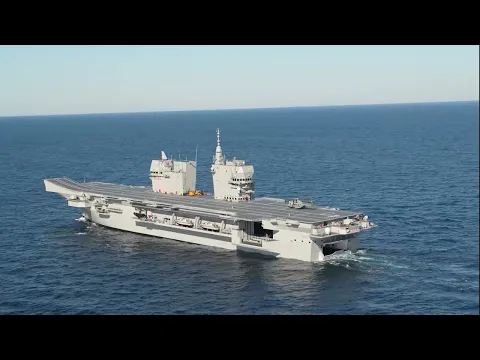

In practice, this means it can operate as a floating airbase for helicopters and short takeoff aircraft while also transporting troops, armored vehicles, and landing craft.
This combination transforms the ship into a complete expeditionary platform, capable of projecting military power in coastal regions without relying on land infrastructure.
Flight deck of the ITS Trieste allows operation of modern aircraft like the F-35B
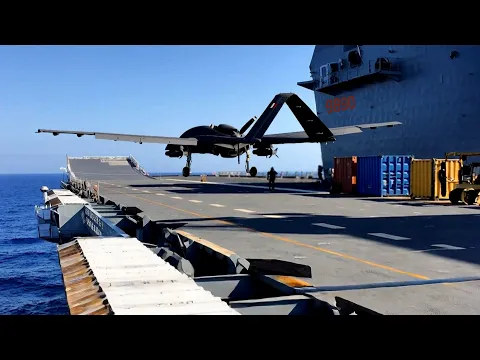
One of the most strategic points of the project is the continuous flight deck, which allows the operation of heavy helicopters as well as short takeoff and vertical landing aircraft, such as the F-35B.
This type of aircraft is designed to operate on ships smaller than traditional aircraft carriers, eliminating the need for catapults and complex launch systems.
With this, the Trieste gains significant air projection capability, being able to operate in air defense, ground support, and surveillance missions.
Floodable dock allows complete amphibious operations
In addition to the flight deck, the Trieste has an internal floodable dock, known as a well deck, which allows for the launch of landing craft.
This includes everything from amphibious vehicles to LCAC-type hovercrafts, used to transport troops and heavy equipment from the vessel to the shore.
This feature is essential for military operations in regions without ports or adequate infrastructure, expanding operational capacity in complex scenarios.
Floating hospital capacity expands use in humanitarian missions
Another central element of the project is the presence of a complete hospital on board, compliant with NATO standards.
The ship has surgical rooms, intensive care units, wards, and the capacity to care for hundreds of patients.
This allows the Trieste to operate not only in war scenarios but also in natural disasters and humanitarian crises, such as earthquakes, hurricanes, and health emergencies.
Propulsion system combines turbines and diesel engines
The ship uses a hybrid propulsion system known as CODLOG (Combined Diesel-Electric or Gas), which combines gas turbines and diesel engines.
This configuration allows for greater energy efficiency and operational flexibility, enabling everything from economical navigation over long distances to high speed in combat situations.
The generated power allows the ship to reach speeds exceeding 25 knots, maintaining sufficient autonomy for prolonged operations at sea.
Platform can provide energy and logistical support on land
One of the lesser-known capabilities of the Trieste is the ability to provide electrical power to coastal areas. The ship can generate up to 2,000 kW of power, sufficient to supply critical infrastructures in disaster-affected regions.
This functionality transforms the ship into a true civil support base, capable of restoring essential services in emergency situations.

The Trieste was designed to transport hundreds of military personnel, as well as armored vehicles, trucks, and logistical equipment.
This capability allows for the rapid mobilization of forces in different scenarios, from military operations to peace missions. The internal space is modular and can be adapted according to the mission’s needs.
Project reflects change in modern naval strategy
The development of the Trieste is aligned with a global trend in military naval construction: the creation of multifunctional platforms.
Instead of operating multiple specialized vessels, navies are investing in ships capable of performing multiple roles. This approach reduces operational costs and increases strategic flexibility, allowing for quicker responses to different types of crises.
As a NATO member, Italy designed the Trieste to operate alongside allied forces. This includes interoperability with communication systems, aircraft, and operational protocols from other countries.
This capability expands the ship’s strategic reach, allowing it to participate in large-scale international missions.
Construction involved one of the largest naval works in Italy
The construction of the Trieste mobilized thousands of workers and involved advanced naval engineering technologies.
The project was led by the shipyard Fincantieri, one of the largest shipbuilders in the world, with experience in military and civilian ships. The result is a vessel that combines structural robustness with high-tech systems.
The Trieste is not just a conventional warship. It represents a new category of vessels that function as mobile infrastructure, capable of operating independently in different scenarios.
This evolution reflects profound changes in how countries project naval power in the 21st century.
Do you believe multifunctional ships will replace traditional aircraft carriers in the future?
The emergence of platforms like the Trieste raises a relevant strategic question.
If smaller and more versatile ships can perform multiple functions efficiently, what will be the role of large aircraft carriers in the coming decades?
In light of this transformation, could multifunctional ships become the new standard for modern navies?







Be the first to react!