Portuguese
  Spanish


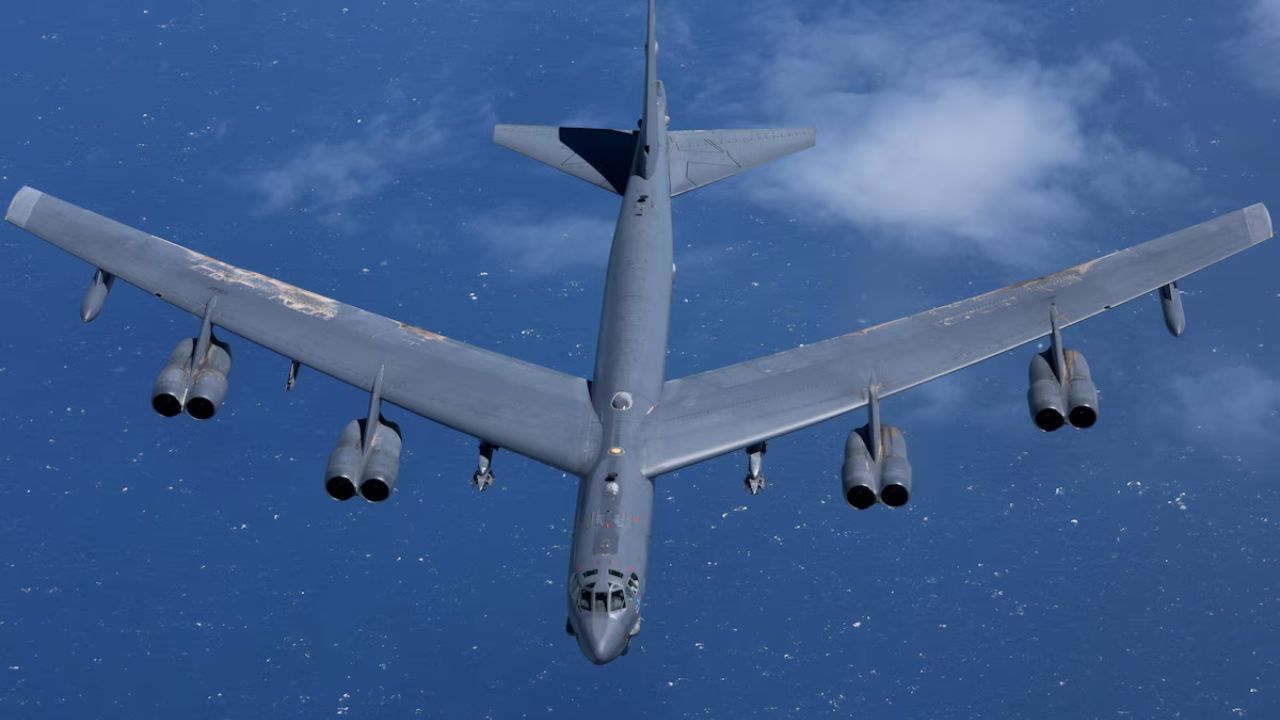

Meet the B-52H Stratofortress, a long-range bomber that remains in operation and is expected to stay active until 2050.
Few aircraft remain relevant for as many decades as the B-52H Stratofortress. Developed for long-range missions, the bomber continues to be one of the main strategic platforms of the United States Air Force. Capable of carrying conventional and nuclear weapons, operating in different combat scenarios, and covering more than 14,000 kilometers without refueling, the plane continues to perform important functions even after more than half a century of use.
The aircraft, manufactured by Boeing, was incorporated into military service in the 1950s and continues to receive technological updates. According to information released by the US Air Force in 2019, the model is expected to remain active until at least 2050, demonstrating the adaptability of a design created in another period of aviation history.
Learn everything about the B-52H Stratofortress
Throughout its operational history, the bomber has been employed in various roles. Its versatility allows it to execute long-range strategic attacks, support ground troops, engage maritime targets, and conduct surveillance operations.
-
Brazilian Family-Owned Notebook Brand Animativa, Known for Scented Notebooks and Turma da Mônica Licenses, Reaches $42 Million in Revenue

-
Indian Inventor, 58, Develops Steering Wheel-Free Agricultural Machine Operated by Levers, Offering Cost-Effective Alternative to Expensive Tractors

-
Brazilian Senate Approves Bill to Automate Child Support Payments Directly from Debtors’ Accounts
-
Brazilian Student in the U.S. Helps Provide Clean Water to 50 Families in São Paulo Slum, Launches Year-Long Volunteer Project with National Expansion Plans


Additionally, the aircraft can use different types of precision-guided weapons. This feature enhances its flexibility in diverse combat environments.
Among the missions assigned to the model are:
- Long-range strategic attacks;
- Close air support;
- Air interdiction operations;
- Missions against vessels;
- Mine laying;
- Maritime surveillance;
- Use of conventional and nuclear weapons.
The ability to adapt to different scenarios has helped keep the aircraft relevant even in the face of advancing new military technologies.
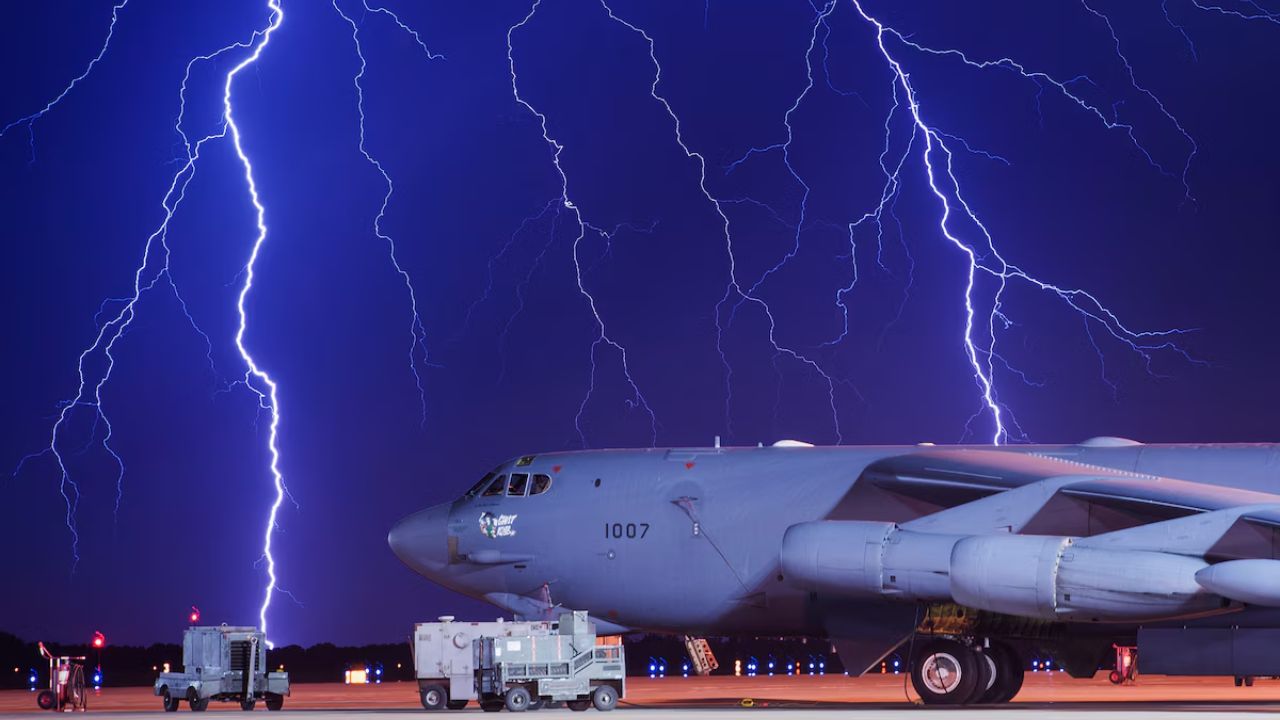
Onboard technology enhances bomber efficiency
Even though it is a project created decades ago, the aircraft has received successive upgrades to meet current operational demands.
The B-52H is equipped with electro-optical sensors, infrared observation systems, and advanced target designation equipment. These features allow it to locate, identify, and track objectives at great distances.
Another advantage is the use of equipment that assists in nighttime operations. Crew members can rely on systems that enhance environmental perception during flights in low-light conditions, increasing safety and observation capability.
Technological improvements also favor the use of guided munitions, increasing the accuracy of attacks carried out in different weather conditions.
B-52H Stratofortress has an impressive range
One of the most remarkable features of the B-52H Stratofortress is its autonomy.
Without the need for refueling, the bomber can exceed the mark of 14,000 kilometers of combat range. When refueled during flight, its operational endurance mainly depends on the physical stamina of the crew.
This capability allows the aircraft to reach distant areas without the need for intermediate landings, significantly expanding its operational range.
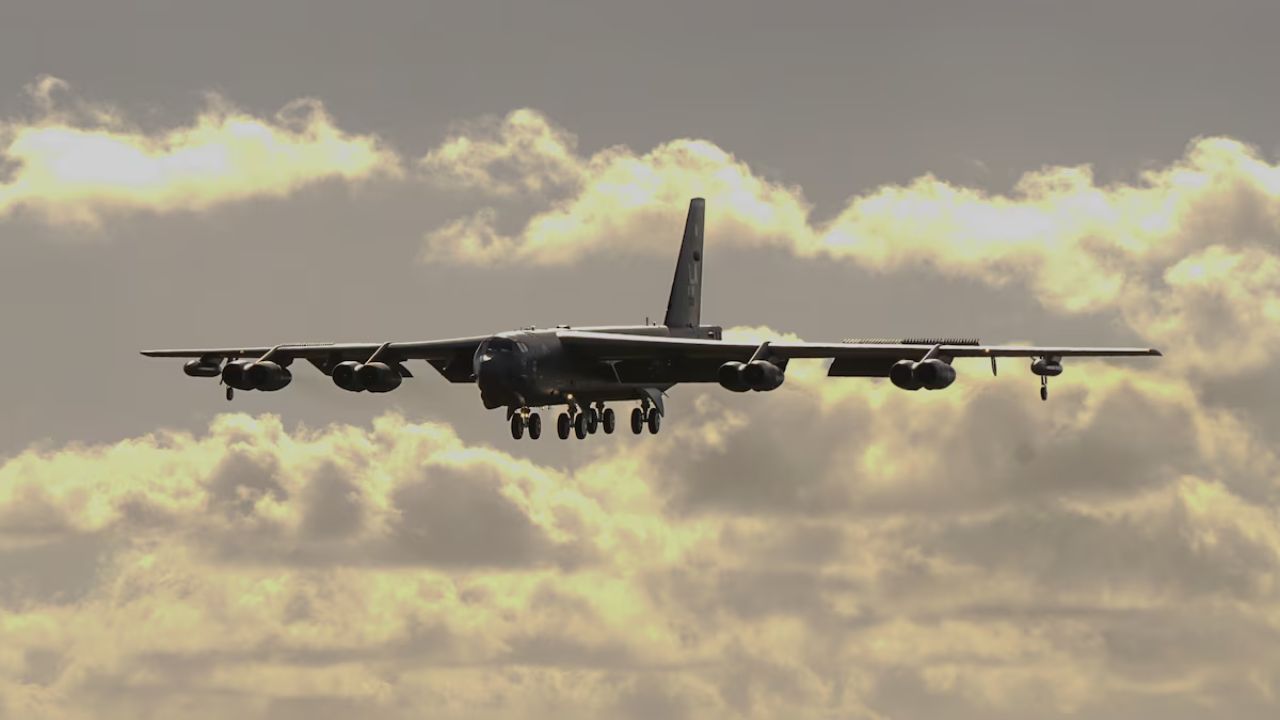
Another example of its operational potential occurred in September 1996. On that occasion, two B-52Hs carried out a round-trip mission totaling 25,750 kilometers and lasting 34 hours, departing from Barksdale Air Force Base in Louisiana.
Participation in military operations throughout history
The operational history of the B-52H Stratofortress includes participation in various conflicts and military campaigns.
During Operation Desert Storm, the aircraft played a significant role. The B-52s were responsible for dropping about 40% of all weapons used by coalition forces.
Subsequently, the model also participated in other relevant military operations.
Among them are:
- Operation Desert Storm;
- Operation Allied Force;
- Operation Desert Strike;
- Operation Enduring Freedom;
- Operation Iraqi Freedom;
- Operation Inherent Resolve.
In 2001, for example, the plane was used to provide air support through precision-guided munitions. In 2003, it participated in night missions during Operation Iraqi Freedom.
More recently, in 2016, it returned to operate in the area of responsibility of the United States Central Command. During that period, it conducted approximately 1,800 combat missions against Islamic State forces in Syria and Iraq.
The armament power of the B-52H Stratofortress
Another factor that helps explain the operational longevity of the B-52H Stratofortress is its large payload capacity.
The model can carry approximately 31,500 kilograms of various armaments. Among the compatible equipment are bombs, mines, and missiles.
The H version was also adapted to use air-launched cruise missiles. The aircraft can carry up to 20 units of this type of armament.
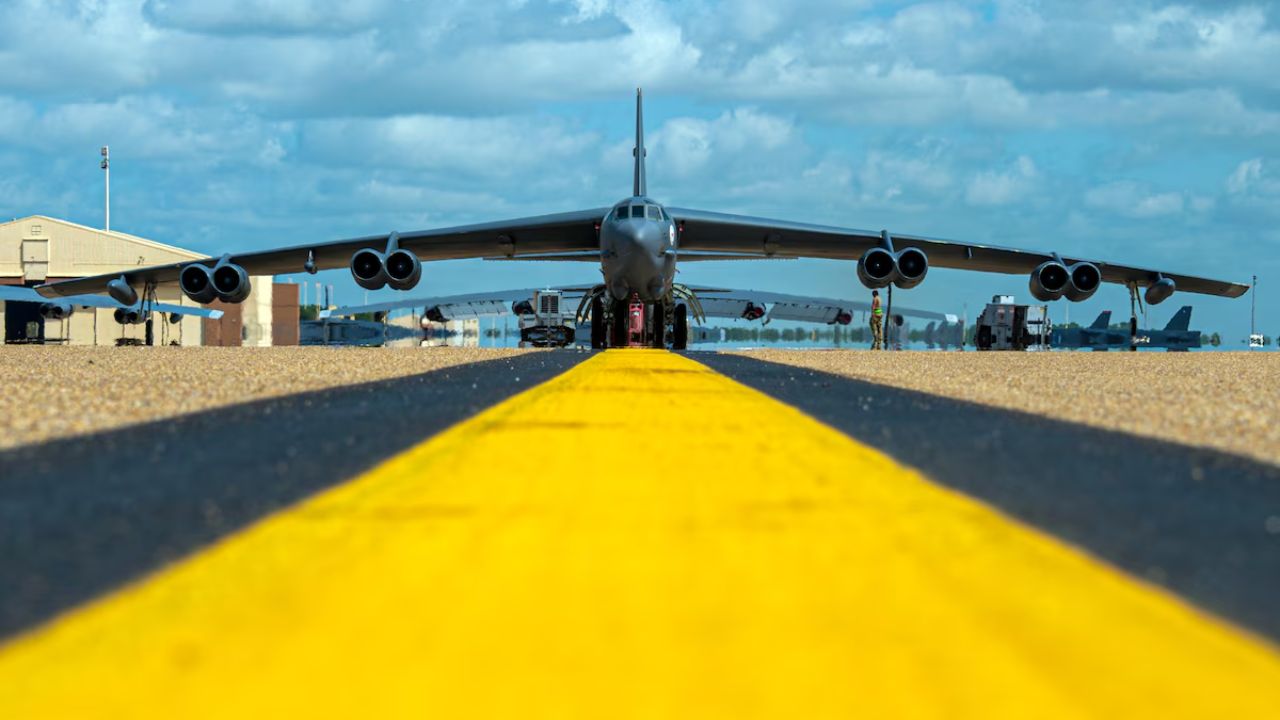
This combination of range and offensive capability has transformed the bomber into a strategic platform for long-distance missions.
Characteristics of the B-52H Stratofortress
The technical data help to gauge the size of the B-52H Stratofortress.
Check out some specifications released by the U.S. Air Force:
- Wingspan: 56.4 meters;
- Length: 48.5 meters;
- Height: 12.4 meters;
- Approximate weight: 83,250 kg;
- Maximum takeoff weight: 219,600 kg;
- Fuel capacity: 141,610 kg;
- Maximum speed: 1,046 km/h;
- Operational ceiling: about 15,244 meters;
- Crew: five military personnel.
Propulsion is provided by eight Pratt & Whitney TF33-P-3/103 turbofan engines, each with thrust of up to 7,711 kgf.
Current presence and future of the aircraft
Although various models have been produced over the years, only the H variant remains in service currently.
There are aircraft distributed among units of the active and reserve United States Air Force. The model is mainly linked to the bomber wings located at Minot Air Force Base in North Dakota and Barksdale Air Force Base in Louisiana.
In total, 744 units of the B-52 family were built. The last one was delivered in October 1962.
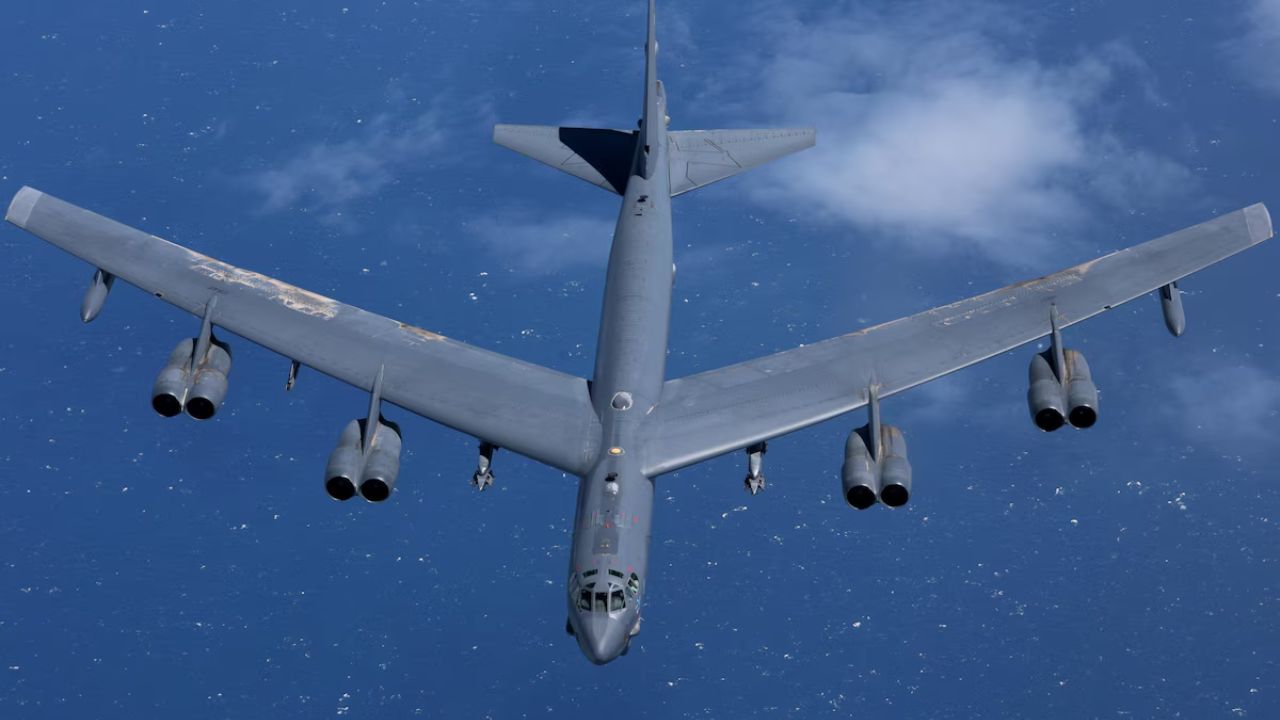
Even decades after its manufacture, the B-52H Stratofortress continues to be considered an important piece of the American strategic structure. The combination of constant upgrades, long range, high load capacity, and operational flexibility explains why the aircraft remains relevant and is expected to stay in activity for many years.