Portuguese
  Spanish





To train robots, workers earn about two dollars per hour, or 10.35 reais, using cameras on their heads and motion sensors. The images go to AI companies, and the bank Morgan Stanley estimates more than one billion humanoid robots in use by 2050. But these jobs may be temporary.
In India, thousands of workers are recording themselves while cutting fruits, folding clothes, and cooking to train artificial intelligence robots. According to a report by the AFP agency, published on 06/12/2026, they use cameras attached to their heads and motion sensors to record household tasks that, in the future, should be performed by machines. An example is housewife Nagireddy Sriramyachandra, who films herself cutting mangoes with a cellphone attached to her head.
According to AFP, she earns about two dollars per hour, equivalent to 10.35 reais, and sends the videos to technology companies. These companies use the material to program machines to move like people in the real world. At 25, Sriramyachandra is part of a growing army of thousands of artificial intelligence system trainers in the world’s most populous country.
How the work of training robots works
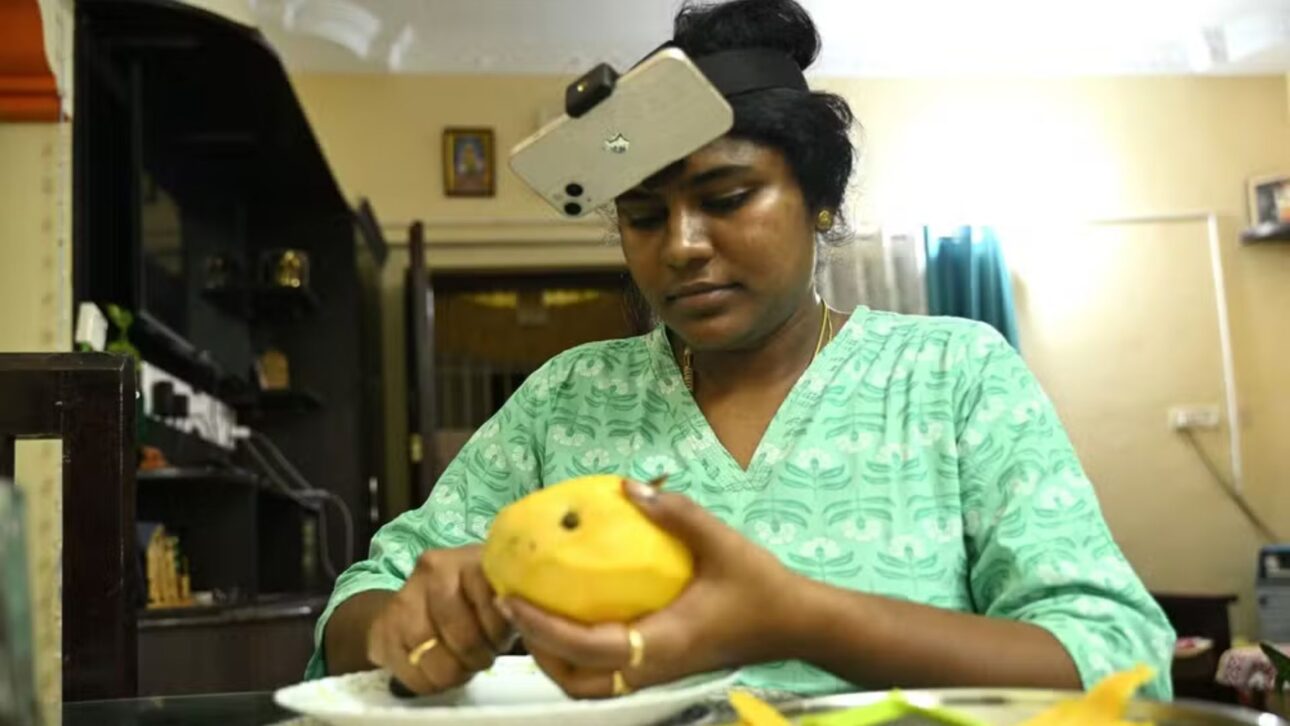
The work of training robots is, in practice, recording the routine in the first person. According to AFP, some trainers work at home, others in factories or specialized studios, using glasses that record, cameras attached to their heads, and motion sensors. Sriramyachandra, who lives in Chennai, in the state of Tamil Nadu, says that an audible alert of undetected hands is triggered when she is not recording correctly.
-
AI Video Generator Automatically Creates Subtitles and Animated Captions

-
São Paulo Unveils Latin America’s Largest Underground Reservoir, Holding 900 Million Liters, in the Greater São Paulo Area

-
Chinese Teen Wins Gold in Germany for Invention Turning Air Moisture into Underground Irrigation in Drought-Stricken Areas

-
Desertification Threatens Brazil’s Caatinga: 85% of Semi-Arid Region Affected, 30 Million at Risk, and Efforts Underway to Restore 10 Million Hectares by 2045





The logic behind this is simple. According to the report, developers believe that feeding artificial intelligence models with first-person recordings will help robots imitate humans. Chatbots and image generators already process enormous volumes of data, but it’s much more challenging to build systems that work well in real environments.
Who’s behind it and how much is earned
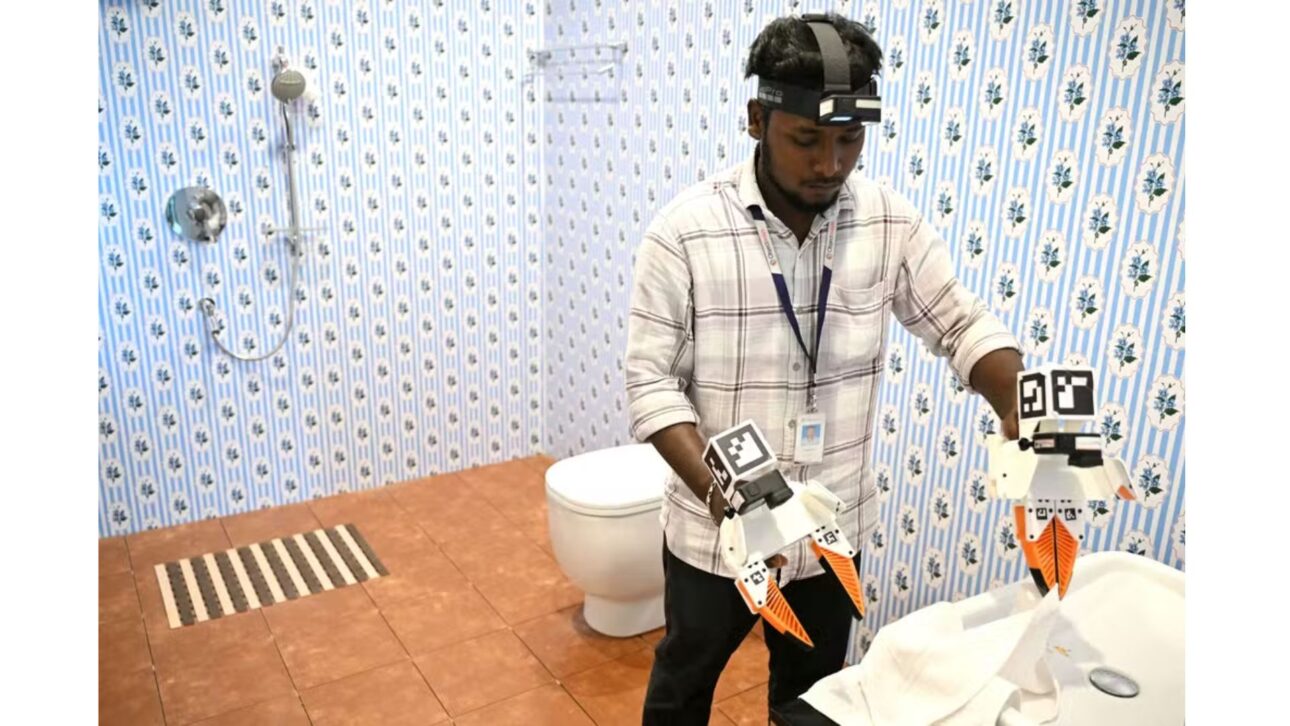
Among the companies paying to train robots is Objectways, with offices in India and the United States. According to AFP, the company has among its clients multinational Fortune 500 companies and works with Amazon SageMaker, a machine learning model platform. The director of Objectways, Ravi Shankar, summarized the videos requested by clients: “folding clothes, making coffee, cooking something very specific, preparing sandwiches.”
The most sensitive point is compensation. According to the report, workers receive about two dollars per hour, or 10.35 reais, which Sriramyachandra views pragmatically: “Who else will pay you 250 rupees per hour just for doing housework?” In a textile factory in Karur, AFP saw eight people with cameras on their heads while labeling caps and ironing fabric bags.
A booming market, but uncertain jobs
The race to train robots is happening amid a booming market. According to AFP, the humanoid robot sector is on the rise, and Morgan Stanley bank estimates that by 2050, there will be more than a billion of them in use. In India, this emerging field of spatial artificial intelligence is creating new jobs, but as the report itself notes, this may only last for now.
The working conditions, however, expose the fragility of these positions. According to AFP, engineering student Rani N., 21, records about 90 four-minute videos a day and considers the job tolerable, although she always feels like she has a camera strapped to her head. Digital work specialist Aditi Surie, from the Indian Institute for Human Settlements, assesses that “it is possible that these data collection services will expand.”
Will robots replace humans?
The inevitable question is whether training robots ultimately means replacing people. According to AFP, Manish Agarwal, from Humyn Labs, who also records conversations on topics ranging from politics to sports for clients interested in speech patterns, denies that robots will steal jobs and believes that humans and machines will one day work together. To illustrate, he stated that “a welder in India could control a welding robot in Prague.”
Still, there is irony and much uncertainty in this scenario. Workers are teaching systems that, in the developers’ view, should one day take over these tasks, and both domestic robots and the one billion units mark by 2050 remain projections, not reality. Between the pragmatism of those who need the money, the optimism of executives, and the caution of experts, it remains open whether humans and robots will work side by side or compete.
The movement to train robots in India presents a curious portrait of the artificial intelligence era, with thousands of people filming their own domestic routines to teach machines to mimic these gestures. It’s a job that pays about 10.35 reais per hour, is growing rapidly, and relies on the bet that robots will, one day, take over household tasks, folding clothes and cooking on their own, something Morgan Stanley projects to be more than a billion units by 2050. Behind the cameras, however, remains the question about the future of these jobs and those who hold them.
And you, would you accept a job like this, spending the day with a camera on your head to train robots? Share your thoughts on this story and exchange ideas with other readers about the future of work in the face of artificial intelligence, with respect for different views.