






 Portuguese
  Spanish


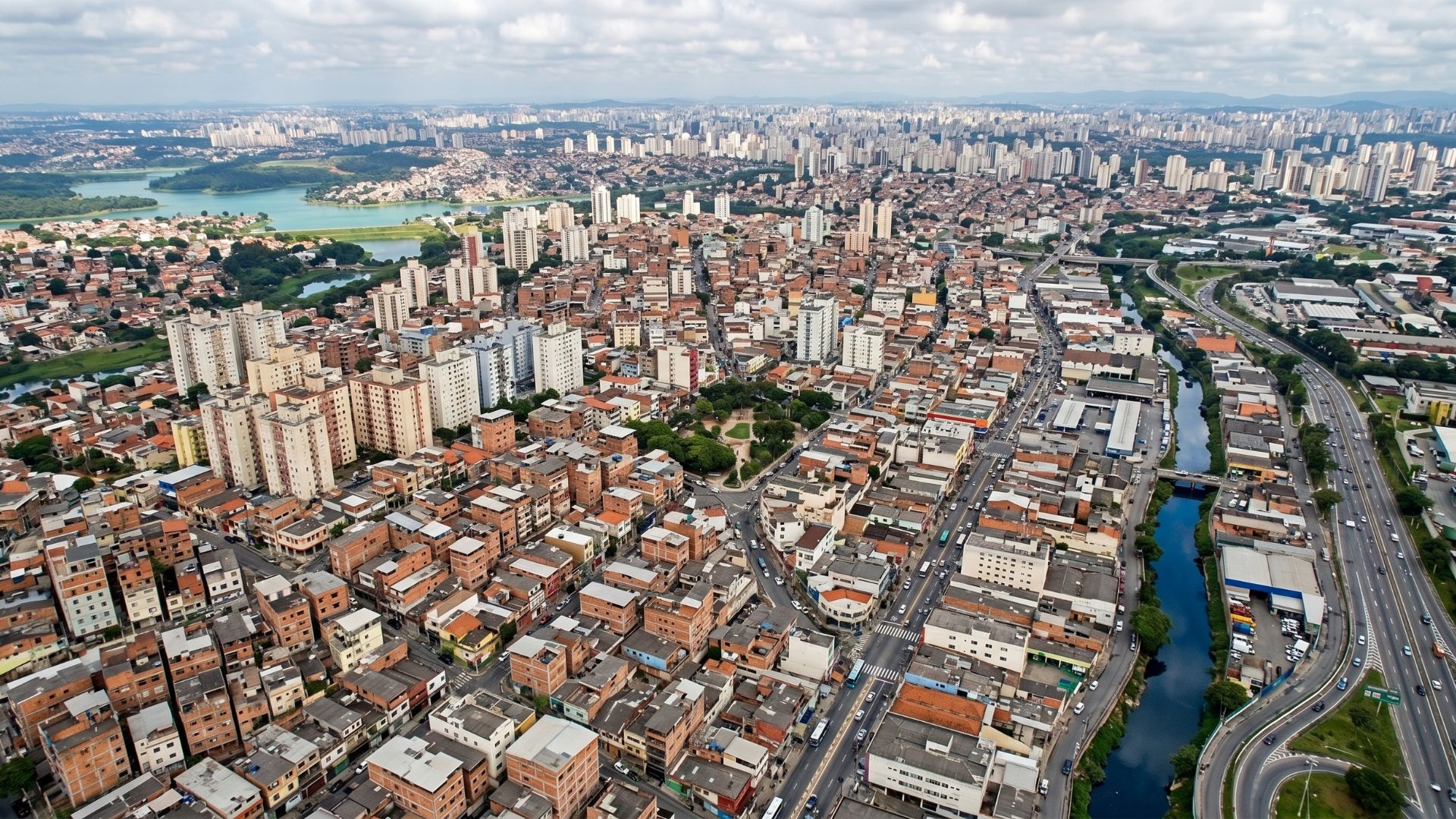

Diadema has 404 thousand inhabitants in just 30.7 km², density 71 times higher than the São Paulo average, almost universal sanitation, and historic drop in homicides after law closed bars at midnight.
According to the IBGE, Diadema, in the state of São Paulo, has a total area of just 30.732 km² and an estimated population of 404,118 inhabitants in 2024. This results in a demographic density of 12,923.8 inhabitants per square kilometer, a rate 71 times higher than the average for the state of São Paulo, which is 180.7 inhabitants/km².
The city is often cited as the municipality with the highest demographic density in Brazil among those with more than 300 thousand inhabitants. To visualize the size of the territory, Diadema has 30.7 km², while the Guarulhos International Airport occupies about 27 km².
Despite the extreme density, the municipality presents relevant urban indicators. Water supply reaches 100% of the population, while sewage services reach 97.8%, above the average for the state of São Paulo and well above the national average.
-
Viral Video of Giant Gold Nugget in Brazil’s Oiapoque Revealed as Painted Rock by French Guiana Miner

-
18th-Century Treasure Uncovered in Brazilian Amazon: 20 Réis Coin and Dutch Pipes Found at Construction Site
-
New York Resident Uncovers Complete Mastodon Jawbone in Backyard After Spotting Teeth Emerge from Ground
-
Young Treasure Hunter from Brazil’s Balneário Camboriú Finds $22,000 in Jewelry with Metal Detector, Aims for $1 Million, and Returns iPhone Found in Ocean


Diadema is one of the densest cities in Brazil and concentrates 404 thousand inhabitants in 30 km²
Diadema has no rural area, large urban voids, or territory available for horizontal expansion. The city is practically fully occupied, with narrow streets, small lots, dense housing, and strong pressure on schools, health, transportation, and infrastructure.


The density of 12,923.8 inhabitants/km² turns every square meter into a strategic resource. Instead of growing outward, the municipality grew inward, with houses expanded vertically and neighborhoods consolidated in areas previously occupied precariously.
This reality makes Diadema a rare urban case in Brazil. It is an entire city operating with the density of a metropolitan neighborhood, but with full municipal responsibilities, including sanitation, education, health, urban security, and public services.
City was born as an industrial dormitory of the Greater ABC region of São Paulo
Diadema was a district of São Bernardo do Campo until its emancipation in 1959. Starting in the 1950s and 1960s, the industrialization of the Grande ABC attracted migrants from the Northeast and the interior of São Paulo to work in automotive, metallurgical, and petrochemical factories.
While Santo André, São Bernardo, and São Caetano had more consolidated industrial infrastructure, Diadema received a large portion of the workers who could not live in these municipalities. Many built simple houses and shacks on slopes and areas without adequate urbanization.
The growth was explosive. The population increased from about 10,000 inhabitants in 1960 to 150,000 in 1970 and more than 300,000 in 1980. The city tripled in successive decades without the infrastructure keeping pace with the rate of occupation.
Diadema’s Dry Law closed bars at midnight and reduced homicides by 73%
In 2002, the City Council approved local legislation known as the Dry Law, prohibiting the operation of bars and establishments selling alcoholic beverages after midnight. The measure was controversial and faced resistance from merchants and part of the population.
The results, however, appeared quickly. Between 1999 and 2006, the homicide rate fell from 141 to 38 per 100,000 inhabitants, a reduction of 73% in six years.
Researchers from the School of Public Health at USP, the Ministry of Health, and other countries studied the case. The mechanism identified was direct: a large portion of homicides occurred between midnight and 4 a.m., at bar exits, in conflicts aggravated by alcohol.
Public safety in Diadema became an international reference for urban prevention
Diadema’s experience gained attention because it did not rely on massive construction, privatization of prisons, or extraordinary policing. The main intervention was a simple urban rule, targeting the time and environment where violence was concentrated.
Closing bars at midnight did not eliminate poverty, inequality, or alcohol consumption. But it reduced exposure to specific situations where interpersonal conflicts turned into homicides.
For this reason, Diadema began to be studied as an example of situational violence prevention. The city demonstrated that localized public policies, based on data regarding time, territory, and behavior, can produce rapid effects on lethal indicators.
Sanitation in Diadema surpasses averages of Brazil and São Paulo
The sanitation data is notable precisely because of the extreme density. Diadema has 100% water supply coverage, compared to a national average of 83.1%.
Sewage coverage reaches 97.8% of the population, above the São Paulo state average of 91.5% and far above the Brazilian average of 59.7%. In a fully occupied city, bringing sewage networks to almost all households requires decades of investment.
The infrastructure needed to be installed under old, narrow streets often without original planning. Diadema managed to universalize basic services in a compact, densely populated territory historically marked by rapid urbanization.
Diadema resisted deindustrialization with its own productive base
The Greater ABC region faced strong deindustrialization between the 1990s and 2000s. Large factories closed, reduced operations, or moved to other states in search of tax incentives.
Diadema, however, developed a more diversified industrial base, composed of small and medium-sized metallurgy, auto parts, plastics, and chemical products. This structure resisted better than large automotive plants concentrated in a few employers.

Today, industry still accounts for an important part of the municipal GDP, alongside commerce and services. The city has ceased to be just a dormitory for ABC workers and has consolidated its own urban economy, more diversified and flexible.
Verticalized city was born from the need to accommodate more people in the same territory
The high density of Diadema appears in the daily lives of families. Houses grow upwards, slabs become new floors, plots are divided among relatives, and neighborhoods consolidate without large free areas.
This spontaneous verticalization did not come from sophisticated urban planning, but from the need to accommodate generations in the same space. Children and grandchildren of migrants who arrived in the 1960s and 1970s began to invest in their own homes and local businesses.
The transformation was slow but profound. Diadema ceased to be a city of temporary arrival and became an established city, built by families who stayed, improved their homes, and created lasting urban ties.
Butterfly Garden and Botanical Garden show investment in green areas in a city without space
In a municipality of 30.7 km², any green area is the result of political choice. The available space is scarce and could easily be occupied by housing, commerce, or industry.

Even so, Diadema maintains facilities such as the Butterfly House, one of the largest butterfly breeding and exhibition centers in Latin America, and the Botanical Garden, inaugurated in 2001, with 93,000 m² and more than 1,500 species of Atlantic Forest plants.
These areas fulfill an environmental, educational, and symbolic function. In a city marked by extreme density, preserving green public spaces means competing for territory with a social logic, not just a real estate one.


