






 Portuguese
  Spanish
  5 min of reading
  0 comments


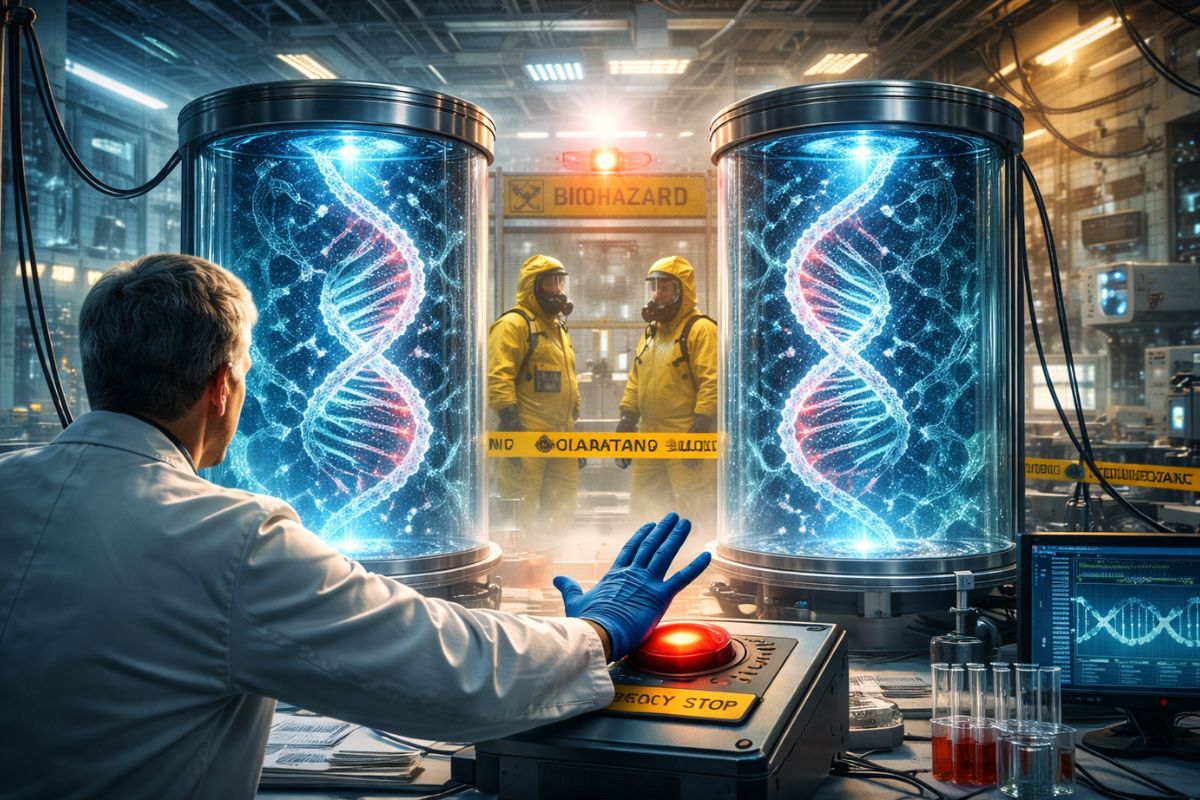
Financed in 2019 with US$ 4 million, the research on mirrored life was halted due to biosafety, and a technical report linked to Science details why the topic frightens experts
In 2019, an American scientist received US$ 4 million to advance a synthetic biology project and, during the research, arrived at the question that raised the alarm: could it be possible to create mirrored life, a cell with inverted chirality, made from scratch in the laboratory? The warning came from biosafety and immunology experts, who called for an immediate halt to the work.
The scientist, identified as Kate Adamala, stopped the line of research and spent years arguing that this path should not be followed. The debate gained international scale when an article and a technical report associated with the journal Science, published in December 2024, pointed out biosafety risks related to mirrored life, including the possibility of a bacterium that does not fit the body’s defenses or antibiotics.
The invisible rule of life and why chirality matters
To understand what is at stake, one must look at a fundamental characteristic of biology called chirality. Molecules can have “mirrored” orientations, like left and right hands, identical in shape but unable to perfectly overlap.
-
Helicopter Drops 180 Tons of Sand and Gravel on Swedish River to Revive Ecosystem Damaged by Decades of Exploitation

-
Brazilian Company Launches Retro Smartphone with 48 MP Camera, T9 Keyboard, and Privacy Features for Social Media-Free Use

-
Self-Taught Chinese Farmer Builds 5-Ton Submarine from Scrap, Launches It in Anhui River
-
Invisible Induction Technology Enables Wireless Power for Blenders, Coffee Makers, and Air Fryers, Reducing Countertop Cables





In life on Earth, there is a universal preference for one side. DNA follows one orientation, and proteins are built with amino acids facing the opposite side, forming a stable pattern that allows for fitting between molecules, enzymes, and cellular structures. The problem begins when someone tries to manufacture the “pieces” by flipping them to the opposite side, paving the way for the idea of mirrored life.
What would a mirrored cell be in practice
A simple way to visualize it is to think of a lock and key. Biology works by fitting, and the fit depends on the correct orientation. Antibodies neutralize viruses because they fit the surface of the invader, and enzymes break down molecules because the shape matches precisely.
A mirrored cell would be a cell with everything inverted, mirrored DNA, mirrored proteins, mirrored sugars, operating like a common cell, but without ever having existed in nature. The central point of the warning is that, in billions of years, there is no record of organisms with this inverted chirality, which means that the biological systems of the planet have not evolved to recognize and contain this type of mirrored life.
Why the immune system and antibiotics may fail
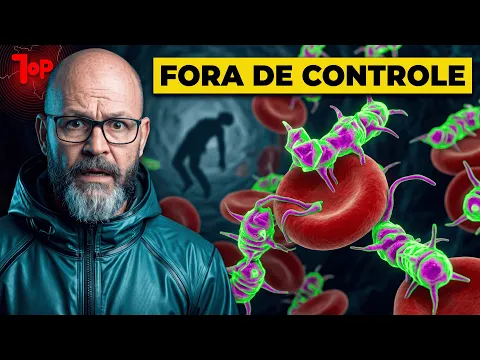

The base text describes risk as a fitting problem. The immune system recognizes enemies by shape, through receptors and antibodies. If the bacteria have proteins with the orientation reversed, the “lock” does not recognize the “key,” and there is no efficient immune response against mirrored life.
The same reasoning applies to antibiotics. They were developed to target specific structures with the standard orientation, cell wall, protein synthesis, and DNA replication. Against a mirrored bacterium, the assessment presented is that antibiotics would not fit, making resistance something structural from the start, without needing to evolve.
The report in Science and the warning before the technology existed
In December 2024, 38 scientists published an article in the journal Science focusing on the risks of mirrored life, accompanied by a technical report of nearly 300 pages signed by experts in immunology, synthetic biology, ecology, biosafety, and evolution. The document states that creating a mirrored bacterium would not be possible today, but it may become feasible in the coming decades.
The report also describes a concerning convergence: science would advance both in creating cells from scratch and in manufacturing mirrored “parts.” If these paths converge, the result could be a real mirrored bacterium. The cited cost for this would be around 500 million dollars, high, but not inaccessible for motivated governments or corporations.
Why the idea seemed tempting to science
The base text points out that there were concrete reasons for researchers to consider mirrored molecules. One of them is medical: mirrored molecules could last longer in the body because they are not recognized by certain enzymes, opening the door for more efficient drugs in some contexts, including antibiotic-resistant infections and certain types of cancer.
Another reason is scientific: to understand why life chose one chirality over another, an ancient question. There is also the hypothesis that mirrored enzymes could degrade plastic more efficiently than current methods. The intentions may be good, but the warning focuses on the specific leap of creating a complete organism capable of reproducing.
The most feared scenario and the environmental risk
One of the most serious points described is the scenario of a single mirrored cell escaping from a laboratory by accident, negligence, or ill intent. The assessment presented is that the environment would have no mechanisms to contain it, because viruses that infect natural bacteria and microscopic predators would be adapted to the standard chirality.
The consequence outlined in the base text is a chain reaction, with reproduction, multiplication, and evolution, expanding the use of environmental resources over time. The concern is not limited to the human body, because it is not possible to “treat” an ocean, a river, or an entire soil if the problem spreads.
The turnaround of those at the center of the research
According to the report, Kate Adamala suspended the research, did not renew the funding, and began working against the continuation of this line. Over months and conversations with experts outside of synthetic biology, the topic ceased to seem like science fiction and began to be treated as a real biosafety risk.
The very construction of the report, with international collaboration, appears as an effort to act before the technology fully exists, taking advantage of a prevention window that, according to the text, should not last forever.
The gap that worries experts
Despite the scientific consensus described, the base text points out that there is no international treaty or legislation that explicitly prohibits the development of mirrored life. DNA synthesis services can be contracted, and synthetic biology laboratories exist in universities and startups. The cited estimate is that a mirrored bacterium could be possible at some point between 10 and 20 years.
At the center of the alert is the question raised by the authors of the report: if knowledge advances and incentives exist, how long until someone decides to try?




Be the first to react!