






 5 min of reading
  0 comments


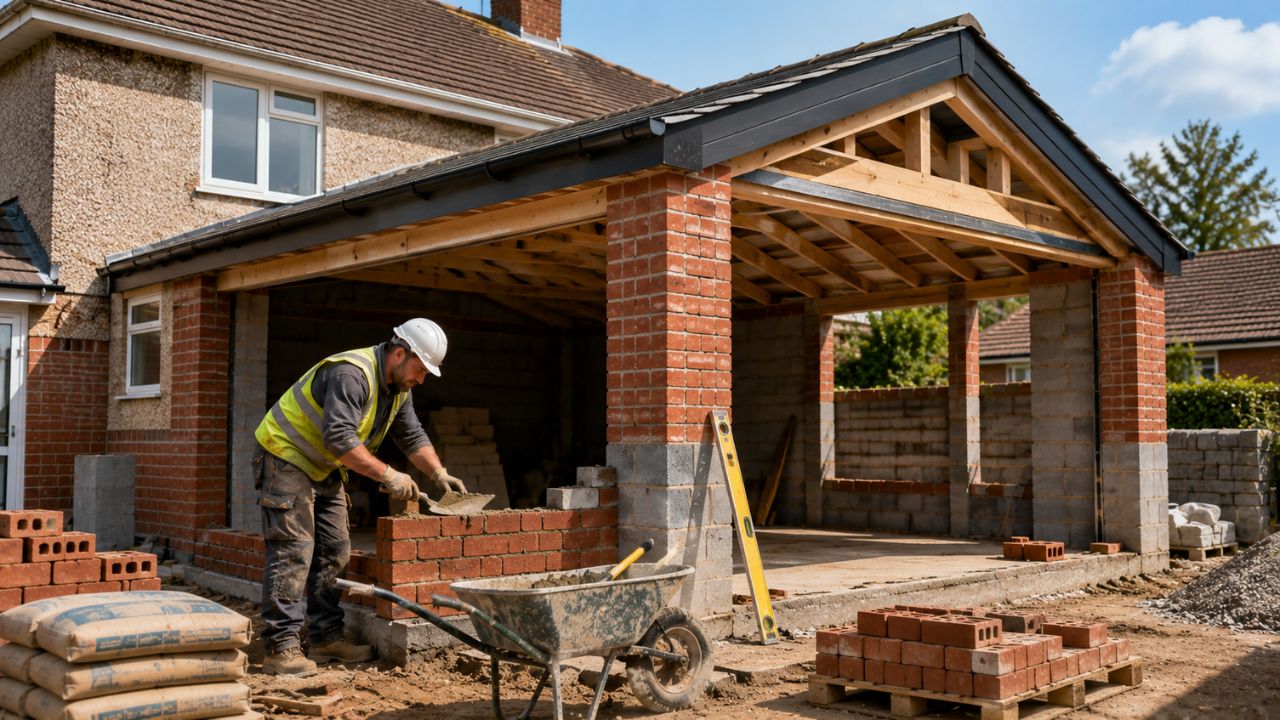
See how much it costs to build a simple covered garage in 2026. Find out the price per square meter, the bricklayer’s labor costs, and the extra expenses that can increase the budget.
Protecting the car from sun and rain exposure is one of the main reasons that lead owners to invest in a covered garage. However, before starting the construction, it is important to understand that the project involves a series of steps that go far beyond installing a cover. Costs with foundation, flooring, drainage, and structure can significantly raise the final budget.
According to the Market Monitor, a simple covered garage, equipped with flooring, pillars, and a light cover, can have a total cost between R$ 700 and R$ 1,600 per square meter in 2026. The difference in values occurs because each project has its own characteristics and distinct construction demands.
What is included in the cost of a covered garage?
Many people associate this type of construction only with the installation of a roof, but the construction usually involves other necessary elements to ensure safety and durability.
-
While traditional grass loses ground, a heat and drought-resistant alternative is advancing through Brazilian yards and attracting attention for requiring less frequent mowing and maintaining a uniform appearance even during prolonged drought periods.

-
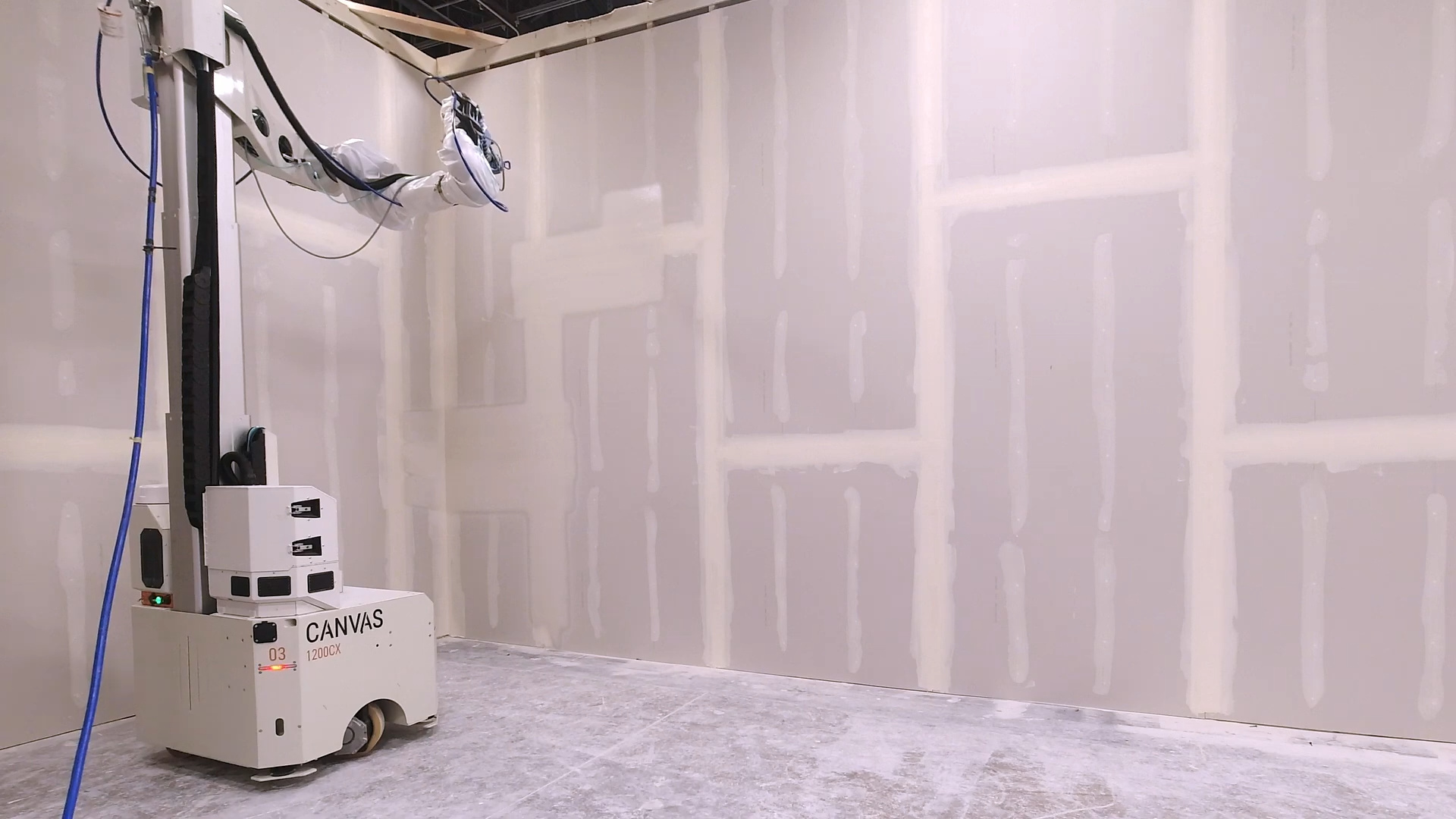
End of bricklayers? A robot smaller than a refrigerator and battery-powered challenges the most exhausting routine of construction sites: it plasters, sands, and finishes an entire drywall by itself, cutting the time for this service from five days to two and capturing 99.9% of the dust that would make workers sick.

-
They built an entire village in Wales with houses made of straw, clay, wood, and recycled materials, where families produce their own energy, collect rainwater, and live in one of the most famous sustainable housing projects in Europe.
-
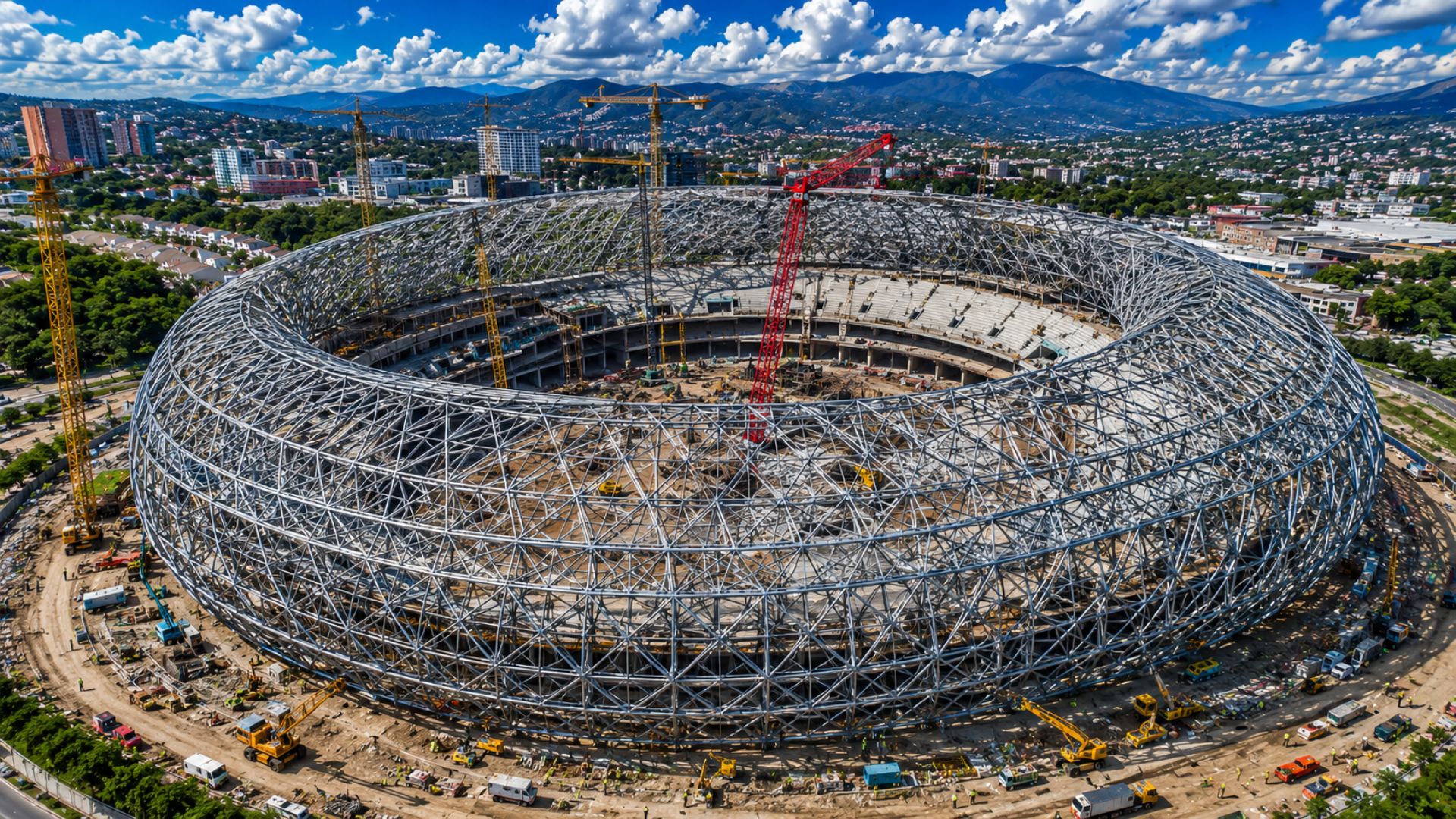
Mega stadium of R$ 2.5 billion financed by China completes perimeter metal structure at 40 meters above ground in El Salvador, with stands and internal systems advancing in parallel towards delivery in 2027

Depending on the land conditions and the characteristics of the residence, services such as execution of subfloor, construction of structural bases, installation of pillars, waterproofing, and creation of systems for rainwater drainage may be required.
Additionally, some projects include complements such as gutters, lighting, painting, side closures, and gates, factors that increase the necessary investment.
Labor cost can vary according to complexity
Hiring professionals also represents an important part of the budget. The simplest services performed by bricklayers are usually charged between R$ 180 and R$ 450 per square meter.
However, when the construction includes slabs, electrical installations, demolitions, or additional closures, costs tend to increase due to the need for specialized services. For this reason, two projects with similar areas may show considerable differences in final values.
Four factors that most influence the budget
Among the elements that most impact construction costs are the choices made during the planning phase.
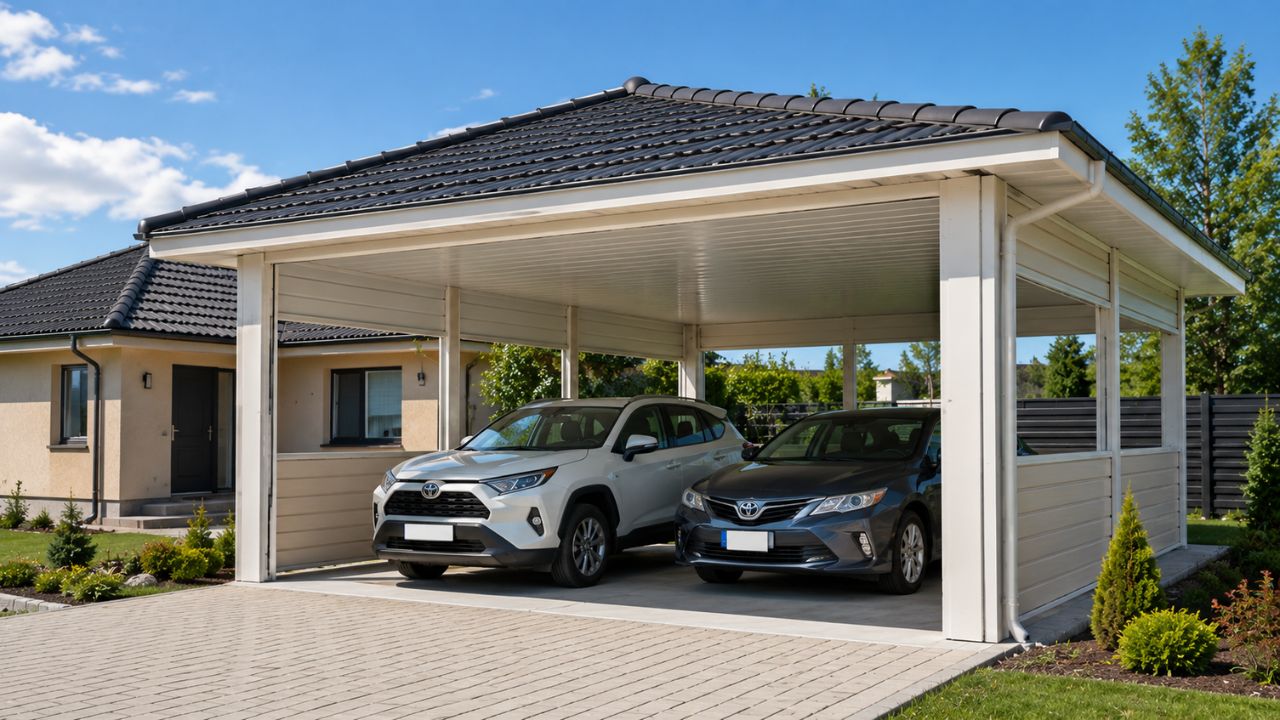
Material used in the coverage
The structure chosen to cover the garage directly affects the expenses with materials and labor. Options such as metal tiles, polycarbonate, fiber cement, wood, or slab have different installation and structural support requirements.
Type of flooring
The finish of the area also influences the investment. While simpler solutions require less expenditure, alternatives using specific materials or different drainage systems can increase the cost of the project.
Support structure
Projects with larger areas and wider spans generally require reinforced foundations, more robust pillars, and greater use of reinforcements.
Complementary items
The inclusion of elements such as ceiling, lighting, painting, gutters, gates, and enclosures can represent a significant portion of the total budget.
Garage size should consider circulation and comfort
Before starting construction, correctly defining the dimensions of the garage is a fundamental step.
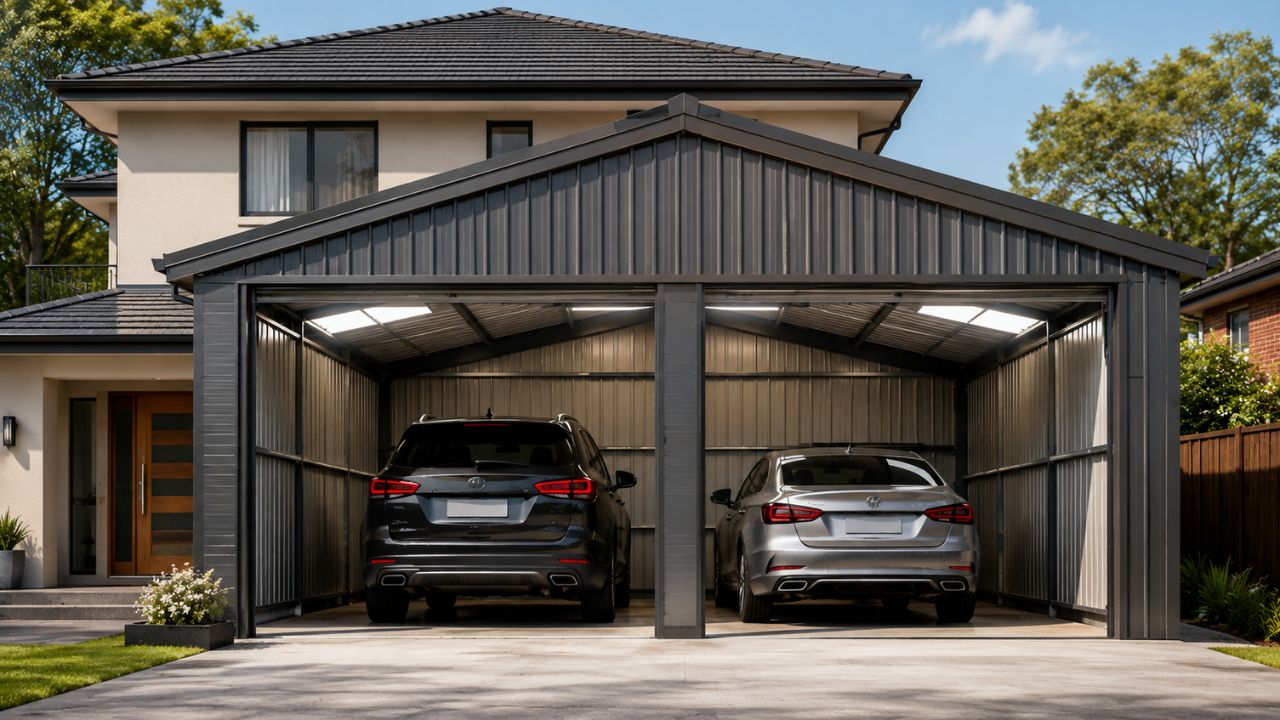
As a reference, a space intended for a single vehicle usually occupies between 12.5 m² and 15 m². Projects for two cars positioned side by side typically require areas between 25 m² and 32 m².
When the space will also be used for storing objects or installing cabinets, it is necessary to plan additional areas for circulation.
In cases of garages built in side corridors, the analysis of the available space should consider the opening of the vehicle doors, the distance from the walls, and the ease of access to other areas of the property.
Side projects may require additional adaptations
The construction of a garage in narrow areas located next to the residence can present specific challenges.
This type of situation may require extra interventions, such as adjustments to the existing floor, drainage solutions, and adjustments to already constructed walls.
Furthermore, the limited space for the movement of workers and materials can make execution more time-consuming.
When might the project need municipal approval?
Besides financial issues, owners must also check if the project meets the urban requirements of the municipality.
The need to consult public bodies may arise when the construction creates a permanent covered area, modifies the residence’s facade, interferes with mandatory setbacks, or promotes structural changes.
Changes related to the drainage of land water or interventions near sidewalks, boundaries, and vehicle accesses may also require prior analysis.
As rules vary from city to city, the recommendation is to seek information from the city hall before starting the project.
Not all structures receive the same treatment by municipal administrations. Fixed covers supported by pillars or walls generally may require project submission and evaluation by the municipality.
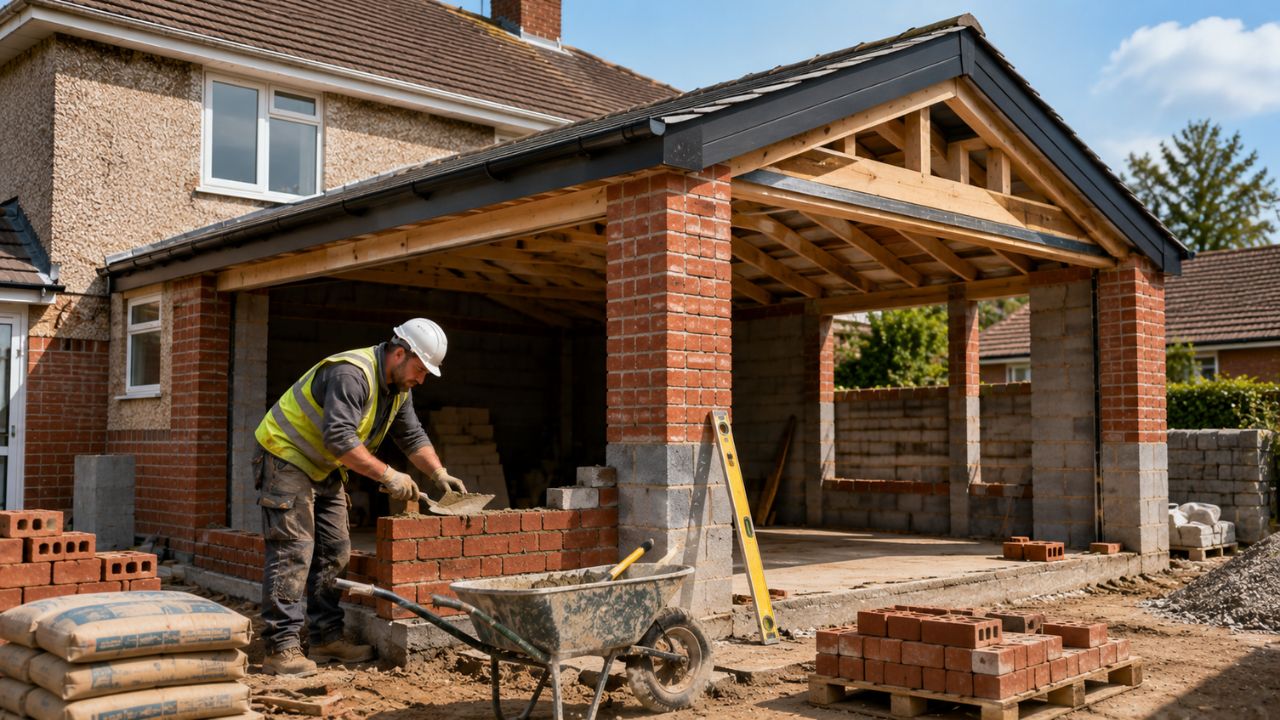
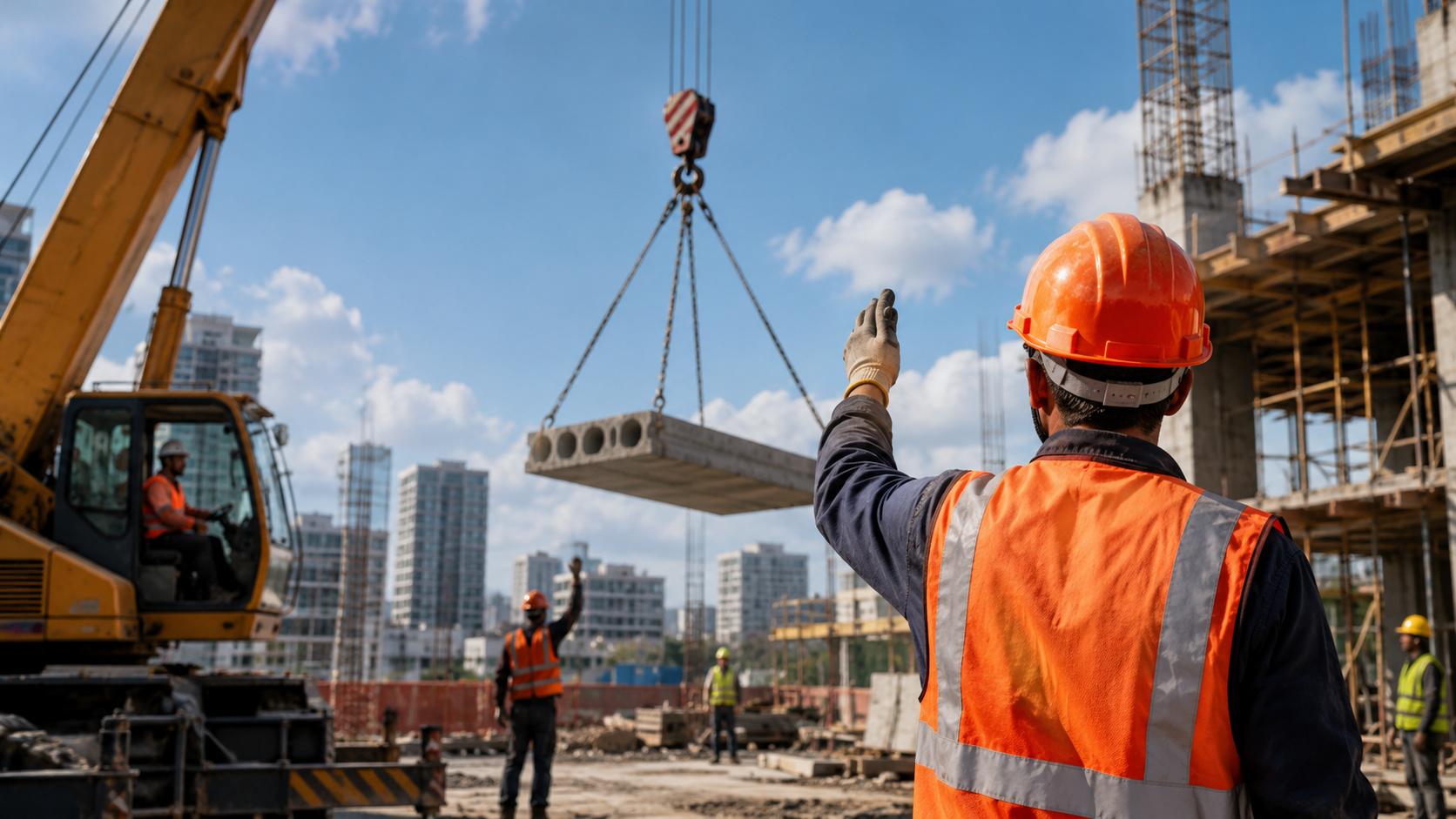
More robust structures, such as concrete slabs and constructions with greater structural load, usually require more detailed analyses. Removable and lighter solutions may follow simplified procedures, although the application of the rules depends on local legislation.
Detailed planning helps avoid future expenses
When requesting proposals, it is recommended to ask for costs to be presented separately, detailing materials, labor, waste removal, electrical installations, painting, and drainage systems.
It is also important to specify exactly what will be built, indicating whether the space will only receive coverage or if it will undergo other improvements.
Choosing the cheapest proposal without analyzing technical aspects can result in future problems, such as leaks, cracks, heat accumulation under the coverage, water drainage failures, and difficulties related to property regularization.
Watch the Casa em Construção video and see how much was spent on covering their garage:






Be the first to react!