






 Portuguese
  Spanish


The American Erin Calkins didn’t even want a bag, but she got one for 8 dollars at a Goodwill. Weeks later, while looking for her keys, she put her hand into a tear and found a treasure in the lining: a diamond bracelet valued at 1,200 dollars. The thrift store bag was worth gold.
There is a type of story that makes anyone want to rummage through everything they’ve ever bought second-hand. Erin Calkins’ story is exactly like that: she paid 8 dollars for a second-hand bag and, without knowing it, took home a hidden jewel worth one hundred and fifty times that amount. The detail that turns the case into an urban fairy tale is how she discovered it, almost by chance, weeks after the purchase.
According to Newsweek, which interviewed the protagonist, Calkins is a resident of Atlanta, Georgia, and wasn’t even looking for a bag when she entered a Goodwill store. It was only when trying to find her lost keys, some time later, that she noticed a tear in the inner lining and, upon putting her hand there, pulled out a bracelet of diamonds that a jeweler would appraise at 1,200 dollars, the treasure in the lining that no one imagined.
The 8-dollar bag she wasn’t even looking for
The beginning of the story is as ordinary as possible, and that’s exactly what makes it charming. Erin Calkins had gone to Goodwill with a very specific and not glamorous goal: to look for a white dress shirt for her husband to wear at a wedding. It was in the middle of this search that a stylish bag caught her attention, and since it cost only 8 dollars, she decided to take it on impulse, without great expectations and without suspecting anything.
-
Construction Workers in Germany Uncover Nearly Intact 29-Ton StuG III Tank Buried for 80 Years

-
Ohio Restaurant Owners Close for a Week to Take All 60 Employees on a Bahamas Cruise with Full Pay
-
Brazilian Mother Turns Pasta Business into $12,000 Monthly Success Using YouTube and TikTok for Marketing and Web Design Skills

-
Construction Worker Finds $30,000 Left in Florida Gas Station Bathroom, Tracks Down Owner to Return It, Declines Dinner Offer as Thanks


The purchase was forgotten for a while, like so many items we acquire and take time to use. The thrift store bag entered the rotation of everyday objects without any ceremony, just another cheap accessory found in a second-hand store. No one there, least of all Calkins herself, could have guessed that the 8-dollar item carried, sewn into the lining, a secret that would change the tone of the story and make headlines around the world.
The tear in the lining and the hand that found the treasure
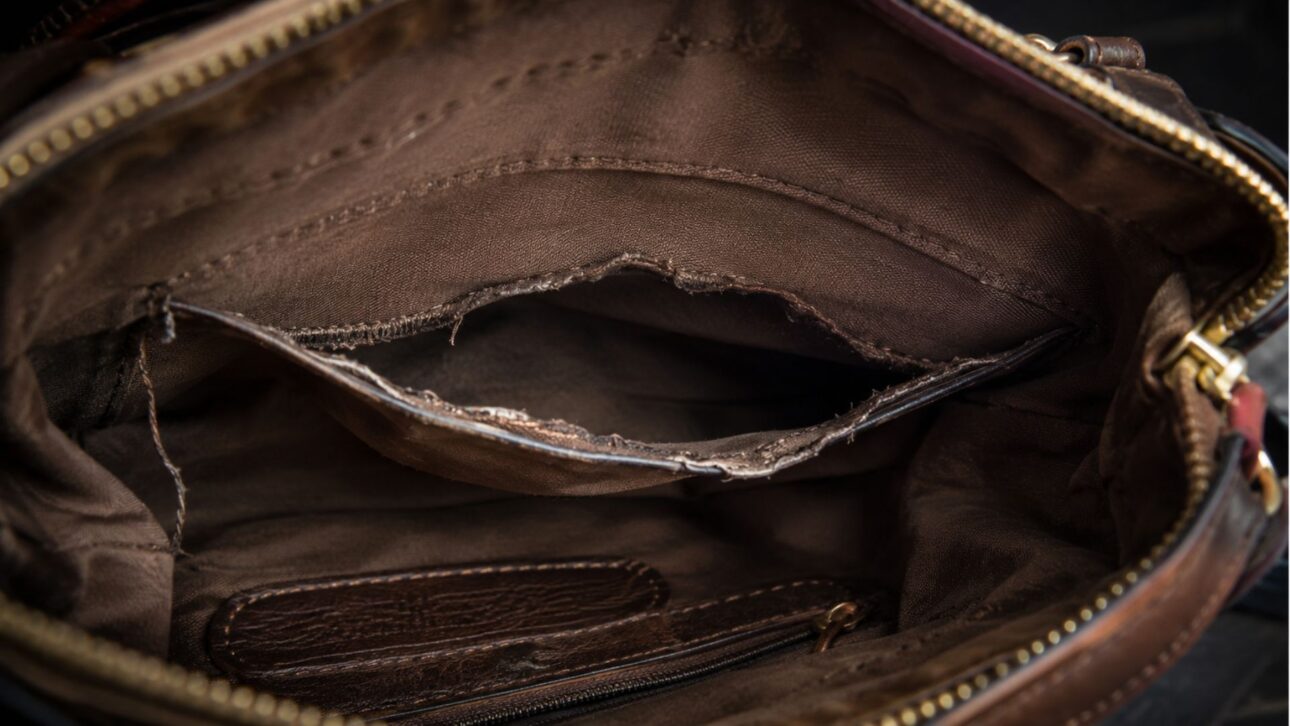
A few weeks after the purchase, still inside the store during another shopping trip, Calkins put the keys in one of the bag’s outer pockets. When she got to the car and went to get them, the keys had disappeared, and it was while investigating the interior of the piece that she noticed a hole in the inner lining, through which small objects could slip into the structure.
When she reached her hand through the tear, looking for the keychain, she found something unexpected. Instead of the keychain, her fingers touched a cold metal chain, and what came out was a shiny bracelet, hidden in the space between the lining and the body of the bag. This is the most cinematic moment of the whole story: the hand entering through the lining tear, groping blindly, and returning with a treasure in the lining that had been there all along, waiting to be discovered.
From doubt to jeweler: the diamond bracelet confirmed
Finding a shiny bracelet is one thing; knowing if it’s worth anything is quite another. Unsure of what she had in her hands, Calkins decided to take the piece to a jeweler specializing in estates and appraisals, the right professional to say whether it was costume jewelry or a real jewel. The verdict came quickly and was encouraging: it was an authentic diamond bracelet, the type known as a tennis bracelet, set in 14-carat white gold, exactly the opposite of a forgotten trinket.
The financial turnaround was immediate and generous. Right there, the jeweler made an offer on the spot for the piece: 1,200 dollars for the diamond bracelet that had come for free inside an 8-dollar bag. Faced with a profit so disproportionate to what she had spent, Calkins accepted the offer without hesitation, turning a curious find into cash and closing the treasure-in-the-lining cycle with a golden key.
8 that turned into 1,200: the math of the find
What captures the public’s attention in this story is, above all, the leap between the numbers. A bag purchased at a thrift store for 8 dollars returned, in the form of a jewel, 1,200 dollars, which represents a return of about one hundred and fifty times the invested amount. It’s the kind of arithmetic that seems impossible in real life, where every dollar spent multiplied in a way that no conventional investment would dream of delivering in such a short time.
More than the absolute value, it is the proportion that makes the case irresistible to those who hear it. It’s not a life-changing fortune, but a significant amount that appeared out of nowhere, hidden in an object that cost less than a snack. This disproportion between the price of the thrift store bag and the value of the diamond bracelet is the heart of the phenomenon, because it fuels the fantasy that any second-hand purchase could hide its own million-dollar surprise.
The perfect timing: the money that fell from the sky
As if the luck of the find wasn’t enough, the moment it happened made everything even more delightful. Shortly before discovering the jewel, Calkins had lost her car in an accident that destroyed the vehicle, and she was precisely looking for a new car when the treasure in the lining appeared. The unexpected $1,200 fell, therefore, at the best possible moment, helping exactly when she needed a cash boost to solve the transportation issue.
This alignment between need and luck is what gives the story a taste of an award-winning script. It wasn’t planning or cleverness, but pure chance, the kind of coincidence that makes people believe that, once in a while, the universe conspires in their favor. The diamond bracelet didn’t solve Calkins’ life, but it came as a timely and welcome relief, and this serendipity turned a thrift store find into one of those tales that people tell for years.
Where these hidden finds in thrift stores come from
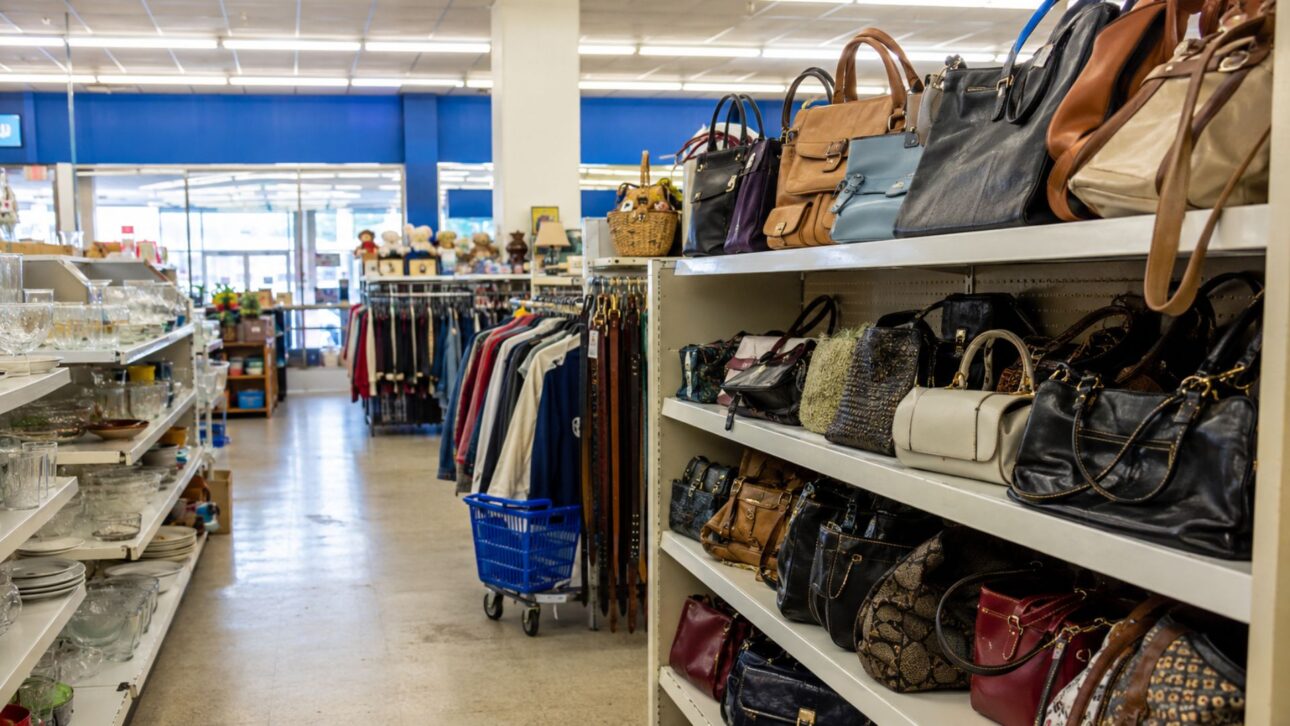
Stores like Goodwill rely on donations, and not always do donors check every pocket, lining, and compartment before handing over their items. Valuable objects end up forgotten inside clothes and accessories all the time, and when these pieces end up on the shelves of a thrift store, the forgotten item goes along, turning the next buyer into an accidental heir.
In the case of the diamond bracelet, it is most likely that someone stored the jewel in the lining, perhaps for security, and then donated the bag without remembering the hiding place. It was this distraction by an anonymous donor that put the diamond bracelet into circulation until it fell into the hands of Erin Calkins, and it is precisely this simple and human mechanism that makes Goodwill a recurring stage for surprising discoveries worldwide.
What the case of the thrift store bag shows
Erin Calkins’ story has all the ingredients to go viral and fuel dreams, but it’s wise to read it with your feet on the ground. It shows that a simple bag bought at a thrift store can indeed hide a diamond bracelet valued at $1,200, and that it’s worth checking pockets and linings of any second-hand item before discarding it. Even so, it’s important to remember that cases like this are rare precisely because they make the news, and that the vast majority of $8 bags from a Goodwill hide, at most, an old piece of gum and no treasure in the lining.
A sober look at the number that enchanted everyone is also worthwhile. The $1,200 was an immediate offer from a jeweler, and not necessarily the maximum market value of the piece, which means Calkins may have exchanged the jewel for liquidity at the right time, perhaps giving up on negotiating more. Even so, few cases summarize so well the charm of thrift store finds: it only took reaching into a tear in the lining in search of keys for $8 to turn into $1,200 and a trivial purchase to become Erin Calkins’ jackpot.
And you, have you ever missed a treasure in the lining of a bag, coat, or furniture that you bought or donated without checking properly? Comment here if you’ve ever found something valuable hidden in a thrift store item or if you think stories like Erin Calkins’ thrift store bag are pure beginner’s luck.


