Portuguese
  Spanish


An honest construction worker in Florida found money in the bathroom of a Wawa station: it was US$ 30,000 in a forgotten pouch. Instead of disappearing with the cash, Luis Salavar hunted down the owner in the parking lot, recognized the young man by his sandals, and returned everything intact, and even refused a reward at the police station.
The scene had all the makings of one of those stories where money disappears without a trace. A man enters the bathroom of a convenience store, finds a black pouch hanging on the support bar, and upon opening it, discovers bundles of $50 and $100 bills totaling more than $30,000 in cash. No one saw, no one would know, and the temptation to simply keep it all would be understandable to many people.
But the character in this story did exactly the opposite. According to The Spokesman-Review, which reproduced a report from the AP agency, construction worker Luis Salavar, 58, found money in the bathroom of a Wawa station in Riviera Beach, Florida, on May 3, 2026, and returned every cent to the owner. It was exactly $30,023 in a pouch that the 24-year-old had forgotten there, money he had saved by selling a collection and which was reserved for a medical procedure for his younger sister.
The pouch forgotten in the bathroom of the Wawa station
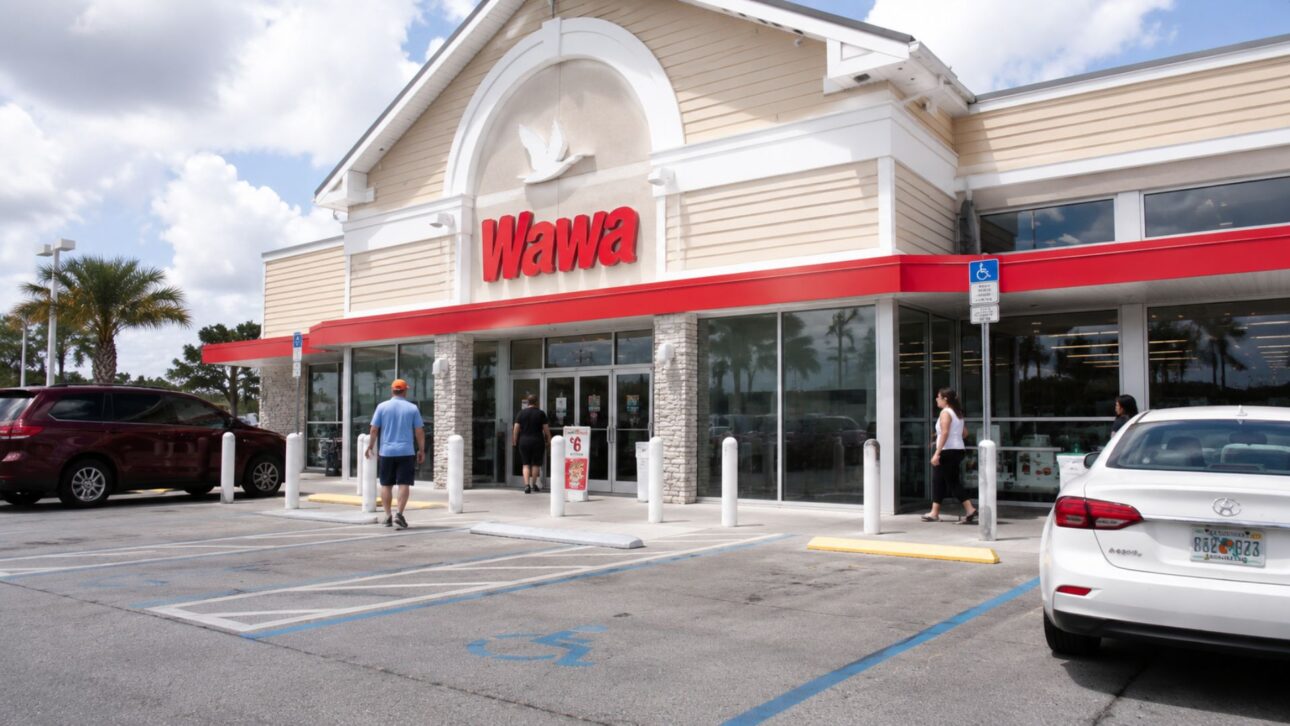
On that May 3, Luis Salavar stopped at a Wawa station, a very popular convenience chain in Florida, and went to the bathroom as any customer would during a work break. It was there that he saw the black pouch hanging on the support bar, forgotten by someone who had left in a hurry, without imagining the size of the problem they were leaving behind.
-
$100 Thrift Store Painting Bought in 1966 Becomes $254,000 Treasure After Google Gemini Identifies It

-
Simple Aluminum Foil Trick Can Easily Remove Excess Ice from Freezer and Simplify Cleaning

-
College Dropout Turned Window Cleaner Builds $1 Million Cleaning Business with Subscription Model After 18 Years of Door-to-Door Work
-
North Korean Soldier Risks Crossing One of the World’s Most Dangerous Borders, Detained in South Korea


Who finds money in the bathroom of a busy place usually has two paths ahead, and the easiest is to pretend nothing happened. Salavar, however, first tried to find the owner right there, searching the store and the Wawa station parking lot before leaving in his white Ford van. Only later, already inside the vehicle and without finding anyone, did he open the fanny pack looking for some identification document, and that was when the money in the bathroom stopped being just any find and turned into a small fortune in the hands of a stranger.
Who is Luis Salavar, the honest construction worker
The figure at the center of the case is discreet and has nothing of a movie hero. Luis Salavar is 58 years old, works in construction, and drives a work van, the same one that later helped the police locate him. The very simplicity of the character is what gives strength to the story, because it is not about a detached millionaire, but a common worker who had in his hands the equivalent of months of salary and chose not to keep anything.
It was this choice that turned Salavar, overnight, into the portrait of the honest construction worker that circulated in the American press. The phrase he repeated to journalists sums up the logic well: the money was great, but it wasn’t his, and he prefers to earn his own money through work. More than an isolated gesture, the stance of the honest construction worker exposes a simple and increasingly rare principle, that value found by chance does not become property just because no one is looking.
The hunt for the owner in the parking lot
The detail that separates this story from a simple bureaucratic return is the active effort to find the owner. Salavar did not wait for chance to resolve it: as soon as he realized the fanny pack had value, he began to worry about finding the right person, and the security cameras at the Wawa station confirmed that he had, first of all, searched the store and the parking lot. This record was decisive because it showed the authorities that there was no intention of theft, and the Riviera Beach police ended up classifying the case as lost property, not a crime.
Meanwhile, on the other side, the owner lived the despair of someone who lost everything. The 24-year-old had just sold a collection of collectible items to gather the amount and realized the fanny pack was missing later, not knowing if he would ever see that money again. The silent race of an honest construction worker through a station parking lot, therefore, was also the only real chance for the young man to recover what he had lost, although neither of them knew it at that moment.
The sandals that revealed the owner
The most cinematic twist came when it was time to recognize to whom the money should be returned. When the police identified Salavar by the van, days later, and organized the reunion at the police station, the natural doubt arose about how to be sure that he was indeed the owner. The answer was in the memory of the worker himself: he remembered crossing paths with a young man with dark curly hair, jeans, a white t-shirt, and beige sandals, and it was precisely by the sandals that he recognized the owner when he saw him again.
This type of concrete detail is what makes a story of honesty stick in the memory of the reader. It wasn’t a document or a password that linked the money to the owner, but the attentive observation of a man who, even without knowing he was carrying $30,000, had noticed who was nearby. The fact that Salavar remembered the sandals of a stranger reinforces the image of the honest worker who not only returned the money but made sure it went back to the right hands.
“It’s not mine to keep”: why he returned everything
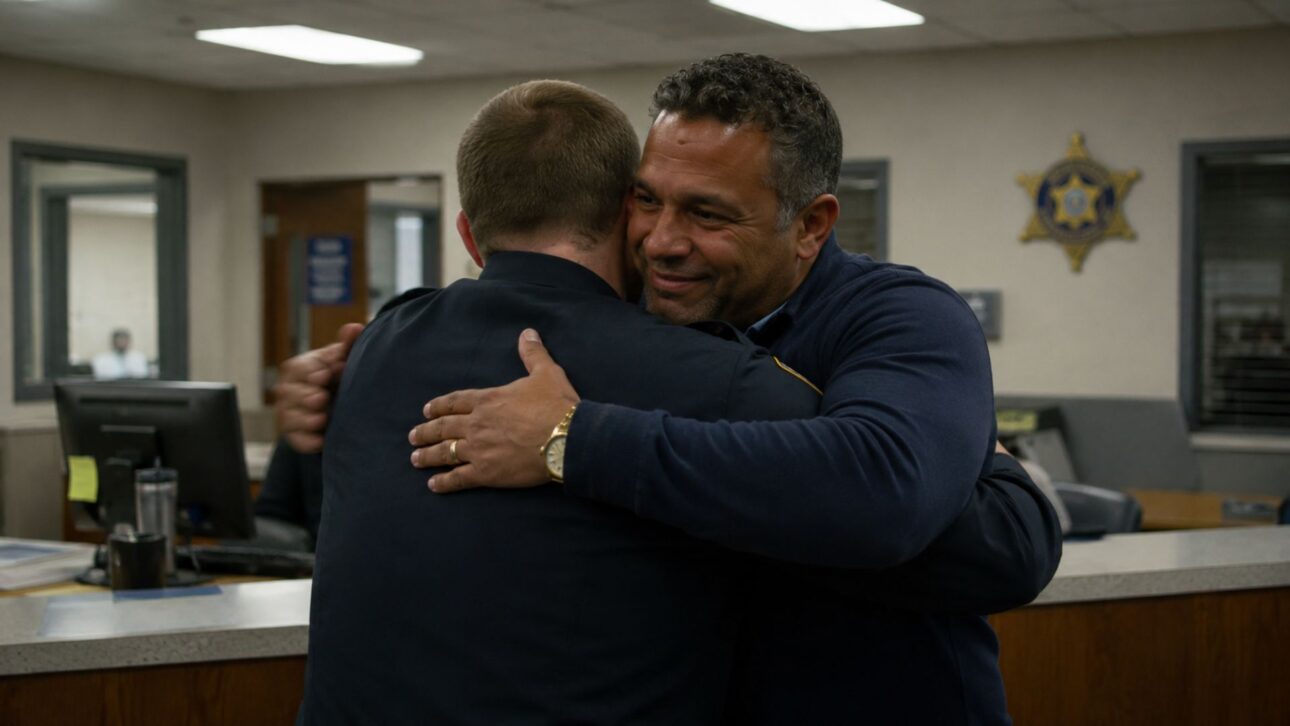
To journalists, he summarized his reasoning by saying that $30,000 is very good, but it wasn’t his to keep, and he added that he likes to earn his own money. It’s a logic that doesn’t require grand speeches: the value found by chance belonged to someone else, and the fact that no one was watching didn’t change who that money rightfully belonged to.
It’s worth noting that returning lost property is, in fact, what the law expects from anyone, and not a heroic act in itself. Even so, the difference between what the law provides and what usually happens in practice is enormous, and it was this gap that made the gesture resonate. When the worker returned the $30,023 intact, without deducting a single dollar, he turned an abstract moral obligation into concrete proof of character, and that’s why the entire internet stopped to applaud a man who simply did the right thing.
The refused dinner and the reward he didn’t want
If returning the money was already remarkable, what came next gave the story its most talked-about ending. Overcome with emotion, the 24-year-old cried and hugged Salavar at the police station, and as a sign of gratitude, even offered to pay for a dinner for the man who had saved his money. Salavar, however, refused any kind of reward, including the invitation to dinner, making it clear that he hadn’t done it expecting anything in return.
This refusal is what completes the moral portrait of the character and elevates him above mere restitution. Many people would return the money but would gladly accept a token of appreciation in return, and the fact that the construction worker refused any reward shows that, for him, the gesture was not a transaction. Someone who returns such an amount and still refused a reward makes it clear that they acted on principle, not calculation, and it is this selflessness that makes the case even harder to forget. Salavar refused a reward not once, but in every form it appeared, and that’s how a simple return turned into a silent lesson about the value of a gesture that demands nothing in return.
What the case of the construction worker who returned US$ 30 thousand shows
The story of Luis Salavar has all the ingredients of a good modern parable, and perhaps that’s why it went viral so quickly. It shows that honesty still exists in the hardest form, that of an ordinary man who had US$ 30 thousand within reach, with no one watching, and yet returned everything and even refused a reward. But it’s worth keeping a realistic perspective when drawing conclusions, because a single beautiful gesture, no matter how inspiring, does not alone transform reality nor prove that others’ dishonesty is an exception.
It’s also fair to remember that returning what isn’t yours should be the rule, not the news, and that the case only makes headlines precisely because the opposite has become too common. It is also worth noting a detail of the investigation: part of the press spells the name as Salavar, following the AP agency, while broadcasters like ABC7 write Salazar, a discrepancy that ABC7 New York helps illustrate. Even so, few cases summarize so well the weight of a simple choice: faced with a fanny pack full of money in the bathroom of a Wawa station, an honest construction worker decided that his name was worth more than the US$ 30 thousand, and returned every cent without asking for anything in return.
And you, would you have the same composure to look for the owner if you found a fanny pack with US$ 30 thousand forgotten in a station bathroom? Comment here if you would return the money and also refuse a reward like the construction worker Luis Salavar, or if you think few people would do the same nowadays.