Portuguese
  Spanish


A painting bought at a thrift store for less than $100 in 1966 ended up valued at $254,000. The turnaround began when Helene Plotkin’s son photographed the canvas and asked for help from artificial intelligence: Google Gemini pointed out the name F.C.B. Cadell, and experts confirmed it. The identification and sale of the work occurred recently, in June 2026.
For almost sixty years, the painting hung on the wall at home without anyone knowing what it really was. Helene Plotkin, now 88 years old and a retired art teacher, bought the canvas for less than $100 at a thrift store in White Plains, New York, in 1966, drawn only by the beauty of the woman in a black dress portrayed there. To her, it was a pretty painting, nothing more, and so it remained for decades, changing walls without ever revealing its own secret.
The twist began in a mundane way, with a photo and a question to an app. According to Smithsonian Magazine, her son Barry photographed the work and submitted the image to artificial intelligence to try to discover the authorship. Google Gemini responded that the style matched that of the Scottish painter F.C.B. Cadell, and this clue led the auction house Lyon & Turnbull to confirm the attribution and sell the painting bought at a thrift store for about $254,000.
The painting bought at a thrift store that no one could identify
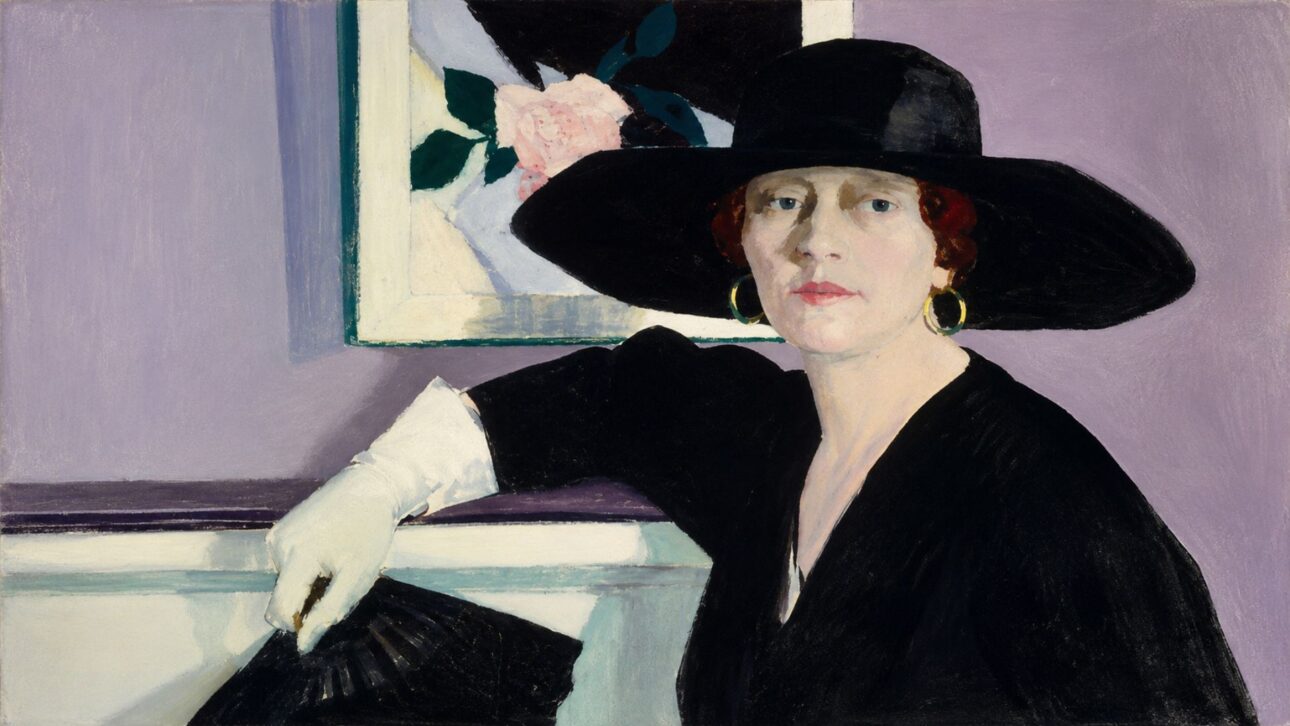
Helene Plotkin taught art throughout her career and had a trained eye for recognizing quality, and it was this eye that made her set aside some change for a painting in a common thrift store, amidst used objects without any pretension. What she saw at the time was the strength of the composition and the magnetism of the female figure in black, not a famous signature, because the canvas had no evident identification of the author.
-
Simple Aluminum Foil Trick Can Easily Remove Excess Ice from Freezer and Simplify Cleaning

-
College Dropout Turned Window Cleaner Builds $1 Million Cleaning Business with Subscription Model After 18 Years of Door-to-Door Work

-
North Korean Soldier Risks Crossing One of the World’s Most Dangerous Borders, Detained in South Korea

-
Stingless Bee Honey from Brazil Can Cost Up to $120 a Liter, Surprises with Flavors of Wood, Citrus, and Even Cheese


For almost six decades, therefore, the family lived daily with a treasure without knowing it. The painting bought at the thrift store remained an emotional object, valued for its beauty and not for the name of the painter, and that is the essence of the enigma. Even an art teacher, with education and repertoire, can spend a lifetime next to a masterpiece without identifying it, simply because no one has the complete catalog of all painters who ever existed in their memory. It was this gap, which no human alone can fill, that technology eventually helped to cover.
The request to Google Gemini that changed everything
The curiosity that unlocked the mystery came from Barry, son of Helene Plotkin, and not from an art dealer or historian. He photographed the canvas with his cell phone and sent the image to Google Gemini, the company’s artificial intelligence assistant, with a direct question about who might have painted it. The response was specific and bold: the artificial intelligence pointed out that the daring brushstrokes, the orange accents, and the art deco atmosphere were typical of Francis Cadell, one of the so-called Scottish Colorists of the early 20th century.
More than just naming a painter, Google Gemini acted as a guide for the family’s next steps. The tool recommended seeking specialized appraisers and suggested a practical measure that would prove decisive: examining the back of the canvas for labels, stamps, and inscriptions. By following this guidance, the family found, behind the painting bought at the thrift store, scribbled numbers, an auction marking, and a canvas stamp that helped piece together the provenance of the artwork. The artificial intelligence did not close the case alone, but it pointed out exactly where to look.
Who was F.C.B. Cadell, the Scottish painter behind the canvas
To understand the significance of the find, it is necessary to know who the author suggested by artificial intelligence was. Francis Campbell Boileau Cadell was a Scottish painter from the early decades of the 20th century, a member of the group known as the Scottish Colorists, alongside names like Samuel Peploe, Leslie Hunter, and John Duncan Fergusson. These artists were marked by their bold use of color, broad brushstrokes, and a visual sophistication influenced by the French avant-garde, which made Cadell’s work highly valued in the British market.
The painting in question, titled Interior: The Lady in Black, was painted in the 1920s and belongs to the most coveted phase of the painter, the elegant interiors with female figures. Cadell’s style, with its play of light, contrast, and accents of orange on the black dress, is exactly the set of marks that artificial intelligence recognized in the photograph. That a painting bought at a thrift store for less than $100 was, in fact, an authentic work by Cadell, is the kind of leap between negligible price and real value that explains why the story went around the world.
The confirmation of the experts and the $254,000 auction
No serious attribution stands solely on the word of an app, and that’s where the professionals came in. With the lead from artificial intelligence and the marks found on the back, the family took the work to Lyon & Turnbull, a Scottish auction house with a tradition in British art, which examined the painting and confirmed Cadell’s authorship. The experts authenticated the painting, reconstructed part of its history, and put it up for auction, where the painting bought at a thrift store was sold for approximately $254,000.
The number gains even more weight when looking at the piece’s origin in the market. The same work, according to the auction house’s research, had already been sold decades earlier at Christie’s in London for a negligible amount, something around a few pounds, before crossing the ocean and ending up in an American thrift store. The difference between the cents paid by Helene Plotkin and the $254,000 final hammer price measures not only Cadell’s appreciation but also how much a work can circulate anonymously until someone puts the right clues together.
Where artificial intelligence got it right and where it went wrong
The most honest part of this story is admitting that artificial intelligence was not infallible. Google Gemini nailed the most difficult point, which was the painter’s name, identifying Cadell from the style with a precision that surprised even the family. But the tool got an important detail wrong: it suggested that the woman portrayed was Bethia Hamilton Don Wauchope, a recurring model of the artist, when subsequent research by Lyon & Turnbull concluded that the figure in black was, in fact, May Easter.
This contrast well summarizes the current stage of technology applied to art. Artificial intelligence is extraordinary for recognizing broad visual patterns, such as brushstrokes, palette, and school, but still stumbles on fine biographical details that depend on archives, documents, and human investigation. In the case of the painting bought at a thrift store, Google Gemini was the brilliant starting point, not the final word, because the model’s identity was only corrected by the patient work of the auction house specialists.
What artificial intelligence changes in art evaluation
The impact of this story is not explained only by the money, and the episode points to a concrete change in the way unknown works are investigated. For a long time, identifying an anonymous painting required access to a specialist, a rare catalog, or a museum, barriers that kept the general public away from this type of research, but now a free artificial intelligence offers a first hypothesis of authorship in seconds. This access is what makes thousands of people photograph old paintings from their grandmother’s house after reading a case like Helene Plotkin’s, although a caution is advisable: for every painting bought at a thrift store that makes headlines for being worth $254,000, there are thousands of canvases that continue to be worth exactly what was paid for them.
This does not mean that appraisers, historians, and auction houses are numbered, quite the opposite. The case showed that artificial intelligence is powerful for raising suspicions and indicating paths, but authentication, provenance, and market value still depend on the trained human eye and the paperwork that proves the origin. The most useful reading is one of complementarity: Google Gemini opened the door to the painting bought at a thrift store, and the specialists at Lyon & Turnbull were the only ones capable of crossing it safely.
What the case of the painting bought at a thrift store shows
Helene Plotkin’s story has a happy and rare ending, but it is necessary to read what it teaches without exaggeration. It shows that artificial intelligence is already capable of recognizing a master’s style from a simple cell phone photo, turning a domestic doubt into a professional clue, and this alone is a milestone of what technology does today. Still, it is worth remembering that Google Gemini got the model’s identity wrong, that it was human specialists who confirmed everything, and that the vast majority of thrift store paintings do not hide any Cadell behind them.
The balance, therefore, lies in celebrating the tool without outsourcing the final word to it. The case of the painting bought at a thrift store is less a promise of easy enrichment and more a portrait of how artificial intelligence and human knowledge can work together, each doing the part they do best. In the end, it took an art teacher’s eye in 1966, a son’s curiosity in 2026, and the confirmation of specialists for a canvas worth less than $100 to reveal the $254,000 it always secretly carried.
And you, would you have the courage to photograph that old painting forgotten on the wall at home and ask an artificial intelligence what it really is? Comment here if you have ever found something of unexpected value in a thrift store or if you think stories like the painting bought at a thrift store by Helene Plotkin are pure luck.