Portuguese
  Spanish


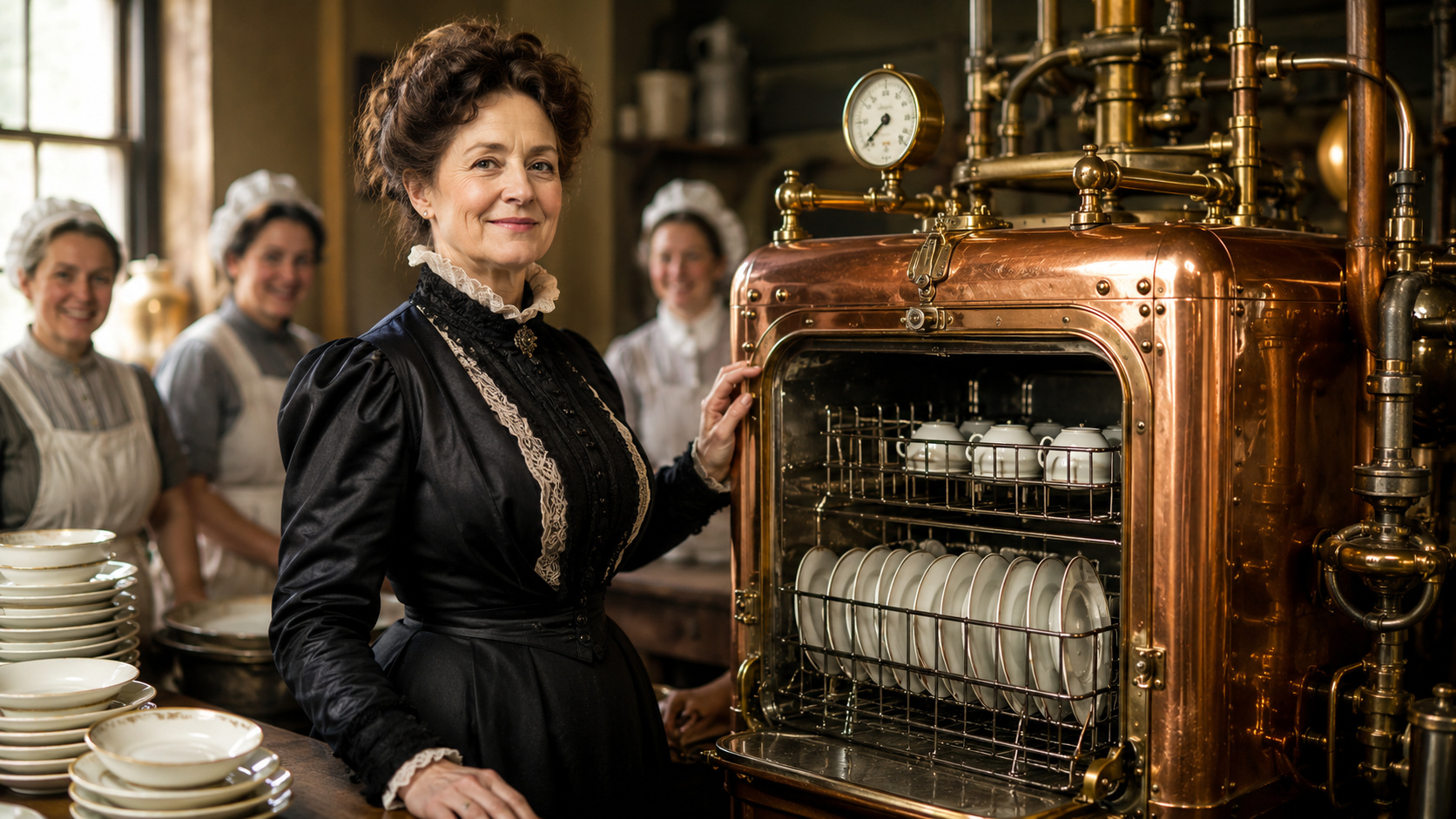

The history of the dishwasher began with broken plates and cups, advanced with wire baskets and hot water under pressure, made its way into hotels and large kitchens, and helps to understand why water, energy, and detergent remain central in choosing a dishwasher
The dishwasher created by Josephine Garis Cochran was born from the refusal to accept that a common task would leave delicate plates broken. The problem turned into a solution to clean utensils without relying solely on direct scrubbing.
In 1886, Cochran obtained the patent for her machine. The National Inventors Hall of Fame, an institution dedicated to recognizing inventors, records that she created the first practical dishwasher and started a company to manufacture and sell the equipment.
It was a model far from today’s versions. Even so, the proposal to use wire baskets and water under pressure took the invention to hotels and large kitchens, where there was a large volume of dishes to wash.
-
Self-Taught Innovator Develops Colorful Maritime Rockets for Nighttime Ship Communication, Adopted by the U.S. Navy for Safer Visual Messaging

-
The Secret U.S. Underwater Network That Tracked Soviet Submarines for Decades Now Used for Science

-
7-Year-Old Girl Rejects Lollipop, Questions Sugar’s Impact on Teeth, and Launches Sugar-Free Brand Now in 25,000 U.S. Stores

-
Scientists Find Regular Activity Can Mitigate Alzheimer’s Impact, Even in Genetically High-Risk Individuals, Offering Strong Evidence for Cognitive Protection and Healthy Aging




The problem of broken dishes gave birth to a practical dishwasher
Josephine Garis Cochran no longer wanted to see plates and other delicate pieces come out of manual washing chipped or broken. Damaged dishes turned a common household activity into loss and frustration.
She sought a way to wash the utensils without leaving the pieces loose during the process. The idea was to keep each item in place while the water did the cleaning.


This care changed the design of the machine. Plates, cups, and saucers began to have their own spaces, which helped prevent collisions between the utensils.
Wire baskets and water jets protected plates, cups, and saucers
The equipment had wire compartments designed to hold plates, cups, and saucers. These compartments were placed on a flat wheel installed inside a copper boiler.
A motor turned the wheel and pumped hot soapy water that was at the bottom of the boiler. The water arrived with pressure, while the utensils remained secured in their spaces.
The machine did not rely on parts used to scrub the dishes. The force of the water took over the cleaning and the baskets helped reduce the damage caused by contact between plates and glasses.
The 1886 patent and the company took the invention beyond the kitchen
The patent obtained in 1886 allowed Josephine Garis Cochran to bring her idea to market. The equipment ceased to be just a home solution and became a commercial product.
The National Inventors Hall of Fame, an institution dedicated to recognizing inventors, reports that Cochran tried to work with existing manufacturers but decided to open her own company.
The choice made her an inventor, manufacturer, and seller. Opening a company to produce the dishwasher was a way to maintain control over the machine’s operation and product sales.
From domestic kitchen to commercial use, hotels made room for the machine
The dishwasher was still far from the models seen in today’s homes and did not win over the domestic audience at first. Hotels and large restaurants were the first places to purchase the invention.
Hospitals and colleges also started using the larger models. These spaces faced a large quantity of plates, glasses, and cutlery, which made manual washing more laborious.
In homes, there was a significant obstacle. The houses did not have enough hot water supply to meet the machine’s needs, and the appliance could also leave soap residue on the utensils.
How the dishwasher evolved and why water, energy, and detergent matter
Josephine Garis Cochran’s machine used hot soapy water and a motor to move the wheel. Hot water, energy, and cleaning product were already part of the operation, although the equipment was quite different from today’s.
The popularization of dishwashers in homes occurred in the 1950s. The greater availability of hot water, more effective detergents, and changes in domestic routines helped the appliance reach more consumers.
Today, choosing a dishwasher still involves similar considerations. The use of water, energy consumption, and the detergent used remain linked to the routine of those intending to place this appliance in the kitchen.
Josephine Garis Cochran found an answer to a problem that seemed small but made a difference at home. The first practical dishwasher showed that protecting utensils could also make way for a new way of washing.
The invention arose from the concern with broken dishes and gained presence in commercial kitchens before reaching households. The idea of reducing the effort of manual washing remains present in the appliances used to this day.
Do you believe that a common problem, like breaking a dish while washing, can inspire an invention capable of changing the routine of many kitchens? Do you have a dishwasher at home? Tell us in the comments and share this story.