






 Portuguese
  Spanish
  5 min of reading
  0 comments


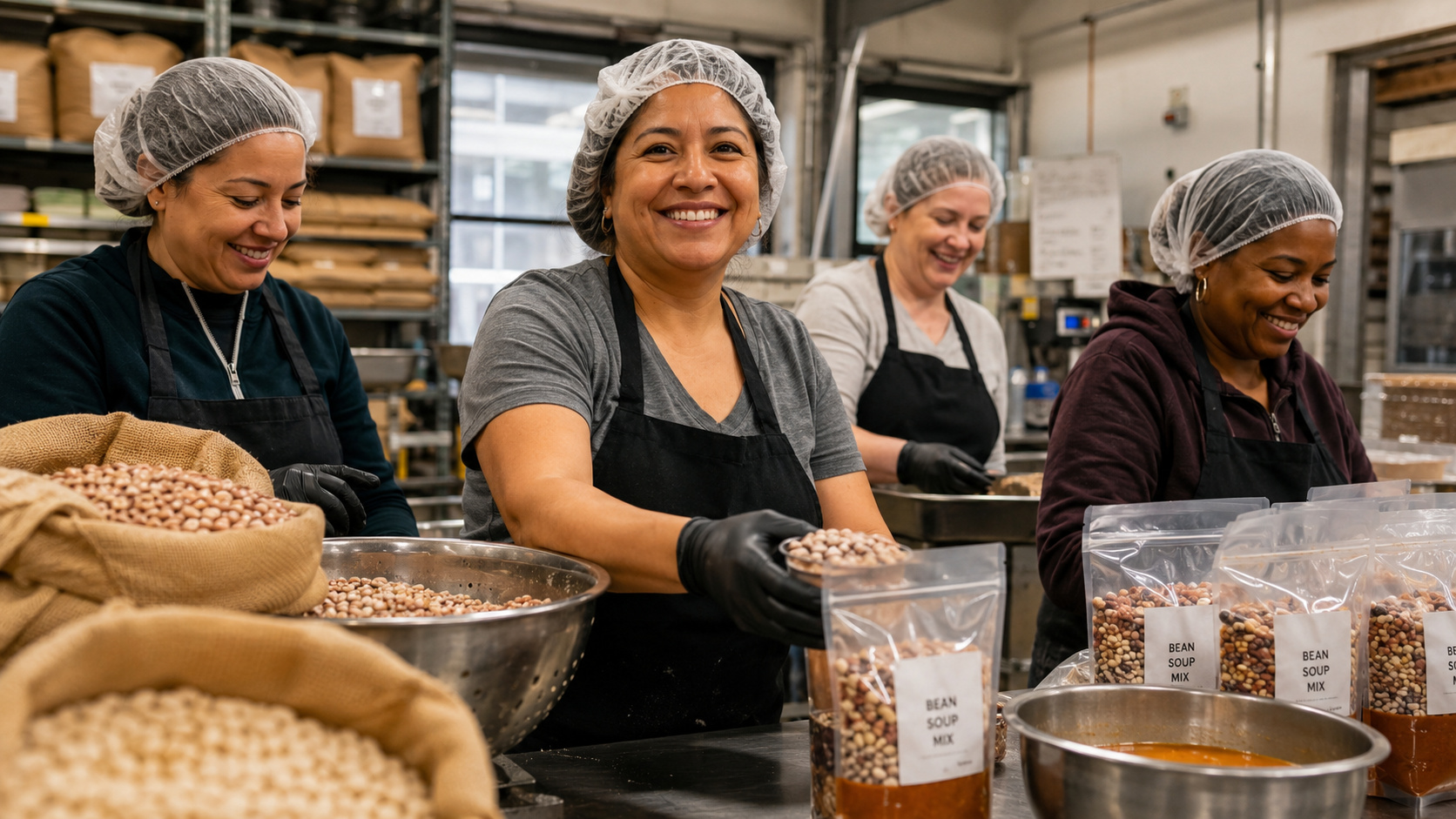
In Denver, the production of beans, soups, and mixes shows how transitional employment can combine income, factory routine, practical classes, and professional preparation for women who need to return to the job market.
Women who had difficulty finding employment find in a bean factory in Denver an organized path to re-enter the job market. The program combines salary, classes, and professional preparation within a real food operation.
The information was released by Women’s Bean Project, a Denver-based social organization focused on food production. The initiative offers a 9-month program for women who have faced barriers to employment.
The difference lies in the format. Participants are not just in training. They are hired as production assistants and start working in the manufacturing and packaging of the foods sold by the organization.
-
“I’m sorry we came to the beach so little”: German Shepherd fulfills all his dreams on his last day of life after facing tumors, kidney failure, and resisting euthanasia for more than 3 years.

-
A solid iron bridge 20 meters long that came from England in 1880 simply disappeared from the rural area of Minas Gerais and was found 140 km away, on private property.
-
Immigrant cooks in the USA left informality with the support of a shared kitchen in San Francisco and turned family dishes into their own businesses.

-
It started with 20 Uber drivers in a WhatsApp group and turned into an ecosystem of 8,000 people with discounts, a street rescue network, and a headquarters provided by a politician on the Salvador waterfront.




Beans became a starting point for women seeking salary, routine, and a new chance
Beans appear as a simple product but hold a central place in this project. They are part of the food production that includes soups, mixes, and packaged products.
Inside the factory, participants work on tasks related to production and packaging. This direct contact with the routine of a food industry helps create practical experience.


For those facing difficulty finding employment, this experience can be important. The person returns to having a schedule, team, responsibility, and contact with a professional routine.
Thus, beans cease to be just a kitchen ingredient. They become a gateway to income, learning, and professional reconstruction.
The 9-month program combines salary, classes, and support to prepare for the next steps
The program lasts for 9 months and offers transitional employment. This type of employment is temporary and serves as a bridge for individuals to regain experience before seeking new opportunities.
The participants work as production assistants in the food manufacturing business. At the same time, they attend classes focused on daily life skills and workplace environment.
This support includes individual follow-up during the program period. Each participant works with a person responsible for helping organize personal goals.
In the final phase, there is career guidance to define the next steps in the market. The idea is for the woman not only to leave with a completed activity but with more preparation to seek employment.
Inside the factory, women learn food production and teamwork skills
The food factory serves as a practice space. The women participate in the manufacturing and packaging of products sold by the organization.
This process teaches tasks related to production, but also reinforces important points for any job. Among them are communication, coexistence, responsibility, and teamwork.
Women’s Bean Project, a social organization in Denver focused on food production, detailed that participants learn work readiness skills while working on the production floor.
This means learning behaviors and practices required in the daily routine of a job. It’s not just about knowing how to make a product. It’s about understanding how to act within a professional routine.
The social factory shows an important difference between donation and productive opportunity
The model does not function as a common donation. The organization sells food and uses this activity as part of its social mission.
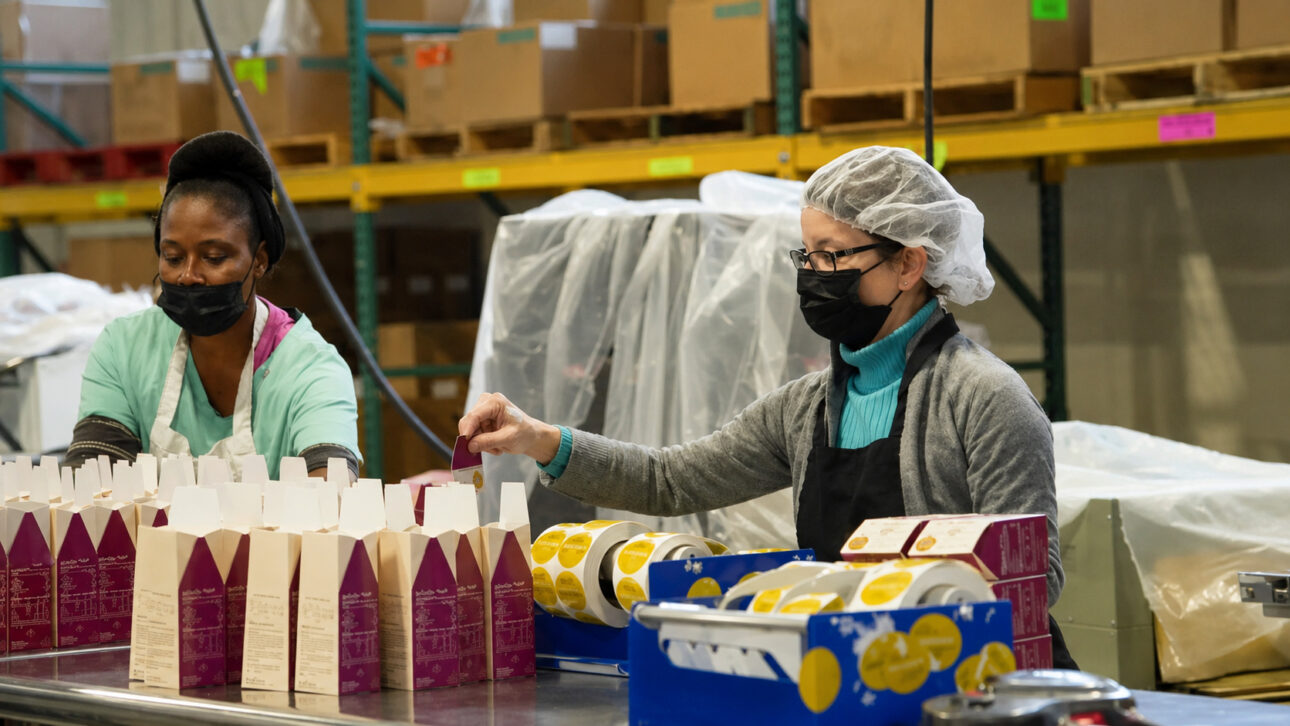
In practice, this turns production into a support tool. The participants work, learn, and receive follow-up while helping to make real products.
This format is called a social enterprise. In simple words, it is a business that sells products or services to sustain a mission of impact.
In the case of Denver, this mission involves employment for women, training, and professional preparation. Therefore, the product sold has a function that goes beyond the shelf.
Why the food industry can open doors for those who have been out of the market
The food industry can be an entry path because it involves practical tasks and direct learning. A person learns by doing and begins to understand how a production routine works.
For women who have faced barriers to employment, this type of experience can help regain confidence. It also allows them to demonstrate responsibility and the ability to work in a group.
The classes complement this experience. They address life skills and professional behavior, important points for continuing the search for a new job.
The program also shows that training does not need to be separate from work. When the two things go hand in hand, learning can become more concrete and useful.
The example of Denver resonates with Brazilian debates on training and income
In Brazil, many income generation initiatives also involve community kitchens, food courses, baking, and small home businesses. The comparison helps to understand the importance of the topic, but the models are not the same.
The experience in Denver shows a path where production, salary, classes, and support appear within the same structure. This strengthens the preparation of those who need to start over.
For women without stable work, the difficulty is often not just in learning a task. The lack of recent experience, guidance, and a safe bridge to the market also weighs heavily.
Therefore, the case draws attention. A factory of beans, soups, and mixes manages to bring together real work, practical training, and professional follow-up in a program with a beginning, middle, and final stage.
A bean factory that transforms simple products into a path to restart
The story shows how common products, like beans and soups, can support a social action linked to work. The central point is not just the food, but the structure created around it.
In Denver, women who had difficulty finding employment find a chance to reorganize their professional lives through a 9-month program with salary, classes, and preparation for the next steps.
The model also helps to view food production differently. Behind packages and ready mixes, there can be a network of learning, income, and reconstruction.
Do you believe that social factories with real production, salary, and support could help more women in Brazil escape instability and return to the market? Share your view or share this story.




Be the first to react!