Portuguese
  Spanish


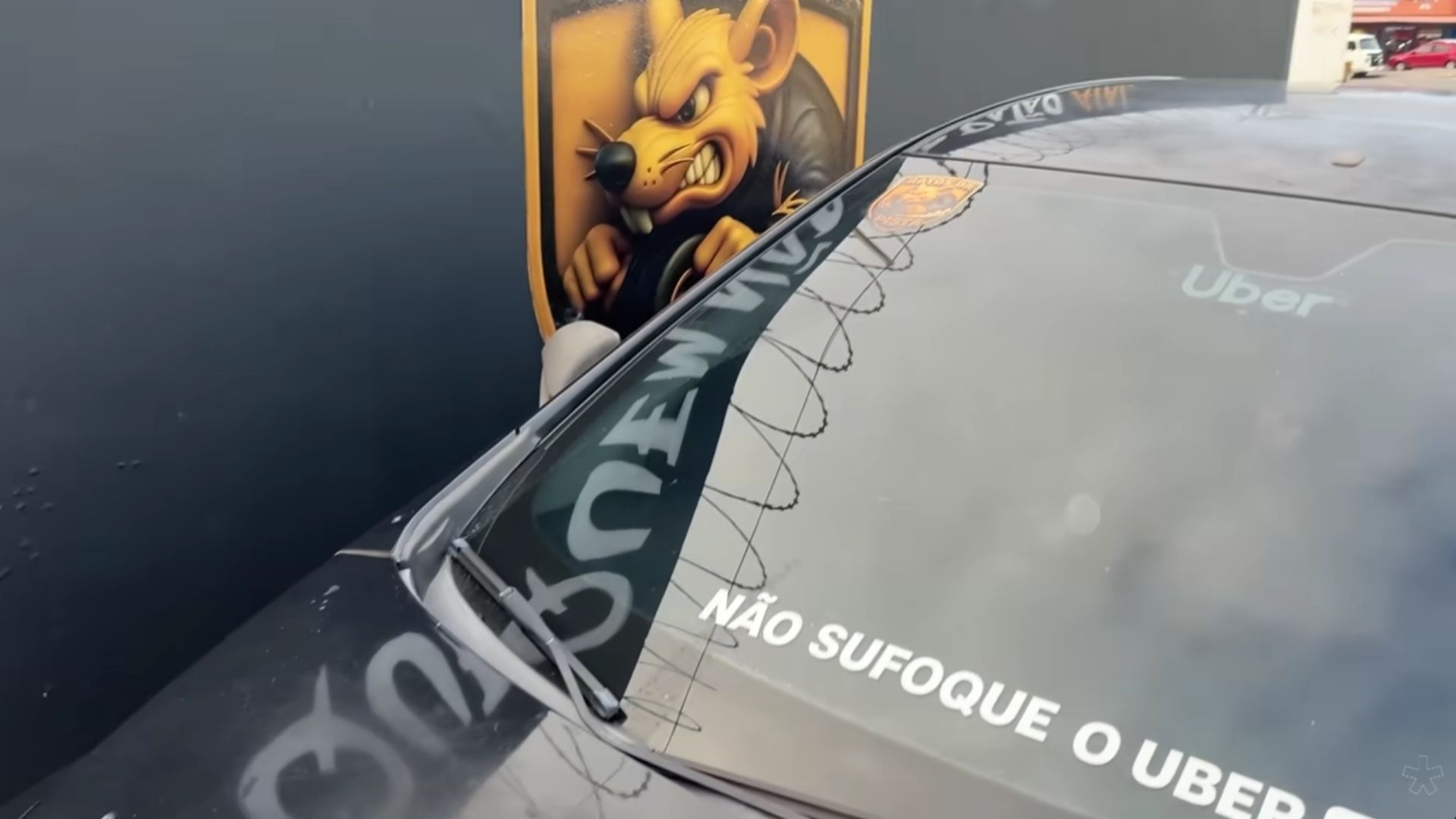

The Track Rats were born in May 2025 as a WhatsApp group of Uber drivers in Salvador. In less than a year, they reached almost 8,000 members, spread across four states, created a street rescue network, closed commercial partnerships with volume discounts, and gained a headquarters by the Bahia coastline provided by a city politician.
In May 2025, a group of Uber drivers in Salvador had fewer than 20 people and functioned as a chat space on WhatsApp. Today, the Track Rats are almost 8,000 members distributed across eight chat groups and eight rescue groups, with confirmed presence in Bahia, Sergipe, Rio de Janeiro, and São Paulo. The name came from one of the founding members, Igor Barreto, who used the word rat in the sense of someone who circulates anywhere without prejudice. “At first we were a bit hesitant because rat conjures up something negative in many people’s minds,” admits one of the organizers in the Jornal Correio video. The redefinition stuck.
What started as a chat space among friends who roamed the city transformed into an ecosystem that the Uber drivers themselves define with this word: rat’s barbershop, beauty salon for the ratonas, optics with glasses for R$ 200 for members, partner car wash in Castelo Branco that was the first to close a deal with the group. The logic is simple and powerful: volume for discount. With almost 8,000 drivers as a guaranteed audience, the collective can sit with companies and request conditions that an individual driver could never obtain. The Correio report showed the behind-the-scenes of this construction.
The origin: Uber drivers, WhatsApp, and the search for discounts
The proposal that the Uber drivers made to the owner was straightforward: if he offered a discount, they would bring at least 20 cars. When the mobilization happened and the cars showed up, the owner was “amazed by so many cars,” according to the group’s own account to the Correio. From then on, the model of bargaining by volume became the backbone of the collective.
-
Google Earth Uncovers 260 Mysterious Stone Structures in Sudan’s Atbai Desert, Sparking Archaeological Investigation into Ancient Nomadic Power Dynamics

-
65-year-old man lived in Arizona forest for 8 years, built illegal campsite, and accumulated half a ton of trash before being discovered by U.S. Forest Service agents

-
Former Biology Teacher Turns Financial Education App into a $1.2 Million Success in Brazil
-
Brazilian Entrepreneur Launches Staff-Free Laundry Chain with 636 Locations Nationwide, Generating $5 Million in Revenue



The increase in members was rapid and unplanned. Uber drivers kept sharing the group, utilities multiplied, partnerships arrived, and the number of people grew along with it. Today, with almost 8,000 participants, the ecosystem has the capacity to fill any establishment that partners with the collective with cars. No medium-sized company in Salvador easily ignores a potential clientele of 8,000 Uber drivers who roam the city all day. This is what gives the collective its bargaining power.
The rescue groups: assistance on the streets of Salvador
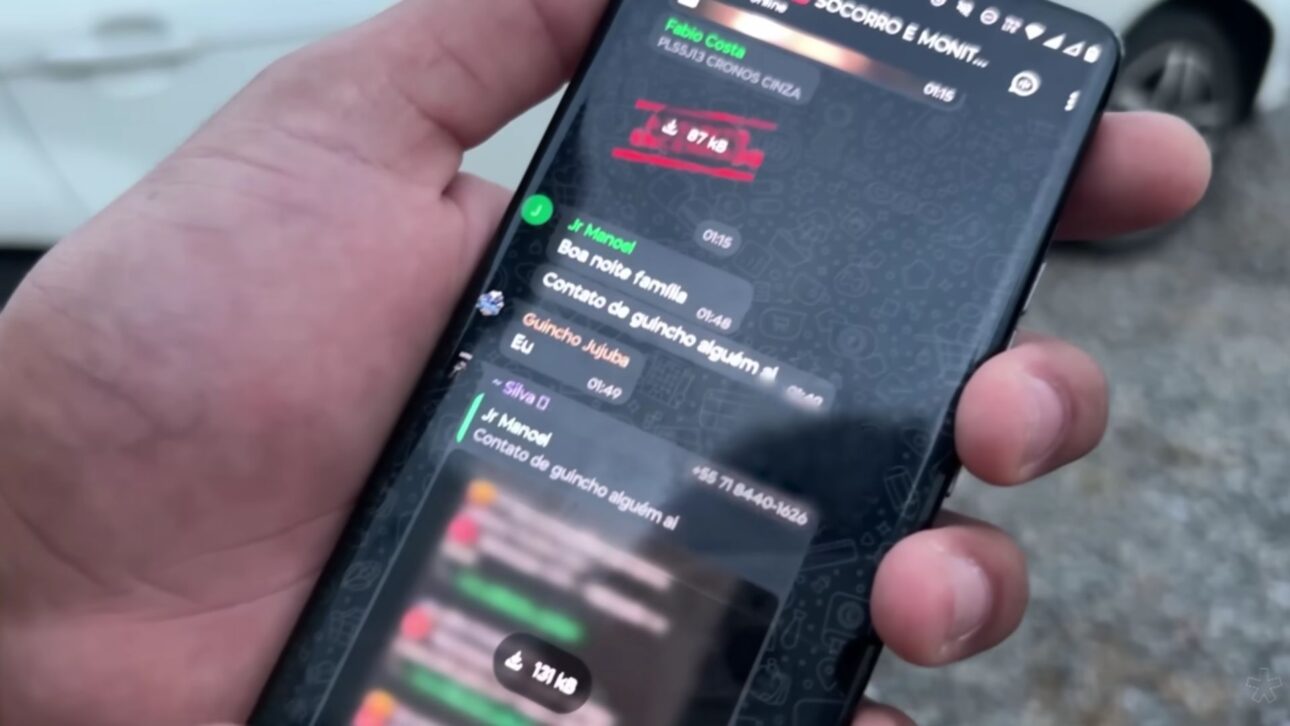
The function is practical: when an Uber driver has a problem on the street, whether it’s a breakdown, accident, or any emergency, they post in the group and other members in the area mobilize to help. Tow truck partners of the collective respond to these calls with special prices for members.
The rescue network works because Uber drivers cover the city continuously and extensively. They are professionals who spend hours on the street, know the neighborhoods, know who is nearby, and can quickly respond to a call for help. Those who don’t have a tow truck partner in the group already have a contact number available a few messages after posting the emergency. This type of informal mutual assistance is what retains members who join for the discount and stay for the support network.
The structure of the groups and how the administrators work
With almost 8,000 Uber drivers in eight chat groups and eight rescue groups, in addition to the regional groups of Feira de Santana and the Jatonas, managing Ratos da Pista requires a structure of administrators. The role is unpaid. All the admins are volunteers, chosen by voting among the administrators themselves based on who shows the most proactivity and willingness to help other members.
The main practical difference between being an ADM and a regular member is access: administrators can access all groups at the same time, which is crucial for coordinating rescue situations that span different groups. The selection logic reflects the culture of the collective: “It is the members who stand out and do for others who are more proactive,” explains one of the organizers in the Correio video. Several people have held the ADM position. Those who stop actively contributing can be removed from the role by the same vote that placed them there.
The funding: stickers, keychains, and rat caps


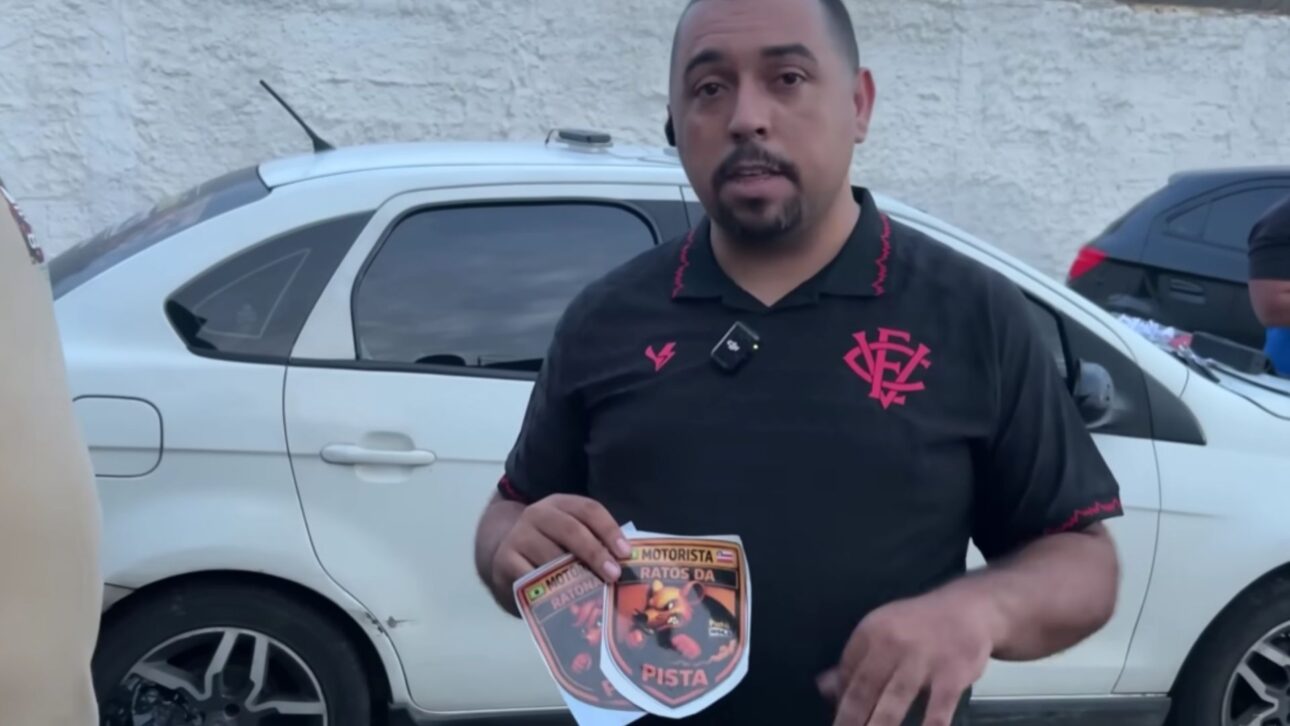
Maintaining a collective of nearly 8,000 Uber drivers organized in dozens of WhatsApp groups, with headquarters, partnerships, and events, has an operational cost. The solution that the Ratos da Pista found is the sale of identification products: stickers, keychains, and soon, caps. The sticker costs R$ 10 and serves both as a source of revenue and as a symbol of belonging to the group.
Cars full of the collective’s stickers have become common scenes on the streets of Salvador. Each Uber driver with the rat symbol on the window or trunk of the car functions as mobile advertising for the group. New members join because they saw the sticker, asked the driver, and were invited. It’s an organic expansion model that didn’t cost any marketing budget, just the visual identity stuck on the cars of those who already feel proud to be part of it.
The headquarters: land on the waterfront granted by a politician for one year
The most ambitious step of the Ratos da Pista was acquiring a piece of land on the waterfront of Salvador, near the Multiuse Arena and the city’s Convention Center, granted by a local politician for a period of one year. The project for the space is detailed: a restaurant or snack bar, two car wash bays, a shower point for Uber drivers, a barbershop, two electric car charging points, and a social area.
One of the organizers openly acknowledges in the Correio video that the land may have been granted with political intentions. The collective’s position is pragmatic: “Being used is not a problem. The problem is being used without having done anything.” The headquarters is being treated as real infrastructure for Uber drivers, regardless of the donor’s motivation. When and if the works progress, it will be the first permanent physical space of the collective and the biggest leap from an online network to a physical presence in the city.
Who are the big rats: retired, micro-entrepreneur, formal worker
The profile of the members of the Ratos da Pista reveals the true composition of the category of Uber drivers in Salvador. One of the interviewees by the Correio report is a retired public servant who hit the road to supplement his income. He leaves home at 4 a.m., drives until about 10 or 11 p.m. with breaks for parallel activities, such as selling imported perfumes inside his own car. Another has a formal job with hours until 4 p.m. and uses his free time on the road to earn extra income.
What unites such different profiles is the need to monetize available time and the perception that the road alone is not enough. The Ratos da Pista exist because an individual Uber driver has little bargaining power with companies, little support network when they have a breakdown, and little visibility when they want to organize something collective. The collective delivers all three: collective purchasing power, street rescue network, and shared identity that transforms a group of strangers driving similar cars into something that feels like a real community.
Four states and the political issue everyone avoids
With a presence in Bahia, Sergipe, Rio de Janeiro, and São Paulo, the Ratos da Pista have crossed the regional border and entered national territory. The expansion was organic: Uber drivers from other states learned about the collective, asked to join, and specific groups were created to accommodate the demand. The model is replicable because it does not depend on physical infrastructure, only on WhatsApp groups and the willingness of local members to organize commercial partnerships in their own city.
The question about political intentions appears twice in the Correio video. The organizers’ response is consistent in denying any intention of candidacy or party activity. “Our intention, we administrators of the Ratos da Pista, do not intend in any way to run as politicians,” says one of the founders. The position is declared, but the collective has already shown that it mobilizes Uber drivers on a scale sufficient to fill commercial establishments. A base of 8,000 organized Uber drivers, headquartered on the coast and present in four states, is a political asset even for those who do not want to be politicians, and the organizers seem to be aware of this.
A collective of Uber drivers that negotiates volume discounts, maintains a street rescue network, and gained a political headquarters on the coast of Salvador is an example of popular organization that should exist in more cities, or is it a movement that will inevitably become a political instrument? Do you know something similar in your city? Leave your opinion in the comments.