Portuguese
  Spanish


A new study shows that since 2010, the growth of mangroves has surpassed losses, and the net loss since the 1980s has fallen to about 849 km². The main driver is natural regeneration. But the recovery is not uniform, and part of the progress may have a dark side.
Capable of storing up to five times more carbon than terrestrial forests and protecting millions of people against tsunamis and storms, the planet’s mangroves are resurging after decades of destruction and surprising scientists with their impressive natural regeneration capacity. According to BBC News, reported in June by G1, mangrove trees had been in rapid decline for decades, cut down for the construction of houses and the establishment of fish farming.
The turnaround, however, came with an important caveat. According to a new study released by BBC News, since 2010, the growth of mangroves worldwide has surpassed annual losses, thanks to the strengthening of legal protections in various countries and increased public awareness following disasters like the 2004 Indian Ocean tsunami. According to researchers, however, the main factor is the remarkable natural regeneration capacity of these environments when humans stop destroying the mangroves.
Why mangroves are so valuable
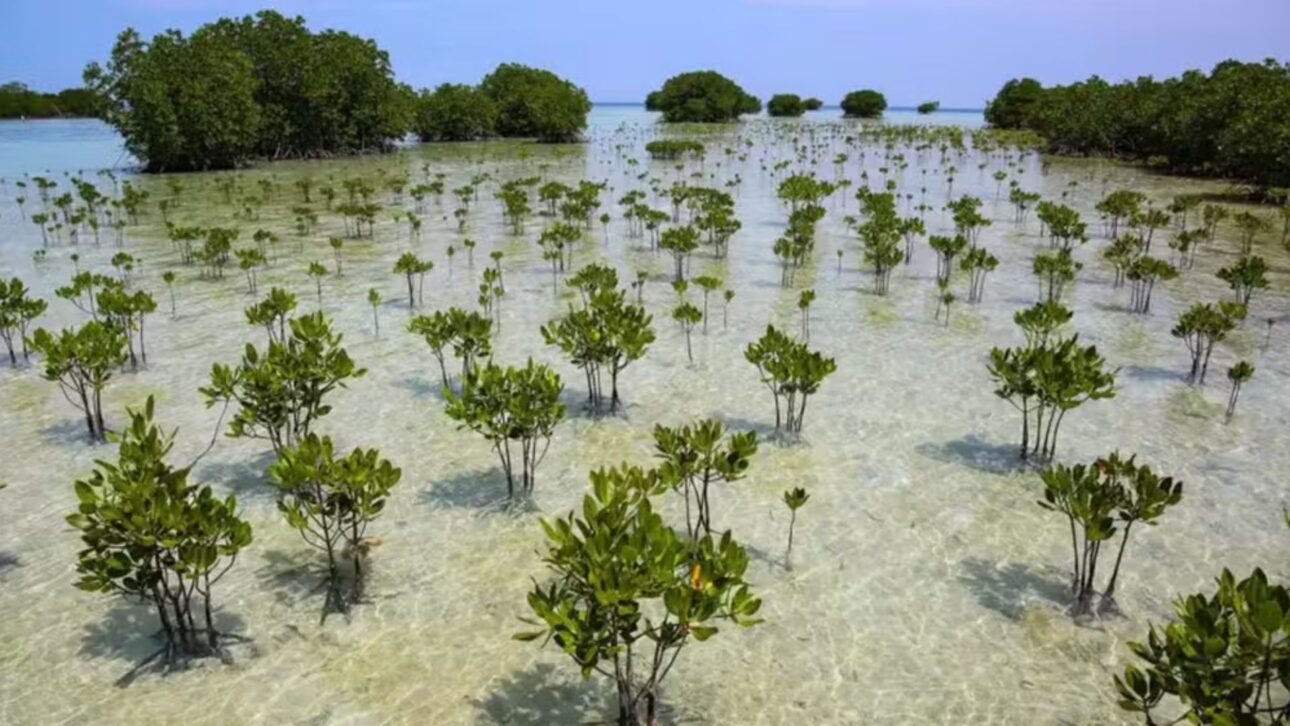
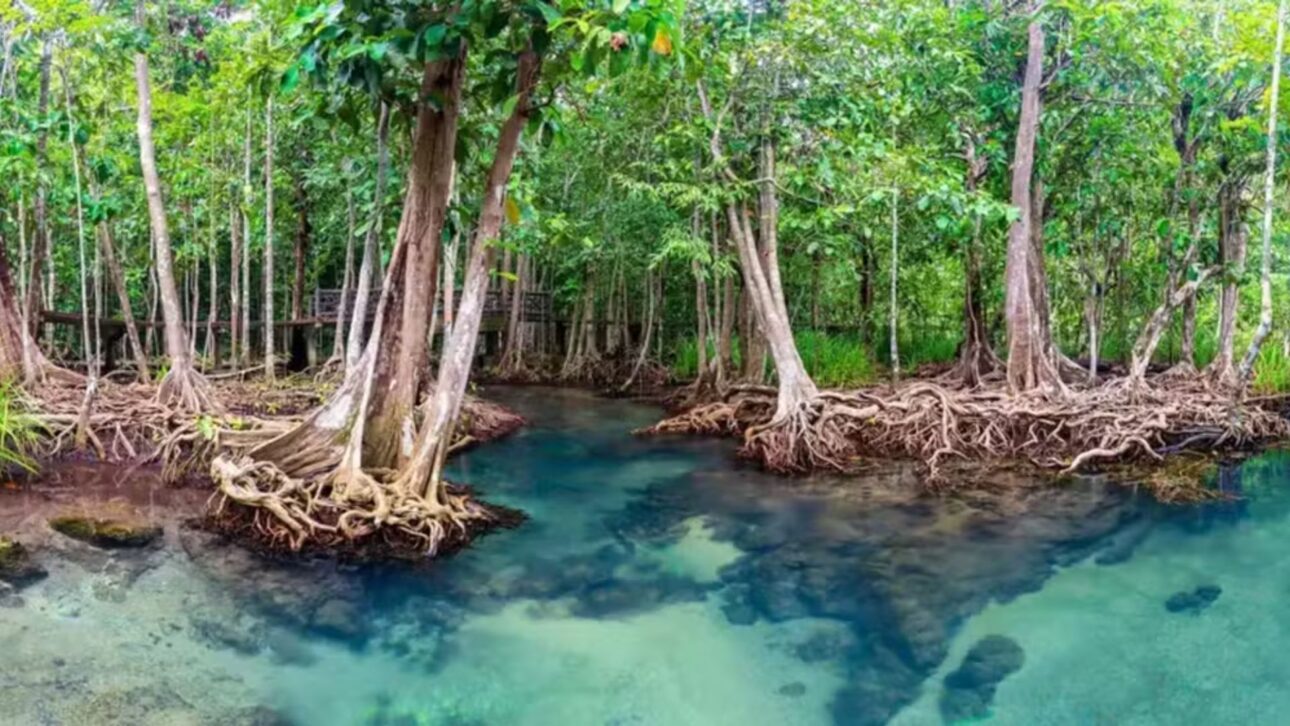
These coastal ecosystems provide services that few people notice. Mangroves are unsung heroes of the environment because they store up to five times more carbon dioxide per area than terrestrial forests, and their tangled roots slow down waves and protect coastal communities against storm surges and tsunamis. It’s no wonder they are a central piece in coastal protection.
-
Pennsylvania Mine Creates Ice in Summer Heat and Melts in Winter, Turning a Mountain Crevice into a Reverse Natural Refrigerator

-
China Accelerates Global Expansion of Robotics: From Smart Vacuums to Industrial and Humanoid Machines, Millions Exported to Over 150 Markets
-
Polar Air Mass to Hit Brazil: Temperatures to Plummet in Nine States, Near Freezing in the South with Frost Risk Until Monday
-
Chinese “dark factories” produce electric cars 24/7 with minimal human intervention, as Zeekr assembles 800 units daily, raising concerns in Brazil.





The same roots support marine life. According to the study, these tangles form a perfect nursery for many species of fish and other marine animals, which are sheltered from predators and find abundant food. According to the report, all these benefits were seriously threatened in the past century, when the expansion of fish farming, agriculture, and coastal cities led many mangroves to be cut down.
From 12,000 km² Destroyed to a Turnaround Since 2010
The scale of destruction was enormous. According to the study, from 1980 to 2010 more than 12,000 square kilometers of mangroves were destroyed in Asia, Africa, and the Americas, an area equivalent to twice the size of the Federal District. According to BBC News, the new work shows a reversal of this trend, especially in the last decade, with the total net loss since the 1980s reduced to about 849 km².
Most of the recovery was not planted, but natural. According to the researchers, restoration work helped degraded forests recover, but the major change came from the natural expansion of mangroves after the decline in deforestation, with areas stabilizing in Indonesia and growing in Myanmar, two of the countries with the most mangroves in the world. According to the study, in Indonesia the 2004 tsunami helped change the mindset about the importance of these forests, while in Myanmar the 2008 Cyclone Nargis and the 2016 national deforestation ban had a similar effect.
Satellites, Natural Regeneration, and the Scientists’ Caveat
Technology helped see what was previously unnoticed. According to the researchers, the study used a different satellite imaging system, with data from Landsat, to map the forests in more detail, revealing many more new trees than previous works. “This is a considerable advance over previous global assessments,” said Elizabeth Robinson, director of the Grantham Research Institute in London, who was not involved in the study.
But part of the expansion has two sides. In many countries, including Brazil, new mangroves have taken over riverbanks and coastlines due to the large amount of nutrients in the sediments, a result of forest destruction and mining inland, which brought nutrients like nitrogen to the waterways. “There are more mangroves than we thought and they are showing their resilience,” said Pete Bunting from Aberystwyth University in the UK, who cautioned that this is only really good news if there is no disorder upstream.
Where Destruction Continues and What Still Threatens Mangroves
Recovery is not the same worldwide. According to the study, the combination of restoration and reduced destruction was a success, but unevenly, with Central and Eastern Africa appearing as a focus of loss. According to Bunting, the Niger River delta has become a symbol of the impacts of pollution on mangroves, with oil pollution causing mass damage and pipelines cutting straight lines through the forests, visible even on Google Earth.
Cyclones remain a constant threat. Tropical cyclones account for some of the largest annual losses of mangroves recorded by the study, from Australia to the Caribbean Sea. Still, the authors agree that recovery is good news, and the work showed that many existing mangroves are strengthening, with the proportion of closed canopy forests, the densest in carbon, growing by about 20% since the 1980s. “We are heading in the right direction,” summarized the lead author, Zhen Zhang, from Tulane University, United States.
The planet’s mangroves, capable of storing up to five times more carbon than terrestrial forests and protecting entire communities against tsunamis and storms, have started to grow again after decades of destruction, with net loss since the 1980s reduced to about 849 km² and growth surpassing losses since 2010.
The main driver is natural regeneration, combined with legal protections, increased awareness after the 2004 tsunami, and more precise satellite mapping. Still, recovery is not uniform, as Central and Eastern Africa and the oil-polluted Niger River delta continue losing mangroves, cyclones continue to threaten, and part of the progress, including in Brazil, may reflect environmental damage upstream.
And you, did you think mangroves were so important for the climate and coastal protection, or were you surprised by the recovery capacity of these forests? Share your opinion and exchange ideas with other readers on the topic, respecting different views.