Portuguese
  Spanish


The Church of Saint-Philibert remained silent for 400 years. It was a construction error in the 1970s that, decades later, led workers to lift the right stone and reveal what no architectural plan recorded.
It all began with a routine renovation. Workers hired to repair the damaged floor of the Church of Saint-Philibert in Dijon, France, lifted an ordinary slab and encountered something that did not exist in any architectural project of the building: an unknown staircase, opening directly into the bowels of the earth.
What lay below those steps was even more disturbing. A completely sealed crypt, untouched for at least 400 years, with wooden coffins, human remains, and personal belongings of people who lived in the 15th and 16th centuries — waiting in silence for someone to find them.
The origin of the problem dates back to 1974, when a heated concrete slab was installed over the floor without considering that the ground was impregnated with salt. For centuries, the church had been used as a salt depot on the trade routes of Burgundy. The heat activated this accumulated salt, which rose through the pillars, cracking the foundations of one of the oldest Romanesque churches in the city.
-
New York removed the tracks from over 2,500 subway cars and dumped everything at the bottom of the Atlantic, and what seemed like trash turned into an artificial reef teeming with fish and divers.

-
From matches sold by bicycle at age 5 to a global furniture empire: the lumberjack’s son founded IKEA at 17 in his uncle’s kitchen and transformed a small company into the largest furniture retailer on the planet.
-
The mansion in Flamengo, built in 1865 for the Baron of São Clemente and closed for 20 years, has become a spa, event hall, and gym for “Symphony,” a luxury condominium that sold 70% of its gross development value in the first month on the R$ 60 million land of the former Bennett College.

-
The Ipiranga convent, a 1924 building adjacent to the Museum that remained vacant for a decade and became home to dozens of cats, is reborn as “Alma Mater,” a luxury development worth R$ 130 million with a pool in the courtyard and a clubhouse in the former nuns’ chapel.





An excavation that changed dimension
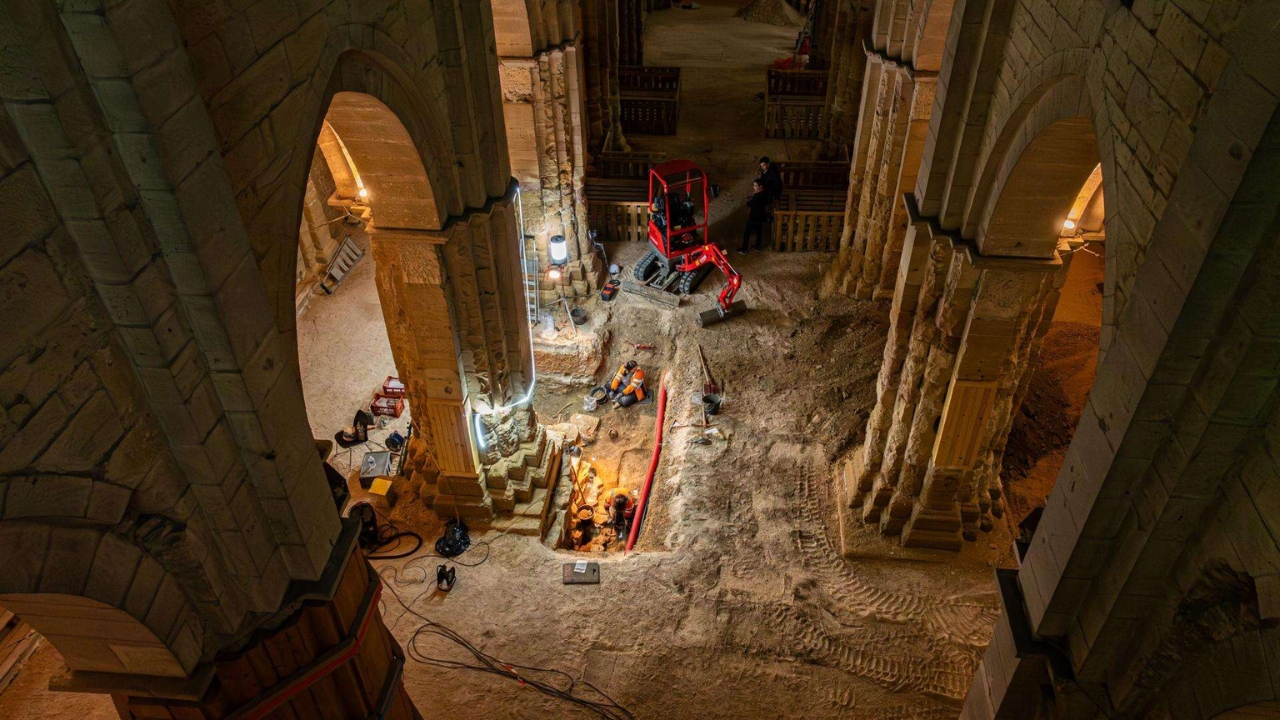
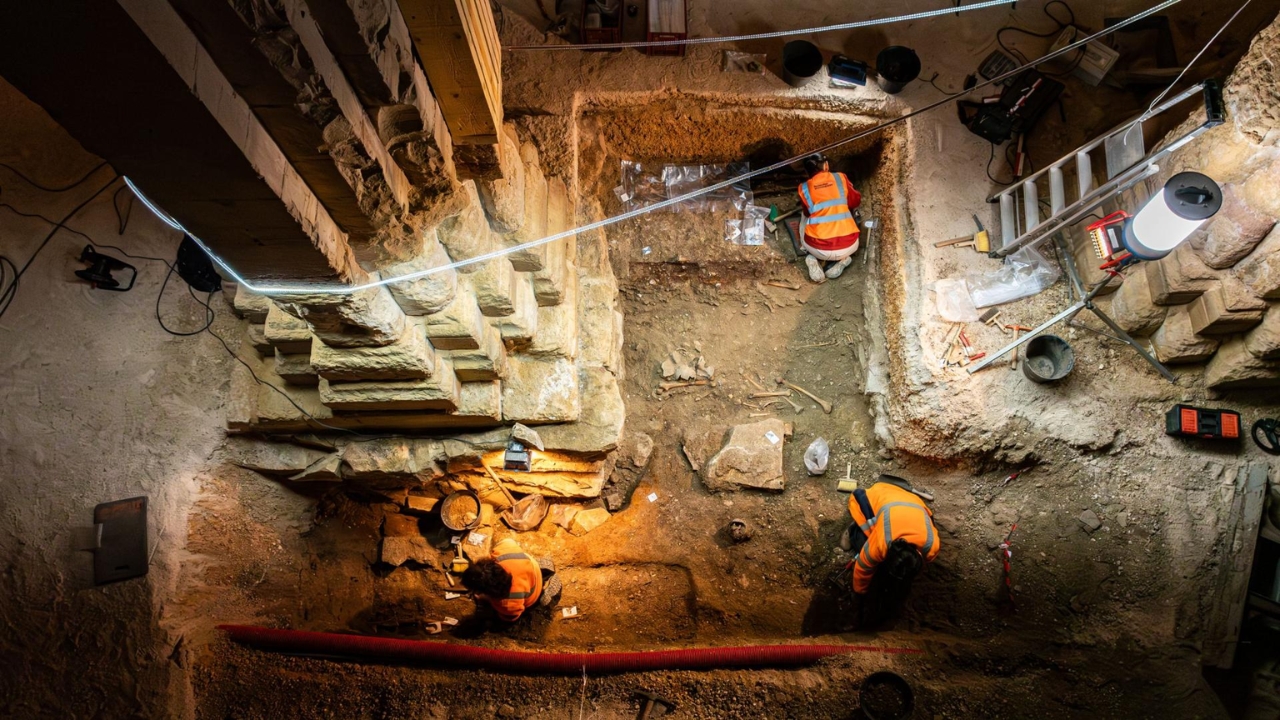
The French National Institute for Preventive Archaeological Research (INRAP) was called in to assess the structural damage. What was supposed to be a technical inspection turned into a complete excavation up to three meters deep — and with each centimeter removed, a new layer of the past emerged.
In the church’s transept, archaeologists confirmed what the staircase promised: a burial site that, according to INRAP, dates between the 15th and 16th centuries and had remained intact for at least 400 years. Inside, wooden coffins with the remains of children and adults, arranged in an east-west alignment according to the Christian tradition of the time.
What was inside the crypt
The burial method revealed a macabre but common fact of the time: the bones of each individual were pushed to the sides of the coffin to make room for the next deceased. The same burial space was reused for generations.
Alongside the bodies, researchers found two rosaries and multiple rare coins, as well as partially preserved shrouds. In total, six sarcophagi were excavated inside and around the structure — a number that surprised even the specialists at INRAP.
1,500 years of bodies stacked under the same floor
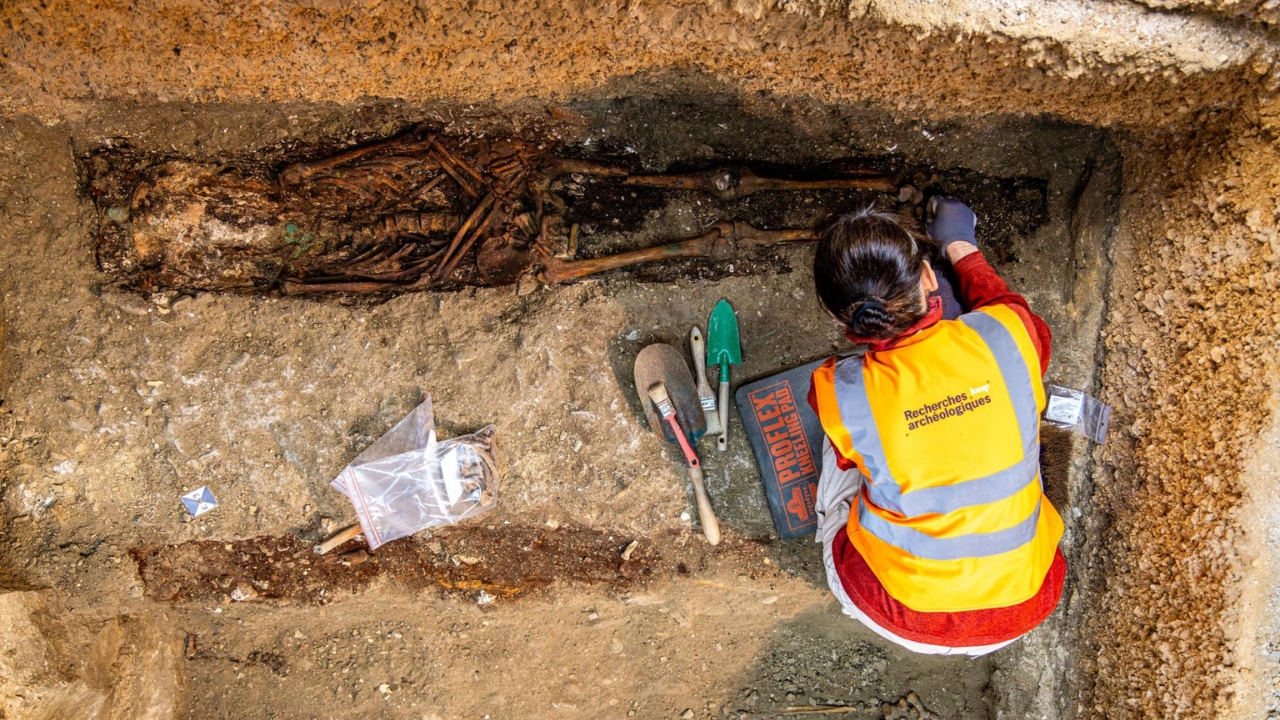
The most disturbing discovery was not the crypt itself. It was realizing that the entire ground of Saint-Philibert is a cemetery with 1,500 years of history, with layers of overlapping burials from completely different eras.
Under the 15th-16th century crypt, archaeologists found slab tombs dated between the 11th and 13th centuries. Below these, sarcophagi from the Merovingian period (6th to 8th centuries) — including two decorated limestone examples, an archaeological rarity. Even deeper, sarcophagi from the end of the Roman Empire, some with carved lids indicating elite burials.
Three overlapping medieval churches
The excavations also revealed that the current Saint-Philibert is not the first religious structure on the site. Three medieval churches were built one on top of the other, with approximately 100 years between each construction, all associated with a cemetery that remained in use until the 18th century.
In 1923, remnants of an even older church had already been found at the same address — but without sufficient technology to explore adequately. What INRAP found in 2024 confirmed that the site has been continuously occupied since late Antiquity, possibly functioning as a funerary basilica even before the medieval era.
The only Romanesque from the 12th century still standing in Dijon
Built in the second half of the 12th century, the Church of Saint-Philibert is the only example of Romanesque architecture from that era still standing in Dijon. However, its history has been turbulent.
During the French Revolution, the temple was abandoned in 1795 and deconsecrated. In 1825, the city demolished the side chapels and the apse to widen a street. The building survived as a depot, as a warehouse, and then as forgotten — until the salt accumulated in the 18th and 19th centuries, combined with the 1974 slab, unintentionally created the perfect conditions to preserve what was hidden below.
What archaeologists are saying now
INRAP published the results of the excavations in December 2024, describing the site as “more than a millennium of unprecedented remains” under the pillars of a single church.
The studies continue. The coins, the rosaries, and the bones are being analyzed to identify who these individuals were — what social class they occupied, what diseases they died from, how they lived in medieval Burgundy. Each coffin is a record. Each coin, a date. And that staircase that did not exist in any plan proved that the dead of Dijon kept their secrets very well.