Portuguese
  Spanish


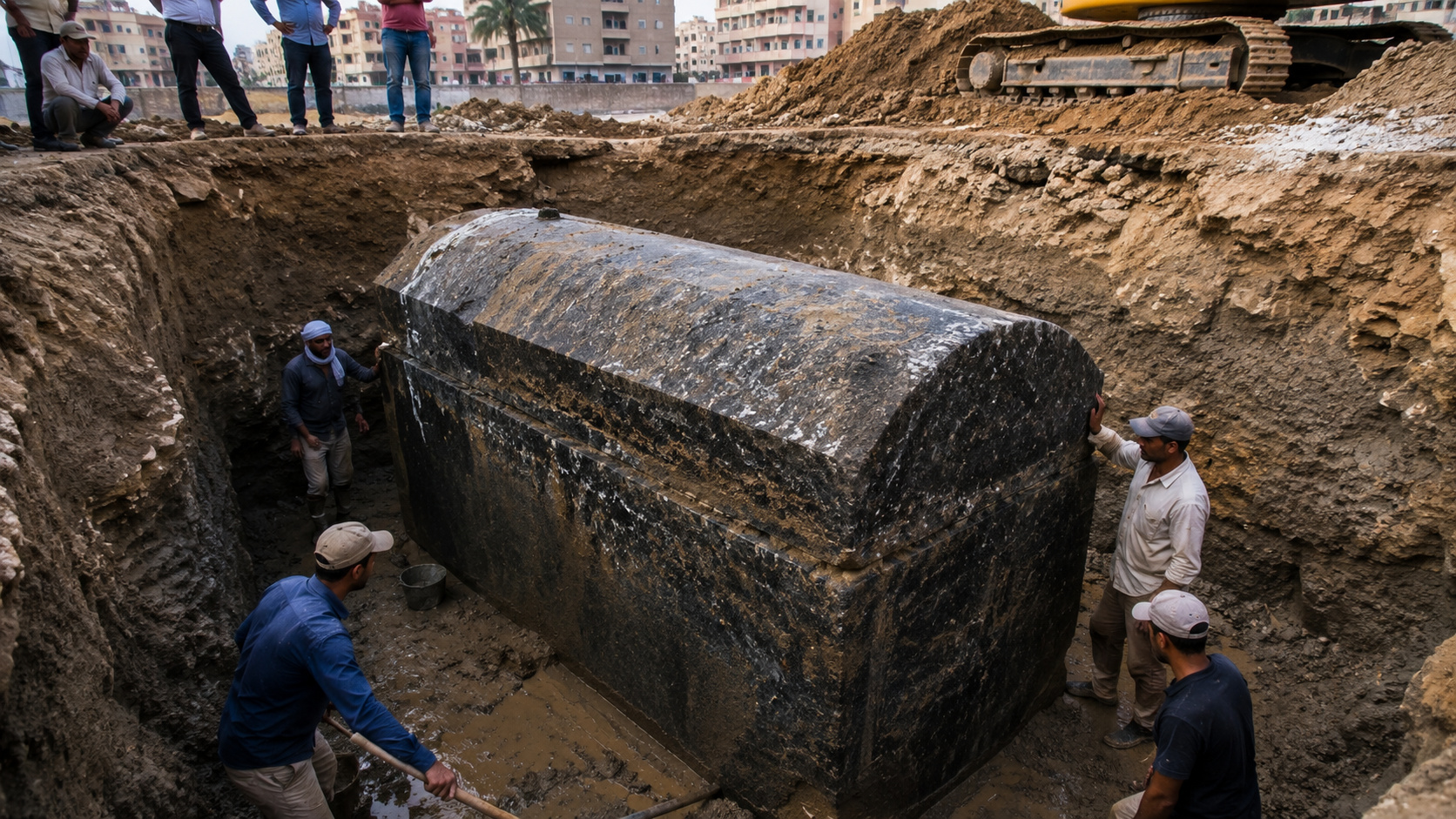


The internet began to speculate that the tomb could hide Alexander the Great
In July 2018, workers operating on a plot intended for the construction of a residential building in Alexandria, Egypt, found something no one expected. Just a few meters below the surface, hidden under streets, buildings, and decades of urbanization, was a huge black granite sarcophagus that had remained sealed since antiquity.
The discovery quickly drew international attention. According to the Egyptian Ministry of Antiquities, the structure was found during foundation excavations in the Sidi Gaber district, a densely urbanized area of the country’s second-largest city. The sarcophagus was buried about 5 meters deep and showed signs that it had never been opened since its burial.
The size of the piece helped fuel speculation worldwide. According to Mostafa Waziri, secretary-general of the Supreme Council of Antiquities of Egypt, it was the largest sarcophagus ever found in Alexandria.
-
Neon Blue Glow in Brazilian Waters Captivates Locals and Goes Viral, Unveiling Rare “Sea Fire” Phenomenon

-
Forgotten Map Leads Diver to Shipwreck with Gold, Rare Jewels, and Secrets Hidden for Nearly 350 Years
-
Furong: The 2,000-Year-Old Chinese City Built on a 60-Meter Waterfall Becomes a Global Tourist Phenomenon

-
YouTube Inventor Dubbed “Real-Life Tony Stark” Builds Robotic Legs for Father’s Day, Creating a Wheelchair That Conquers Stairs and Rough Terrain




A simple residential project revealed a structure weighing almost 30 tons
The sarcophagus impressed not only by its age but also by its dimensions. According to TIME magazine, the structure measured approximately 2.6 meters in length, more than 1.5 meters in width, and about 2 meters in height, being constructed of solid black granite. Estimates released by archaeologists pointed to a weight close to 27 to 30 tons.


In addition to the sarcophagus, archaeologists found an alabaster bust that likely represented the tomb’s owner. The discovery suggested that the site had belonged to a person of high standing during the Ptolemaic period, which ruled Egypt after the death of Alexander the Great.
The detail that most intrigued researchers was a layer of mortar between the lid and the burial box, indicating that no one had violated the tomb since antiquity.
The internet began to speculate that the tomb might hide Alexander the Great
Few archaeological finds have generated so much speculation in such a short time. Since the lost tomb of Alexander the Great has never been found, theories emerged suggesting that the gigantic structure could hold the remains of the Macedonian conqueror who founded Alexandria in 331 BC.
The fact that the sarcophagus is the largest ever found intact in the city contributed to the emergence of these hypotheses. However, archaeologists warned that there was no concrete evidence linking the tomb to the famous ruler. Even so, worldwide curiosity turned the opening of the structure into an event followed by millions of people.
When the lid was finally removed, the reality was quite different from the theories
After weeks of anticipation, archaeologists managed to open the structure. According to the Egyptian Ministry of Antiquities, inside the sarcophagus were the remains of three human skeletons, accompanied by a large amount of brownish-red liquid resulting from the infiltration of sewage and groundwater over the centuries.
Initial analyses ruled out any relation to Alexander the Great. According to statements released by Egyptian authorities, one of the skulls showed signs consistent with an ancient arrow wound, leading some researchers to suggest that the individuals might have been linked to military activities. However, the exact identity of the buried individuals was never definitively confirmed.
The contents of the tomb turned out to be much less spectacular than rumors suggested, but this did not diminish its archaeological importance.
Alexandria continues to hide entire cities beneath its modern buildings
The case of the black sarcophagus highlighted another important aspect of Egyptian archaeology. For a long time, Alexandria received less archaeological attention than regions like Giza, Luxor, or the Valley of the Kings. However, the modern city was built directly over successive layers of the ancient capital founded by Alexander.

According to TIME, centuries of urbanization have covered much of the ancient remains, causing significant discoveries to often appear during construction work. This means that a significant part of ancient Alexandria remains hidden beneath the avenues, buildings, parking lots, and entire neighborhoods of the contemporary city.
One of the greatest archaeological mysteries of the decade was born by chance
The discovery of the black sarcophagus shows how some of the most fascinating archaeological finds do not emerge from million-dollar expeditions or excavations planned over years. In this case, it all started because workers needed to open the foundations of a residential building.
Under a common area of the modern city was hidden a gigantic funerary structure, buried for more than 2,000 years, which remained intact through empires, invasions, wars, earthquakes, and centuries of urban growth.
Even without containing Alexander the Great, the black sarcophagus became one of the most talked-about archaeological discoveries of the 21st century and showed that Alexandria still holds countless secrets beneath its streets.