






 Portuguese
  Spanish


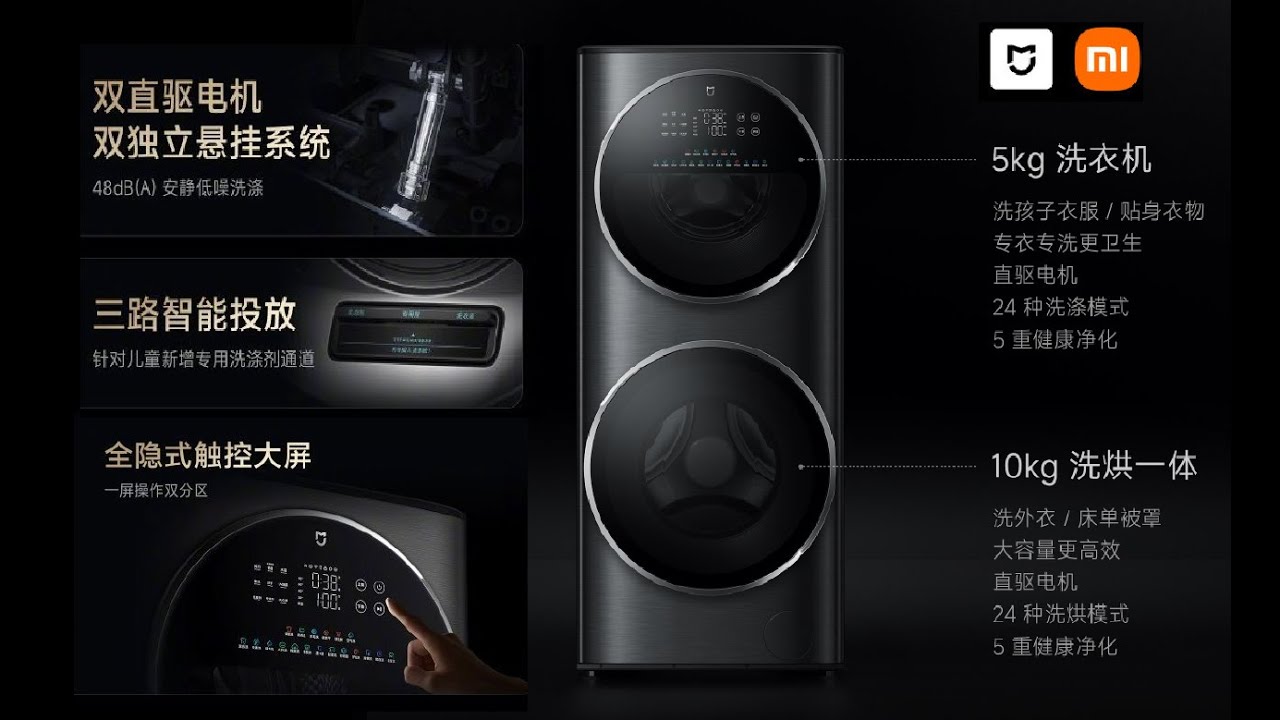

Xiaomi launches smart washer and dryer from 12 kg to 15 kg with 31 programs, 95°C cleaning, and HyperOS control to compete with white goods giants.
In 2026, Xiaomi expanded its presence in the connected home appliance sector with the launch, in China, of the Mijia Washing Machine Pro Super Electrolytic Smart Wash and Dry 12kg, a model presented with 31 wash and care programs, a capacity of 12 kg for washing and 9 kg for drying, remote control via the brand’s app, and HyperOS Connect support. According to Notebookcheck, on January 9, the equipment also features intelligent detergent dosing, an internal drum cleaning mode at 95°C, and super-electrolysis technology aimed at stain removal, clothes whitening, and color transfer reduction.
The new washer and dryer incorporates sensors for low-temperature drying, a fast 12-minute cycle, and dual compartments capable of storing supplies for up to a month, placing Xiaomi in direct competition with traditional manufacturers of so-called smart white goods. In a publication on January 10, Gizmochina reported that the model also combines a 1,200 rpm inverter motor, automatic load sensing, and integration with the Mi Home ecosystem, reinforcing the brand’s strategy to transform the washing machine into an automated, connected, and software-updatable device.
Continue reading below to understand how this new generation of washer and dryer works, what its technical differentials are, and why it aims to change market standards.
-
2,000-Year-Old Gold Rings Found with Human Bones in Thailand Reveal Rare Burial and Feature Ancient Indian Inscription

-
Lenovo Unveils Legion Y700 Tablet with RGB Backlighting, 5G, and SIM Card Support

-
World’s First Nuclear Hydrogen Unit Begins Operation: Copper-Chlorine Technology with Initial Capacity of 150 Liters per Hour, Aiming for 3,000 Liters per Hour
-
Mechanics Retrofit Old Fiat Uno with BYD Electric Motor for Silent, Low-Voltage Operation Reaching Nearly 60 km/h in Home Test



System with 31 programs expands customization and adapts washing to different types of clothes
One of the most striking features of the model is the number of available programs. The machine offers 31 wash modes, including specific cycles for:
- delicate fabrics,
- sports clothes,
- quick wash,
- stain removal,
- pet hair removal.


This level of personalization allows the washing process to be adapted more precisely.
In practice, the machine reduces the use of generic settings and increases efficiency in different usage scenarios, which aligns with the intelligent automation proposal.
Low-temperature drying protects fabrics and reduces clothes wear and tear
Xiaomi relies on a more controlled drying system, using lower temperatures compared to traditional methods.
This brings two direct effects:
- fiber preservation,
- reduction of damage to sensitive fabrics.
The system uses sensors to automatically adjust drying time and intensity. This type of approach prevents overheating and improves the durability of garments.
Drying ceases to be merely a thermal process and becomes a data-controlled process, adjusted in real-time.
Drum cleaning at 95°C eliminates bacteria and internal residues
Another relevant differential is the self-cleaning system. The machine can perform internal drum cleaning cycles with water heated up to 95°C, a temperature sufficient to eliminate:
- bacteria,
- fungi,
- detergent residues.
This feature improves equipment hygiene and prevents accumulated odors. It also contributes to maintaining washing efficiency over time.

This type of function connects directly with the growing concern for domestic hygiene and health.
Automatic detergent dosing reduces waste and improves washing efficiency
The machine features an automatic detergent dosing system. Internal sensors calculate the ideal amount based on factors such as:
- load weight,
- dirt level,
- fabric type.
This prevents both excessive use and lack of product. In addition to improving wash quality, the system reduces waste and cost over time. Automatic control replaces manual user decision, increasing process precision.
Integration with HyperOS connects machine to Xiaomi’s digital ecosystem
One of the model’s pillars is connectivity. The machine is integrated with HyperOS, allowing remote control and automation. Through the system, the user can:
- start and monitor cycles via smartphone,
- receive notifications,
- adjust programs remotely,
- integrate the machine with other home devices.
This integration transforms the appliance into part of a larger connected system. The laundry room is now controlled by software, not just physical buttons.
12 kg to 15 kg capacity meets domestic use with balance between size and efficiency
The machine offers 12 kg washing capacity, with approximately 9 kg for drying. This volume suits most families, allowing large quantities of laundry to be washed without taking up excessive space.

The balance between capacity and dimensions makes the model suitable for urban environments, such as apartments.
Smart functions expand automation and reduce user intervention
The combination of sensors, software, and connectivity creates a high level of automation. The user needs to interfere less in the process, as the machine automatically adjusts:
- time,
- intensity,
- water quantity,
- detergent dosage.
This type of operation reduces human errors and increases consistency in results.
Xiaomi advances into market dominated by traditional white goods brands
The model’s launch reinforces Xiaomi’s broader strategy. The company has been expanding its operations beyond smartphones, entering categories such as:
- refrigerators,
- air conditioners,
- washing machines.
This move increases competition in a sector historically dominated by traditional manufacturers.
Smart laundry becomes part of the connected home transformation
The concept behind the product goes beyond washing clothes. The machine fits into the trend of connected homes, where different devices are integrated by software.
In this scenario, home appliances share data, automate tasks, and reduce manual intervention. Laundry ceases to be an isolated activity and becomes part of a smart home system.
Xiaomi’s model represents an evolution in the sector. It combines:
- automation,
- connectivity,
- efficiency,
- hygiene.
These factors reposition the appliance as a complete technological device.
Xiaomi bets on total integration to compete with global giants
Xiaomi’s strategy is clear: use technology and connectivity as a competitive differentiator. By integrating the machine into HyperOS, the company creates an ecosystem that goes beyond a single product. The goal is to transform the home experience through complete digitalization.
Now the direct question remains: will the aggressive entry of technology companies into the home appliance sector really change the standard of domestic laundry, or will traditional brands continue to dominate this market for longer?


