





 Portuguese
  English
  Spanish
  2 min of reading
  0 comments


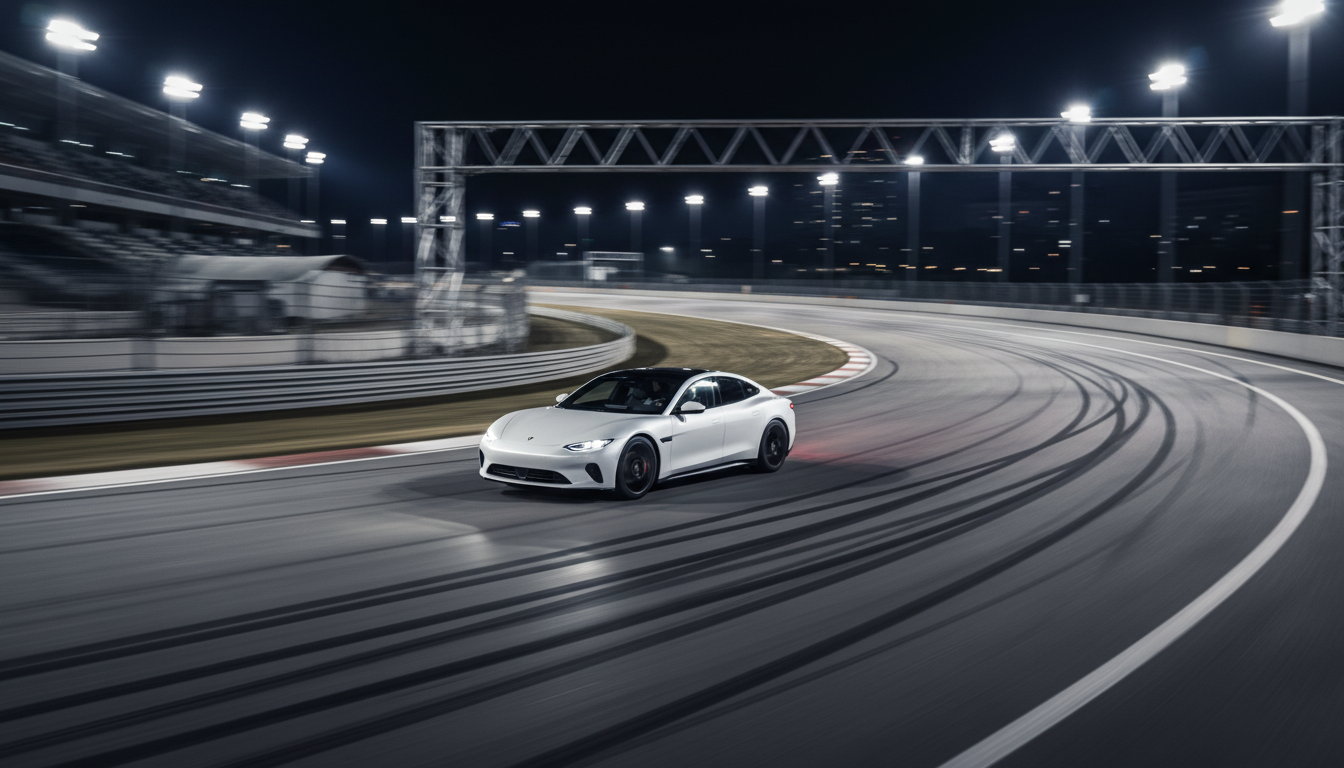
Xiaomi’s electric sedan traveled 4,264 kilometers in 24 hours non-stop on a track in China and set the world endurance record for mass-produced electric cars
The Chinese technology giant Xiaomi has just set a new world endurance record with its electric car. The Xiaomi SU7 Max traveled 4,264 kilometers in 24 continuous hours.
The test took place on a high-speed track in China. The distance is equivalent to traveling from Beijing to Moscow without leaving the driver’s seat.
The previous record for mass-produced electric vehicles was comfortably surpassed. Xiaomi announced the results via Weibo, the Chinese social network.
-
For the first time in history, a submarine cable will descend to four thousand meters deep under the ice of the North Pole to ensure that the internet between Europe and Asia no longer depends on conflict zones in the Middle East.

-
A British company has installed in the middle of the ocean the world’s first floating platform that generates electricity 24 hours a day from the temperature difference between the surface and the depths of the Atlantic, without relying on wind or sun.
-
The James Webb telescope spotted a planet 700 light-years from Earth with mornings full of sand clouds and nights with clear skies, the temperature difference between the two hemispheres reaches an impressive 170 degrees.
-
A former Hong Kong police officer has just become the first astronaut from her city to go to space. She embarked on the Shenzhou-23 mission alongside two other colleagues who will face muscle atrophy, radiation, and prolonged fatigue in orbit.




Lei Jun, founder and CEO of Xiaomi, oversaw the project. The company recently entered the electric car market and is already competing with Tesla and BYD.
SU7 Max: 673 horsepower, ultra-fast 800-volt charging, and CLTC range of 800 km
The SU7 Max produces 673 horsepower with two electric motors. The 800-volt electrical architecture allows for ultra-fast charging.

The declared range is 800 km on the Chinese CLTC cycle. This standard tends to be 20-30% more optimistic than the European WLTP or American EPA.
The average speed during the 24 hours was above 177 km/h. The charging time was included in the total period, demonstrating the efficiency of the system.
According to CnEVPost, the announcement coincided with the pre-sale of the renewed SU7 in January 2026.
Xiaomi versus Mercedes-AMG: the Chinese leads among production cars but concepts surpass

The SU7 Max holds the record among mass-produced vehicles. However, the Mercedes-AMG GT XX, a concept, has already recorded 5,483 km in 24 hours with charging of up to 900 kW.
The difference of 1,219 km shows that fast charging technology will be the decisive factor in the next generations of electric vehicles.
According to Autoblog, Xiaomi’s record demonstrates the viability of electric mobility over long distances.
What the record means for the future of electric mobility

Traveling 4,264 km in 24 hours proves that range anxiety is becoming increasingly obsolete. With fast charging stations, electric vehicles can cover intercontinental distances.
According to Tek Sapo, the test took place on a closed 7.8 km oval circuit, without real traffic or weather variations. This caveat is important.
Furthermore, exact details of energy consumption and the number of charges were not fully disclosed. Nevertheless, the Xiaomi SU7 proved that a mass-produced electric car can travel the equivalent of Beijing-Moscow in a single day.








-

1 person reacted to this.