Portuguese
  Spanish


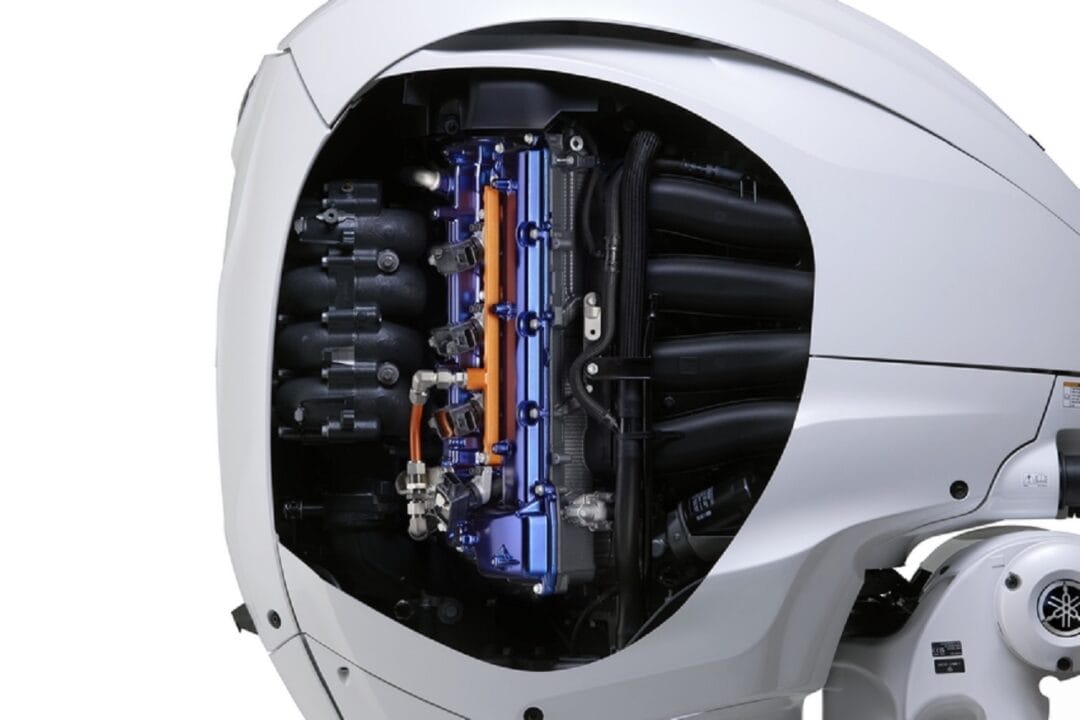

Yamaha Will Reveal Its New Hydrogen-Powered Engine for the Maritime Market Next February. The Company’s Expectation Is to Contribute to the Sustainability of One of the Most Polluting Sectors.
Yamaha Motor Co., LTD recently announced in a note that it will showcase a prototype of a hydrogen-powered outboard motor at the Miami International Boat Show. This is one of the largest boat shows in the world, scheduled to take place from February 14 to 18 next year in Miami, Florida, United States.
Yamaha Aims to Achieve Carbon Neutrality by 2050
According to Yamaha, marine products move through water and, as such, are subject to water resistance, requiring much more energy for propulsion than land vehicles. Additionally, performance and engineering requirements for products in the maritime industry can vary widely depending on the environment of use, such as the ocean, rivers, or lakes, as well as the usage itself, from commercial fishing to recreation.
To achieve carbon neutrality with marine products while simultaneously facing such challenges, Yamaha is announcing this hydrogen-powered engine, which represents a multidirectional development approach, looking at other energy sources and technologies alongside its electrification efforts.
-
Lenovo Unveils Legion Y700 Tablet with RGB Backlighting, 5G, and SIM Card Support
-
Lenovo Unveils Legion Y700 Tablet with RGB Backlighting, 5G, and SIM Card Support
-
Northern Brazilian City Prepares Task Force to Mitigate El Niño Impacts with Stockpiled Fish, Drone Monitoring, Firefighting, and Water Supply Reinforcement in Remote Areas

-
Brazil to Issue “Panda Bonds” in China, Aiming to Raise Up to 5 Billion Yuan at Lower Interest Rates Than Dollar Debt

With the announcement of its new hydrogen-powered engine, Yamaha has set an environmental goal for the entire company to achieve carbon neutrality in Scope 3 emissions by 2050. To develop a more sustainable world, the company will continue to promote the research and development of technologies that contribute to sustainability.
The new hydrogen-powered engine offers several sustainable advantages, especially when using green hydrogen, a low-carbon emission fuel that reduces dependence on fossil fuels, promotes greater versatility, energy storage, and reduces local pollution, among others.
Yamaha Also Develops Hydrogen-Powered Engine for Cars
In January of last year, Yamaha launched the first hydrogen-powered V8 engine. With hydrogen fuel emerging as an alternative to electric cars, the Japanese company decided to modify its 5.0 V8 engine to burn the fuel.
The Japanese company used the engine from the LC-F and LC500 as a base, developing new cylinder heads, intake manifolds, and an injection system. As a result, the new hydrogen-powered engine in the automotive industry offers up to 455.5 horsepower and 55.1 kgfm.
This power is sufficient to move the large Lexus coupé as well as the LS sedan, for example. This hydrogen-powered engine generates energy through combustion. The model operates similarly to a gasoline engine: the fuel cell is filled with hydrogen gases, where the mixture is compressed by pistons, providing energy to the networks.
Other Sustainable Initiatives by Yamaha
In October of this year, Yamaha Motor Company began using cellulose nanofibers developed from wood instead of some plastic and steel parts in its boats.
The wood, which the company states is five times stronger than steel, is a cutting-edge material developed in Japan. This wood, stronger than steel, is produced by decomposing wood pulp to a minimal level.
Currently, 26 factories produce the product throughout Japan. Despite having a high environmental adaptability, the production of this wood is still expensive. According to Yamaha, starting in 2024, some components of its engines used in watercraft will be produced from wood. In fact, we will not see the wood used directly in the engines, but rather a resin composite derived from wood.