Portuguese
  Spanish


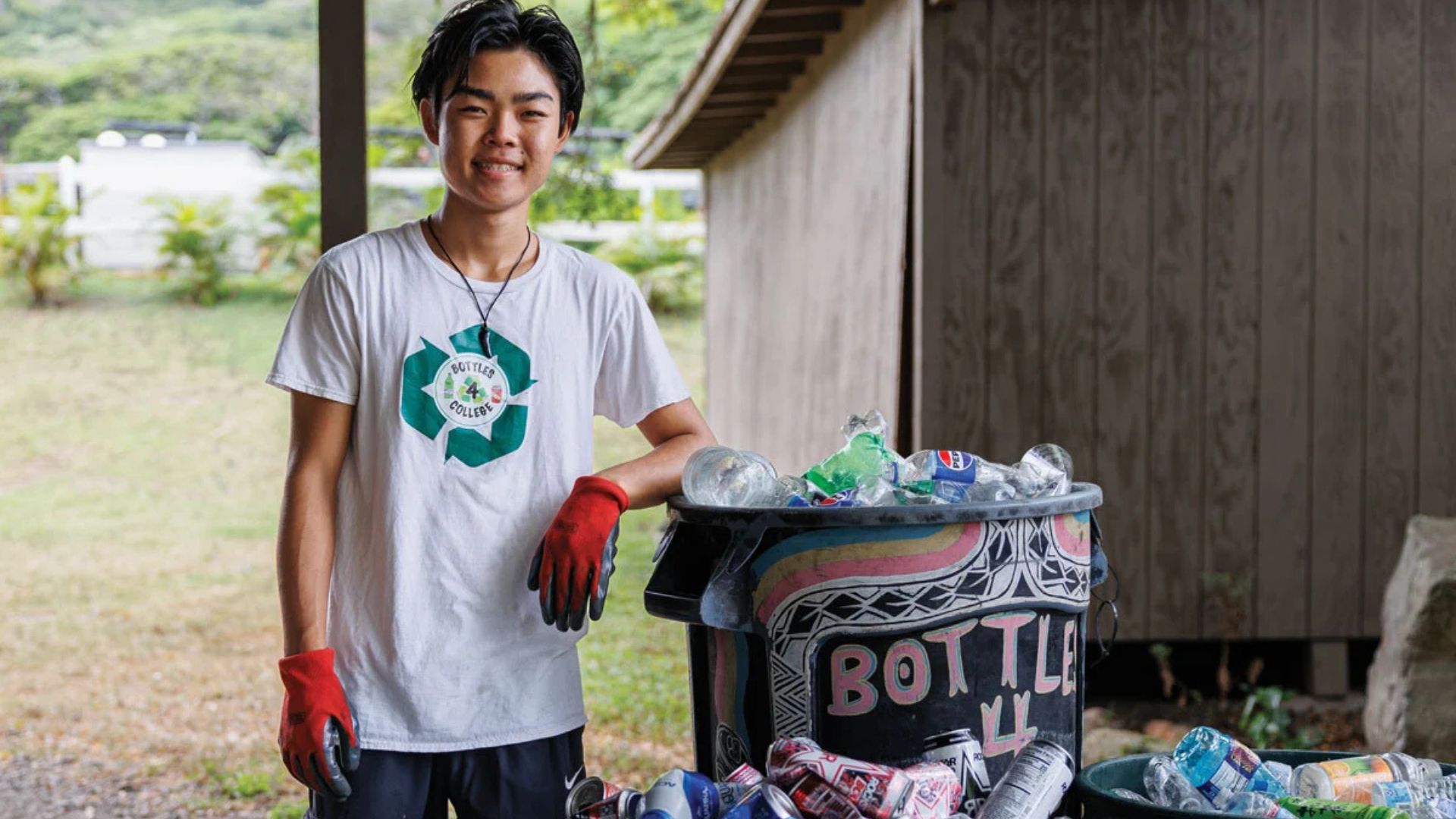

Recycling of cans and bottles has already generated scholarships for nine students in Hawaii.
Behind the paradise image associated with Hawaii, the high cost of living remains a real barrier for many young people considering higher education. It was in this context that Genshu Price, a resident of Hauula, began collecting cans and bottles as a child to save money. What started as a family idea later became Bottles4College, an organization created to turn recyclables into scholarships for local students.
According to Points of Light, Genshu started this work at 10 years old, using a wheelbarrow to collect containers in neighborhoods, beaches, parks, and sporting events. Over time, he realized that the initiative could go beyond his own college and start serving other students in Hawaii, combining recycling, environmental impact, and access to education in a single project.
Bottles4College was born in Hawaii to turn recycling into scholarships
The logic of the project is simple but powerful. In Hawaii, the state program HI-5 returns five cents for each eligible beverage container. Alone, this amount seems irrelevant. But, in large volume, it turns into enough money to cover an important part of a degree. Based on this logic, Genshu stopped collecting containers just for himself and started structuring a community collection model.
-
Xiaomi Launches Compact Photo Printer with Bluetooth, Extra Black Ink, and Augmented Reality Photo Printing

-
Teen Invents AI-Powered Traffic Light to Assist Elderly Pedestrians by Extending Crossing Time

-
NASA Plans Telescope That Can Be Repaired by Robots 1.5 Million Kilometers from Earth
-
China Launches First Oceanic Medical Rescue Ship with Advanced Facilities to Serve Remote Regions



When Bottles4College officially became a non-profit organization in 2021, the project’s reach increased. According to Points of Light, Genshu began creating collection points in partnership with local businesses and schools, facilitating community participation and increasing the volume of cans and bottles converted into scholarships.
This scale change was decisive. What once depended on the individual effort of a child started to function as a community network, where residents deposit recyclables knowing that the material will be converted into financial support for students in their own state.
Recycling of cans and bottles has already generated scholarships for nine students in Hawaii
According to Hawaii News Now, by April 2025 Bottles4College already had nine students in college with scholarships granted by the initiative. The report also highlighted the case of a student graduating from the University of Hawaii in Manoa two years ahead of schedule, with a double major, thanks to the combination of a full scholarship and other financial aid.
This data helps to show that the impact of the project is no longer symbolic. It has started to produce concrete academic results, reducing access barriers and accelerating university paths for young people who, in many cases, face a high cost of living and an environment where college may seem too distant.
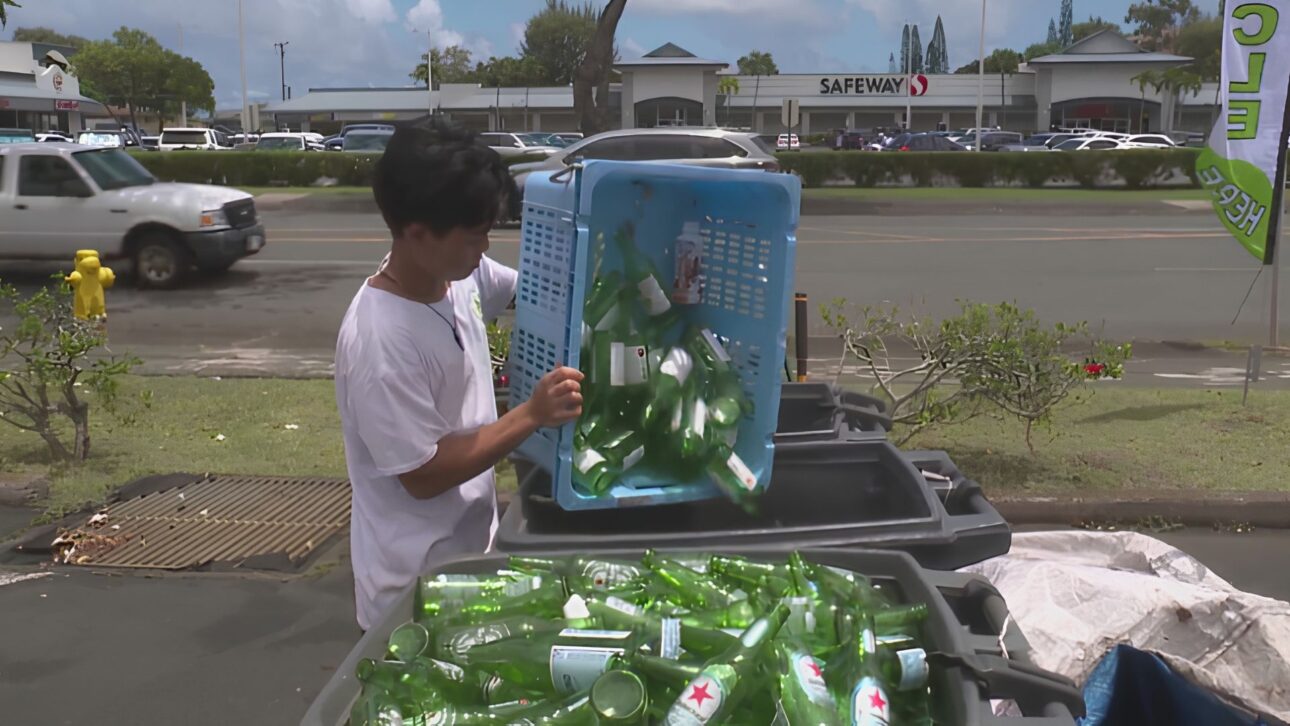
According to Points of Light, Genshu’s declared goal has always been precisely this: to transform recycling into a practical tool to expand opportunities for local students, while reducing waste and strengthening the sense of community.
1.8 million recycled packages turned into money for education
The scale reached by the project helps to understand why it gained visibility. According to Hawaii News Now, Bottles4College had recycled approximately 1.8 million cans and bottles by January 2025. This volume is equivalent to more than 140,000 pounds of waste, about 63,000 kilograms, diverted from landfills.
According to the broadcaster, the conversion of this material into financial resources had already generated more than US$ 43,000 in scholarships, in addition to US$ 10,000 allocated to the victims of the Maui wildfires. The scholarships distributed by the program range from US$ 1,000 to US$ 10,000 per student.
These numbers show the real weight of the five cents per package when the collection stops being individual and starts operating on a community scale. What would be change without apparent value transforms, with volume and organization, into tuition, university permanence, and direct support to students in Hawaii.

The project grew because the entire community embraced the logic of collection
According to Points of Light, Genshu realized early on that it would be impossible to fund significant scholarships with individual collection alone. This realization changed the nature of the project. Instead of one person trying to raise money alone, Bottles4College began to function as a platform where the entire community deposits recyclables to create collective impact.
The report itself highlights that Genshu, even with the expansion of the organization, still sorts up to 15,000 recyclables per week, but the total volume of the program today depends on the participation of hundreds of local residents and partners. This change in scale is what made the model viable in practice.
At the heart of the initiative is a simple idea of communication: whoever delivers a can or a bottle knows that this gesture will not only prevent waste in the environment but will directly help a local student get to college.
Bottles4College unites environment, community, and access to higher education
According to Points of Light, the project was structured around four pillars: education, environment, community, and lifestyle.
In practice, this means that the organization is not just presented as a fundraising system, but as a way to transform an everyday habit into community action with visible results.
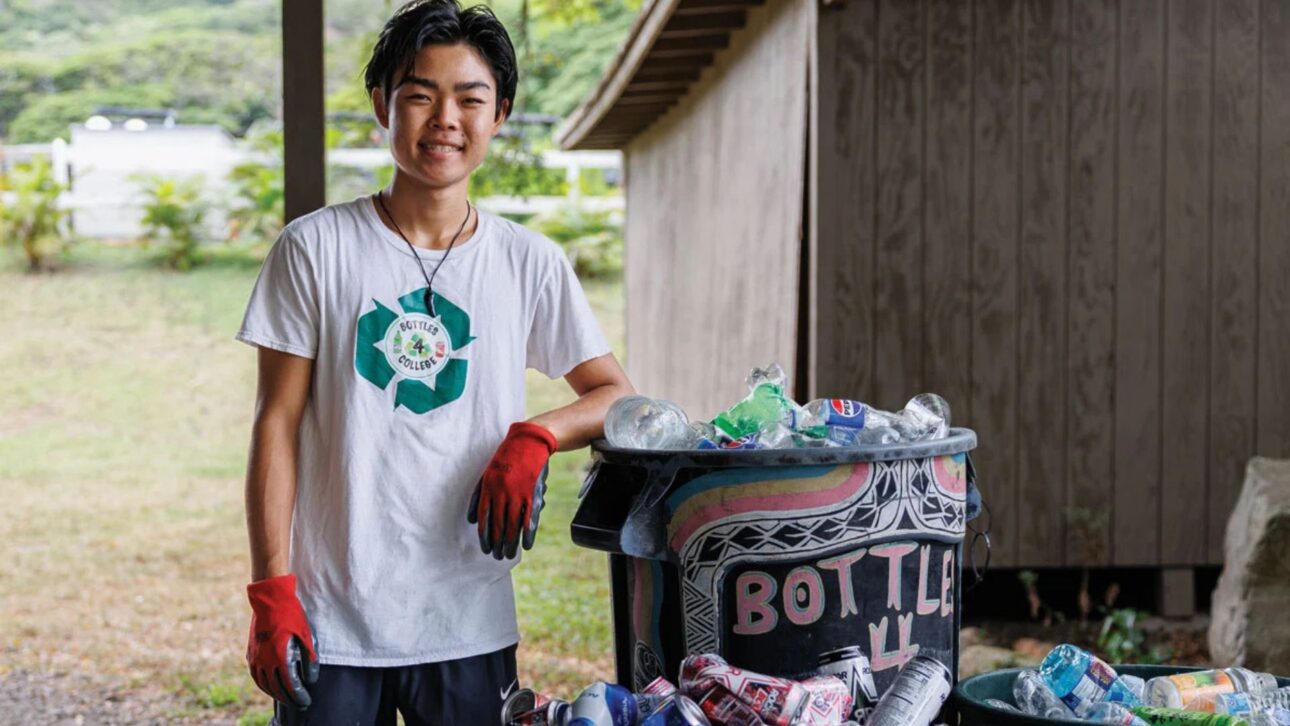
In the environmental pillar, each recycled container is one less item in landfills or the ocean. In the educational pillar, the money raised becomes a scholarship.
In the community pillar, the population begins to participate in a chain where individual contribution has a clear destination and local impact. This combination is one of the reasons why the project gained recognition outside of Hawaii.
This design also helps explain why the initiative gained momentum. It does not just ask for donations. It offers a clear symbolic exchange: recyclable waste goes in, educational opportunity comes out.
Young Hawaiian turned a wheelbarrow into a replicable model
According to Points of Light, Genshu also expanded the project’s reach by documenting the process, producing videos, and explaining how to properly separate cans and bottles. This layer of communication turned Bottles4College into more than just a good local idea: it transformed the initiative into a model that can be understood and potentially reproduced in other places with similar container deposit programs.
The central point of the story is precisely there. The project started with a 10-year-old boy, a wheelbarrow, and a simple account based on five cents per container. Today, it has already helped real students enter and stay in college while diverting tons of waste from common trash.
In the end, Bottles4College shows how a minimal amount, multiplied by scale, organization, and community, can gain enough weight to change the lives of students in Hawaii. What seemed like just recycling turned into a concrete bridge between discarded waste and higher education.