Portuguese
  Spanish


In Beijing, the robotic hand of Linkerbot and the Zhongguancun U30 became showcases for electronic skin, semiconductors, and AI networks, demonstrating how young scientists bring laboratory technology to industrial scale.
A scene catches attention at the Zhongguancun Science Park in Beijing: a robotic hand holds a fine needle and manages to pass it with precision. It also plays the piano, tightens screws, and even gives a gentle massage. What seems like a laboratory demonstration has, in practice, turned into a product and market, led by young entrepreneurs who transform academic research into startups with a direct impact on industry and daily life.
Behind the robotic hand is Jia Xiaoyou, a graduate student at Tsinghua University and co-founder of Linkerbot, a company operating in the global high-precision robotic hand segment. The advancement is presented with a striking number: eight out of ten similar units in circulation worldwide are produced by Linkerbot. The ambition is to expand access to a technology previously considered niche and expensive, making it more viable for large-scale use.
What is the robotic hand and why has it become a key component for robots in the real world

The robotic hand described in the text is a high-dexterity device that can be adjusted at different angles and hold very distinct objects, from a lipstick to a dumbbell.
-
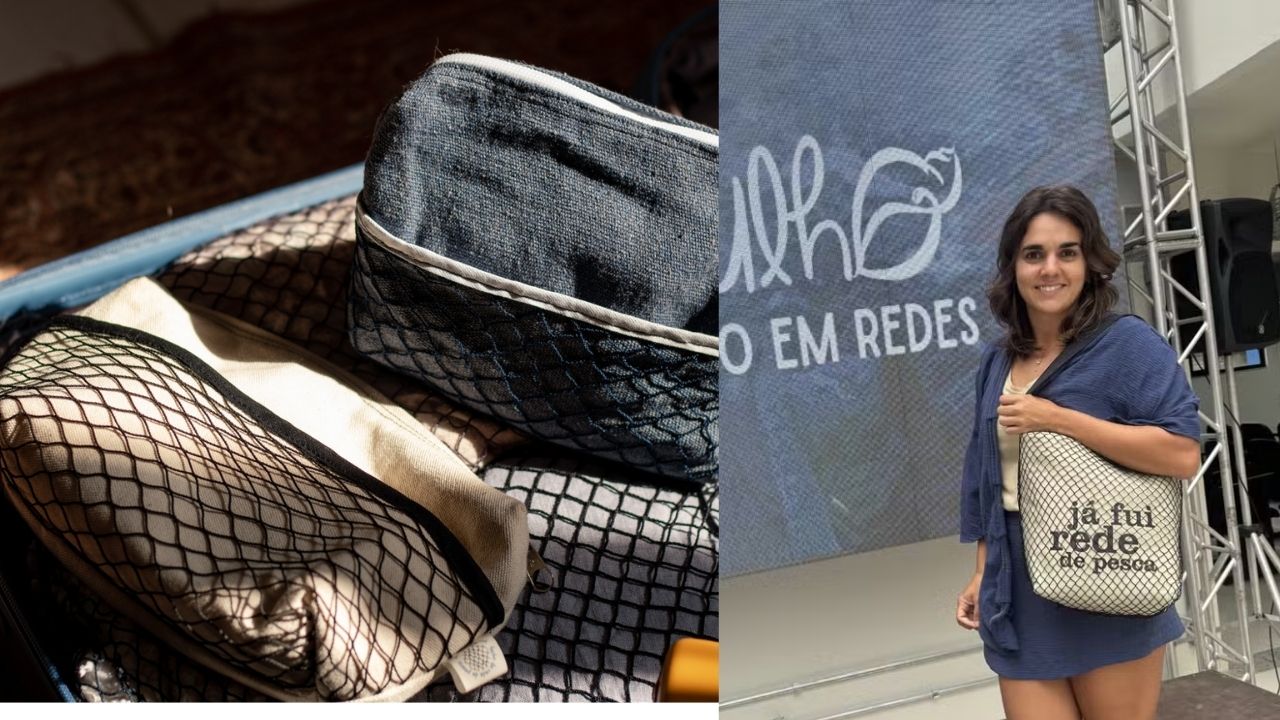
Oceanographer Turns Abandoned Fishing Nets from Brazilian Waters into Bags, Creating Jobs and Earning Over $7,000 Monthly

-
Australia deploys poisoned sausages and uses traps, shooting, and fences in a battle against invasive cats that kill over 1.5 billion native animals annually, threatening more than 200 species.

-
NASA Rover Captures “Tired Face” on Mars, Highlighting Human Brain’s Tendency to See Faces in Rock Formations

-
Ancient Stone City in the Desert, Once Home to 30,000, Puzzles Scientists with Nabateans’ Water Mastery 2,000 Years Ago




In practice, this expands the range of applications, as delicate and repetitive tasks no longer rely solely on manual labor in industrial environments.
Jia summarizes the central argument: for robots to truly enter everyday life, agile mechanical hands are indispensable.
Without this capability, robots are limited to simple interactions and cannot handle real-world problems that require fine control, precision, and adaptation to the object and the environment.
The numbers that explain the leap: 80% of units and price drop from 1 million to 6,000 yuan
The impact of Linkerbot appears both in market share and cost. According to Jia, some imported products cost more than 1 million yuan per unit, making them unfeasible for widespread adoption.
The startup’s goal is to reduce prices to less than 50,000 yuan, with basic models available for just 6,000 yuan.
In addition to price, the very diffusion of technology is used as a scaling argument: the systems have been adopted by foreign universities for research, development, and data collection.
In industrial use, the proposal is to perform delicate operations that would normally require a lot of labor, increasing productivity and reducing dependence on manual processes in precision tasks.
The ecosystem that pushes startups: the U30 program and almost 7,000 youths on the radar
The advancement of these companies is described as part of a broader shift among young Chinese entrepreneurs, supported by innovation environments and networks. One of these drivers is the Zhongguancun U30, a program launched in 2015 to support founders under 35 years old.
The text points out numbers that size the network: nearly 7,000 participants over the years and more than 300 selected as annual winners.
The community focuses on cutting-edge technologies such as artificial intelligence, humanoid robotics, and life sciences. For Jia, the program acts as a showcase and bridge: it creates space for idea exchange, connections, and visibility at relevant events, with support from local authorities.
Electronic skin: giving touch to machines requires a long supply chain and production from scratch
If the robotic hand represents dexterity, the electronic skin represents sensitivity. Lai Jiancheng, a member of U30 and founder of Tachin, works with technology designed to give machines the sense of touch, with applications in robotics, smart vehicles, medical rehabilitation, and wearable devices.
The challenge, however, is not just scientific. Lai states that electronic skin cannot simply be assembled with ready-made parts: it needs to be built from raw materials until it becomes a functional system, requiring a long and complex industrial chain. The transition from the laboratory to industrial scale has been difficult because there was no established production line for this technology in China. By the end of 2025, the team established the first production line, after learning from various sectors and integrating different technologies into a new system.
Chips and semiconductors: optical inspection becomes a target for autonomy after sanctions
Another axis mentioned is the industrial base of semiconductors. Yuan Zhichao, founder of i-Sense, develops optical inspection modules used as fundamental components to detect defects and control quality in semiconductor manufacturing.
The motivation has a direct context: advanced inspection systems have long depended on imported optical components, which became an obstacle to self-sufficiency in equipment.
Yuan states that, by the end of 2024, a second wave of sanctions accelerated the search for national alternatives. In response, the company developed an autofocus imaging system capable of detecting microscopic defects in multiple layers, overcoming the limitations of traditional optical technologies.
i-Sense serves over 70 clients in wafer and advanced packaging inspection, is expanding in Southeast Asia, and plans to enter the Japanese and South Korean markets.
AI Network for Idle Computing: The Logic of a “Computational Power Grid”
The ambition is not limited to robotics and chips. Fu Zhi transformed an observation about energy into a business model focused on computing. During his PhD at Tsinghua, he noticed a discrepancy: green energy is often generated during the day, while consumption and storage occur at different times.
For him, the same logic applies to computational power, where idle resources can be shared and redirected to meet demand elsewhere.
In 2023, Fu founded ComNergy Tech Limited, an AI-based scheduling platform for idle computational resources, creating a network similar to an electrical grid to make these resources instantly accessible.
The system serves AI companies, research institutions, and developers, offering flexible and cost-effective solutions. Fu has also expanded operations internationally and enabled cross-border sharing of computational resources, advocating for the creation of a new model of global technological cooperation.
What Changes in Practice: Research Becomes Product, Costs Fall, and China Aims for Leadership
Together, the stories show a pattern: young scientists leave the lab with a clear target for practical application. Instead of remaining only at the prototype stage, the focus is on creating a product, structuring production, and entering strategic industrial chains.
In one case, the robotic hand becomes a symbol of scale and cost reduction; in another, electronic skin requires building a production line from scratch; in semiconductors, optical inspection seeks to reduce dependence on imports; and in AI infrastructure, the bet is on using idle resources as a shared network.
In the discourse of these entrepreneurs, ambition also changes tone: Fu states that innovators in China are often seen as followers, but they should aim to lead, not just follow.
In your opinion, which of these fronts has the most potential to change daily life first: robotic hand, electronic skin, chips with optical inspection, or AI network for shared computing?