






 Portuguese
  Spanish


ASSA ABLOY, born from the merger of a Swedish company with a Finnish one in 1994, owns Yale, Medeco, and Brazilian brands like Papaiz and La Fonte, and has become a world leader in the door-locking business
Look at the locks in your house, the padlock on the gate, and the card that opened the hotel door on your last trip. It is very likely that they all come, directly or indirectly, from the same company. The largest lock manufacturer in the world is a Swedish group that almost no one can name, but is present in almost every locked door on the planet.
Its name is ASSA ABLOY, and the list of brands it controls is impressive. It owns Yale, Medeco, Mul-T-Lock, and in Brazil, names as common as Papaiz and La Fonte, in addition to having a strong presence in the hotel access card and digital lock market in dozens of countries. According to Papaiz, a brand now part of the group, ASSA ABLOY is the “World leader in access solutions”, a category that ranges from common locks to electronic control.
How the largest lock manufacturer in the world became invisible
The secret to invisibility is the brand strategy. Instead of stamping its own name on every product, the group maintains the local brands that people already know and trust. The Brazilian consumer buys a lock from a national brand thinking it’s an independent company, unaware that it belongs to a European conglomerate.
-
Major Brazilian Ethanol Producer Becomes Largest Owner of Planted Forest in Mato Grosso, Aiming to Power Plants with Renewable Energy Instead of Fossil Fuels

-
In 1980, three brothers in a Chinese village collected discarded buttons, sparking the transformation of the area into the world’s button capital, producing billions annually for global fashion.
-
Man Tests Powerful Laser Robot Capable of Damaging Phones, Cutting Through Glass, Melting Sand, and Fusing Volcanic Rocks, Highlighting the Need for Strict Regulation

-
In 1959, an English engineer revolutionized glassmaking with the float glass process, now the standard for windows, mirrors, and screens worldwide.


This tactic gives the group the best of both worlds: the strength of a giant multinational and the affection of established regional brands. You trust the lock on your door without having any idea who really makes it, and it is precisely this discretion that has helped the company establish itself as one of the owners of physical security in much of the world without drawing attention.
A Swedish-Finnish merger that united the world of locks
The giant was born from a corporate marriage. In 1994, the Swedish ASSA joined with the Finnish Abloy, two traditional lock manufacturers, forming a single group headquartered in Stockholm. From there, the company embarked on a marathon of acquisitions, buying lock manufacturers on various continents.
According to Exame, the company is the “result of the merger between the Swedish Assa and the Finnish Abloy” and, from a revenue of about US$ 500 million and 4,000 employees in 1994, it transformed into a “global leading giant.” Each purchase eliminated a competitor and added an entire clientele, in a snowball effect that helped transform two regional companies into one of the largest lock empires in the world.
Yale, Medeco, and an army of famous brands
The list of brands resembles a global security catalog. Besides Yale, perhaps the most well-known lock name on the planet, the group controls brands like Medeco, Mul-T-Lock, Securitron, and Norton, respected in padlocks, door closers, and high-security locks. The group’s official material lists, among its international brands, “Yale, Securitron, Norton, Medeco, and Hes.”
This means that a large part of the innovation in locks over the past decades has ended up concentrated in the hands of a single owner. The Yale lock that many people consider synonymous with security is, in practice, just one of the dozens of brands in the group. Those who want to buy a reliable lock almost always end up, unknowingly, feeding the same Swedish cash register.
From padlock to hotel card: the business of locking everything
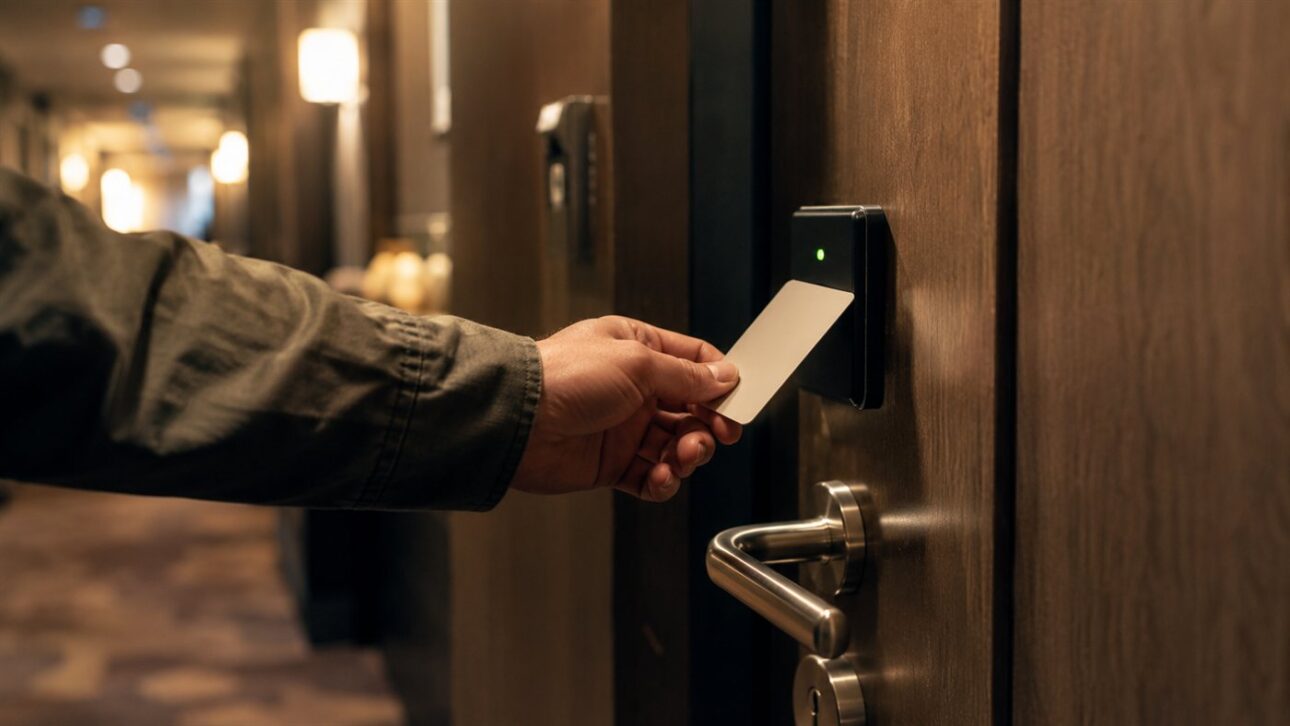
The portfolio goes far beyond the home lock. The company manufactures automatic doors, turnstiles, biometric access control systems, electronic locks, and the cards that open hotel rooms in many countries. Practically any barrier that separates who can enter from who cannot may pass through its territory.
This reach transforms the company into a central piece of modern security, from airports to corporate buildings. Locking and unlocking has ceased to be a simple padlock and has become a technology ecosystem, and the group has positioned itself at its center. Access control today is as much about software and chips as it is about metal.
Billions in revenue and tens of thousands of employees
The numbers confirm the size of the dominance. According to Papaiz, the ASSA ABLOY Group “was established in 1994 and today comprises more than 400 subsidiary companies in 70 countries, exceeding 51,000 employees and revenue of about 8.8 billion dollars.” It is one of the largest discrete industrial businesses on the planet.
Few consumers imagine that locks move so much money. But security is a universal and permanent necessity: every new building, every hotel, and every house needs locks. As long as there is something to protect, there will be demand for those who make the lock, and this constant flow sustains the empire. The company grows by buying rivals and riding the wave of global urbanization.
In Brazil, Papaiz and La Fonte are part of the group
Here is the fact that brings the story closer to Brazilians. Brands as popular as Papaiz, La Fonte, Silvana, and Udinese, present in hardware and doors of millions of homes in the country, belong to ASSA ABLOY. According to Exame, “Assa Abloy, which has a global revenue of about US$ 8 billion, entered Brazil in 2000, with the purchase of the company La Fonte,” and later “acquired control of the Papaiz group, which includes the company Udinese.”
In other words, that lock bought at the neighborhood hardware store is likely part of a Swedish conglomerate. What seems like a national product is, in fact, a link in a global security chain, which shows how the origin of the things we use is rarely what it appears to be. The dominance hides behind familiar brands.
The race for digital and biometric locks
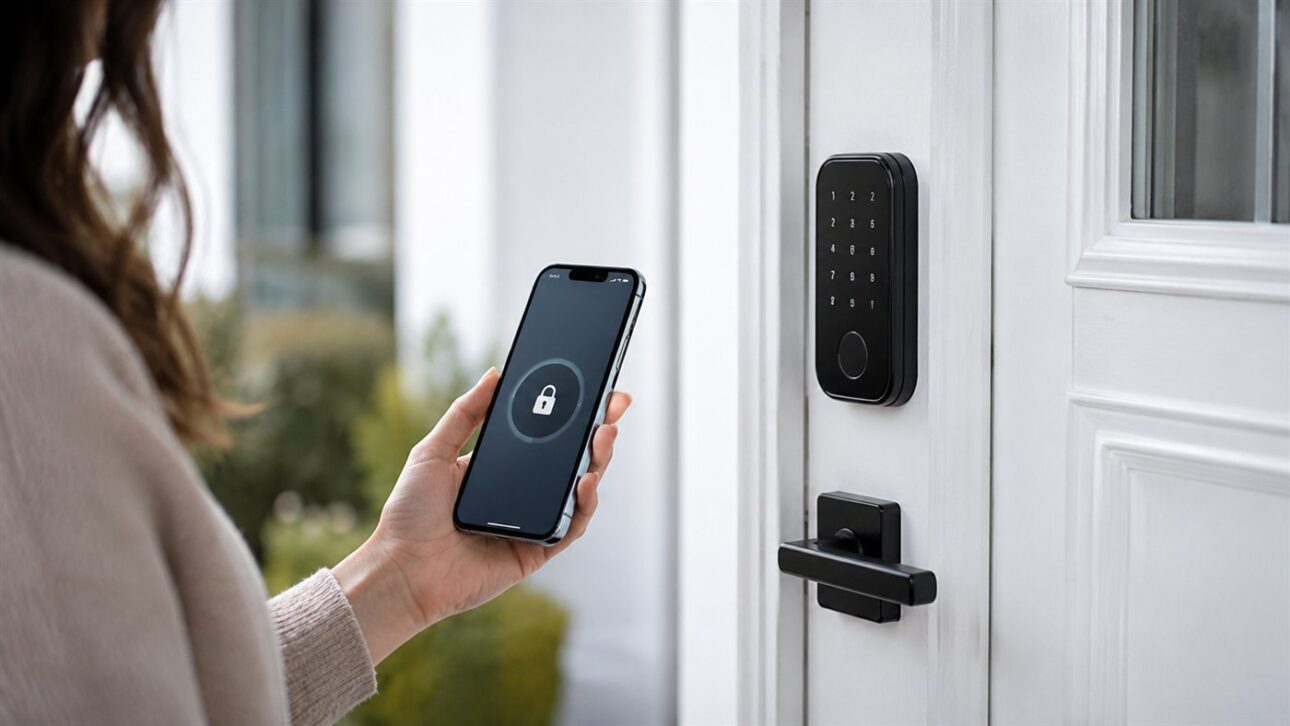
The future of the sector is leaving the metal key behind. The company is investing heavily in locks that open via cellphone, password, facial recognition, and card, betting that the home and office of the future will have fewer and fewer physical keys. Whoever dominates this transition will have significant influence on security in the coming decades.
This change is also a strategic move to maintain leadership in a digital world. Replacing the mechanical lock with an electronic one creates a new dependency on software, updates, and services, a much more valuable recurring revenue model. The group wants to ensure that, even without a key, the door continues to be opened by their technology.
Why security has become such a concentrated market
At its core, the story of this Swedish group repeats a pattern seen in various sectors: a universal need that ends up in the hands of very few companies. Locking doors is something everyone needs, and for that reason, it has become a billion-dollar and highly concentrated business.
There is nothing illegal about this, but it is worth reflecting on how much of our daily lives depend on giants we don’t even know. The next time you turn a key or tap a card on a door, it’s worth remembering who is behind the gesture. Did you imagine that the security of your home could be owned by someone in Sweden?


