






 Portuguese
  Spanish


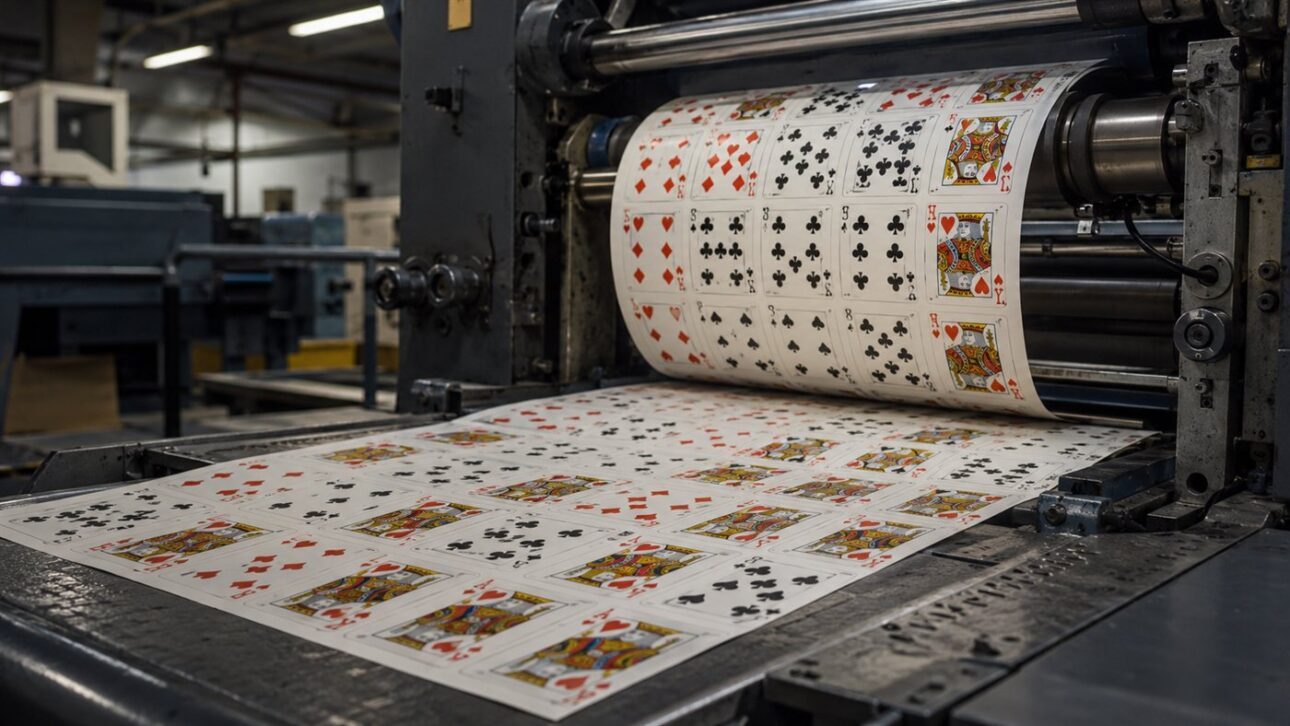
Cartamundi, based in the small town of Turnhout, prints common decks, collectible cards, and famous games, and also owns the iconic Bicycle cards used by magicians and casino tables
If you have ever played rummy, truco, poker, or opened a pack of Pokémon cards, you have probably held in your hands the product of a company that almost no one knows exists. The world’s largest playing card manufacturer is Belgian and is located in a small town in northern Belgium. It is from there that a large portion of the cards that circulate the world comes, from popular decks to rare collectibles.
Its name is Cartamundi, and its reach is surprising. The company prints everything from cheap market decks to collectible cards from giant brands, and it also owns the legendary Bicycle cards, those used by magicians and casino tables worldwide. Many things that seem to be from different brands come from the same place.
How this playing card manufacturer was born in a Belgian town
The history of this Belgian town with cards is old and deep. The town specialized in printing playing cards a long time ago, accumulating knowledge, machines, and skilled people generation after generation. Over time, it became a kind of playing card capital, concentrating a rare tradition in this field.
-
World’s Largest Cork Producer in Portugal Harvests Over 5 Billion Corks Annually from Trees Without Cutting Them Down

-
Most of the world’s wigs and hair extensions are made from Indian human hair and assembled in a single Chinese city, the global wig capital, where 300,000 people rely on this billion-dollar industry.
-
Despite declining smoking rates in the U.S., Zippo’s windproof lighter factory sees record sales in over 180 countries, remaining the largest employer in its region for decades.
-
Brazilian Driver Accidentally Becomes Millionaire for 7 Hours, Returns $25 Million and Now Seeks $2.5 Million Reward in Court


It was from this environment that the current giant was born. Just as other towns became specialists in buttons or pencils, the region concentrated the know-how of making playing cards in one spot on the map. When a skill accumulates for so long in one place, it becomes almost impossible for outside competitors to catch up. The local card manufacturer benefited from decades of accumulated advantage.
An operation that earns hundreds of millions of euros
The roots of the business are truly ancient, but today’s size is what impresses. According to the Belga News Agency, the group closed 2025 with a revenue of 693 million euros, an increase of 6% over the previous year, and projects to reach 800 million euros this year.
Surviving and growing in this field for so long is quite an achievement. The company has weathered industrial revolutions, wars, and the arrival of video games without abandoning the deck of cards. This longevity shows that, even in a digital world, physical cards still have a cherished place at the table of billions of people, from family games to serious betting.
From the Common Deck to Pokémon and Magic Cards
What makes the Belgian company so powerful is the variety of clients. Also according to the Belga News Agency, the company produces cards for giant brands, including Pokémon, Disney Lorcana, and Magic: The Gathering, three of the biggest names in the collectible games world. It also manufactures decks of its own brands and third parties for the entire world.
This means that games that seem like rivals on the shelves may come from the same factory. The company has become a sort of official printing house for tabletop entertainment, catering from the child opening a pack of stickers to the adult collecting rare cards. It’s the same logic as other hidden giants: dominate production and let the brand shine.
Bicycle Cards and Casinos

One of the group’s most valuable assets is the purchase of the United States Playing Card Company, owner of the Bicycle brand. According to Cartamundi, the USPC, owner of iconic brands like Bicycle, Bee, Hoyle, and Fournier, is described as the global standard in the world of playing cards.
The same statement points out that the USPC is strong in the segments of cardistry, casino, and special cards, precisely the most demanding niches. From the ten-cent card to the premium card used in Las Vegas, the path may lead to the same Belgian owner. Manufacturing high-quality playing cards, identical to each other and impossible to mark, is a technical requirement that few can meet on a large scale.
A Billion-Dollar Investment and More Than a Dozen Factories
The operation is truly industrial. According to the Belga News Agency, the group operates about eleven factories spread across various countries and announced a plan to invest 200 million euros over two years to expand and modernize production, driven by the explosion in demand for collectible cards like Pokémon.
Every deck that comes out of there goes through precision printing, millimetric cutting, varnish application, and rigorous quality control. Producing mass cards that are all identical is essential: any minimal difference could be used to cheat in the game. Therefore, the manufacturing of playing cards is much more technological than the simple appearance of the product suggests.
Why making cards is more difficult than it seems
It may seem that printing a deck is trivial, but it is not. The cards need to have identical thickness, perfectly identical backs, and a finish that allows shuffling thousands of times without sticking or wearing out. A single visible flaw on the back would ruin the game, as it would reveal the card to the opponent.
Moreover, casinos require strict control to prevent fraud, with traceable cards that are frequently discarded. Ensuring that millions of cards come out absolutely identical is a precision engineering challenge, not a simple printing task. This technical requirement is precisely what protects the industry leader from cheap competition.
A business that resisted the digital era
Many people bet that digital games would kill physical cards, but the opposite happened in several niches. Collectible games exploded, poker became a global phenomenon, and board and card games came back into fashion as a way to bring the family together away from screens.
The Belgian manufacturer knew how to ride this wave. According to the Belga News Agency, collectible cards already account for about 45% of the company’s revenue and are growing at a double-digit rate, becoming the main driver of the business. While there was talk of the death of paper, the company proved that the physical card has an appeal that the screen cannot replace. Holding, shuffling, and dealing cards remains an analog pleasure that withstands time.
Why almost every deck leads to a small Belgian town
In the end, the story of this card giant shows how even the simplest of pastimes hides an industrial empire behind it. The deck that adorns your home’s drawer is part of a global chain that passes through a small Belgian town and today supplies the world.
It is yet another case of how the production of common things is concentrated in surprising points of the planet. The next time you open a new deck and smell that card scent, it’s worth remembering the long tradition behind it. Did you imagine that so many different games could be born from the same factory?


