






 Portuguese
  Spanish


Qiaotou, a village in the interior of China, specialized so much in a single product that it became the world capital of this tiny object and supplies the fashion industry of much of the planet
There is a small town in China where almost everything revolves around a tiny object that you use without noticing: the button. The world capital of the button is called Qiaotou, located in a mountainous region of the Chinese interior, and it alone manufactures the majority of all clothing buttons in the world.
The numbers explain the nickname. According to Salon, the city’s factories churn out about 15 billion buttons per year, and three out of every five buttons used in the world come from there, that is, close to 60% of everything that fastens clothes on the planet. It’s the kind of extreme specialization that only the Chinese industry has taken so far.
How a village became the world capital of the button
The concentration seems absurd, but it follows a powerful logic. When hundreds of factories of the same product come together in one place, they create an unbeatable ecosystem: nearby raw material suppliers, specialized labor, organized transportation, and buyers from all over the world who know exactly where to find what they need.
-
Man Tests Powerful Laser Robot Capable of Damaging Phones, Cutting Through Glass, Melting Sand, and Fusing Volcanic Rocks, Highlighting the Need for Strict Regulation

-
In 1959, an English engineer revolutionized glassmaking with the float glass process, now the standard for windows, mirrors, and screens worldwide.

-
London Building Features 25 Apartments, Including 8 Social Housing Units, with Shared Spaces in a Model Combining Architecture, Community Management, and Aging Planning

-
After a court-ordered shutdown years ago, Onça Puma nickel mine in Brazil’s Pará region restarts, boosting production from 25,000 to 40,000 tons annually, becoming the largest ferronickel operation in Brazil while staying 13% under budget.


This clustering effect makes costs plummet and variety explode. A buyer from any country finds thousands of button models in the city within a few streets’ radius, something difficult to replicate elsewhere. The button production there didn’t succeed by chance, but by transforming a mundane item into an industrial-scale machine.
The three brothers and the buttons on the street
The origin of the story is almost folkloric. According to Salon, the first small workshop was set up in 1980 by three brothers who collected the first buttons they found on the street, discarded as trash by someone else.
Instead of ignoring, they had a simple and accurate idea: gather those buttons and resell them. From that humble insight, a business was born that grew, attracting neighbors, becoming a factory, and, decades later, dominating the global market. It is proof that large industries sometimes start with someone seeing value where everyone else sees waste, exactly the kind of turnaround that seems too small to lead to what it did.
Billions of buttons per year coming from just one city
The scale of production is hard to imagine. Billions of buttons are produced every year from a single city, enough to give several buttons to every living person in the world, every year. Multiplied over decades, it’s an ocean of small pieces of plastic, mother-of-pearl, metal, and resin.
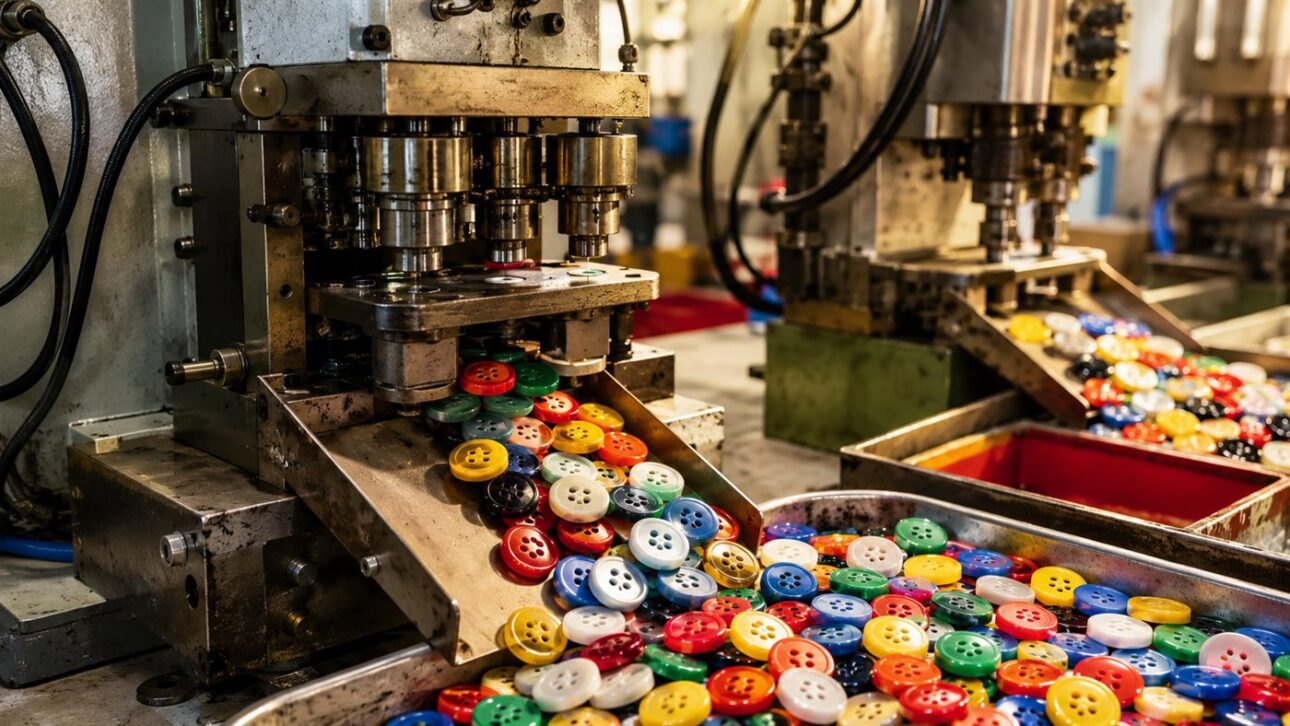
All this production depends on machines that stamp, drill, paint, and polish the buttons at an industrial pace. The CBS News report that visited the city states there are 550 button factories in the city, as well as a mall with more than 550 stores dedicated solely to this product. An object that costs a fraction of a cent sustains the entire economy of a city.
60% of all clothing buttons in the world
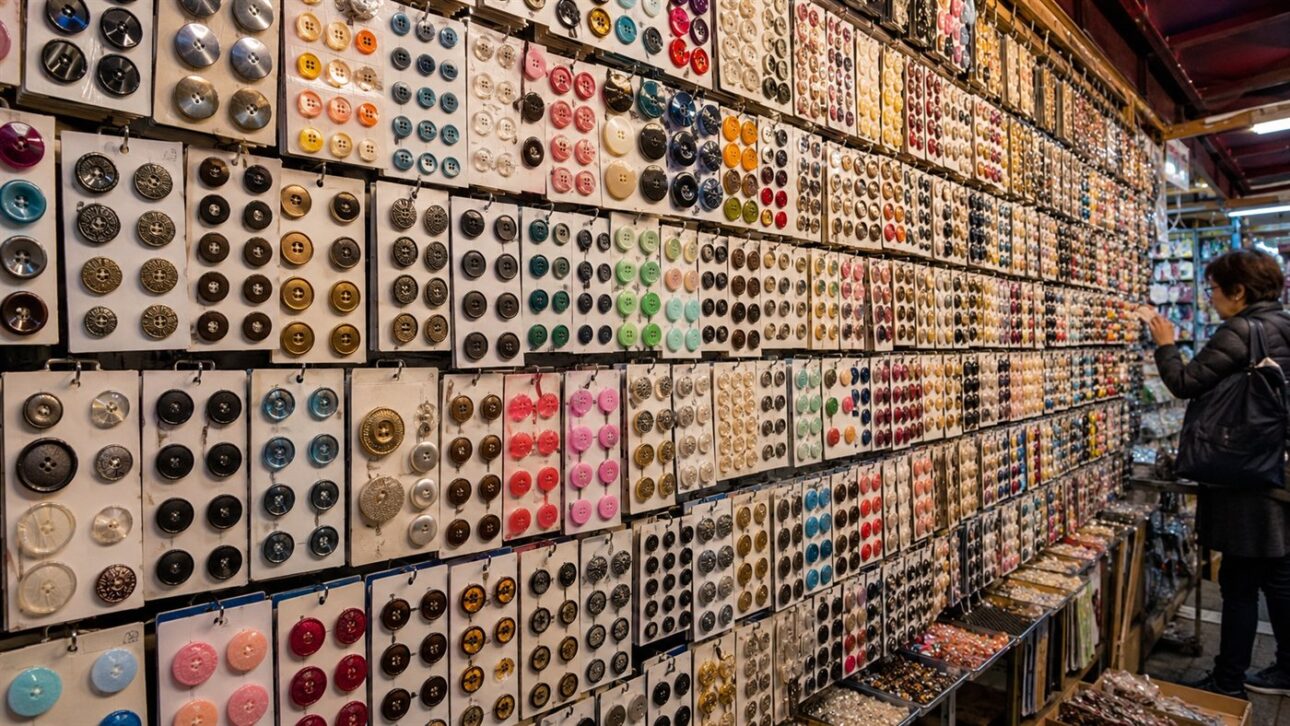
The market dominance is what impresses the most. If six out of every ten buttons on the planet come from the same place, it means that a good portion of shirts, coats, pants, and uniforms manufactured in the world carry a piece from this same village. The button production there has become a silent global bottleneck.
This gives the city a discreet power over the global textile industry. According to CBS News, more than 60% of all buttons on Earth come from there. When a clothing manufacturer in Brazil, Europe, or Africa needs cheap buttons in large quantities, the path almost always leads to the same Chinese origin. It is a de facto dominance built not by a giant company, but by a swarm of small factories working side by side.
The Chinese model of cities specialized in a single product
The city of buttons is not an isolated case. China is full of these hyper-specialized cities, each dedicated to a single product: one makes socks, another makes lighters, another makes ties, another makes pens. This model, built over four decades, is one of the reasons why the country dominates global manufacturing.
The advantage is not only in the labor cost, but in the accumulated infrastructure. It is almost impossible for another country to recreate from scratch an entire city specialized in a specific item, with the entire chain set up and fine-tuned. Competitors like Vietnam and India try, but they face decades of consolidated advantage ahead. It’s not enough to have cheap labor: you need to have, in the same place, resin suppliers, machine factories, finishing warehouses, and agents who export to the world. This set took forty years to mature, and recreating it would require repeating all this history, something that no amount of money can buy overnight.
The other side: dependence on a single product
All this specialization comes at a price. A city that lives off a single product becomes extremely vulnerable to changes in fashion, trade tariffs, and economic crises. If the button loses space, if alternatives arise, or if international trade stalls, the entire local economy feels the impact.
Moreover, internal competition is fierce and margins are tight, as thousands of factories compete for the same clients. Being the world capital of something is a source of pride, but also a risky bet on a single number. The city’s prosperity depends on the world continuing to want to buy billions of cheap buttons, year after year.
Why almost everything you wear passes through there
In the end, the story of this button city reveals an invisible backstage of the clothes we wear. That button you fasten without thinking probably crossed half the world, coming from a tiny factory in a Chinese city that most people have never heard of. The world capital of the button works silently for the wardrobe of the planet.
It is a reminder of how globalization has concentrated the production of simple things in very specific points on the map. Next time you button up a shirt, it’s worth noticing the button and imagining its journey. Did you have any idea that such a small detail of your clothing had its own world capital?





