Portuguese
  Spanish


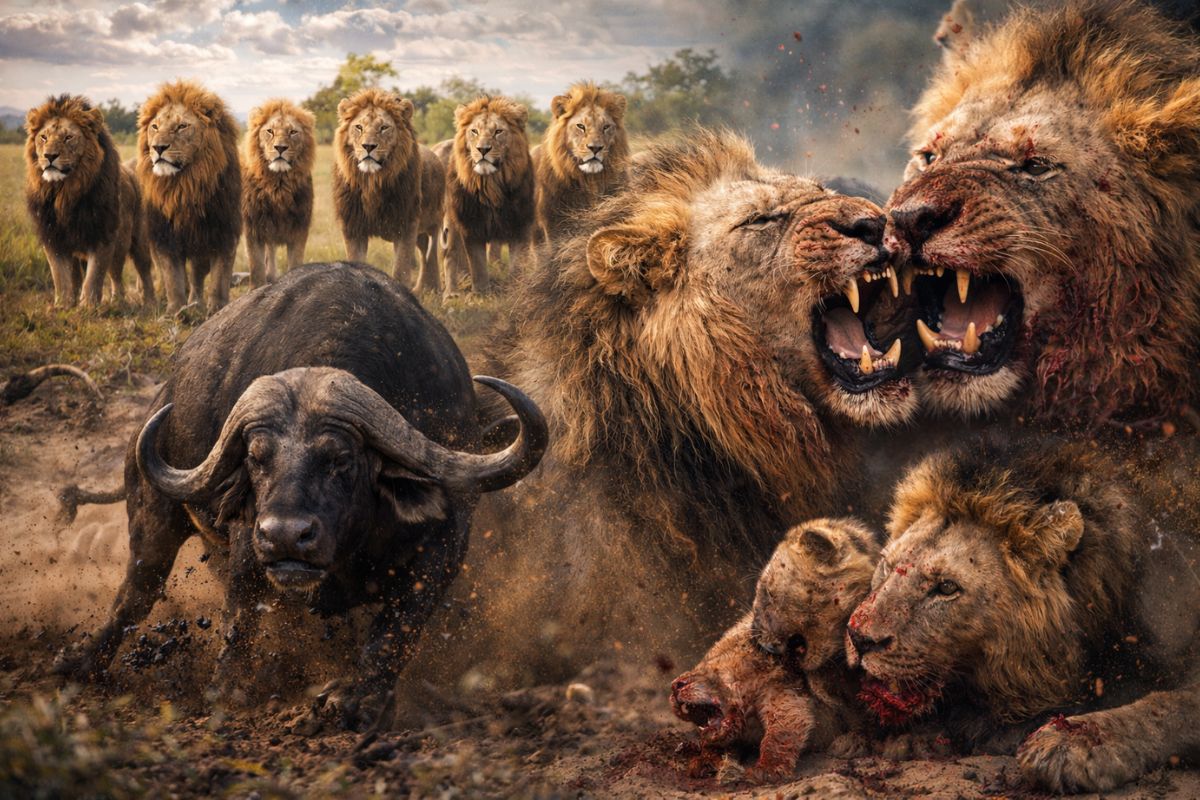


Guides Recorded the Mapogo Lions in Sabi Sand, the Coalition of Six Males That Transformed Buffalo Hunting and Changed Lion Territorial Disputes Forever.
Over 16 years of daily observation, guides and cameramen tracked the journey of the Mapogo lions, a coalition of six males in Sabi Sand, South Africa, that changed everything known about power, violence, and territorial disputes among lions. In just a few years, they hunted adult buffaloes, took down entire rival coalitions, seized prides, killed cubs, and dominated an area seven times larger than Manhattan.
The story of the Mapogo lions is a succession of impressive scenes: audacious cubs stealing meat from adult males, attempts to hunt buffalo amid tons of brute force, invasions of established territories, bloody battles against dominant males, cub killings, and even females from their own pride. What began as a large litter in Sabi Sand ended as the most violent reign ever recorded among lions in the region.
Sabi Sand, Kruger, and the Mapogo Lions’ Landscape

The private reserve of Sabi Sand is located in the northeastern part of South Africa, sharing an open border with the Kruger National Park, which is more than twice the size of Yellowstone.
-
Twin Earthquakes of Magnitude 7.2 and 7.5 Strike Venezuela, Leaving Over 1,400 Dead and Affecting Millions, Potential Losses Estimated at $6.7 Billion

-
Latin America’s Largest Residential Complex Located in São Paulo Boasts 1,160 Apartments, 72 Shops, 22 Elevators, and 104 Staff Members

-
Rare 1747 Lutheran Bible from Germany, Preserved in Southern Brazil, Showcases Unique Engravings and Handcrafted Techniques
-
Before Japan Became a Football Powerhouse, Zico Transformed the Amateur League, Boosted the J.League, and Was Honored with a Statue at Kashima Antlers




Together, these areas form a massive mosaic of savannas, rivers, and woodlands, abundant in prey such as antelope, buffaloes, giraffes, and zebras.
This environment, with abundant food, available water, and a constant presence of other predators, is the perfect stage for strong lion coalitions to emerge.
This is where the Mapogo lions emerged, grew, and took the concept of territorial dominance to an unprecedented level in Sabi Sand.
The Sparta Cubs: From Large Litter to Names That Would Become Legendary

In the early 2000s, the Sparta pride in Sabi Sand had around 10 cubs, including five males. At that time, no one imagined that those young lions, still unnamed, would become the feared Mapogo lions.
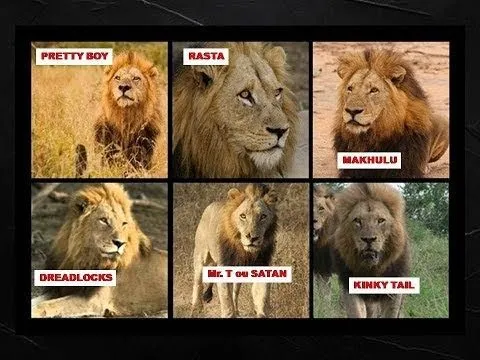
Later, the five brothers were given names: Makulu, Scar, Pretty Boy, Rasta, and Kinky Tail, along with Mister T, who would join the coalition as a sort of older brother. Guides who followed the group’s growth recount that, since they were cubs, two of the youngest stood out. One behaved like a natural leader, audacious and always at the front; the other seemed like his “backup watchman,” attentive to everything happening behind.
Right from their first interactions with carcasses, these cubs showed extraordinary courage. Even in the presence of an adult male holding a buffalo carcass, one of the young continued to eat silently, without backing down, when it was expected for him to retreat. For observers, it was a clear sign that something was different about them.
Males, Females, and the Role of Parents in Sabi Sand

In popular culture, there is a common idea that male lions “do nothing,” just resting while females hunt. In Sabi Sand, observing the Mapogo lions and their parents showed a different reality.
The males that dominated the territory of the cubs were known as the West Street Males, regarded as great fathers, tolerant, present, and extremely important in defending their territory.
While the lionesses ensured the pride’s unity and kept the hunting flowing, the males protected the females and cubs from invaders.
Among felines, lions are among the few that live socially, with structured prides. Females remain in the same area for life, daughters may stay with their natal pride, and a well-established group can last for decades.
Males, on the other hand, form coalitions, wander, invade territories, and are forced to leave when they reach sexual maturity. It was exactly this path that the Mapogo lions followed.
From Adolescence to First Dangerous Hunts
When the young Mapogo lions were between 6 and 18 months old, they were still part of a stable pride, with strong parents and experienced lionesses. The Sparta females began taking them on hunts, allowing them to observe, make mistakes, and learn.
The young ones tested everything they encountered: trying to chase inappropriate prey, such as porcupines or extremely aggressive animals like honey badgers, poor survival choices, but useful for training. It is during this period that lions develop the confidence and technique to face truly dangerous prey in the future.
Among these prey, one of Africa’s most challenging is the African buffalo, an animal that can weigh nearly a ton, with horns capable of goring a lion. In Sabi Sand, some herds could number up to 1,400 animals.
In a striking scene, young Mapogos found themselves trapped in the midst of a furious herd, with buffaloes flinging cubs into the air and trying to crush them. Some cubs from the Sparta pride were killed in that attack, but the five males who would later become the Mapogo lions survived.
This survival was crucial. If those young had died along with the other cubs, the coalition of the Mapogo lions would never have existed.
Expulsion, Nomadic Life, and the Birth of the Mapogo Coalition
Around 2003 and 2004, the young males, now adolescents, faced another critical moment: the arrival of an unknown male to the Sparta territory. Under normal circumstances, an invading male kills cubs and confronts the dominants. This time, something unusual happened.
The new male, who would later be called Makulu, did not kill the adolescents, was accepted by the Sparta lionesses, and tolerated by the West Street Males.
Some guides believe he could be a half-brother to the young males, coming from another pride, which may have facilitated his acceptance. Gradually, Makulu became part of the group, functioning as an older brother to the future Mapogo lions.
However, over time, the natural cycle enforced itself. When they reached adulthood, the young males were expelled from the pride by their parents.
Suddenly, they were alone, nomadic, without females, without territory, and surrounded by alert dominant males. This is the period when the most males die in a lion’s life, whether from hunger, conflicts, or encounters with larger coalitions.
The difference is that, in this case, they were six. Makulu, Scar, Pretty Boy, Rasta, Mister T, and Kinky Tail realized that together they would have a much better chance.
This is how the coalition of the Mapogo lions was born, a group of six males that, over time, would be compared to a sort of “death squad” in Sabi Sand.
Learning to Hunt Buffaloes: The Key to Power

Even in a coalition of six, the beginning was tough. The Mapogo lions still did not know how to hunt large prey on their own.
They often depended on carcasses found along the way or expelled lionesses from already made kills to feed themselves. When dominant males showed up, they had to flee.
Over the months, their technique improved. The coalition began to specialize in hunting buffaloes, one of the most dangerous prey for a lion. They also took down hippos, rhino calves, and even giraffes, repeating the pattern they had seen from their parents.
Learning to take down buffaloes was a turning point. From then on, the Mapogo lions grew large, strong, and confident enough to attempt something bigger than the next meal: conquering territory.
Among the six, two figures stood out for their aggressiveness on the front lines: Mister T and Kinky Tail. In many hunts, they were the ones who held the buffalo, taking goring hits, kicks, and the initial impact while others came to help.
The near-suicidal bravery of these two males would become the group’s trademark, both in hunting and in territorial battles.
The First Conquest and the Start of the Bloodbath

By around 2006, the Mapogo lions were ready to try the next step: to conquer their own territory. They moved north in Sabi Sand, an area controlled by four dominant males.
Instead of a cautious approach, the coalition arrived making noise, roaring loudly, marking territory, and making it clear that there were new challengers in the area.
The confrontation did not take long. In a brutal fight, one of the resident males was killed, and the others fled with no chance of defense.
From this victory, the Mapogo lions discovered, in practice, the extent of their power. The conquest of the first territory was the trigger for an unprecedented bloodbath. Over the following months, they subjugated coalitions they encountered along the way, expelling or killing resident males.
Dominating territory for lions is not just about defeating adults. After taking over a pride, the new males kill any existing cubs, so the females come back into estrus and can bear their offspring.
In Sabi Sand, females tried to protect the young, fleeing, hiding litters, and confronting invaders. In several cases, they were killed trying to save their cubs.
Guides report scenes where entire prides, with over ten cubs, were pursued and all the young were killed.
In one instance, 11 cubs from a single pride were exterminated after the arrival of the Mapogo lions. There are estimates that they may have killed more than a hundred lions over the years of dominance in Sabi Sand, including cubs, females, and rival males.
A Gigantic Territory and Unprecedented Violence
Over time, the coalition expanded their borders. In 2008, the Mapogo lions came to dominate an area of about 70,000 hectares, equivalent to 700 square kilometers, approximately seven times the size of Manhattan. Previously, this entire region was divided into various smaller territories held by different coalitions of males.
Now, a single coalition controlled almost all of Sabi Sand. They ruled over more than eight prides, with various females and cubs scattered over a vast area. It was something that guides and biologists had never witnessed there before.
But the violence did not stop at the killing of previous offspring. In an extremely rare behavior, Mister T was seen killing even females from his own pride, lionesses with whom he could mate.
In one of the most shocking scenes, he attacked a lioness, bit her back, asphyxiated her for several minutes, and then began to devour her body.
This kind of behavior goes beyond what is typically expected of males undergoing domination. Even researchers accustomed to the harshness of the wild classified the behavior of the Mapogo lions as something beyond normal, resulting from a combination of immense strength, a large number of males in the coalition, and a context where there were almost no rivals of equal caliber.
The Division of the Coalition and the Brutal Death of Kinky Tail
As the territory grew, internal tensions arose. Makulu, with a darker mane and imposing appearance, was seen as the dominant male, the “alpha.” Mister T, younger and extremely aggressive, seemed to unwillingly accept the role of a subordinate.
In a violent fight, Makulu and Mister T confronted each other, sustaining severe injuries and much roaring. Shortly after, something unprecedented occurred in the memory of the Sabi Sand guides: the coalition of Mapogo lions divided into two groups.
On one side were Mister T and Kinky Tail, controlling the central and eastern region of the territory. On the other were Makulu, Scar, Pretty Boy, and Rasta, concentrated in the western part. Practically, they were two groups of related males, in neighboring territories, but with different routines and prides.
Mister T and Kinky Tail began defending an area that bordered the Kruger National Park, where young nomadic males entered in search of females and territory.
For about two years, they managed to repel invaders, expelling smaller coalitions and maintaining their dominance.
But in 2010, a worthy enemy emerged: a coalition of five males, the Majingilane, advanced from the south and began testing the borders of Mister T and Kinky Tail.
In their first major confrontation, the Mapogo duo managed to turn the tide. Mister T and Kinky Tail took down one of the Majingilane and killed him in a fight of rarely recorded violence.
However, revenge came shortly after. On another night of confrontation, Kinky Tail was cornered by four Majingilane males and attacked repeatedly.
Guides describe the scene as one of the most brutal they have ever witnessed: bites in the groin area, mutilated hind legs, lots of dirt, blood, and roars.
Even injured, Kinky Tail still tried to fight until a crack, similar to a gunshot, indicated a broken spine. The lion was torn apart.
Witnessing Kinky Tail being destroyed by four males was one of the hardest moments for those who had followed the Mapogo lions since cubhood.
Mister T even attempted to rescue his brother, attacking two Majingilane to divert their attention, but realized he had no chance.
He fled, narrowly escaping, and became the last representative of the duo that once seemed invincible in the eastern section of the territory.
Mister T’s Return and the Carnage Among the Cubs

Severely injured, Mister T retreated westward, where Makulu, Scar, Pretty Boy, and Rasta, the other Mapogo lions, were located.
After years apart, he was seen approaching, observing from a distance, until he decided to reconnect with the old coalition.
Makulu did not seem too pleased with the return of the turbulent male, but surprisingly, Mister T was accepted back into the group without fatal confrontations.
Guides imagined that from then on, he would become just another male in the territory, helping to defend what remained of the great Mapogo area.
However, the scenario had changed. The western part of Sabi Sand now had females with young cubs, many of them likely descendants of Makulu and the other three males.
Within a few days, Mister T began doing what he knew best: he sought out cubs, killed several of them, and even devoured their carcasses.
The behavior shocked observers. The other males, who were fathers or uncles to these cubs, did not intervene to stop Mister T, something difficult to explain even from an evolutionary standpoint.
The interpretation is that he was trying to gain total control over the pride, erase the previous offspring, and generate only his own descendants, repeating the cycle of domination from years before, now against his own nephews.
Meanwhile, the Majingilane continued advancing, conquering portions of the former territory of the Mapogo lions, killing cubs, and establishing themselves as a new force in the region. Pretty Boy and Rasta disappeared, likely killed in confrontations. Only Makulu, Scar, and Mister T remained.
The End of the Reign and the Death of the Last Mapogo

The reign of the Mapogo lions in Sabi Sand lasted about six years at its peak, within a story followed for 16 years by the field team.
In the wild, few lions live past 12 years. As the Mapogo era approached its end, Mister T was around ten years old, Scar about twelve, and Makulu around fourteen.
In 2012, another coalition, called Selati, formed by five young males, entered the remaining territory of the Mapogos.
In yet another unequal confrontation, Mister T was surrounded and attacked in a manner very similar to what happened to Kinky Tail. Bites to the spine, paralyzed hind legs, several males taking turns attacking and retreating.
Guides report that he still tried to get up, roaring, looking at vehicles as if he was still ready to defend the territory.
Even unable to walk, Mister T continued to react to his limits, reinforcing the image of a lion who lived and died fighting.
The Selati lions roared loudly as they attacked, marking the proclamation that they were the new owners of the region.
For those watching from the beginning, it was like witnessing the end of an era: the last great male Mapogo falling under the force of a younger coalition.
Makulu and Scar, already old, eventually left Sabi Sand. The last time they were seen, they no longer dominated any large territory. The cycle had come to an end.
The Legacy of the Mapogo Lions and the Dark Side of Lions
Even after the fall of the Mapogo lions, their lineage did not disappear entirely. Reports indicate that some adult females in Sabi Sand, with live cubs, may be direct descendants of Makulu and the other males.
Amid the destruction, a few young ones escaped, enough to maintain a trace of Mapogo genetics in the region.
For biologists and guides who lived through this story, the coalition redefined the understanding of lion dominance.
The Mapogo lions showcased a dark side that rarely appears in traditional documentaries, which focus more on the majesty of the species than on the brutality of competition among males.
They were both spectacular and violent, efficient and relentless, beautiful and terrifying. From a human perspective, many scenes are difficult to watch.
From an ecological perspective, they did exactly what lions do in a highly competitive system: survive and pass on their genes, pushing territorial conquest strategies to the limit.
And you, after learning the story of the Mapogo lions, do you think they should be remembered more as brutal villains or as the ultimate example of what a lion is capable of doing to survive in the wild?