






 Portuguese
  Spanish
  4 min of reading
  0 comments


Discovery of the young mathematician overturned a conjecture that had resisted for decades, surprised experienced researchers, and opened the way for an academic path rarely seen in the recent history of mathematics.
A discovery made by a 17-year-old student is drawing the attention of the international scientific community. Hannah Cairo, a young girl homeschooled in the Bahamas, managed to solve a mathematical problem that had intrigued researchers for more than four decades. The feat was so impactful that experts claimed to be completely surprised by the result.
The story gained worldwide attention after the publication of a scientific article on February 10, which presented a solution to the so-called Mizohata-Takeuchi conjecture, an open problem in mathematics that had resisted resolution attempts for more than 40 years. The information was originally published by Quanta Magazine, a magazine specializing in science and mathematics supported by the Simons Foundation.
The case quickly caught the attention of mathematicians from various universities, not only because of the importance of the discovery but also because of the author’s age. At the time she completed the demonstration, Hannah had not yet finished High School.
-
Giant South American Tree Stores Water in Its Trunk, Survives for Years in Dry Regions

-
Brazilian Man Transforms Degraded Area in São Paulo into Urban Forest with 40,000 Trees
-
11-Year-Old Brazilian Prodigy Develops New Math Formula, Seeks Publication in Leading Scientific Journal
-
They promised wealth with Sigma Lithium’s lithium mining, but the Jequitinhonha Valley got cracked houses, skyrocketing rent, and R$ 0 in royalties in 2025.



The mathematical mystery that intrigued specialists for more than four decades
The Mizohata-Takeuchi conjecture belongs to an advanced area of mathematics known as harmonic analysis, a branch that studies the behavior of waves, frequencies, and how certain functions distribute energy.
Although the subject is extremely technical, the central issue was relatively simple to describe: mathematicians sought to understand how certain mathematical structures behave when different frequencies interact.
For decades, researchers made partial advances, but no one had managed to definitively demonstrate whether the conjecture was true or false.
Among the scholars who worked on the problem was mathematician Itamar Oliveira from the University of Birmingham. After years investigating the subject, he admitted that Hannah’s discovery completely surprised the academic community.
According to the researcher, the initial reaction was one of absolute shock, as few imagined that such a young student could find a solution to a problem considered extremely complex.
The surprise increased because Hannah not only solved the challenge. She demonstrated that the conjecture was false, something that contradicted the prevailing intuition among various specialists in the field.
From self-taught student to internationally recognized researcher
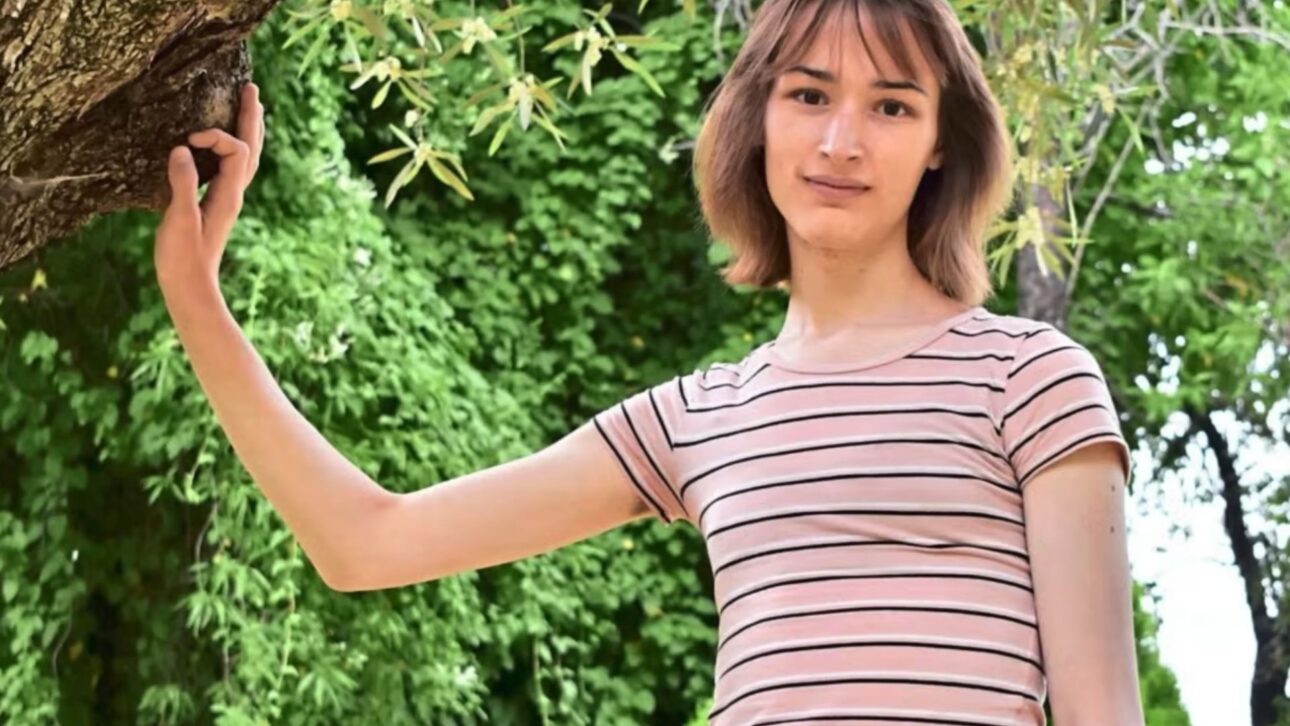
Hannah Cairo’s journey is as unusual as her discovery.
Raised in Nassau, Bahamas, she received homeschooling during her childhood. Her first more intense contact with mathematics happened through online courses on the Khan Academy platform.
The progress was extremely fast. At the age of 11, she had already completed content equivalent to advanced calculus, usually studied only in higher education.
Over the following years, Hannah began to study in a practically self-taught manner. Using university books and postgraduate materials, she deepened her knowledge in various areas of modern mathematics.
In 2021, she further expanded her contact with researchers by joining the Chicago Mathematics Circles programs and later the Berkeley Math Circle.
When she applied to the Berkeley program at the age of 14, her resume already included subjects equivalent to those found in advanced undergraduate mathematics courses.
According to Zvezdelina Stankova, Hannah demonstrated a level of knowledge far above that observed among students of the same age group.
The university course that led to the historic discovery
In 2023, Hannah moved with her family to Davis, California, and began attending the University of California at Berkeley through a concurrent enrollment program.
It was during a course taught by mathematician Ruixiang Zhang that the opportunity arose that would change her trajectory.
Among the exercises proposed to the students was a simplified version of the Mizohata-Takeuchi conjecture. The initial goal was just to allow students to practice advanced techniques used in the field.
While many saw the exercise only as training, Hannah decided to continue investigating the problem on her own.
While developing a specific mathematical construction, she realized that the waves involved did not behave as predicted by the conjecture. Instead, they produced extremely complex patterns, capable of concentrating energy unexpectedly.
Initially cautious, the young woman reviewed her calculations several times. After simplifying the demonstration and confirming that the results remained valid, she concluded that she had found a definitive counterexample.
In practice, this meant that the conjecture could not be true.


Discovery paved a direct path to a PhD
The impact of the work was immediate.
Experts highlighted not only the importance of the solution but also the mathematical elegance of the demonstration presented by the young researcher.
Mathematician Tony Carbery, who studied the problem for decades, praised the clarity and technical quality of the paper.
The impact was so significant that Hannah decided to follow an unusual academic path. Instead of completing high school, entering undergraduate studies, and then pursuing a graduate degree, she was directly accepted into a mathematics PhD program at the University of Maryland.
She is expected to start the course in September. When she completes the PhD, it will formally be her first academic degree.
Hannah Cairo’s journey reinforces how talent, intellectual curiosity, and access to knowledge can produce extraordinary results. Her discovery not only solved a problem that had resisted for over 40 years but also showed that significant contributions to science can come from completely unexpected places and profiles.
How many ‘Hannahs’ might Brazil be missing due to a lack of opportunity and encouragement in mathematics?





Be the first to react!