Portuguese
  Spanish


The Pedra do Navio, in the Agreste of Pernambuco, emerged from neglect to become a municipal park after archaeological research linked the site to prehistoric communities. The granite formation, about 10 meters high, holds a history of burial urns, ancient artifacts, and excavations conducted between the 1960s and 1970s.
A rock formation of approximately 300 tons has become the center of a new tourist route in Bom Jardim, in the Agreste of Pernambuco.
Known as Pedra do Navio, it draws attention for its shape that resembles an ancient ship and for its archaeological past linked to peoples who occupied the region thousands of years ago.
The site is located on the edge of PE-088, about 2 kilometers from the city center. After decades partially covered by vegetation, accumulated soil, and little structure around, the area was transformed into the Pedra do Navio Municipal Park.
-
18-Year-Old Student Designs Modular Microhouse from Fiberglass and PET to Combat Homelessness in Brazil, Plans to Live in Prototype for a Year to Demonstrate Quick Assembly

-
The Frenchman Who Brought the World Cup to Life: Overcoming Resistance and Crossing the Atlantic with the Trophy to Create Football’s Biggest Tournament

-
Archaeologists Reexamine 4,500-Year-Old Tombs in Ancient Mesopotamia, Suggesting Some Early Kings May Have Been Powerful Women
-
The North Face Co-Founder Donates Vast South American Lands to Create National Parks in Patagonia, Turning Private Wealth into Environmental Legacy



According to information from the Bom Jardim Municipal Government, research conducted between 1968 and 1974 by archaeologist Armand Laroche, with support from the Carbon-14 Laboratory of the Principality of Monaco, indicated prehistoric human presence in the area, with datings between 11,000 and 1,000 years before present.
The rock appeared in full after the opening of a highway
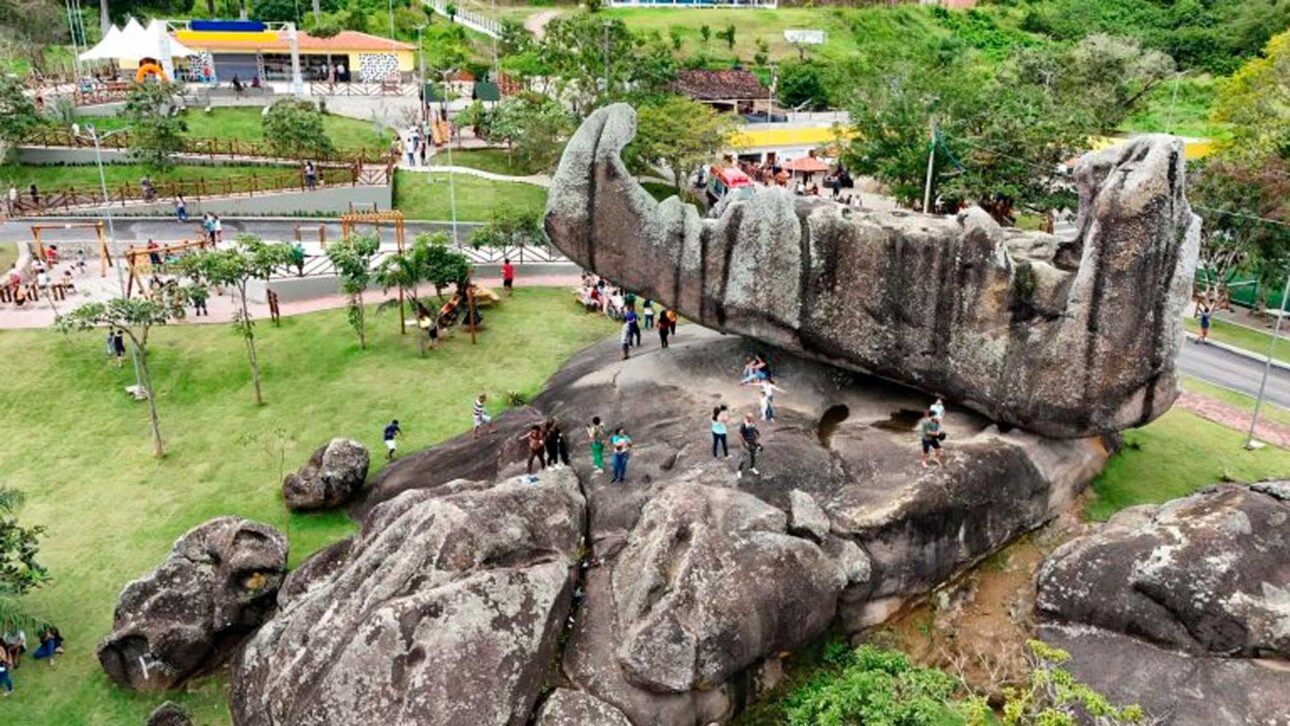
The Pedra do Navio was not part of the urban landscape of Bom Jardim as it appears today. For many years, only parts of the formation were visible, which helps explain why it was left out of the oldest records of the city, founded in 1867.
The change began in the 1960s, during the opening of PE-88. The clearing of vegetation and the movement of earth revealed the true size of the monolith, which began to be seen by residents and researchers with a new perspective.
The name came from the very shape of the stone. Viewed from certain angles, the granite structure resembles the hull of a ship resting on solid ground, an image that eventually became a visual trademark of Bom Jardim.
The excavations found signs of a possible ancient cemetery
The most relevant point of the story is not just the size of the rock, but what appeared in the soil around it. As reported by Diário do Litoral, excavations carried out in the 1970s revealed funerary urns, adornment objects, and domestic utensils buried in the region, which led researchers to associate the site with funerary practices of ancient communities.
This type of find changes the interpretation of the place. The Ship Stone ceases to be just a curious natural formation and becomes part of a context of ancient human occupation in the interior of Pernambuco.
Some of the objects found were sent for preservation in Recife. This relocation is common when archaeological pieces need technical storage, conservation control, and access for researchers.
The find helps explain human occupation in the Agreste of Pernambuco
The region of Bom Jardim is located in the Northern Agreste of Pernambuco, a transitional area between more humid zones and the semi-arid. This location helps to understand why ancient communities might have used the territory for habitation, movement, gathering, hunting, and funerary rituals.
The datings mentioned by the city hall place the site in a broad time range. It is not a single moment of occupation, but evidence distributed over millennia, among groups that lived before European colonization and before the formation of current municipalities.
In Brazil, vestiges such as urns, ceramics, bones, adornments, and tools help archaeologists reconstruct eating habits, circulation routes, burial forms, and relationships with the environment. In the case of the Ship Stone, the scientific interest lies precisely in the combination of geology, local memory, and archaeological material.
The care for this type of area does not depend solely on the municipality. Iphan informs that Brazilian archaeological heritage is protected by the Federal Constitution of 1988 and by Law No. 3,924, of July 26, 1961, being considered Brazilian cultural heritage and a Union asset.
The once forgotten spot now has leisure, sports, and tourism area
The transformation of the area into a municipal park changed the city’s relationship with the Ship Stone. The space was inaugurated on July 5, 2024 and began to combine historical preservation, leisure, culture, and sports in an area of 8,320 square meters.
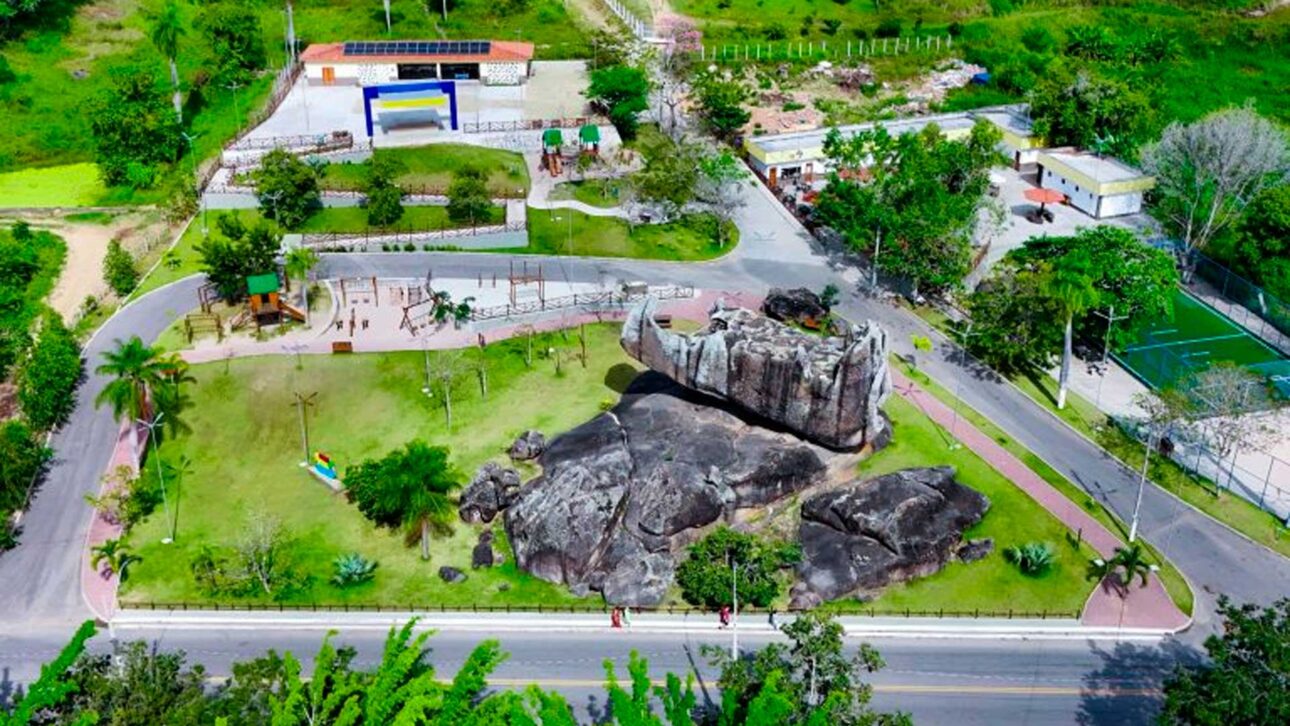
According to Revista Algomais, the project had an investment of R$ 4.8 million and included a food court with six kiosks, an event stage, sports areas, gym equipment, and the planting of 40 adult trees.
The structure also made room for local crafts and cultural activities. For a small town, this type of facility has a direct economic impact because it attracts visitors, boosts small businesses, and creates demand for guides, food, and services.
Bom Jardim is about 100 kilometers from Recife, Caruaru, and Campina Grande. This location facilitates short weekend trips, especially for those seeking nature tourism, regional history, and family outings without long distances.
The preservation of objects is an essential part of the new phase of Pedra do Navio
The revitalization solves part of the problem but does not end the responsibility for the site. Areas with archaeological remains require proper signage, access control at sensitive points, and visitor guidance to avoid damage, removal of pieces, or trampling in areas of scientific interest.
The Museum of the Man of the Northeast, linked to the Joaquim Nabuco Foundation, houses about 16,000 pieces related to the cultural heritage of indigenous peoples, European colonizers, and enslaved Africans in the formation of the Northeast.
When archaeological finds are preserved in such institutions, they gain documentation, study opportunities, and better physical conservation conditions. For the public, they also cease to be just isolated objects and become part of a larger narrative about the occupation of the territory.
In the case of Pedra do Navio, the challenge now is to balance tourism and memory. The park can attract residents, students, and visitors, but the strength of the place lies in what it reveals about populations that lived there long before roads, cities, and official records.
Pedra do Navio has become an attraction but remains a site of historical interest. What do you think should weigh more in such a space, local tourism or scientific preservation? Leave your comment and tell us if you would visit a park built around an archaeological find like this.