






 Portuguese
  Spanish


Student project in the United States shows how science classes, rainwater, lemonade, and tie-dyed t-shirts helped fund a well in a rural village in Malawi, Africa.
A lesson on the water cycle became a bridge between a school in Massachusetts and a rural village in Malawi.
5th-grade students at John F. Kennedy School in the city of Canton raised $8,000 over seven years and funded the construction of a clean water well in an African community that did not have easy access to a safe source.
The campaign began in 2018 and continued until 2025, spanning different 5th-grade classes.
-
Highest city in Europe: how to visit the destination where more than 2,000 people live at an altitude of 2,350 meters and preserve one of the greatest cultural mysteries of the Caucasus.

-
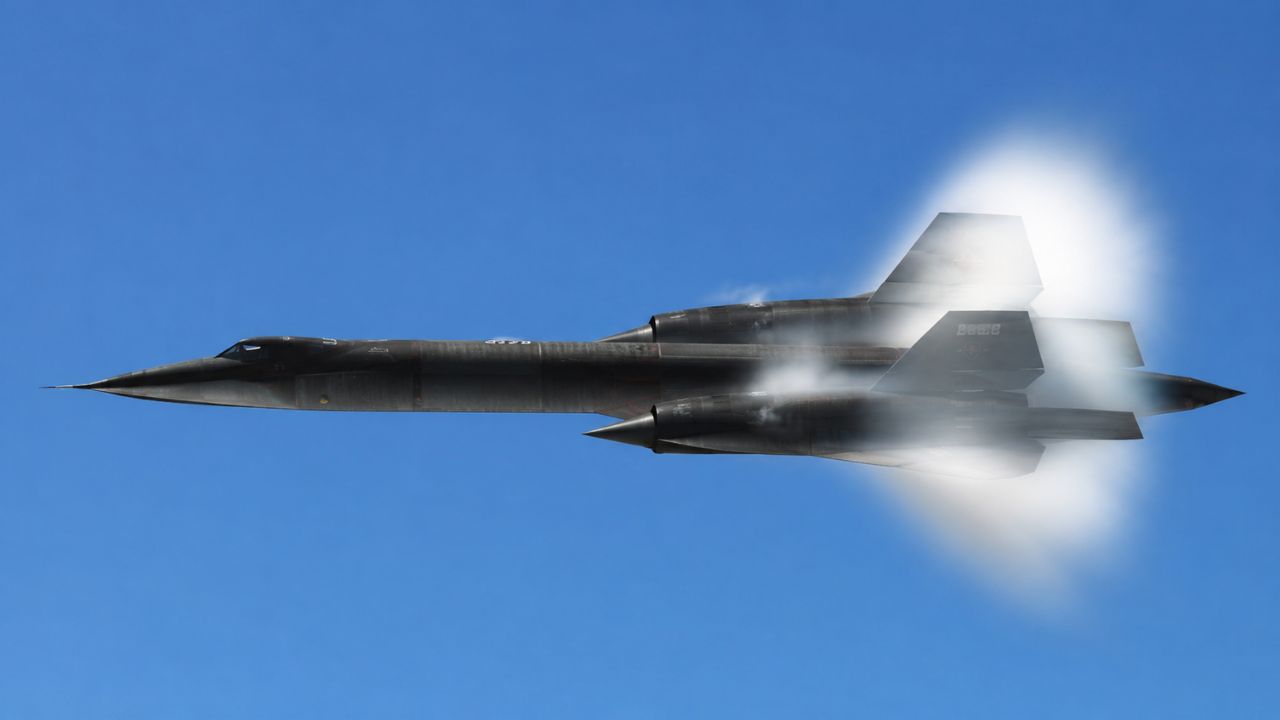
Capable of reaching Mach 3.2, the legendary SR-71 Blackbird crossed the United States in just 1 hour, flying at over 3,400 km/h, three times faster than the speed of sound, making it the fastest plane in the world.

-
The government allows the new ID card to be requested from a mobile phone to be delivered at home with the CPF as a unique number: states like São Paulo and Minas Gerais already offer delivery via Correios.
-
A couple from Belo Horizonte went bankrupt during the pandemic, turned tangerines into a successful business, and today earns R$ 400,000 with jams, sauces, and liqueurs with HogDidi.



The project was led by teacher Kerry Griffin, a faculty member at John F. Kennedy School, and received support from various classes that passed through the school during this period.
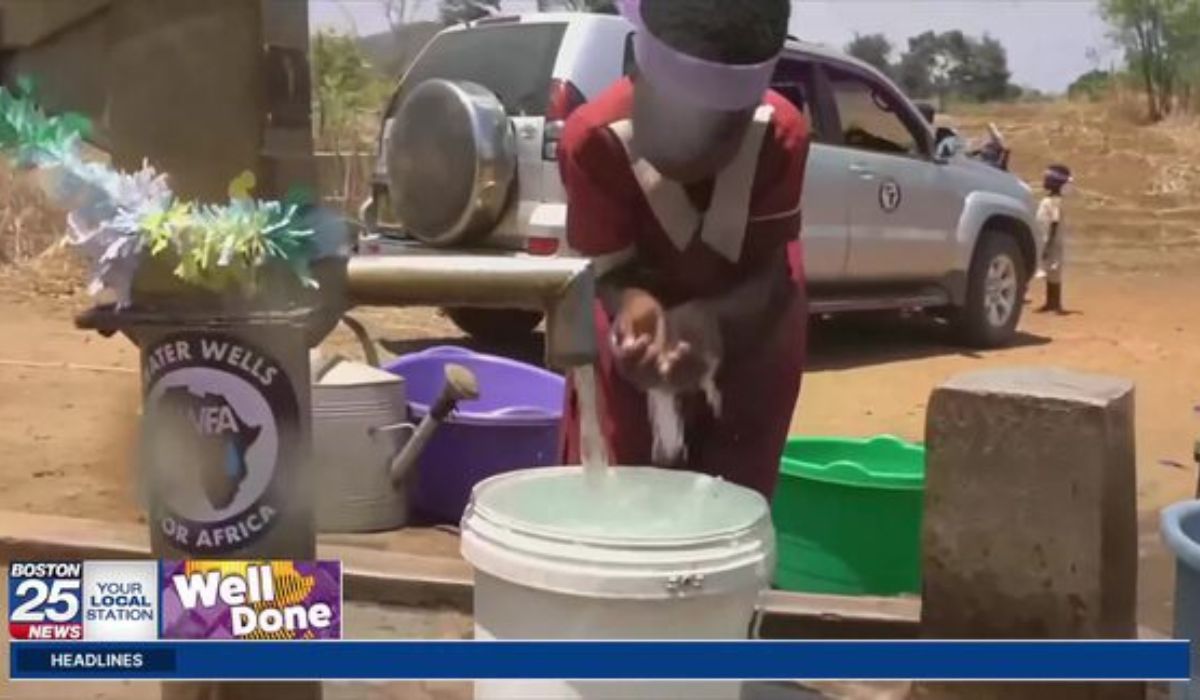
The report by Boston 25 News, published on April 2, 2026, stated that the money was donated to the organization Water Wells for Africa to fund the construction in a rural and hard-to-reach area in Malawi.
The curiosity of the case lies in how the students raised the money.
Instead of a ready-made campaign, the fundraising was integrated into science classes, where children studied the water cycle, filtration, and groundwater.
From this content, they began collecting rainwater from the school’s roof, filtering it, and using it to produce tie-dyed t-shirts for sale.
The initiative also included selling lemonade during the school period.
With small actions repeated over the years, different classes reached the necessary amount to fund the well.
The result was a plaque installed by Water Wells for Africa at the site, in honor of John F. Kennedy School.
Science class turned into a well in Malawi
Kerry Griffin appears in the official directory of Canton Public Schools as a 5th-grade teacher at John F. Kennedy Elementary School.
In practice, the project transformed a common science curriculum content into a concrete action about water access, consumption, and inequality.
According to the Boston 25 News report, Griffin explained that the class knew from the start that $8,000 would be a challenging goal for a student-led fundraiser.
Even so, the group maintained the campaign because the amount was necessary to build a well in a rural, remote, and hard-to-reach community in Africa.
The teacher also stated that the experience helped students realize a resource that often goes unnoticed in places where you just need to turn on a tap.
In indirect speech, Griffin said that many students do not think about the fact that they have daily access to drinking water and that this access is not a reality for everyone.
This approach made the project less abstract.
The water studied on the board, filtered in experiments, and collected from the school roof became part of a campaign with a defined destination.
The distance between Canton and Malawi also entered the storyline.
The well was built about 8,000 miles from Massachusetts, equivalent to almost 13,000 kilometers, according to the local report.
For students aged 10 or 11, the campaign connected school content to a community that many have probably never visited.
Lemonade, T-shirts, and Rainwater
The fundraising gained momentum by using simple elements.
The lemonade sold at the school helped raise part of the money, while the T-shirts dyed with the help of rainwater gave the project a direct connection to the topic studied in class.
The process had a pedagogical logic.
The water was collected, filtered, and reused in a creative activity, while students learned why clean water depends on treatment, storage, and safe access.

The idea also helped explain that water is not just a textbook subject.
In some regions, it determines whether a child gets to school, if a family can maintain a garden, if a community reduces diseases, and if residents stop walking long distances to fetch buckets from rivers or unsafe sources.
Water Wells for Africa states on its website that it has been installing wells in rural and hard-to-reach villages since 1996.
The organization claims to have surpassed 500 wells installed and says that since 2020, it also works with wells on school properties to keep students hydrated, healthy, and present in school.
On the current NGO website, the cost to sponsor an entire well is listed as US$ 9,000.
The report by Boston 25 News, however, noted that the Canton campaign raised $8,000 and that this amount was used to fund the construction of the well in Malawi.
The difference may reflect values practiced at different times or specific project costs, but there is not enough public detail to safely explain the variation.
Clean Water and School Attendance
In communities without nearby drinking water, fetching water can take up part of the day for children and adults.
UNICEF Malawi reports that 67% of households in the country have access to drinking water, but distribution is uneven between districts and between urban and rural areas.
In rural areas, 63% of households use improved sources, and 37% spend 30 minutes or more fetching water to drink.
This travel time is directly reflected in the case of Canton.
According to Brittany Harris, a representative of Water Wells for Africa cited in the report, children in the community in Malawi used to leave class and walk a long distance to the river to fetch water.


Harris participated in the well dedication ceremony and told Canton students that they were making a difference for the children of the community served.
The phrase summarizes the symbolic effect of the campaign, but the central information is practical: the new source reduced the travel to the river and started providing clean water closer to the population.
The relationship between water and school is also pointed out by international organizations.
UNICEF states that when water is not available at home, the responsibility of fetching it falls disproportionately on women and children, especially girls.
In a survey cited by the agency, women collecting water in Malawi spent an average of 54 minutes on this task, while men spent 6 minutes.
This context helps explain why a well can affect more than just thirst.
When the water source is closer, students can spend less time traveling, families can better organize their routines, and communities can reduce exposure to contaminated sources.
How Water Wells for Africa Builds Wells
Water Wells for Africa describes its wells as structures designed for rural and hard-to-reach areas, with technology simple enough to be maintained by the community itself.
According to the organization, the model includes training residents to take care of the pump, organize local responsibilities, and maintain hygiene and sanitation practices.
The NGO states that each village forms a community committee of 10 people to monitor the well’s operation, with required participation from women.

This detail is relevant because maintenance is often a decisive point in water projects: a well installed without local training may stop functioning when the pump breaks or when parts need repair.
The cost of a well, according to the organization, does not involve only materials such as pipes, pump, and foundation.
The depth of the groundwater, location, transportation, training, and hygiene classes are also included in the installation package.
The case of Canton draws attention because it brought children closer to a technical discussion without turning the class into something distant.
Filtering water, understanding the underground, and talking about aquifers stopped being just test content and started to have a visible application.
Students followed the project for years
The first students involved in the campaign are now in high school.
The report from Boston 25 News stated that the students who started the project in 5th grade reached the final year of Canton High School when the well was completed.
Tony Sfeir, one of the former students mentioned in the report, recalled that the idea of participating in a project that would help a distant community generated enthusiasm among the students.
Veronica Lykov stated that the experience broadened her perspective beyond her own life in Canton.
Kate Budway said that the project showed circumstances and problems she did not imagine other people faced.
These statements help explain the educational aspect of the initiative.
The project was not limited to sending money; it accompanied a generation of students during part of their childhood and adolescence, maintaining the connection between science, fundraising, and social impact.
The school also incorporated a practical dimension of simple innovation.
There was no app, advanced laboratory, or high-tech equipment.
The difference was in the combination of basic science, creativity, and continuity.
Rainwater, dyed t-shirts, and lemonade were transformed into a physical work on another continent.
The impact of the well on the community
According to the original report, after the installation of the well, the village in Malawi recorded a reduction in waterborne diseases and an increase in local gardening.
The information was attributed to Water Wells for Africa and the dedication ceremony attended by Brittany Harris.
The organization also reports, in other projects in Malawi, that communities served by wells start to collect more water per day, reduce episodes of diseases associated with contaminated water, and improve school attendance.
In a case disclosed by the NGO in 2026, Water Wells for Africa stated that its 600th well was installed on May 31, 2025, in the village of Sudala 2, in the Mwanza district, serving about 400 people.
However, there is no public page found with the name, coordinates, or specific technical report of the well funded by the Canton students.
Therefore, the local impacts attributed to the project should be treated as a report from the news article and the organization involved, and not as an independent audit.
Still, the main point remains documented: an elementary school in Canton raised $8,000 between 2018 and 2025, donated the amount to Water Wells for Africa, and had its name recognized on a plaque on the well built in Malawi.


