Portuguese
  Spanish


86% of the route is inside the mountain — Japan is building a train that levitates at 500 km/h and disappears underground to connect Tokyo to Osaka in 67 minutes
Japan, the country that invented the bullet train in 1964, is building something that makes the Shinkansen seem slow. The Chuo Shinkansen is a maglev train — magnetic levitation — that floats above the tracks without touching them and reaches 500 km/h.
When completed, it will connect Tokyo to Osaka in 67 minutes. Today, the fastest Shinkansen makes the same journey in 2 hours and 15 minutes.
But the most impressive fact is not the speed. It’s the route: 86% of the journey goes through mountains.
-
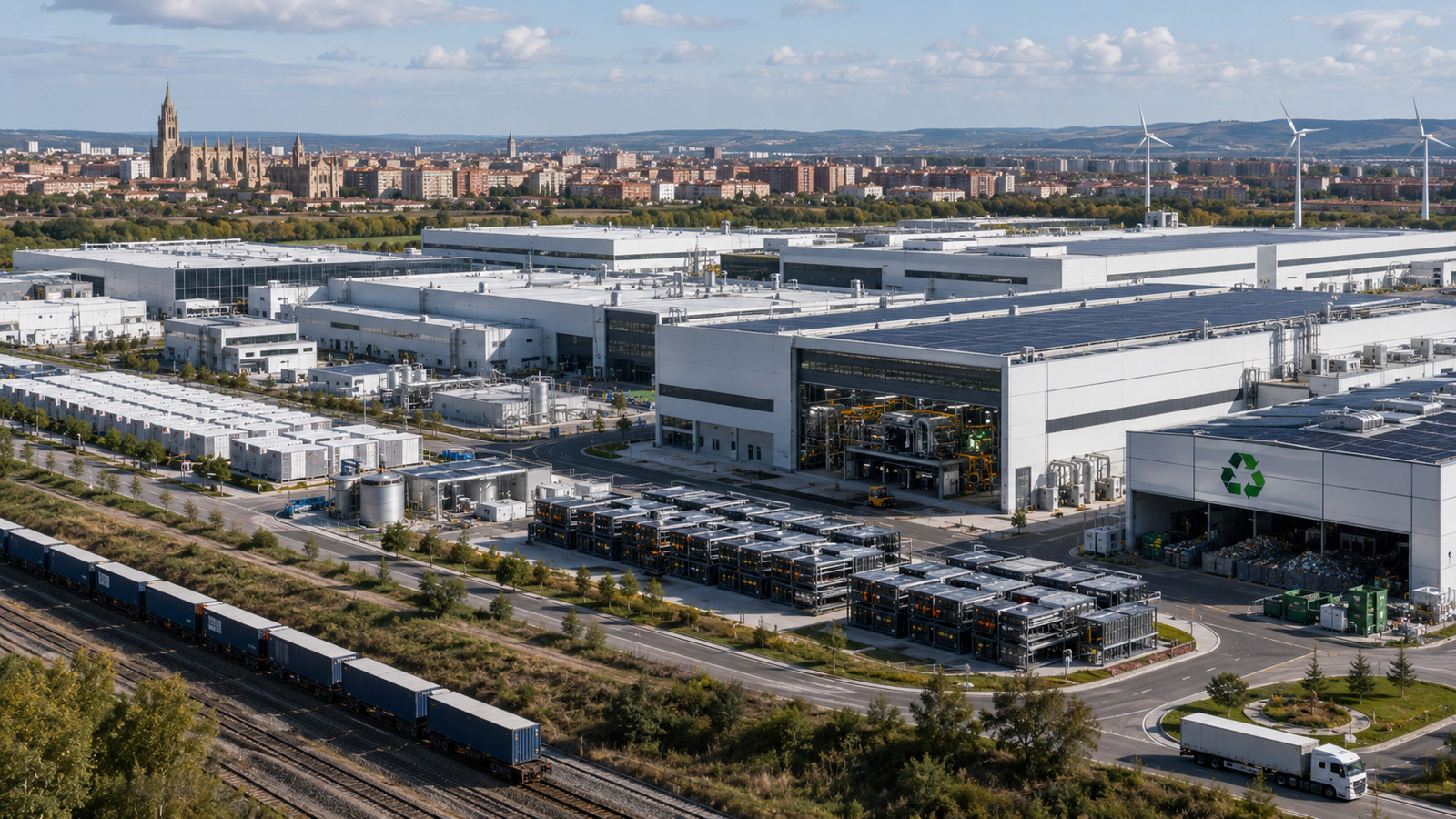
A 180-meter ship with a deck the size of a football field was christened to carry 25,000 tons of giant energy modules around the world.

-
While modern cities rely on pumps and electricity, in Iran, ancient tunnels carried water through the desert using only slope and gravity.
-
In the land of soybeans, Sinop’s first 42-story skyscraper will consume 1,900 truckloads of concrete and 350,000 kilograms of steel, with a foundation of 50 meters, deeper than that of the future “tallest building in Brazil” in Balneário Camboriú.
-
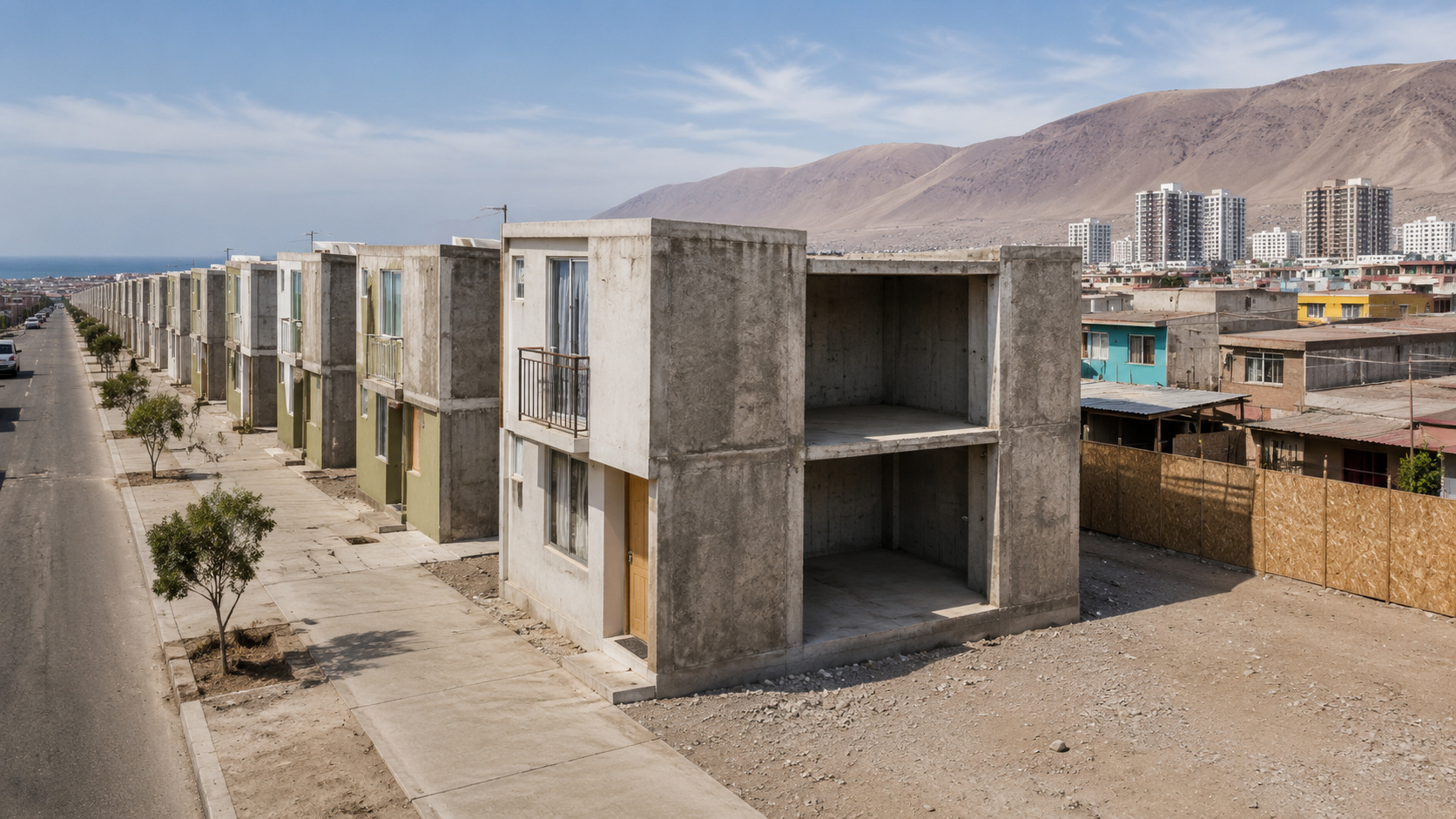
Instead of sending families far from the city, a project in Chile intentionally created incomplete houses on expensive urban land and left technical space for each to grow.


How a train that levitates and travels at 500 km/h works
The maglev train has no wheels in contact with the tracks during the journey.
Superconductors cooled to extreme temperatures generate magnetic fields that literally lift the train 10 centimeters above the track.
Without physical contact, there is no mechanical friction. The only friction that remains is with the air — and at 500 km/h, it is considerable.
That’s why the train travels inside tunnels. Inside the mountain, the environment is controlled, and aerodynamic drag can be better managed. Additionally, the underground route avoids expropriations in densely populated urban areas — one of the biggest challenges in railway projects in Japan.
The SCMaglev (Superconducting Magnetic Levitation) technology was developed by the Central Japan Railway Company (JR Central) over decades. In tests, the train has already reached 603 km/h — the world record for vehicles on magnetic tracks.

86% of the route is underground — and this is the hardest part
The Chuo Shinkansen will have approximately 286 km in length between Tokyo and Nagoya (first phase). The complete stretch to Osaka will be about 438 km.
Most of the route passes under mountain ranges, including the Japanese Alps.
Excavating hundreds of kilometers of tunnel through volcanic mountains, with groundwater and geological faults, is one of the greatest civil engineering challenges in the world.
The most critical section is the Southern Alps Tunnel, which is over 25 km long. Construction in this section has faced problems with groundwater and soil stability.
Under dense metropolitan areas like Tokyo and Nagoya, the tunnel runs more than 40 meters deep to avoid interference with existing urban infrastructure.
From Tokyo to Nagoya in 2027 — but Osaka will have to wait
The project has two phases:
- Phase 1: Tokyo to Nagoya — originally scheduled to open in 2027, delayed to the mid-2030s due to construction issues
- Phase 2: Nagoya to Osaka — completion expected in 2037 or later
JR Central began construction in 2014. The estimated cost of the first phase is approximately 9 trillion yen — about $60 billion.
It is the most expensive transportation infrastructure project in Japan’s history.
Delays are mainly due to negotiations with local governments and geological challenges in drilling the tunnels in the Southern Alps.

What changes when Tokyo and Osaka are 67 minutes apart
Tokyo and Osaka are the two largest metropolitan areas in Japan. Together, they account for more than 50 million people and represent most of Japan’s GDP.
Reducing the travel time between them from 2h15 to 67 minutes is like transforming two cities into a single megaregion.
Executives could live in Osaka and work in Tokyo. Students could attend college in one city and return home in the other every day. Companies could operate in both cities without duplicating offices.
The projected economic impact is equivalent to what the original Shinkansen caused in the 1960s — when it transformed Japan into the world’s first superpower in high-speed rail transport.
Japan vs. the world: who leads the maglev race
China has operated a commercial maglev in Shanghai since 2004, but it is only 30 km long with a maximum speed of 430 km/h.
The Chinese are also developing a prototype maglev that can reach 600 km/h, but there is no date for the inauguration of a commercial line.
The United States has discussed maglev projects in Washington-Baltimore and Dallas-Houston, but none have materialized.
The Chuo Shinkansen, when inaugurated, will be the world’s first long-distance maglev line — and the fastest railway in commercial operation on the planet.
The record of 603 km/h in tests, recorded in 2015, remains unbeaten. No train in the world — not even the Chinese ones operating at 350 km/h — comes close to that speed.

The challenges that could still delay the train of the future
The project faces internal criticism in Japan. The $60 billion cost for the first phase is considered excessive by public opinion, especially in a country with high public debt.
Local communities along the route have expressed concerns about environmental impact, vibration, and damage to groundwater caused by tunnel drilling.
JR Central is financing the project almost entirely with its own resources and loans — without direct subsidy from the central government. It is a $60 billion bet by a single private company on the future of transport. Few companies in the world would have that financial capacity or planning horizon.
However, if Japanese engineering proves it is possible to make a train levitate at 500 km/h through 250 km of mountains, the model could be exported worldwide — and the bullet train, which Japan invented in 1964, will have a worthy successor.
The question is whether the world will have the patience to wait until 2037 — or if China, with its construction speed and its 600 km/h prototype already in testing, will arrive first with a long-distance commercial maglev line.
In any case, the idea of a train that levitates and disappears inside a mountain at 500 km/h is no longer science fiction. It is ongoing Japanese engineering. And when the first journeys begin, Japan will have proven once again that the future of transport still runs on — or rather, above — tracks.
If Japan can make a train levitate at 500 km/h for 250 km through mountains, why does the rest of the world still rely on congested highways and polluting domestic flights?