






 Portuguese
  Spanish


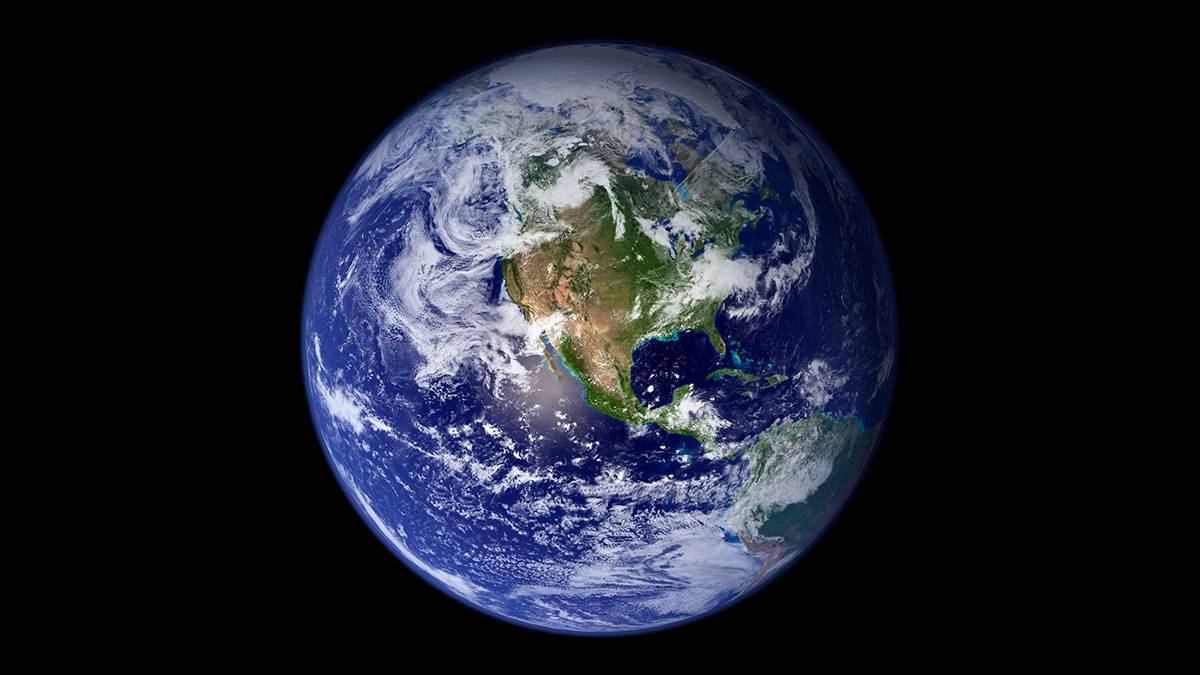


For observers of our planet, July 9, 2025, stands out. Scientists indicate that this date may be recorded as the shortest day of the year on Earth, a phenomenon that reflects the ongoing and subtle acceleration of our planet’s rotation.
Although the difference may be imperceptible in our daily lives, this cosmic peculiarity has kept the scientific community alert, generating debates and deepening the understanding of the dynamics of Earth.
Why Will July 9, 2025, Be the Shortest Day of the Year?
The idea of a shortest day of the year on July 9, 2025, does not come from nowhere. It fits into a broader trend observed in recent years: Earth has, on average, been accelerating its rotation.
-
ChatGPT Alerts FBI to Prevent Planned Murder of 8-Year-Old in Brazil’s Espírito Santo

-
Scientists Discover 125-Million-Year-Old “Pregnant Fossil” with Preserved Embryos and Microscopic Larvae Inside Mollusk in England

-
17-Year-Old Justin Bernstein Develops Bacteria to Produce Glass on Arctic Ice to Reflect Sunlight, Wins $50,000 U.S. Scholarship

-
The 19-Meter Rocket-Helicopter: A Private Industry Prototype That Challenged Space Race Logic




But, why is this happening? The information on why this is happening points to a combination of complex factors that affect the distribution of the planet’s mass and, consequently, its rotational speed.
One of the most significant factors is the melting of glaciers at the poles. Just as a figure skater spins faster by pulling in their arms, the redistribution of melted ice mass to oceans closer to the equator tends to accelerate the rotation of Earth.
Additionally, deep geological activities, such as earthquakes and the movement of magma in the planet’s core, can have an impact, even if minimal, on the duration of the day. Atmospheric and oceanic phenomena, like ocean currents and large-scale winds, also exert forces on the Earth’s crust, contributing to these variations in rotational speed.
Although the daily variation is minuscule – measured in milliseconds – the accumulation of these changes is what leads to records, such as the potential for July 9, 2025, to be the shortest day of the year. Scientists monitor these fluctuations with extreme precision to better understand the interactions between the different layers of our planet and their dynamics.
The Future of Time in Our Hands
July 9, 2025 being the shortest day of the year is more than just a curiosity; it is a fascinating reminder of the dynamic nature of Earth. This ongoing phenomenon shows us that our planet is in constant motion and transformation, influenced by internal and external forces.
Accurate monitoring of Earth’s rotation and the search for more information on why this is happening are crucial for science and technology. They allow us not only to adjust our clocks and systems but also to improve climate models, geophysical predictions, and our fundamental understanding of the planet we inhabit. The rhythm of Earth is a vibrant field of study, and each day, even the shortest, brings us new discoveries.


