






 Portuguese
  Spanish


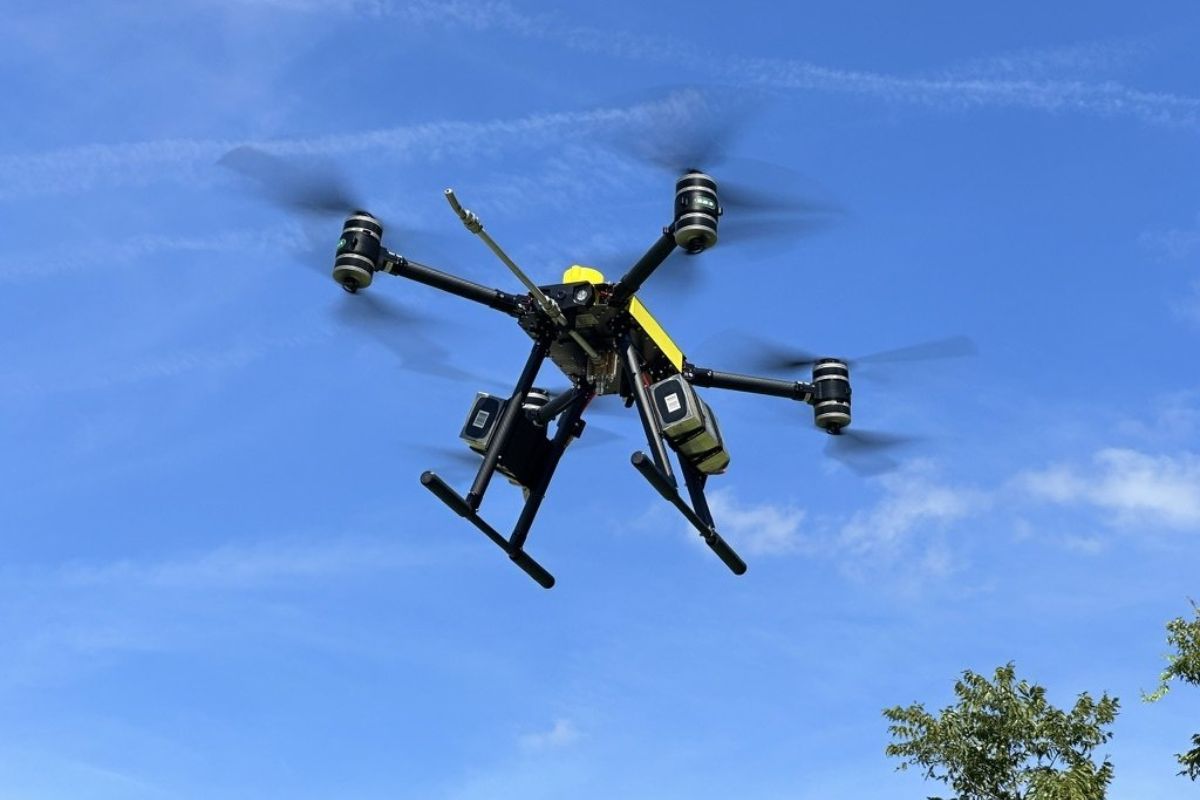


Discover The Technology Of Drones That Paint Building Facades Autonomously, An Innovation That Promises To Eliminate The Risk Of Scaffolding, Reduce Costs, And Deliver A Perfect Finish.
Facade painting, one of the most dangerous and expensive jobs in construction, is about to be transformed forever. A new generation of drones that paint building facades autonomously is emerging from laboratories into the real world, promising to replace human work at heights with a robotic, safe, and surprisingly efficient solution.
Led by innovative startups like the American Apellix, this technology is not just a glimpse of the future but a concrete response to chronic problems in the industry. With the capacity to reduce the risk of accidents by up to 80% and halve labor costs, drones that paint building facades autonomously are establishing themselves as one of the most disruptive innovations of the last decade.
How Does The Painting Drone Work?

Unlike filming drones, painting drones are designed for heavy-duty work. They typically operate “tethered” to a base on the ground via a cable and hose, ensuring a continuous supply of power and paint, allowing them to work for hours without interruption.
-
Couple Converts 1925 Detroit Bank into Home, Earns $40,000 Annually on Airbnb

-
Tired of Seeing People Sleep in the Cold, London, Canada Opens First Modular Shelter for Homeless with 60 Cabins, Heating, Meals, and Dog Area
-
Brazil’s $1.3 Billion, 870-Meter Immersed Tunnel to Be Latin America’s First of Its Kind, Featuring Special Public Facilities and Information Center
-
Brazilian Innovator Develops Concrete Blocks from Recycled Plastic, Eliminating Mortar and Reducing Construction Costs


The process is a mix of robotics and artificial intelligence:
3D Mapping: Before starting, the drone scans the facade with sensors (like LIDAR) to create an accurate three-dimensional map of the building.
Autonomous Flight Plan: Software calculates the ideal flight path, ensuring that every inch of the surface is covered uniformly and without waste.
Precise Application: Equipped with a high-precision spray nozzle, the drone “dances” across the facade, applying paint with a consistency that would be impossible to achieve manually.
More Safety, Less Cost
The adoption of drones that paint building facades autonomously brings advantages that go far beyond automation.
Safety First: The main advantage is the elimination of the risk of accidents with workers at heights. Scaffolding, ropes, and swings, which are sources of serious accidents, become unnecessary.
Drastic Savings: By eliminating the need for scaffolding setup and reducing the requirement for skilled labor, the technology can cut facade painting costs by up to 50%.
Efficiency and Sustainability: The software-controlled spray system reduces paint waste (overspray) by up to 40%. Additionally, the operation is significantly faster: a drone like Apellix’s PowerPainter can cover 100 square meters in just two hours.
Who Is Leading This Revolution?

The forefront of this technology is led by startups specializing in aerial robotics, with a focus on Apellix, based in Florida, USA. Founded by Robert Dahlstrom, the company gained global recognition by winning the innovation challenge “Paint The Future,” organized by the paint giant AkzoNobel.
The partnership between Apellix and AkzoNobel was crucial in validating the technology, testing specific paints and coatings for application with drones. The result was the launch, in 2025, of the PowerPainter, one of the first commercial drones for facade painting, with an approximate cost of $30,000.
The Future Of Building Painting
The technology of drones that paint building facades autonomously is still in its early stages of adoption, but its potential is transformative. Besides solving safety and cost issues, it emerges as a solution to the shortage of skilled labor in the construction sector.
With the advancement of artificial intelligence and integration with drone swarms, the future of building maintenance will be increasingly autonomous, safe, and efficient. The image of a painter hanging from a skyscraper may soon become a thing of the past.
And you, what do you think about the use of drones that paint building facades autonomously? Do you believe this technology will replace rappelling painters? Leave your opinion in the comments!




Se pra pintar um portão já voa tinta pra todo lado,imagina um prédio kkkk.