






 Portuguese
  Spanish
 5 min of reading
  0 comments


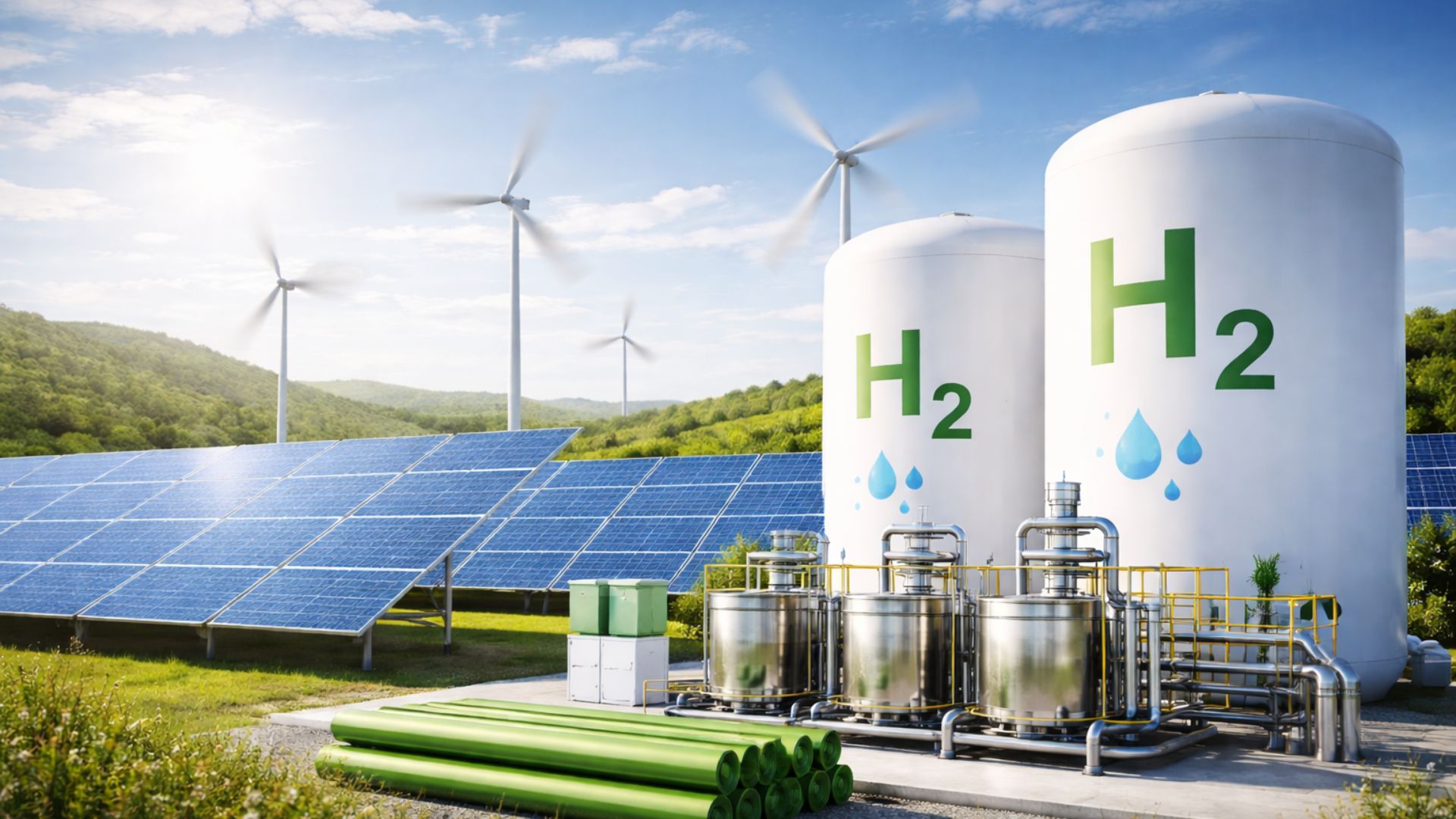
Fapes Signs Cooperation with German Institute Fraunhofer to Map the Potential of Green Hydrogen and Accelerate the Energy Transition in Espírito Santo
The Fapes (Foundation for Research and Innovation Support of Espírito Santo) and the German institute Fraunhofer Institute for Solar Energy Systems (Fraunhofer ISE) held an online event that formalized the start of the H2-VERDE ES project.
According to an official publication on Tuesday (10), the proposal is to assess the potential of green hydrogen in the state and to structure solid technical foundations to accelerate sustainable energy transition in Espírito Santo, focusing on the expansion of clean energy in the regional matrix.
The objective is clear: analyze the technical and economic feasibility of green hydrogen production and position Espírito Santo as a national reference in clean energy.
-
Advancement in renewable energy: A R$ 150 million project launched by Petrobras and Finep aims to create state-of-the-art electrolyzers for green hydrogen, strengthening national research and preparing Brazil to compete in a billion-dollar energy market.

-
Illiterate or semi-literate grandmothers were trained to repair solar systems, open rural workshops, and light up homes that still depended on kerosene.
-
The world has bet on green hydrogen as the fuel of the future, but now faces the side effect: producing 1 kilogram requires about 9 liters of ultrapure water, and the largest projects on the planet are precisely in the driest regions of the Earth, where water is already scarce for people.

-
Africa has about 500,000 cell towers and most still burn diesel to operate, while companies rush to cover antennas with solar energy and avoid signal blackouts.




Fapes and German Institute Structure Partnership for Green Hydrogen in Espírito Santo
The meeting gathered representatives from Fapes, the Secretary of Science, Technology, Innovation and Professional Education (Secti), and researchers from Fraunhofer ISE. The meeting marked the first practical action of the Memorandum of Understanding (MoU) signed in November 2025 between the Government of Espírito Santo and the German institute, consolidating an international cooperation focused on applied research and energy innovation.
The partnership between Fapes and the German institute Fraunhofer ISE represents a concrete advance in the energy transition agenda of Espírito Santo. The H2-VERDE ES project is expected to last six months and is designed to produce detailed technical diagnostics, future scenarios, and practical proposals aimed at the development of green hydrogen.
According to the general director of Fapes, Rodrigo Varejão, the cooperation was officially consolidated after an international mission in Germany. The agreement provides for the exchange of experiences between local and German researchers, strengthening the scientific capacity of the state.
Fraunhofer ISE is part of the Fraunhofer Society, recognized internationally for its work in applied research in the areas of renewable energy, energy efficiency, and decarbonization. Thus, Espírito Santo now has technical support from a world-leading institution in clean energy. This is a strategic alliance that combines scientific knowledge and a vision of sustainable economic development.
Green Hydrogen as the Focus of the Energy Transition and Clean Energy in Espírito Santo
Green hydrogen is produced through the electrolysis of water using electricity from renewable sources, such as solar and wind. Unlike gray hydrogen, obtained from natural gas, the process does not generate direct carbon emissions. For this reason, it is considered a key component in the global energy transition.
In the context of Espírito Santo, the project led by Fapes and the German institute aims to evaluate whether the state has the technical, regulatory, and economic conditions to competitively integrate into the low-carbon hydrogen value chain.
The analysis includes the structure of the state’s energy system, renewable generation potential, available infrastructure, and the sectors that could demand the clean fuel, such as heavy industry, transportation, and port logistics. Decarbonization is no longer a trend; it is a strategic necessity.

Diagnosis of the Energy System of Espírito Santo to Strengthen the Energy Transition
One of the central stages of the H2-VERDE ES project is the detailed analysis of the current energy system of Espírito Santo. The Fapes and the German institute will gather data on generation, consumption, transmission infrastructure, and potential renewable sources.
This technical foundation will allow for the identification of bottlenecks and opportunities. Based on this information, it will be possible to project future scenarios for the expansion of clean energy and the incorporation of green hydrogen into the state matrix.
The survey includes analysis of solar, wind, and biomass resources, as well as an evaluation of logistical and port capacities. Espírito Santo has a strategic location and significant port infrastructure, factors that may favor future exports. Data-driven planning is essential for sustainable decisions.
Scenarios Until 2040 and 2050 Boost Green Hydrogen and Clean Energy
Another area of work involves constructing long-term energy scenarios. The proposal is to evaluate different trajectories for the energy transition in Espírito Santo, considering public policies, regulatory incentives, and technological evolution.
Possible support instruments for the development of green hydrogen will be analyzed, as well as sectors with the greatest potential demand. This approach allows for the alignment of the expansion of clean energy with sustainable economic growth.
The goal is not only to map possibilities but to propose viable paths for practical implementation. Thus, the state can position itself strategically in the national race for leadership in decarbonization. Anticipating trends is fundamental to achieving competitiveness.

Mapping the Potential of Green Hydrogen and Clean Energy in Espírito Santo
The project also provides for a georeferenced mapping to identify areas suitable for the production of green hydrogen. This stage considers solar and wind potential, biomass availability, and existing infrastructure.
The work will be conducted with technical support from the German institute, while Fapes and Secti will provide essential regional data. The integration of this information will result in detailed maps and proposed pilot projects.
These projects could attract investments and stimulate new businesses related to clean energy. In addition, the initiative contributes to enhancing state energy security and reducing dependence on fossil sources. The technical mapping is the foundation for turning potential into reality.
International Cooperation between Fapes and German Institute Strengthens Leadership in Clean Energy
International cooperation is one of the pillars of H2-VERDE ES. The German institute Fraunhofer ISE will be responsible for technical coordination, while Fapes will act as a strategic partner in regional coordination.
This collaboration enhances scientific exchange and strengthens the training of qualified professionals in the field of energy transition. Additionally, it reinforces the credibility of Espírito Santo with investors and international institutions.
The exchange of experiences between Brazilian and German teams allows for the application of globally established methodologies in the feasibility assessment of green hydrogen. Global partnerships elevate the standard of local projects.
Espírito Santo Seeks National Leadership in Green Hydrogen and Energy Transition
The H2-VERDE ES project represents a strategic movement to establish Espírito Santo as a leader in the clean energy agenda in Brazil. By uniting Fapes and the German institute in a structured cooperation, the state demonstrates its commitment to innovation and sustainability.
The production of green hydrogen can become a vector for economic development, job creation, and investment attraction. Furthermore, it directly contributes to emission reduction goals and strengthens the energy transition. The energy future is renewable, technological, and collaborative.
With technical planning, international cooperation, and a focus on concrete results, Espírito Santo is moving toward a strategic position in the new low-carbon economy. The initiative not only broadens the debate on clean energy but also establishes real foundations to turn potential into national leadership.






-

-

2 people reacted to this.