





 Portuguese
  English
  Spanish
  3 min of reading
  0 comments



Fund Profit Plummets 41%, Inflation Erodes Deposits and Millions May Lose Access to Housing, Sanitation, and Credit.
The president of Caixa publicly admitted that the FGTS is at risk of collapse, raising immediate concerns about the future of social protection for millions of Brazilian workers. The fund, which should guarantee security in cases of dismissal and finance affordable housing, is now facing a significant drop in revenue, loss of profitability, and internal fraud.
According to an analysis by Josué Aragão, the model has become unsustainable: fewer formal workers are feeding the fund, recurring withdrawals drain liquidity, and the remuneration offered is systematically losing to inflation. The warning is that the worker may see their balance shrink in real terms while simultaneously witnessing the weakening of housing policies financed by the FGTS.
What Sustains the FGTS Is Disappearing
According to Josué Aragão, the fund, which should protect the worker, has turned into a mechanism of institutionalized confiscation.
-
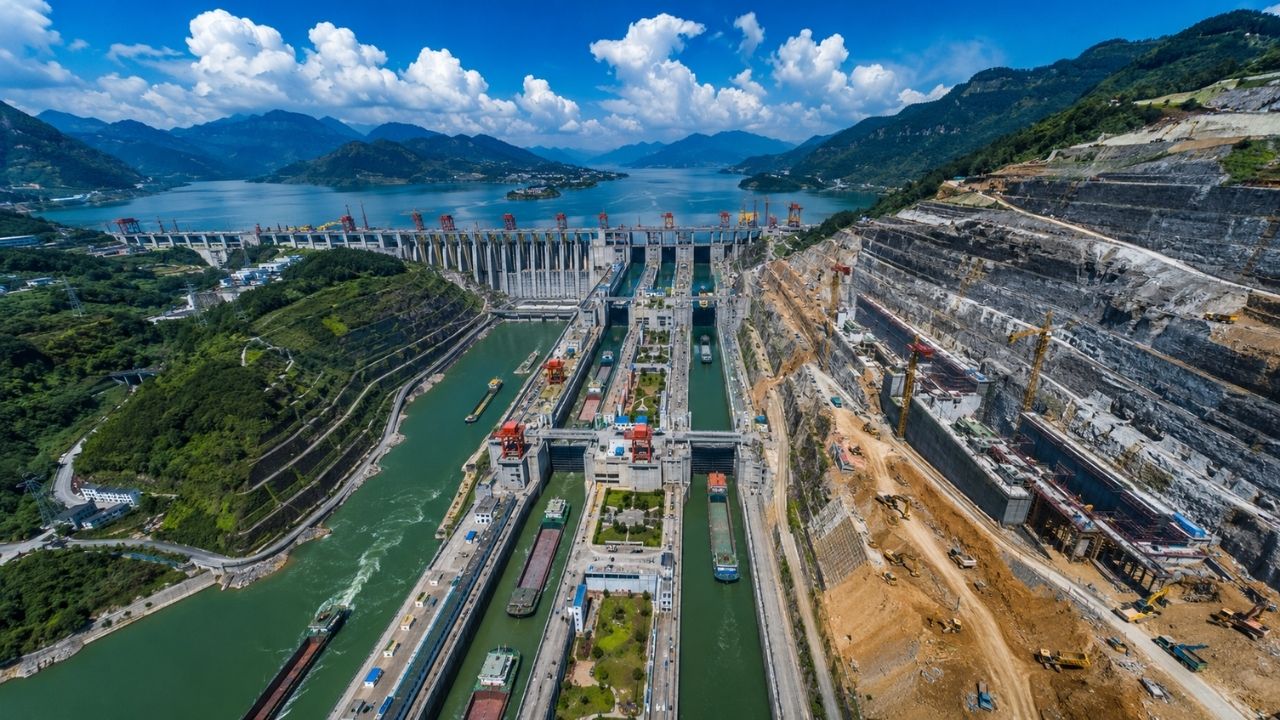
China’s major economic artery receives a megaproject worth $11.39 billion to allow ships to pass through the Three Gorges: new locks carved into the mountain promise to double the logistical capacity of the Yangtze River by 2050.

-
Banco Master has its liquidation recognized by the Bahamas Justice, expands the international scope of the process, and places overseas assets at the center of a billion-dollar dispute involving creditors, investigations, and cooperation between countries.

-
R$ 3,500 marks the entry into the Brazilian middle class, which extends up to R$ 8,300 in the first tier and reaches R$ 26,000 in the so-called upper middle class, the only level capable of saving and investing budget surpluses, according to IBGE and Ipea.

-
The automaker BYD, a leader in electric cars in Brazil, has been added to a U.S. military list alongside Alibaba and Baidu, in a Pentagon decision that threatens to strain the fragile trade truce between Trump and Xi Jinping.


Mandatory monthly deposits yield TR + 3% per year, below inflation, eroding purchasing power.
A practical example shows that, in 10 years, a worker who contributes 8% of their salary monthly would have a real balance 7.4% lower than necessary just to keep up with inflation.
This disconnect generates frustration and opens space for criticism of the model, which cannot sustain itself in a scenario with fewer formal jobs.
Moreover, the birthday withdrawal and anticipations policies have created a continuous drainage effect of resources, accelerating the fragility of the system.
Structural Dependence of the Economy on the FGTS


The problem does not stop at the erosion of individual deposits. More than 90% of affordable housing financing is supported by the fund.
This means that any shortfall jeopardizes programs like My House, My Life, in addition to sanitation and urban infrastructure projects.
If the coffers are emptied, millions of families will remain trapped in rental housing, and over 50 million Brazilians may lose prospects of access to adequate basic sanitation.
This structural dependence creates a cascading risk: as the worker loses protection, the country loses investment in critical social areas.
According to the Brazilian Chamber of Industry of Construction, in 2024 alone, 2 million housing units and over 6 million jobs could have been made viable if resources had been preserved.
Frauds and Mismanagement Increase Distrust
Another point that further weakens the FGTS is the occurrence of internal fraud. Recent investigations revealed schemes of embezzlement within Caixa Econômica Federal itself, where employees altered data in systems like Caixa Tem to release irregular withdrawals.
This undermines the worker’s trust in a fund that should represent security.
The history also shows that the political management of resources overrides the original objective.
Governments use the FGTS as a tool for promotion and political capital, prioritizing projects with electoral impact, but not always with financial sustainability.
The Warning from the President of Caixa
In his most recent remarks, the president of Caixa, Carlos Vieira, acknowledged the seriousness: “We will have a very big crisis in the FGTS”.
The executive highlighted that the decrease in the number of formally employed workers and competition with other public expenditures already threaten the sustainability of the fund.
In practice, this means that if nothing changes, the mechanism may stop functioning in a few years.
The FGTS was born to be a safety net but has turned into a system that returns little, relies on few, and sustains much.
Amidst inflation, frauds, and political use, the costs may not add up for the worker.
And you, do you think that the president of Caixa is right to predict an imminent crisis? Do you believe that the FGTS is still a protection or has it become a trap for the worker? Please leave your opinion in the comments; we want to hear from those who feel it in practice.









-

-

-

-

10 people reacted to this.