Portuguese
  Spanish


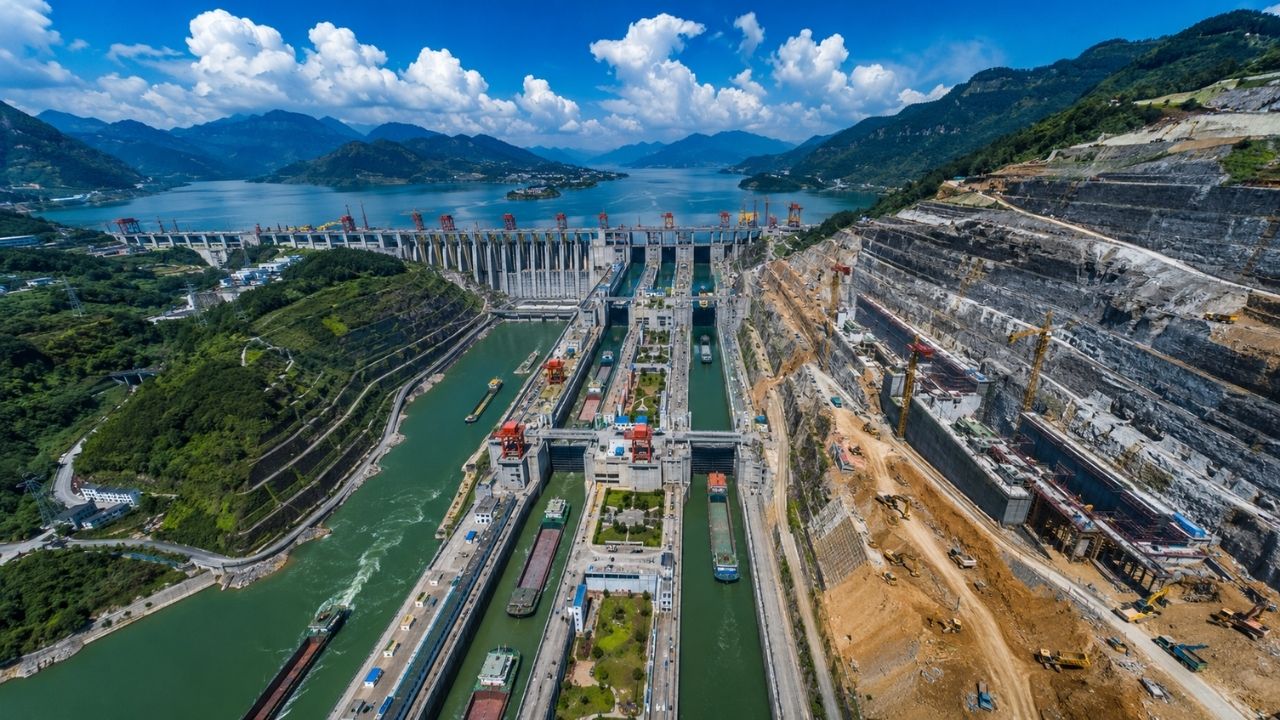

Ships on the Yangtze River will be served by new locks at the Three Gorges and by expansion in Gezhouba. Launched on June 8, 2026, in Yichang, Hubei, the $11.39 billion project promises to increase the annual capacity to 336 million tons at the main complex and reduce logistical bottlenecks.
The ships passing through the Yangtze River, China’s main economic artery, are at the center of a megaproject launched in Yichang, Hubei province, on June 8, 2026. The project will expand the navigation system of the Three Gorges and the Gezhouba dam.
According to information published by China Daily, the project is led by China Three Gorges Corp and involves an investment of approximately 77.2 billion yuan, about $11.39 billion. The goal is to reduce chronic bottlenecks in river transport, increase cargo capacity, and strengthen the Yangtze economic belt by 2050.
New locks will be excavated in the mountain
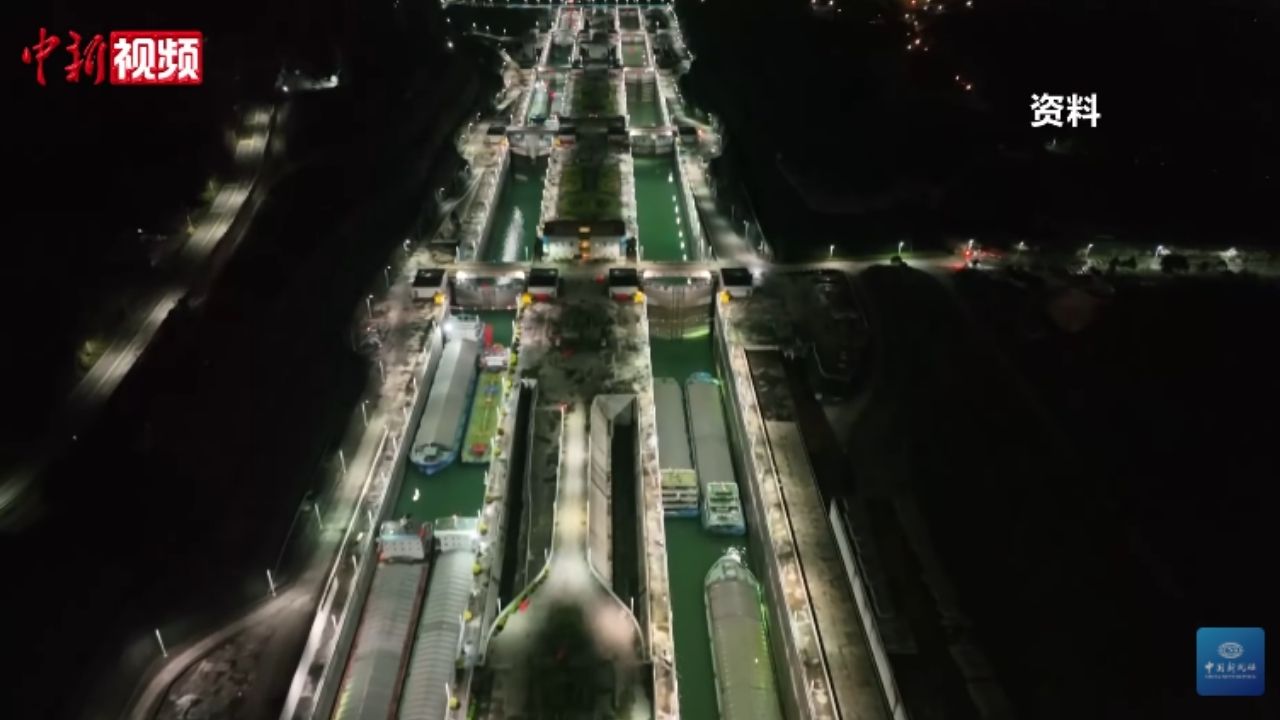
The core of the project is at the Three Gorges complex, where two new locks for ships will be built after mountain excavation on the left bank of the river. They will be parallel to the already existing double locks.
-
$2.5 Billion Amazon Potash Mine Aims to Reduce Brazil’s 95% Import Dependency

-
Grendene’s Sales Decline in 2025, but Melissa Brand Surges 36% and Becomes Key Focus
-
World’s Largest Single-Line Pulp Mill Opens in Brazil, Costing $4.3 Billion

-
Pix Processed $35 Trillion in 2025, Becoming Brazil’s Leading Payment Method


The intervention changes the scale of navigation at one of the most strategic points of Chinese logistics. Once completed, the system will operate with a configuration of four lock lanes, in addition to the existing ship elevator at the complex.
The expansion seeks to solve a capacity problem that has become more pressing as transport on the Yangtze has grown. In 2025, the total volume of cargo that passed through the Three Gorges complex reached 173 million tons.
With the new structure, the total annual capacity of the complex is expected to rise to 336 million tons. This leap explains why the project is considered a key piece for the circulation of cargo between the interior and the industrialized east of China.
Gezhouba will also undergo expansion
The project is not limited to the Three Gorges. The Gezhouba Dam, located downstream, will also have its navigation system expanded to accommodate the expected increase in ship traffic.
The intervention plans to dismantle Gezhouba’s lock number 3 and build two new single-stage locks on the left side. Additionally, the approach channels will be widened to improve the passage of vessels.
The logic is to prevent a bottleneck from simply being transferred from one point to another. If the Three Gorges gains capacity, Gezhouba also needs to keep up with the new pace of circulation in the river corridor.
With the expansion, Gezhouba’s annual capacity is expected to reach 360 million tons. This number shows that the project was conceived as an integrated system, not as an isolated work on a single dam.
Yangtze River supports more than 40% of China’s economy
The Yangtze River Economic Belt spans 11 provinces and municipalities and accounts for more than 40% of China’s population and GDP. Therefore, any logistical bottleneck on the river affects a huge part of national production.
Industries such as metallurgy, automobiles, and high-tech manufacturing heavily rely on the waterway. According to data cited by China Daily, the river transports 85% of the region’s iron ore and foreign trade goods, as well as 83% of the coal.
The Yangtze functions as a major economic conveyor belt between the interior and industrial centers. When ships face queues, delays, or capacity limitations, the impact is felt across entire production chains.
This role helps explain the scale of the investment. China is not just expanding locks; it is trying to unlock a logistical corridor that supports factories, ports, trade, and regional integration.
Water transport costs less than rail


Su Fengming, a researcher at the Comprehensive Transportation Institute of the National Development and Reform Commission, highlighted the economic weight of the waterway. According to him, the GDP of the Yangtze Economic Belt exceeded 65 trillion yuan in 2025.
In the same year, cargo movement at the main ports along the Yangtze’s main line reached 4.2 billion tons. This volume exceeded by more than 80% the total national transport by rail, according to the cited analysis.
Cost is one of the major reasons for this dependency. Waterway transport costs only about one-fifth of rail transport, making the river crucial for bulky and lower-margin cargo.
For an economy with a strong industrial base, this difference matters. The more efficient the navigation, the greater the competitiveness of the production chains that use the Yangtze to move raw materials and goods.
Cargo volume grew for two decades
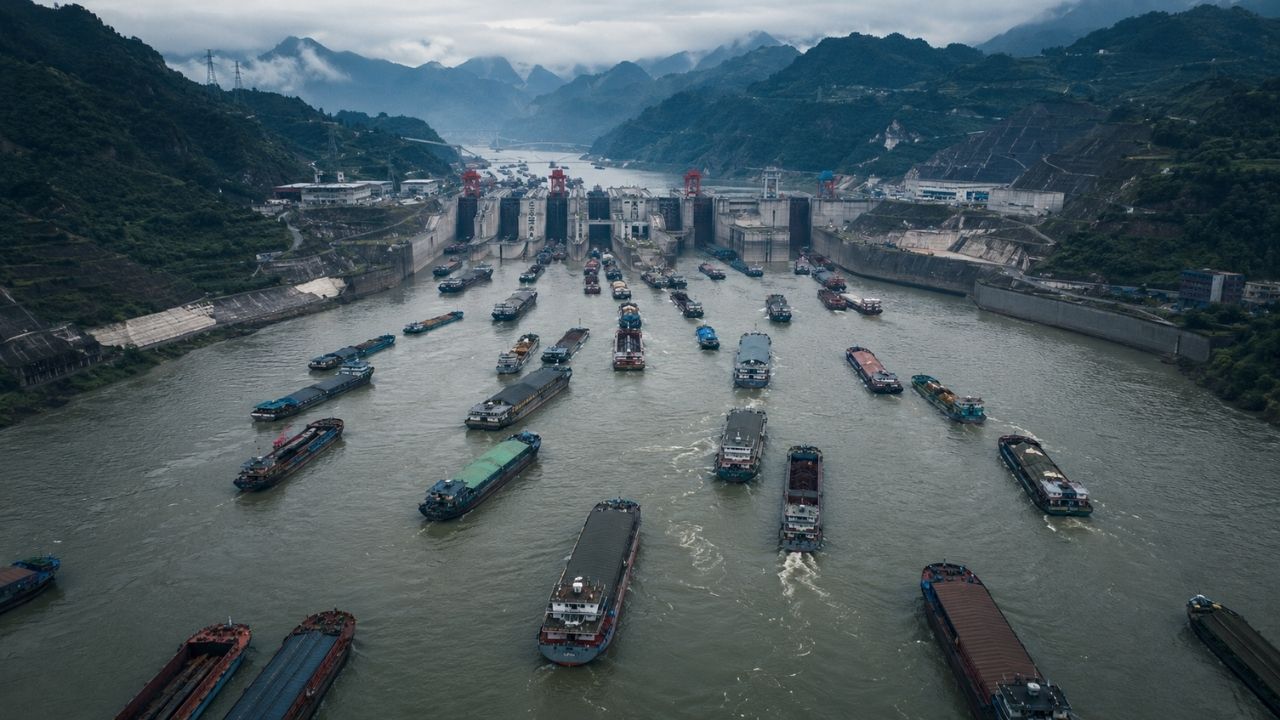
Niu Xinqiang, an academic from the Chinese Academy of Engineering, stated that the cargo volume on the main line of the Yangtze has continuously grown over the past two decades. The flow increased from 650 million tons in 2005 to 4.2 billion tons in 2025.
According to him, the river has held the top position among the world’s inland rivers in cargo volume for 20 consecutive years. This continuous growth has put pressure on structures that no longer meet the current demand size.
Navigation at the Three Gorges has become a critical point because it concentrates cargo passage in a strategic region. The greater the movement of ships, the greater the need for locks capable of absorbing the flow without stalling the system.
The new passage is expected to increase the one-way project capacity of the complex from about 50 million tons to 168 million tons by 2050. This advancement is considered a central piece to accelerate the circulation of productive factors.
Project aims to better connect east and west China
The expansion also has a territorial dimension. The Yangtze connects industrial regions, inland areas, and coastal zones, helping to reduce the economic distance between the more developed east and the west of the country.
Niu states that the new channel will help bring these regions closer by accelerating the flow of cargo and inputs. In practice, the river infrastructure becomes a tool for national economic integration.
This strategy gains importance as industrial and manufacturing bases advance into the geographical interior of China. When factories move to less coastal regions, cheap and reliable transport becomes even more necessary.
In this context, the river functions as a low-cost corridor for heavy cargo. More capacity for ships means less risk of bottlenecks in an economy that depends on scale and logistical regularity.
Work shows the scale of Chinese logistics
The investment of US$ 11.39 billion shows that China treats inland navigation as strategic infrastructure. Instead of relying solely on highways and railways, the country strengthens a river system that moves billions of tons per year.
The two new locks at the Three Gorges and the expansion of Gezhouba indicate a long-term bet. The goal is to prepare the corridor for decades of growth, not just to solve the immediate pressure of 2025.
The project also reveals the level of engineering involved. Excavating the mountain, building parallel locks, and maintaining the operation of an already essential system requires planning, operational control, and coordination between different structures.
The expansion does not replace other forms of transportation but reinforces the multimodal logic of the Chinese economy. The river remains the cheapest route for many cargos, while railways and highways serve complementary functions.
Larger ships and faster flow can change the Yangtze

The promise of the new infrastructure is to allow more ships to pass with less waiting and greater regularity. This can reduce logistical costs, improve predictability, and increase the capacity for the flow of industrial products and raw materials.
The expected effect goes beyond the dam. When a waterway of this size gains capacity, ports, factories, warehouses, and supply chains along the river also tend to reorganize their operations.
The challenge will be to deliver a complex work without compromising the safety and efficiency of the existing system. The Three Gorges is already critical infrastructure, and any expansion needs to coexist with the current operation.
Even so, the scale of the project shows why the Yangtze is called an economic artery. Few river corridors in the world concentrate so much population, industry, cargo, and strategic importance on a single route.
Three Gorges become a new test of economic engineering
The Three Gorges megaproject shows how China continues to use large works to reorganize its economy. The expansion of the locks and Gezhouba is not just a navigation intervention; it is an attempt to increase the capacity of the country’s largest economic corridor.
With 336 million tons expected in the main complex and 360 million in Gezhouba, the project aims to give a boost to the Yangtze River by 2050. The question is whether engineering will be able to keep up with the growth rate it helps to fuel.
For ships, the promise is less waiting and more passage. For the Chinese economy, it means more capacity to connect the interior, industry, ports, and trade.
And you, do you think megaprojects like this are essential to sustain giant economies or do they increase the dependence on large constructions too much? Leave your opinion in the comments.