Portuguese
  Spanish


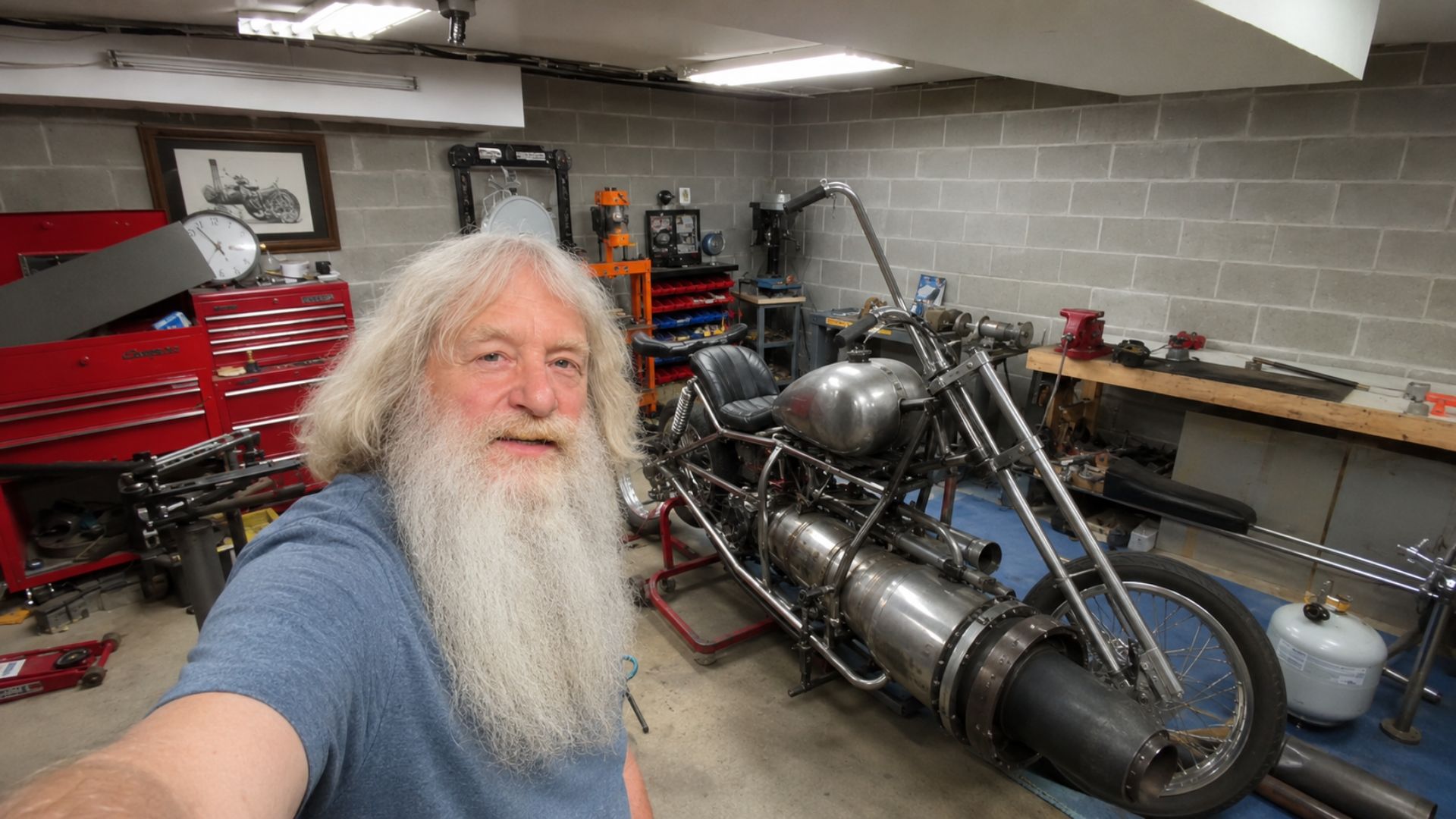

The engine is a pulsejet, cousin of the one that equipped the V-1, and the owner assembled it at home to power the motorcycle. But the speed is just an estimate of his, and this type of engine is so noisy, hot, and polluting that it cannot run on the street.
A motorcycle assembled in the garage received a rather unusual engine, the same type that made the V-1 flying bombs cross the sky in World War II. Known as a pulsejet, this jet engine without moving parts was adapted by an amateur builder to push a light motorcycle, in a project he filmed and divided into stages. The idea of putting a war bomb engine under a motorized bicycle is not new and was popularized by the American Robert Maddox.
The motorcycle setup uses two pulsejets, each with about 45 pounds of thrust, which together can reach close to 100 pounds, equivalent to about 45 kilograms of force. The engine is fueled by diesel, with propane for starting, and the owner estimates that the motorcycle can exceed 110 kilometers per hour, although this is just a guess, not a measurement. However, there is a detail that the author himself insists on warning about, as he modifies a pressurized propane tank and says himself that this is dangerous and should not be copied.
The jet motorcycle that was born in the garage
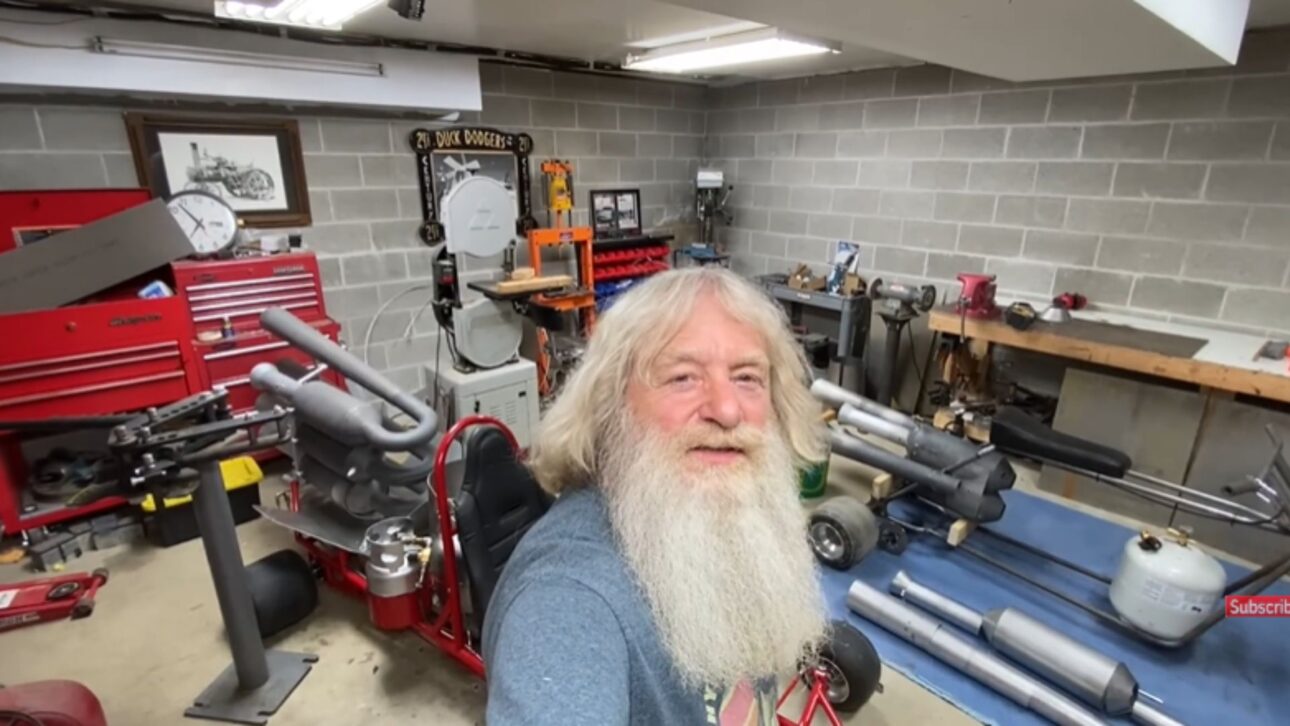
The star of the project is a motorcycle designed to be light and fast, mounted on a high-strength steel tube frame. According to Robert Maddox’s account, the assembly yields two vehicles in one, because it only takes changing an axle to transform the three-wheeled tricycle into a two-wheeled motorcycle in about 20 minutes. The chosen engine is the pulsejet, which the author describes as little more than a set of hollow tubes, with nothing inside.
-
Tokyo Scientists Create First 18cm Biohybrid Hand Using Human Muscle, Capable of Scissor Gesture and Holding a Pipette

-
Brazil Faces Norway in World Cup at Stadium Linked to Jimmy Hoffa’s Mysterious Disappearance

-
Retired Woman Leaves French Public Housing Due to Fear, Lives in Van for Weeks, Prompting Response from Local Authorities and a Priest
-
World Cup Ball Chip Uses Technology to Detect Invisible Touches, Confirms Offside, Secures Portugal’s Victory Over Croatia





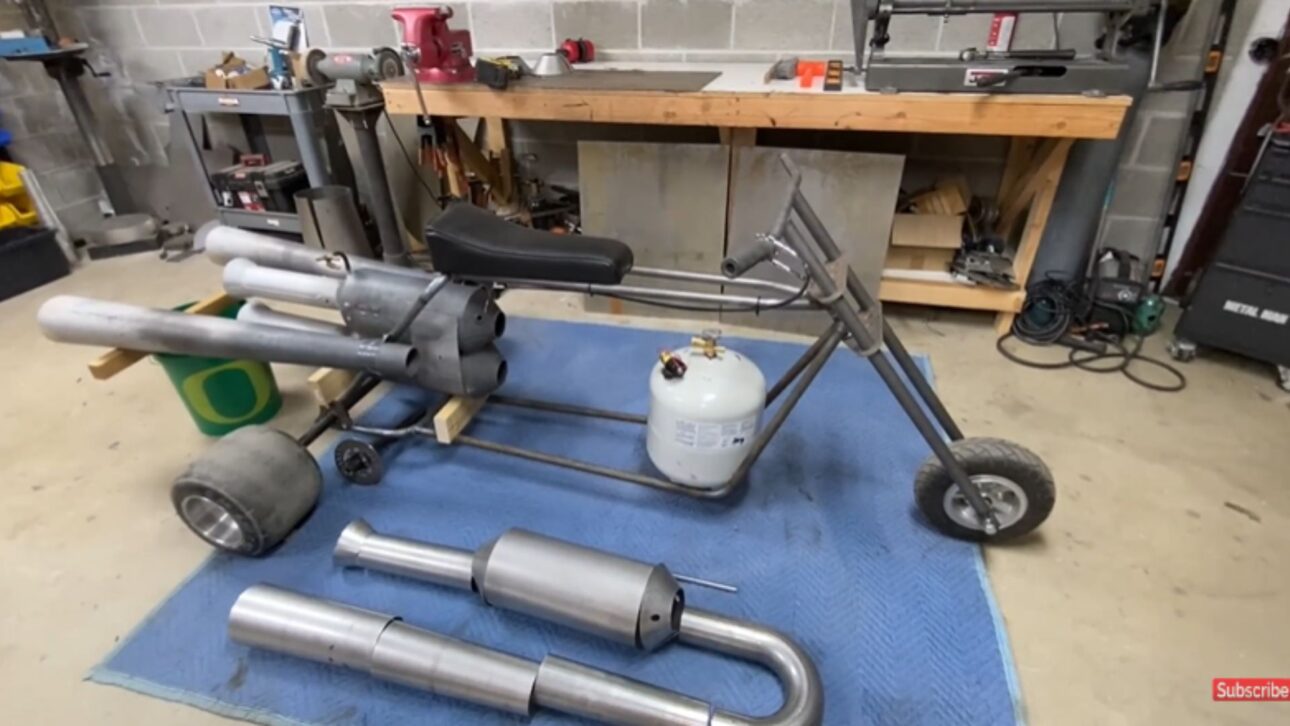
The supply combines diesel for operation and propane for starting, activated by a button and a solenoid. Robert Maddox compares the new bike to his larger cart, saying it weighs about a quarter of the weight and has about a third less power. He avoids, in the material, teaching the step-by-step of the riskiest part and even warns that handling a pressurized propane tank is dangerous.
The engine that came from the V-1 bombs
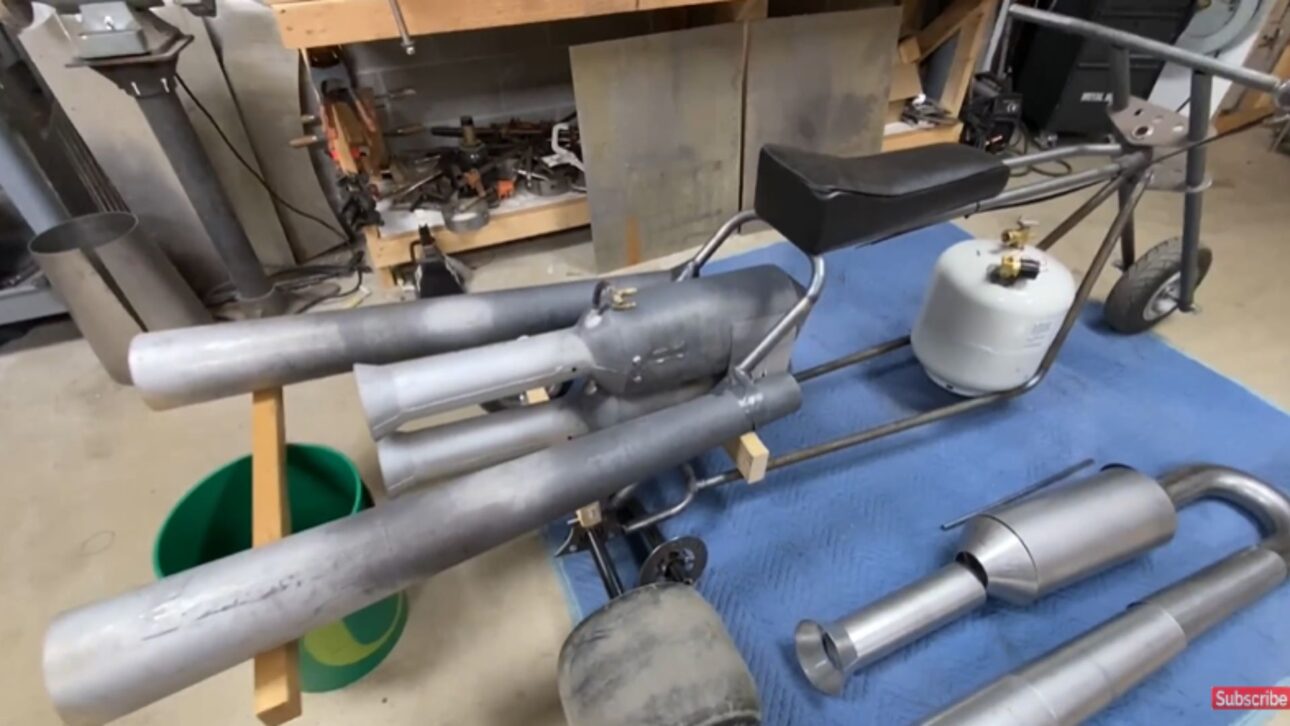
The pulsejet is a type of jet engine where combustion occurs in pulses, with few or no moving parts. Its fame comes from World War II, when the Argus As 014 model equipped the German V-1 flying bomb, used against London in 1944. It was the first mass-produced pulsejet, with over 30,000 units, and became known for the characteristic buzz that earned the weapon the nickname buzz bomb.
However, there is an important technical difference between the V-1 engine and the bike’s engine. The V-1 engine had valves, small gates that opened and closed dozens of times per second, while the garage one is the valveless type, operating solely by the shape of the tubes. They are, therefore, from the same family but with different designs, and it is worth remembering that modern missiles no longer use this type of engine, preferring turbines or rockets.
How much force does it have and what do pounds of thrust mean


The most impressive number, the thrust, is often misunderstood, and it’s worth clarifying. Thrust is the force the engine pushes backward, measured in pounds of force or kilograms of force, and not the mass it would be able to carry. Thus, each pulsejet on the bike generates about 45 pounds, close to 20 kilograms of force, and together they reach around 100 pounds, about 45 kilograms of force.
For comparison, Robert Maddox builds pulsejets of up to 1,000 pounds of thrust, the largest in the world. The speed of 110 kilometers per hour cited for the bike is an estimate by the owner, not a measured data, and documented jet bicycles have already exceeded 97 kilometers per hour in tests. In other words, the potential exists, but the exact number remains in the realm of promise.
Noise, Heat, and Why You Can’t Ride on the Street
As fun as it may seem, the jet bike is a genuinely dangerous machine. The pulsejet is deafening, with over 130 decibels, a level comparable to a plane taking off, to the point where Robert Maddox ruptured an eardrum when starting an engine and began using ear protectors. Besides the sound, the tubes become incandescent, and the exhaust reaches extremely high temperatures.
This set of characteristics explains why such vehicles cannot circulate on the streets. The engine is very inefficient, spending most of the fuel on noise, has a range of less than a kilometer per tank, and releases dirty gases, which conflicts with noise and emissions regulations. Therefore, these machines usually run only on dry lake beds, with a helmet, and function more as an attraction than as real transportation.
From Fair Attraction to Internet Phenomenon

The figure behind the popularization of these machines is Robert Maddox, nicknamed “Crazy Rocketman”. A resident of Phoenix, Oregon, and a fan of the dry lake beds of Cedarville, California, he has been building pulsejet vehicles since the 1990s, from bicycles and go-karts to cars and even skateboards. Maddox has appeared on engineering and mechanics TV shows and has amassed hundreds of thousands of followers with videos of his machines.
The fascination is pure spectacle, made of fire, speed, and a boom that stops any audience. Maddox sells kits starting at about $1,000, around R$ 5,400, and ready-made models have been sold for over $25,000, something like R$ 135,000. In the end, the jet bike is less a means of transport and more a piece of World War II engineering turned into garage adrenaline.
The pulsejet-powered bike shows how a technology created for war can reappear, decades later, under a garage vehicle. Between admiration for homemade engineering and the shock of the risks, it is clear that it is a show machine, noisy and dangerous, and not for everyday transport. The merit lies in creativity, as long as it is accompanied by a lot of care and a clear notion of the danger involved.
And you, do you think these jet machines are a genius invention or too dangerous a madness? Share your opinion in the comments, respecting different views on the subject.